


Every diaper change feels like a mini crisis. Yesterday the skin looked fine. Today it’s suddenly red, cranky-looking. That whiplash is real. The other tricky part is how similar the early pictures can look, even though irritant rash, yeast diaper rash, and bacterial problems do not respond to the same home playbook.
This guide keeps it practical. It lines up irritant, yeast, and bacterial cues, how to manage these three types, and spells out when to call your pediatrician. This article is general information, not medical advice. Newborns can change quickly, so when symptoms or severity are unclear, contact your pediatrician for guidance.
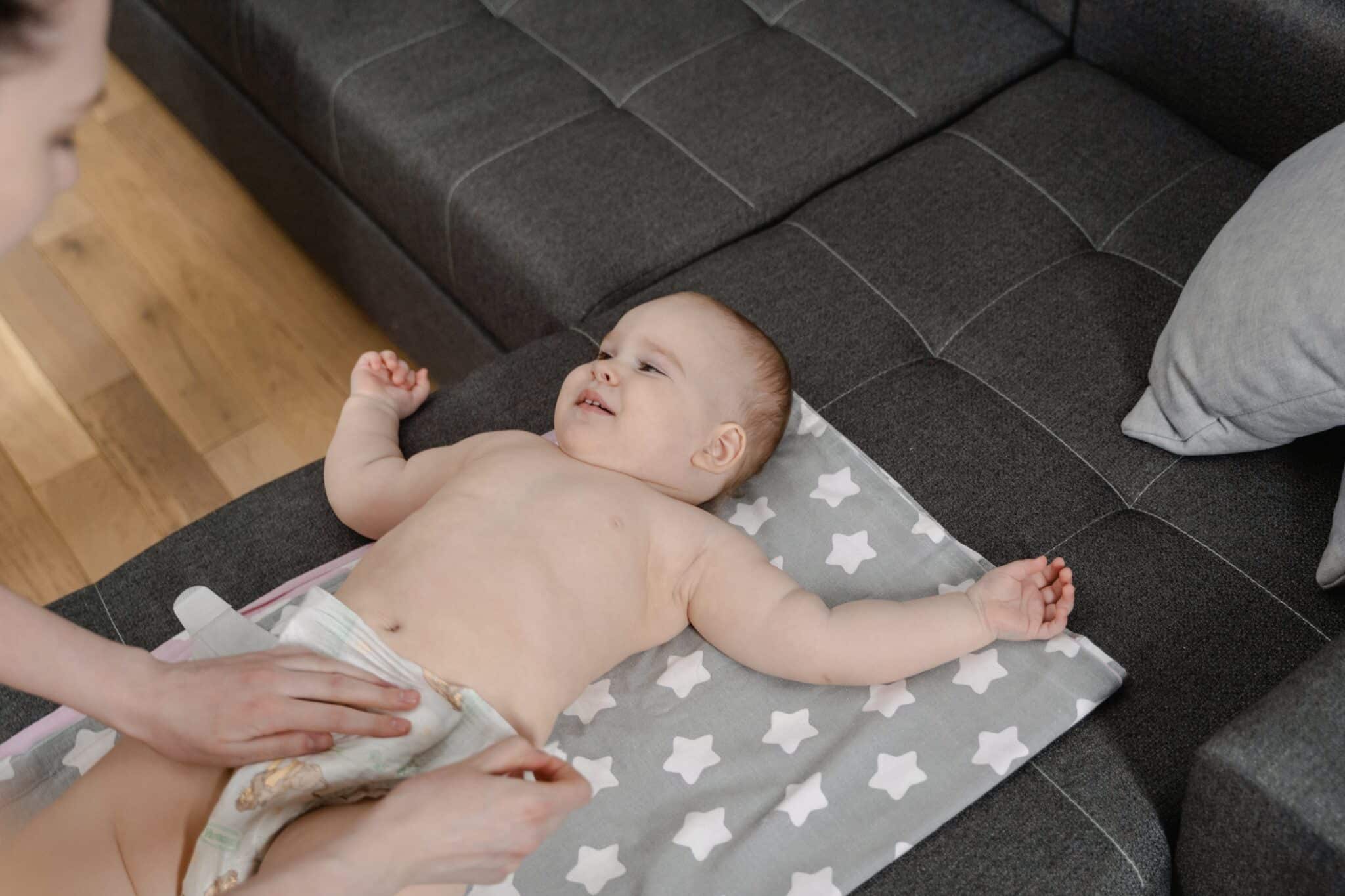
Parents help their baby put on diapers
Why Does Newborn Diaper Rash Happen so Easily?
A newborn’s skin barrier is still a work in progress. Down in the diaper zone, you’re stacking wetness, friction, pee and poop contact, and wiping on repeat. Gentle wiping still adds up over 10+ changes a day.
You might notice a flare when stools pick up, after a long sleep stretch, during a growth spurt week, or any time the area is just… busy. Here’s the detail that actually helps you pick a direction: location.
Simple irritation usually shows up on the skin that touches the diaper. If redness shows up in the groin folds or in the crease between the buttocks, yeast is more likely. That is especially true when the rash keeps coming back.
Most diaper-area rashes sort into three broad stories: moisture and friction irritation, yeast when the barrier is worn down, and bacterial involvement when the skin looks injured or your baby looks sick. Use this as a pattern cheat sheet, not a label.
|
Most likely type |
What you’re seeing |
What usually helps first |
|---|---|---|
|
Irritant diaper rash |
Pink or red patches on the outer skin that rubs the diaper, folds less involved |
Gentle cleaning, more air time, thick barrier ointment or paste |
|
Yeast diaper rash |
Beefy red rash that involves folds, plus tiny red dots nearby that look scattered, lasts more than 3 days |
Keep barrier care, add an antifungal plan per pediatrician |
|
Possible bacterial infection or severe inflammation |
Rapidly worsening redness, swelling or warmth, crusting, pus, blisters, open sores, fever |
Call pediatrician promptly; may need prescription treatment |
General information only, not medical advice
Basic Care Steps for Most Mild Rashe

If your baby otherwise seems okay and the rash is in the mild-to-moderate range, run the same simple plan for about two or three days. That window is often enough to show you what you’re really looking at.
- Change sooner than you think you need to. Poops are the big ones. Stool sitting on skin is basically a recipe for irritation to hang around.
- Clean gently. Lukewarm water plus a soft cloth or cotton pad works well. If you use wipes, go fragrance-free and alcohol-free, and press instead of scrubbing back and forth.
- Pat dry, then give a little air. Two to five minutes is better than zero. If you can manage one longer diaper-free stretch most days, great.
- Lay down a real barrier with every change. Picture frosting on a cupcake, not lotion that disappears. You want a layer you can still see, because that’s what keeps the next pee or poop off raw skin.
With a mostly irritant picture, the angry raw look often softens within about 24 to 72 hours. The American Academy of Pediatrics’ family guidance lines up with this kind of reset (see HealthyChildren.org diaper rash overview).
How to Manage Irritant Diaper Rash in Newborns
Many parents run into this one first. You’ll usually see pink or red areas on the buttocks, pubic area, or lower belly, and it tends to look worst where the diaper sits tight and rubs. Once you recognize that pattern, it’s mostly about doing the same gentle routine at each change for a few days.
- Stick with the same products for a few days. If you swap something every 24 hours, you’ll never know what actually helped.
- Scrubbing until the skin feels brand-new is a sneaky reason rashes stick around.
- Go thick on the barrier. Petrolatum ointments and zinc oxide pastes are common picks. When you’re shopping diaper rash cream, thicker usually wins on protection.
When skin is really raw, you do not need to strip off every speck of ointment at each change. If there’s no stool trapped in it, lift off what’s soiled, pat, and add a fresh coat. Constant scrubbing can keep you stuck in the same loop.
How to Manage Yeast Diaper Rash in Newborns
If you’ve been doing the basics and the rash still won’t improve—or it spreads—yeast climbs the list. Yeast diaper rash is often tied to Candida, and the context matters: recent antibiotics (baby or breastfeeding parent), thrush, or several days of broken-down irritated skin can all tilt the odds.
MedlinePlus walks through common patterns and when to seek care (see MedlinePlus on diaper rash).
- Creases and folds are involved
- The red looks deeper than typical irritation
- You notice small bumps or dots just outside the main rash (satellite spots)
- It’s not improving after 72 hours of careful home routine
- It keeps coming back fast
- Keep the foundation (gentle cleaning, drying, air time, barrier), then:
- Call your pediatrician and ask whether an antifungal makes sense for a newborn.
- If they say yes, options sometimes discussed are clotrimazole or miconazole, but the exact product and timing should match your baby’s age and how the skin looks.
- Many parents are told to apply the antifungal first, let the skin dry, then add a thick barrier on top so the next diaper does not lift the medicine right off.
If things are moving fast—spreading quickly, baby seems miserable, or broken skin is getting worse—don’t wait a full week “just to see.”
How to Manage Bacterial Diaper Rash in Newborns
Some rashes start out looking boring and then escalate because bacteria jump in.
- Yellow crusting, pus, or weeping fluid
- Blisters or open sores
- Redness that’s spreading fast, feels hot, looks swollen, or seems very painful
- A bright red, sharply outlined rash right around the anus
If infection is on the table, your baby may need an exam and targeted treatment. Catching the right diagnosis early beats a long week of guessing.
How to Use Diaper Rash Cream Safely
Diaper cream is mostly a physical barrier—thick layer keeps urine and stool from sitting right on the skin. It shines on heavy stool days as prevention, for straightforward irritant rashes, and sometimes as the top layer during yeast care if your pediatrician is okay with that setup. Mayo Clinic also notes petroleum jelly or higher zinc oxide products can help block moisture (Source: Mayo Clinic diaper rash treatment).
- It won’t replace an antifungal when yeast is the story, or antibiotics when infection is likely. If you’re seeing pus, fever, or rapid worsening, leaning on cream alone can buy the wrong problem time.
- Skip powders, skip numbing creams and random “kitchen sink” medicated mixes, and don’t put steroid creams in the diaper area unless your pediatrician specifically tells you to.
- Apply a thick layer with clean hands, lift stool gently at the next change.
When to Call Your Pediatrician
With a newborn, earlier phone calls are usually fine. Call if:
- The rash is worse, or not clearly better, after 48 to 72 hours of steady home care
- You’re worried about yeast (folds, satellite dots, a rash that won’t budge)
- There’s bleeding, blistering, pus, crusting, swelling, or open sores
- The rash is marching past the diaper area
- Fever, poor feeding, or your baby is hard to wake
If you can’t tell irritation from yeast from infection, a quick in-person look can end a lot of second-guessing.
General information only, not medical advice
Keeping Diaper Changes Calmer at Night
Night changes are where good intentions go sideways. Two tweaks help a lot of households:
- Park the basics beside the pad, such as warm water, a few soft cloths, a dry towel for patting only, and barrier cream close enough that you are not digging through a drawer half awake.
- Press, don’t wipe.
If you’re doing frequent changes and want fewer unnecessary night wakings, having a clearer view of baby’s sleep can help you time those changes better. If that fits your home, the eufy Baby Monitor C10 supports hybrid monitoring, so you can use it with or without home WiFi. You can also browse the eufy baby monitor collection to compare more different models.

Conclusion
Most newborn diaper rashes fit into one of three buckets. They are irritant rash, yeast rash, and bacterial infection. Each one improves with a different approach, so the goal is to match care to the pattern you are seeing.
The practical guide is a short loop. For a comfortable baby with a mild rash, run the same reset for about 48 to 72 hours, then look for clear progress. If that window passes without gains, the rash favors folds with satellite dots, or you see infection signs, call your pediatrician and let the exam choose the next step.