

When it comes to home improvement, knowing which projects offer the best return on investment (ROI) can help you make informed decisions.
Whether you plan to sell soon or simply want to increase your home’s value for the long term, understanding which upgrades pay off is crucial.
Some home improvements deliver a significant return, making them worthwhile investments, while others may not offer the same financial benefits.
In this blog, we’ll explore which home improvements provide the best ROI and how you can make the most out of your renovation budget.
What ROI Means in Home Renovation
ROI (Return on Investment) in home renovation refers to the value a project adds to your home compared to the cost of the improvement.
It’s a way to measure how much of your investment will be recovered when you sell the home.
A higher ROI indicates that the project increases your home’s resale value significantly relative to the money spent, making it a financially smart decision for homeowners looking to increase property value.
How Is ROI Calculated?
ROI in home renovation is calculated by dividing the value added by the project by its cost and then multiplying by 100. This formula helps determine what percentage of the investment you recoup.
Formula:
ROI = (Value Added by Project ÷ Project Cost) x 100
For example, if a $10,000 kitchen remodel increases your home’s value by $12,000, the ROI would be 120%. This shows that the project provided a 20% return on investment.
Key Factors That Influence ROI
Several factors can impact the ROI of a home improvement project. These include:
- Location: Home values and buyer preferences vary by area. Some renovations may pay off more in certain regions than others.
- Quality of Work: Professional craftsmanship and high-quality materials are crucial to maximizing ROI. Poor workmanship can detract from the value of an improvement.
- The Scope of the Project: Smaller, more affordable upgrades tend to offer better ROI than large-scale renovations. For instance, a minor kitchen remodel often offers a better return than a full kitchen overhaul.
- Timing: If you plan to sell soon after completing a renovation, you might see a quicker return. However, some improvements, such as energy-efficient upgrades, may yield savings over time.
- Appeal to Buyers: Upgrades that improve curb appeal or appeal to a wide range of buyers are more likely to increase the resale value of your home. Personal preferences should be considered, but making improvements that align with market demands is key.
7 Home Improvements That Pay Off Phenomenally
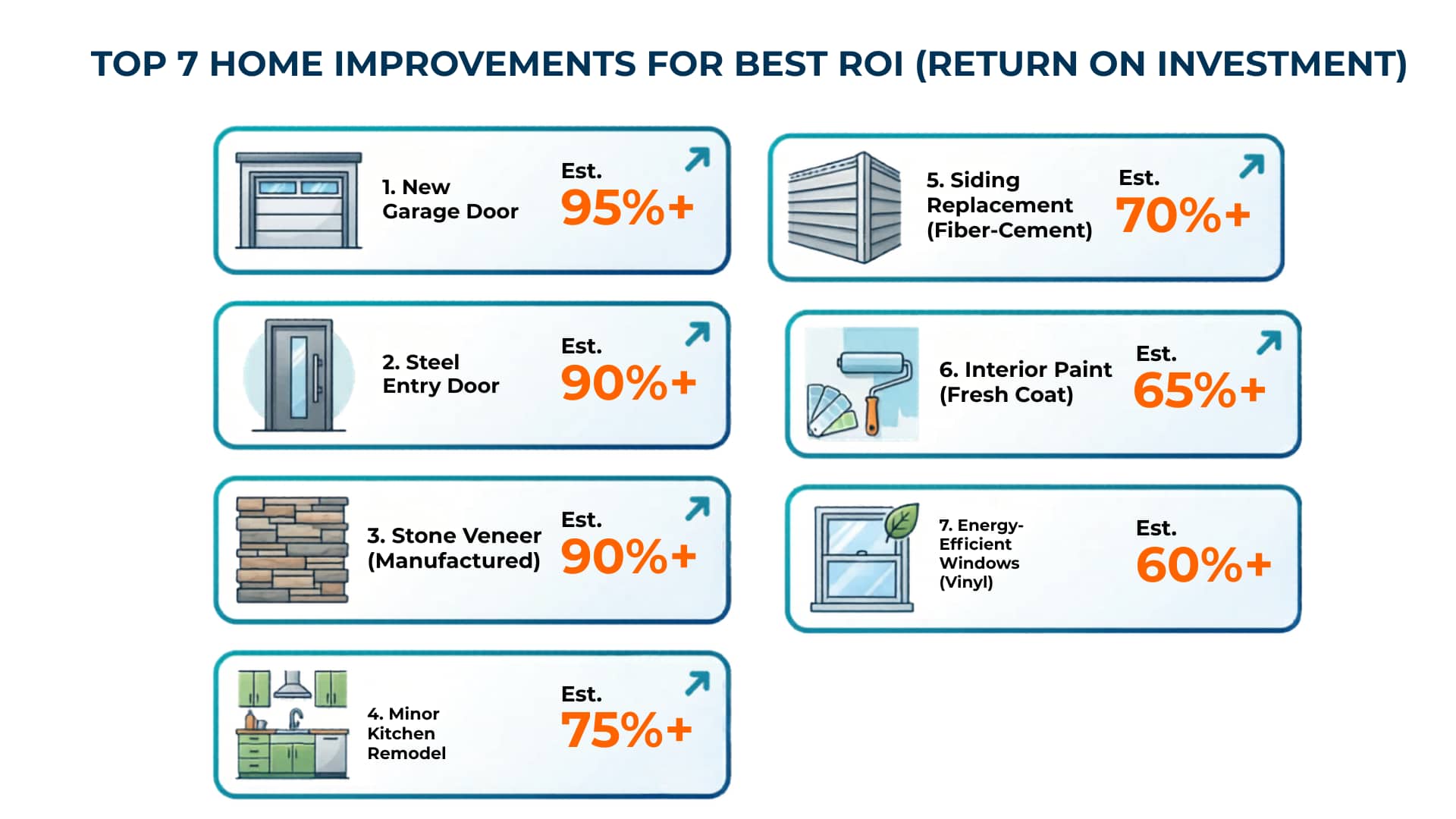
Alt Text: A graphic listing the top 7 home improvements with the best ROI, including garage doors, entry doors, stone veneer, kitchen remodels, siding, paint, and energy-efficient windows.
1. Garage Door Replacement
Replacing an old garage door is one of the most cost-effective upgrades you can make. It instantly boosts curb appeal and often recoups nearly 100% of the cost, offering excellent ROI with minimal investment.
2. Steel Entry Door Replacement
A new steel front door enhances both security and appearance, making a powerful first impression. This affordable improvement offers strong returns, often recouping more than 75% of its cost, especially in areas with high buyer demand.
3. Manufactured Stone Veneer
Installing manufactured stone veneer on the exterior of your home provides an upscale, modern look. This project adds significant value, with some homeowners seeing over 200% of their investment returned at resale.
4. Minor Kitchen Remodel
A minor kitchen remodel, such as updating countertops, appliances, and cabinets, can bring substantial value. Unlike full renovations, these smaller changes can recoup over 80% of the cost while making the space more attractive to buyers.
5. Vinyl or Fiber Cement Siding Replacement
Replacing old siding with vinyl or fiber cement not only improves the aesthetic appeal but also increases energy efficiency. This project is highly valued by buyers and can return a large portion of its cost, typically around 75-80%.
6. Interior Painting
A fresh coat of paint can make your home feel new again, brighten spaces, and create a more modern look. Interior painting is one of the most budget-friendly updates and can offer excellent returns, often recouping the entire investment.
7. Window Upgrades
Energy-efficient windows are an attractive feature for modern homebuyers. They improve insulation, reduce energy bills, and enhance your home’s curb appeal, making this upgrade a solid investment with substantial ROI.
Why Do Exterior Projects Often Return More?
Exterior home improvements tend to offer higher ROI compared to interior projects because they immediately impact a potential buyer’s first impression of the property. Curb appeal is key when selling your home, and exterior updates such as siding, doors, and landscaping can significantly affect how quickly your house sells and at what price.
Key Interior Projects That Yield Positive ROI
When considering interior improvements, certain projects offer a strong return on investment without requiring a full overhaul. These upgrades enhance both the appeal and functionality of your home, making them attractive to potential buyers while improving your living space.
| Project | Estimated ROI | Why It Pays Off |
|---|---|---|
| Minor Kitchen Remodel | 80%+ | Upgrades like new countertops and cabinets are cost-effective but highly impactful. |
| Bathroom Remodel | 60-70% | Adding modern fixtures and redoing tiles can enhance both style and function. |
| Flooring Update | 70-80% | Replacing worn flooring with hardwood or vinyl adds a clean, fresh look. |
| Interior Painting | 100% | A simple coat of neutral paint can transform a room, making it feel larger and fresher. |
| Lighting Fixture Update | 60-75% | Modern lighting fixtures can brighten up a space and add a contemporary touch. |
These interior improvements are valuable investments that can enhance your home’s marketability and deliver a solid return when it’s time to sell.
Home Improvements That Often Don’t Pay Off
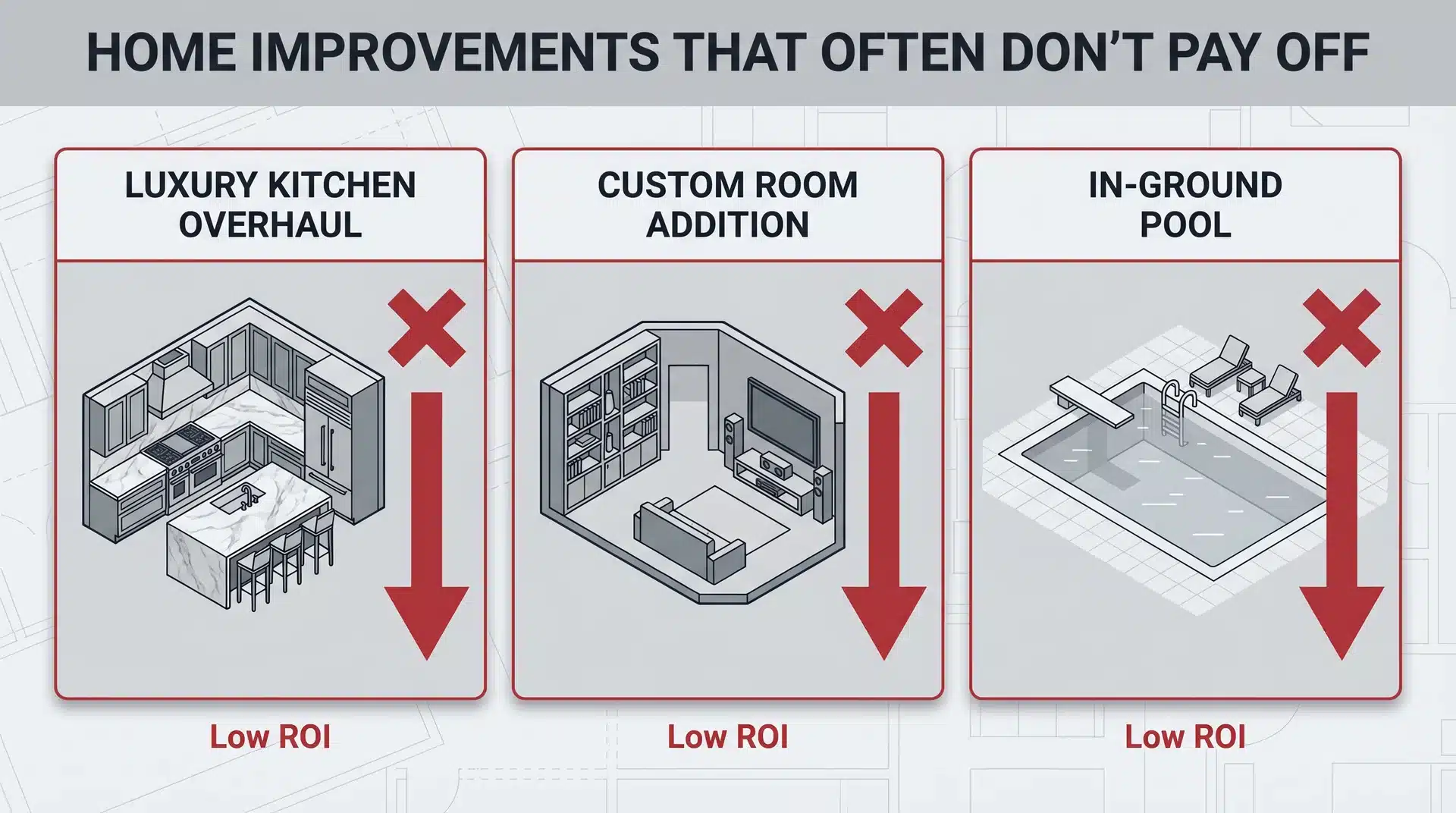
Alt Text: A graphic showing home improvements with low return on investment, including luxury kitchen overhauls, custom room additions, and in-ground pools.
Not all renovations offer a good ROI. Here are a few that you might want to reconsider:
- Luxury Kitchen Overhauls: While a full kitchen remodel might be fun and improve your lifestyle, it can often cost more than it adds in resale value. A minor kitchen remodel tends to yield better results.
- Swimming Pools: Pools can be costly to install and maintain, and they don’t always offer the return you might expect, especially in cooler climates or areas where outdoor living is less popular.
- Over-Personalized Features: Customizations like themed rooms or overly unique features might make your home stand out, but they can also limit your pool of potential buyers.
How to Maximize ROI on Your Home Improvement Projects
To maximize ROI on your home improvement projects, focus on upgrades that appeal to the broadest range of buyers while staying within your budget.
Prioritize improvements that enhance both functionality and curb appeal, such as replacing outdated windows, adding new siding, or making minor kitchen or bathroom updates.
Choose projects known to offer high returns, such as garage door replacements or energy-efficient upgrades. Ensure the quality of materials and workmanship to avoid diminishing returns.
Additionally, consult with real estate professionals to understand what’s most in demand in your area, and time your improvements strategically based on local market trends.
By carefully planning and executing your projects, you can increase your home’s value while staying within budget.
The Bottom Line
Maximizing ROI in home improvement projects requires careful planning and smart choices.
Focus on upgrades that improve curb appeal, energy efficiency, and overall functionality, as these tend to offer the best returns. Prioritize projects with broad buyer appeal and alignment with market trends.
By selecting the right renovations and ensuring quality workmanship, you can boost your home’s value without overspending.
Whether you’re preparing to sell or simply upgrading for personal enjoyment, investing wisely in home improvements can lead to lasting financial benefits.