
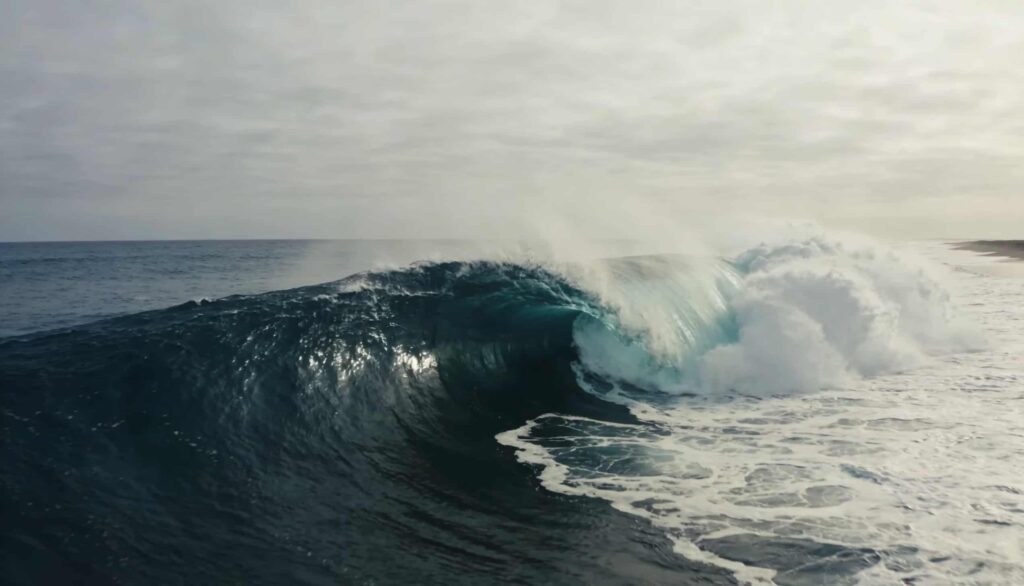
Most people think of tsunamis as just very big waves. They are not. A tsunami is a series of fast-moving walls of water that can cross an entire ocean without losing much energy.
One wave can be the height of a 10-story building by the time it reaches shore.
What makes these facts about a tsunami so striking is how little most of us actually know about them. You will read things here that school textbooks skip.
From the fastest recorded wave speed to a 10-year-old girl who used her geography lesson to save nearly 100 lives, these interesting facts about tsunamis are worth knowing.
What Is a Tsunami?
A tsunami is not a single wave but a series of large ocean waves, called a wave train.
These waves are created when a large volume of water is suddenly displaced, most often by an underwater earthquake, volcanic eruption, or landslide beneath the sea. The word “tsunami” comes from Japanese, where “tsu” means harbor and “nami” means wave.
Unlike regular wind-driven waves, a tsunami carries energy through the entire depth of the ocean, which is why it can travel thousands of miles and still arrive with enough force to level entire coastal towns.
30 Facts About Tsunamis
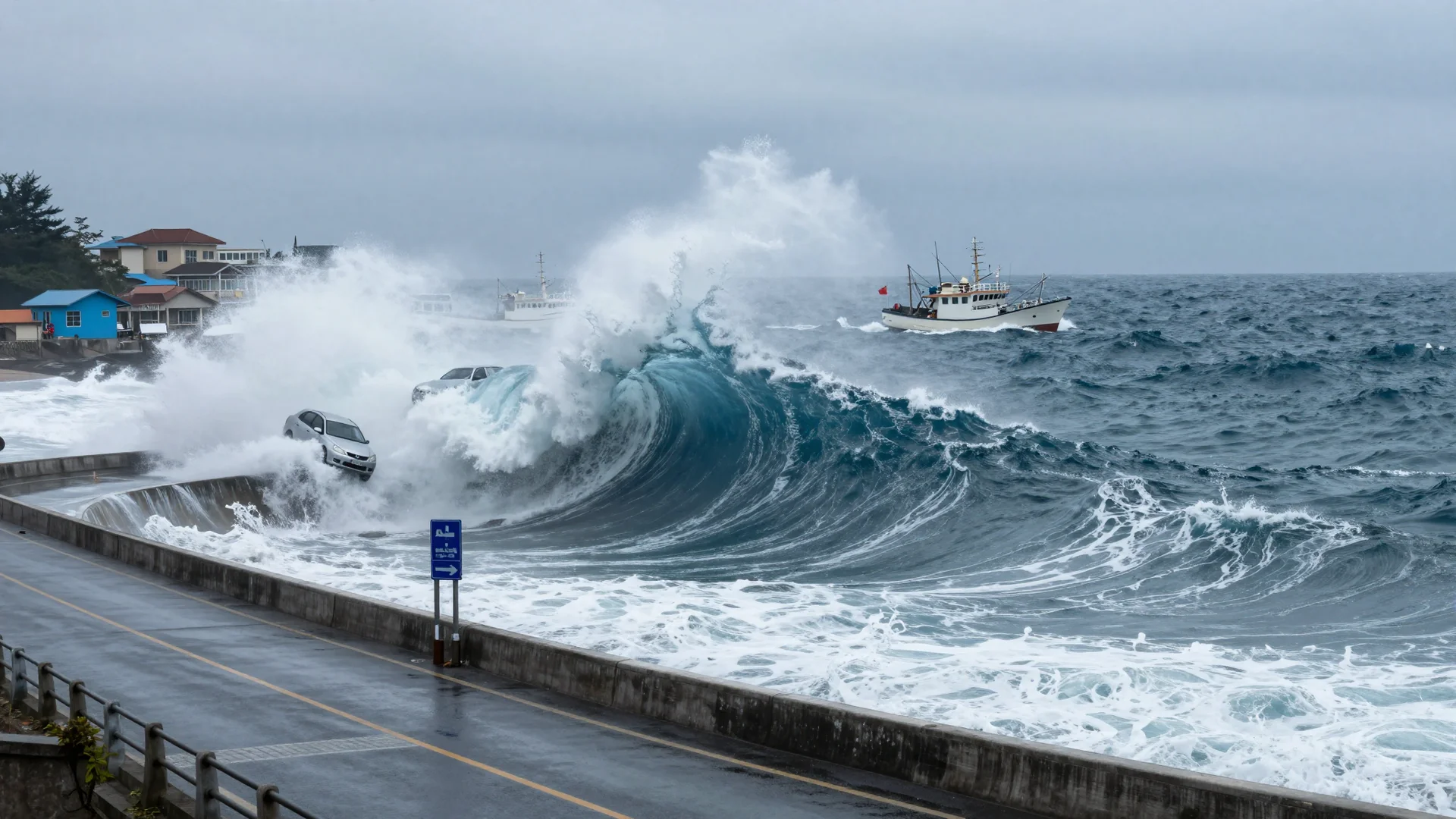
Alt Text: A massive tsunami wave crashes against a coastal sea wall near a road with cars and buildings under a grey sky.
These interesting facts about tsunamis cover science, history, survival, and topics most people have never heard of before. Read through all 30; a few of them might genuinely surprise you.
- Tsunamis travel at jet-plane speed. In deep water, a tsunami can move at around 500 miles per hour (805 km/h). That is roughly the speed of a commercial airplane.
- They are almost invisible in the open ocean. In deep water, the wave may be less than one foot tall. Ships passing over one would not feel it at all.
- The wavelength is enormous. A tsunami can have a wavelength of up to 300 miles (482 km). A typical ocean wave has a wavelength of around 100 feet. The difference is staggering.
- Wave periods can last hours. The time between one tsunami wave and the next can be anywhere from a few minutes to a full hour. This makes them far more dangerous than a single breaking wave.
- About 80% of tsunamis occur in the Pacific Ocean’s Ring of Fire. This is where most of the world’s active volcanoes and fault lines are concentrated.
- The first wave is rarely the worst. Successive waves in a tsunami train often grow stronger, not weaker. Many people who returned to shore after the first wave were caught by the second.
- A tsunami can flood hundreds of meters inland. The fast-moving water can strip beaches bare, knock down buildings, and push inland well past where most people think is safe.
- They strip beaches of years of accumulated sand. The erosion a single tsunami causes can undo decades of natural coastal buildup in a matter of minutes.
- The word “tsunami” was first used in English after the 1960 Chile earthquake. Before that, English speakers called them tidal waves, which is inaccurate since they have nothing to do with tides.
- The first written mention of a tsunami dates to 426 BC. Greek historian Thucydides described one in “History of the Peloponnesian War,” connecting unusual ocean behavior to an underwater earthquake.
- The largest tsunami wave ever recorded was 1,720 feet (524 meters) tall. It struck Lituya Bay in Alaska on July 9, 1958, after a massive landslide dropped into the bay.
- The 2004 Indian Ocean tsunami had the energy of over 23,000 atomic bombs. It hit 14 countries and killed around 250,000 people. About one-third of the dead were children.
- The 2011 Tohoku earthquake and tsunami in Japan cost approximately $232 billion. It is considered the most expensive natural disaster in recorded history.
- The 2004 tsunami uncovered an ancient lost city. The receding water off the coast of Mahabalipuram, India, revealed centuries-old sculptures that had been submerged for generations.
- Japan has warning markers over 600 years old. Stone tablets along the Japanese coast warn residents not to build homes below a certain elevation. Some communities still follow them.
- Japan spends about $20 million per year on its tsunami warning system. The country also continues to build massive concrete walls along vulnerable coastlines.
- A megatsunami is a category entirely different from the others. These are caused by giant landslides or volcanic island collapses. Initial wave heights can be measured in hundreds of meters.
- The ocean sometimes pulls back before a tsunami hits. This is called a drawback. The seafloor becomes briefly visible, and fish are left stranded on dry land. It is a warning sign, not a curiosity.
- Tsunamis can travel up rivers and streams. The wave does not stop at the coastline. It can move upstream through waterways connected to the ocean.
- Mangrove forests and coral reefs slow tsunamis down. These natural barriers absorb some of the wave’s energy before it reaches populated areas. Their removal has made some coastlines more vulnerable.
- Hawaii expects at least one significant tsunami per year. Larger wave trains arrive roughly every six to seven years. Hawaii is one of the highest-risk areas in the United States.
- During World War II, researchers explored using tsunamis as weapons. The concept, sometimes called a “tsunami bomb,” was studied but never successfully developed.
- A tsunami crossed the Indian Ocean and still killed people in Africa. The 2004 event traveled nearly 5,000 kilometers from its origin near Sumatra and reached the coast of Africa with enough force to cause deaths and property destruction.
- After the 2011 tsunami in Japan, over 5 million tons of debris entered the ocean. Parts of that debris washed up on North American shores years later.
- Animals may have sensed the 2004 tsunami before it hit. In Sri Lanka, very few animal bodies were found after the disaster. Many animals reportedly moved inland before the waves arrived. Scientists still do not fully understand why.
- Geological features can wildly change a tsunami’s impact. Reefs, bays, river mouths, and underwater formations can reduce wave height in one location while leaving a nearby beach completely unprotected.
- A tsunami wave does not break the way a normal wave does. Rather than curling and crashing, it behaves more like a fast-moving flood that keeps rising.
- The Pacific Tsunami Warning System was established in 1949. It uses seafloor sensors and DART buoys to detect seismic activity and monitor ocean conditions in real time.
- In 1755, a tsunami killed around 90,000 people in Lisbon, Portugal. The city was already devastated by an earthquake, and the tsunami came while survivors were near the harbor.
- A 10-year-old girl used her geography lesson to save nearly 100 lives in 2004. Tilly Smith recognized the warning signs on a beach in Thailand and alerted her father and hotel security in time to evacuate. That beach was one of the few in Phuket with no reported fatalities.
How Does a Tsunami Form?
Tsunamis begin when something suddenly moves a massive amount of water. The most common cause is an underwater earthquake, where tectonic plates shift and part of the ocean floor drops or rises sharply.
When that happens, the water above it has to go somewhere. It spreads outward in all directions as a series of waves carrying enormous energy.
| Stage | What Happens |
|---|---|
| Trigger event | An earthquake, landslide, or eruption displaces the ocean floor |
| Wave generation | Water above the disruption spreads outward in all directions |
| Deep ocean travel | Waves move at up to 500 mph, barely visible at the surface |
| Approaching shore | Water gets shallower, waves slow down, and grow taller |
| Landfall | Wave height surges, water floods inland |
As the wave moves into shallower water near the coast, physics takes over. The bottom of the wave slows down while the top keeps moving. The wave compresses and grows in height.
What was barely a ripple in the deep ocean becomes a wall of water near shore. Some tsunamis rise to 30 meters or more before they hit land.
The Biggest and Deadliest Tsunamis in History
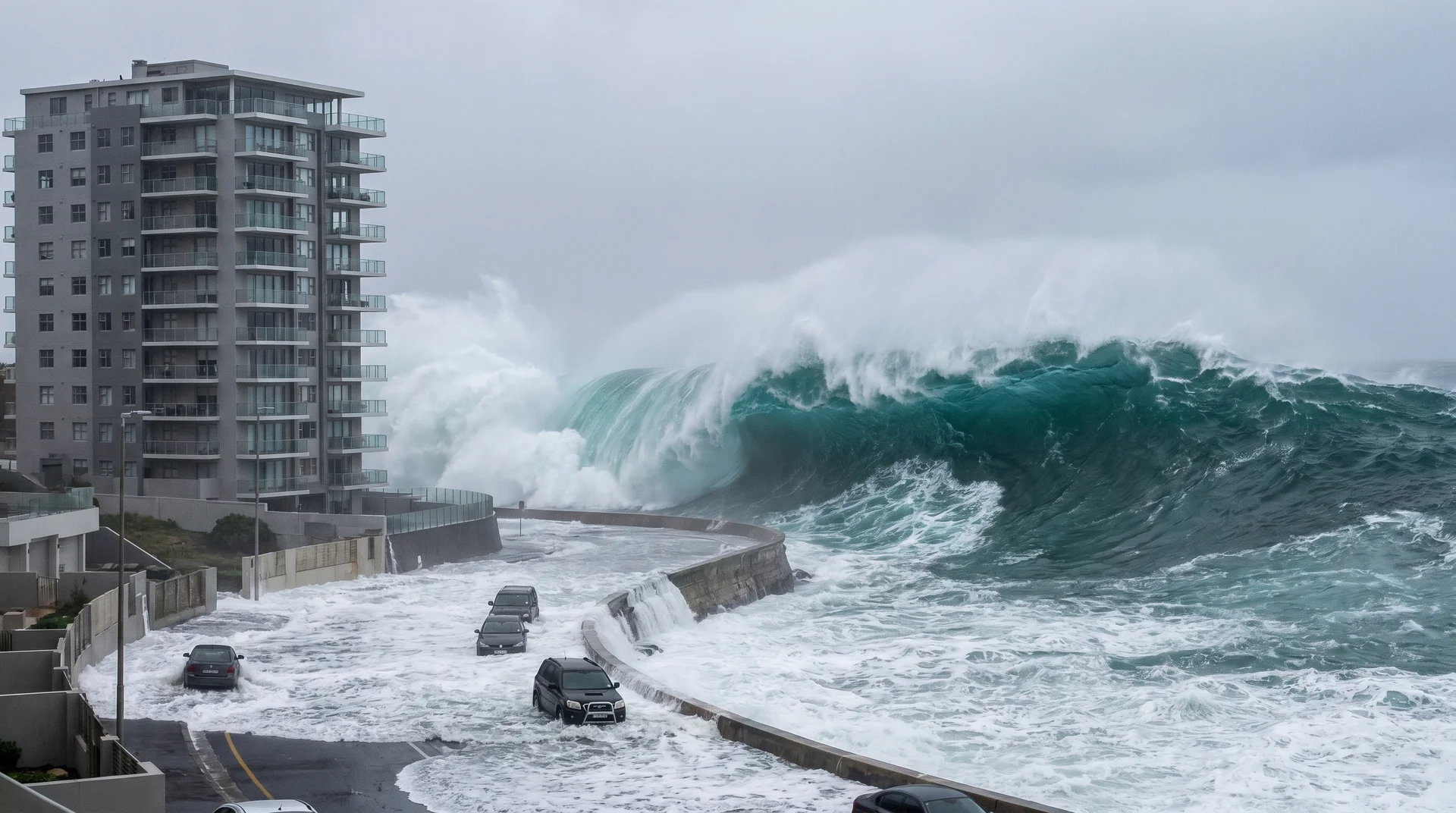
Alt Text: A massive tsunami wave crashes against a coastal sea wall near a road with cars and buildings under a grey sky.
The 2004 Indian Ocean tsunami remains the deadliest on record, killing between 227,000 and 280,000 people across 14 countries in a single day.
The 2011 Tohoku tsunami in Japan caused the most financial damage, estimated at around $232 billion, and triggered a nuclear crisis at Fukushima.
The 1755 Lisbon tsunami killed around 90,000 people in a city already shattered by an earthquake. The 1960 Chilean earthquake, the most powerful ever recorded at magnitude 9.5, sent waves that reached Japan.
The record for the tallest wave belongs to Lituya Bay, Alaska, where a 1958 landslide-triggered wave reached 1,720 feet, the highest ever measured in modern history.
How to Stay Safe During a Tsunami
Knowing what to do before a wave arrives can make the difference between surviving and not. Here are the key steps to follow.
- Learn your area’s risk level. Check with your local emergency management office to find out if you are in a tsunami hazard zone. Many coastal areas have evacuation maps that are worth printing out and keeping at home.
- Know the natural warning signs. If the ground shakes strongly near the coast, the sea suddenly pulls back and exposes the seafloor, or you hear a roaring sound like a train or jet engine coming from the water, move immediately. Do not wait for an official alert.
- Move to high ground without delay. Head to at least 100 feet above sea level or at least one mile inland. The goal is elevation and distance from the shoreline, not just distance.
- Do not go down to watch. Every year, people are killed because they went to the shore to watch a wave come in. A tsunami is not something you can outrun once it is visible.
- Stay put until you get the all-clear. The first wave is rarely the only one. Danger can last for several hours after the initial wave. Wait for official confirmation before returning to low-lying areas.
- After the water recedes, stay cautious. Floodwaters may carry sewage, chemicals, and bacteria. Avoid touching them. Check your home for structural damage before going inside, and do not use gas appliances until you have confirmed there are no leaks.
Conclusion
Tsunamis are one of the most powerful forces on Earth. They travel at aircraft speeds, cross entire oceans without slowing, and can arrive with almost no warning in some parts of the world.
These interesting facts about tsunamis are not just interesting because the numbers are large. They matter because knowing them could change what you do if you ever find yourself near the coast during an earthquake.
Tilly Smith was 10 years old when she paid attention in class. That knowledge saved nearly 100 lives.
If you found these facts about a tsunami useful, share this post with someone who lives near the coast. It might be worth more than they expect.
Frequently Asked Questions
Who Was the 10-Year-Old Girl in the 2004 Tsunami?
Tilly Smith, a 10-year-old British girl vacationing in Phuket, Thailand, recognized the warning signs from a geography lesson and helped evacuate nearly 100 people before the wave hit.
What Animals Can Sense a Tsunami?
Elephants, dogs, and flamingos have been reported to move inland before a tsunami hits, likely because they detect low-frequency seismic vibrations that humans cannot feel.
What Is the Number One Worst Natural Disaster?
By death toll, the 1931 China floods are the deadliest natural disaster on record, while the 2004 Indian Ocean tsunami remains the deadliest tsunami ever.
Do Tsunamis Have a Smell?
Some survivors report a sulfur or rotten-egg smell just b