


Ever wonder why some kids listen respectfully while others constantly push back? The difference often comes down to parenting style.
Authoritative parenting strikes a balance that many parents struggle to find. It’s not about being your child’s best friend or ruling with an iron fist.
This approach combines clear rules with genuine warmth, creating kids who are both responsible and confident.
In this guide, you’ll learn what makes authoritative parenting work, see real examples you can use today, and understand how it compares to other styles.
We’ll also cover practical tips, common challenges, and help you decide if this approach fits your family.
What is Authoritative Parenting?
Authoritative parenting is a style that balances clear rules with emotional support. Parents set firm expectations but also show warmth and understanding.
This approach helps children grow into independent thinkers while still respecting boundaries. The key elements include consistency in rules, open talks between parents and kids, and giving children room to make choices.
Parents guide rather than control. They listen to their child’s perspective while maintaining structure. This style builds trust and teaches responsibility at the same time.
Key Characteristics of Authoritative Parenting

What makes authoritative parenting stand out from other styles? It combines several important traits that work together to raise confident and capable children.
- Clear and Consistent Expectations: Parents set rules that are easy to understand and apply them the same way each time, with some room for special situations.
- Warmth and Nurturance: They show love and care while still holding firm to the standards they have set.
- Open Communication: Both parents and children feel safe sharing their thoughts and feelings without fear of judgment.
- Encouragement of Independence: Kids learn to think for themselves, make choices, and handle problems on their own.
- Fair Discipline: Consequences are logical and meant to teach lessons, not just to punish bad behavior.
Pros and Cons of Authoritative Parenting
Like any parenting style, authoritative parenting has both benefits and challenges. Here’s what to consider.
| Pros | Cons |
|---|---|
| Emotional Regulation: Kids learn to handle stress and frustration in healthy ways. | Time-Consuming: Staying consistent with rules and support takes ongoing effort. |
| Social Competence: Children develop strong social skills and resolve conflicts well. | Finding Balance: Getting the mix of warmth and structure right takes practice. |
| Academic Success: Self-discipline and responsibility lead to better school performance. | Requires Patience: This style needs lots of emotional energy, especially during tough behaviors. |
| Self-Esteem and Confidence: Kids feel good about themselves through praise and feedback. | High Expectations: Sometimes expectations can overwhelm kids if they need more space to explore. |
The Takeaway: The benefits often outweigh the challenges, but this style works best when parents commit to the ongoing effort it requires.
Examples of Authoritative Parenting in Action

Understanding the theory is one thing, but seeing how it works in real life makes it easier to apply. Here are some practical examples of authoritative parenting in everyday situations.
1. Setting Limits with Compassion
A parent tells their teenager they need to be home by 10 PM on school nights. Instead of just giving an order, they explain that this rule keeps them safe and ensures they get enough rest. The parent also listens when the teen wants to discuss special occasions.
Key Elements:
- The rule is clear and firm
- The reason behind it is explained
- The teen’s feelings are heard and respected
- Flexibility is shown for special events
2. Balancing Freedom and Responsibility
Parents let their 10-year-old pick between soccer, art class, or piano lessons. Once the child makes a choice, the parents explain that they need to stick with it for at least one season. If the child wants to quit after two weeks, parents talk through the feelings but remind them about commitment.
Key Elements:
- The child gets to make their own choice
- Parents set expectations about follow-through
- Feelings are acknowledged, but rules remain
- Life lessons about commitment are taught
3. Emotional Support and Problem Solving
When a child comes home upset about a friend ignoring them at school, the parent sits down and really listens. They ask questions like “How did that make you feel?” and “What do you think might be going on with your friend?” Instead of jumping in to fix everything, they guide the child to think through possible solutions.
Key Elements:
- The parent gives full attention and listens actively
- Questions help the child think critically
- Emotions are validated and respected
- A child learns to solve problems independently
4. Open Discussion of Expectations
Before a family vacation, parents sit down with their kids to talk about the trip rules. They explain why certain behaviors matter, like staying together in crowded places or being respectful at restaurants. Parents also ask for the kids’ input on activities and meal choices.
Key Elements:
- Rules are discussed before situations arise
- Reasons are provided for each expectation
- Children’s opinions are valued and included
- Mutual respect is built through dialogue
Implementing Authoritative Parenting Techniques
Ready to put authoritative parenting into practice? Here are specific techniques you can start using today with your children.
- Positive Reinforcement: Notice and praise good behavior, like when your child finishes homework on their own, to encourage them to repeat it.
- Consistency in Discipline: Apply the same rules and consequences every time so your child knows what to expect and learns accountability.
- Encouraging Problem-Solving: Ask questions like “What do you think would happen if we tried this?” instead of just giving them the answer.
- Active Listening: Give your full attention when your child talks about their feelings, and let them know you understand before offering advice.
- Offering Choices: Let your child pick between options you approve of, like choosing their outfit or snack, to help them practice making decisions.
How Authoritative Differs from Other Parenting Styles
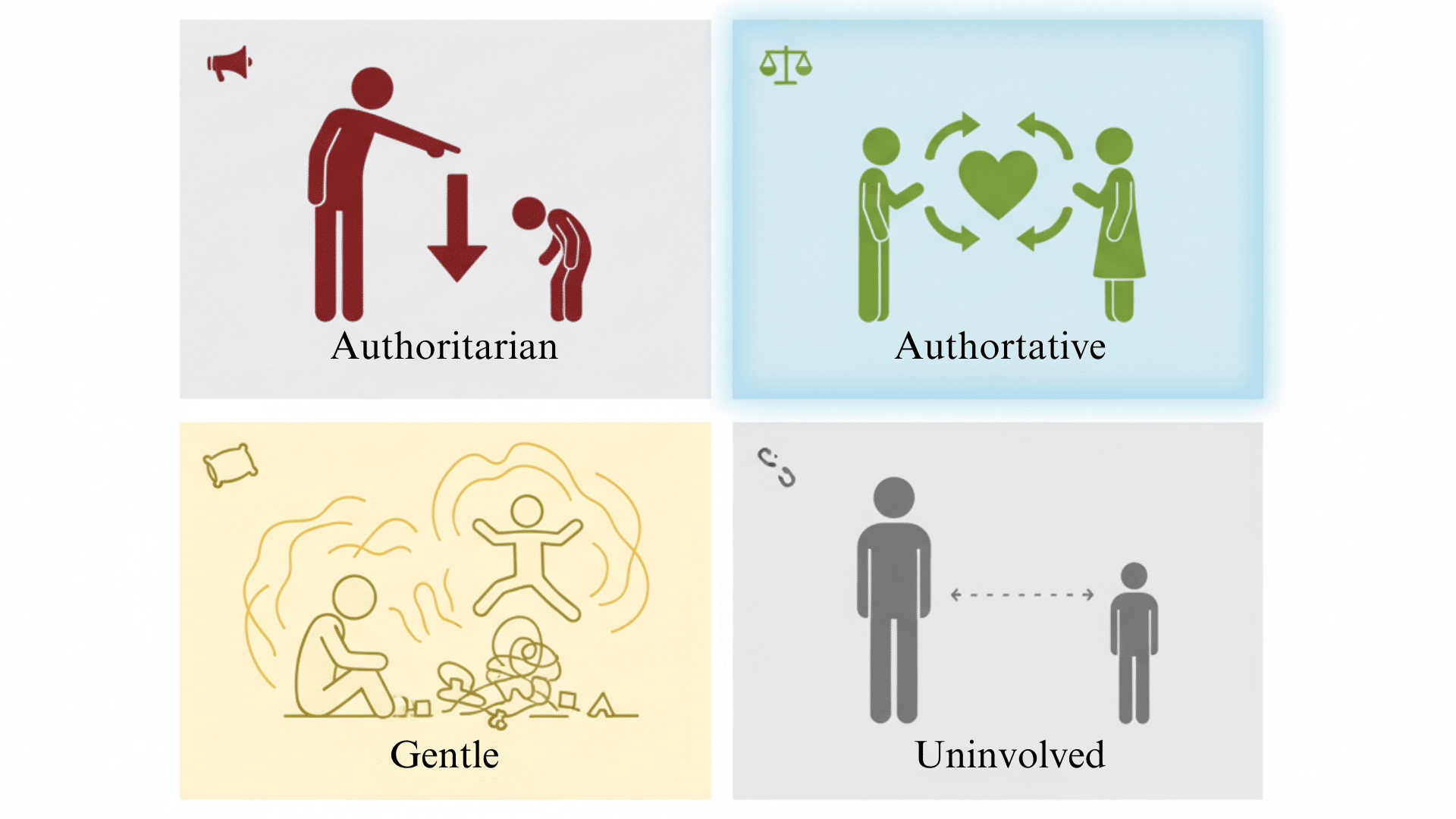
Not all parenting styles are the same. Here’s how authoritative parenting compares to other common approaches.
| Parenting Style | What It Looks Like | Key Difference |
|---|---|---|
| Authoritarian | Strict rules, no discussion, punishment-focused | Demands obedience vs. mutual respect |
| Permissive | High warmth, few rules, avoids limits | Lacks structure vs. balanced boundaries |
| Uninvolved | Detached, minimal guidance or support | No involvement vs. engaged parenting |
| Gentle Parenting | Empathy-focused, avoids all punishment | No consequences vs. fair discipline |
Authoritative parenting balances warmth with structure, avoiding the extremes of other styles.
Common Challenges of Authoritative Parenting
Even the best parenting approach comes with its own set of challenges. Here are some common obstacles parents face when practicing this style.
Consistency Over Time
Life gets busy and stressful, making it hard to stick to the same rules every day. Parents may feel too tired to follow through with consequences or have meaningful conversations after a long day at work.
Striking the Right Balance
What works for a toddler won’t work for a teenager, so parents constantly adjust their approach. Finding the sweet spot between being supportive and setting firm boundaries takes practice and often involves some trial and error.
Overcoming Parenting Differences
When parents, grandparents, or caregivers have different views on discipline, kids get mixed messages. One adult might be stricter while another is more lenient, which confuses children and weakens the consistency this style needs to work well.
Tips for Practicing Authoritative Parenting Effectively

Ready to improve your authoritative parenting skills? Here are practical tips to help you succeed.
- Be Calm and Patient: Stay composed when problems come up and avoid reacting in the moment, showing your child how to handle emotions well.
- Set Clear, Realistic Expectations: Know what your child can handle at their age and create goals that push them forward without causing stress.
- Empower Your Child: Give them chances to make decisions about their clothes, snacks, or daily schedule within the limits you’ve set.
- Model the Behavior You Expect: Show respect, kindness, and responsibility in your own actions so your child learns by watching you.
- Be Flexible: Adjust your approach based on what’s happening and remember that every child has different needs.
Is Authoritative Parenting Right for My Family?
Authoritative parenting works best for families that value independence, respect, and open communication.
If you want to raise confident kids who can think for themselves and handle responsibility, this style fits well.
Every child is different, though, so you’ll need to adjust your approach based on your child’s personality and age. Don’t worry if things don’t work perfectly right away.
Try different strategies and see what feels right for your family. Some techniques will click immediately, while others might need tweaking.
The key is being willing to learn and grow alongside your children.
The Bottom Line
Authoritative parenting offers a balanced approach that benefits both parents and children.
By combining clear expectations with emotional warmth, you create an environment where kids learn responsibility while feeling loved and supported.
The examples and techniques we’ve covered show that this style isn’t about perfection. It’s about consistent effort and adapting to your child’s needs.
Start small. Pick one or two techniques from this guide and try them this week. Notice how your child responds. Remember, every family is different, so adjust what doesn’t feel right.
What’s your biggest parenting challenge right now? Share your thoughts in the comments below. We’d love to hear what works for your family.