
Your baby is finally ready for solid foods. Now comes the big question: do you go with baby-led weaning or stick to purees?
Every parent has an opinion. Your pediatrician has a preference. And the internet has about a million different answers.
Here’s the truth: both methods work. Both are safe. And both have real benefits and real drawbacks. What matters most is finding what fits your baby and your family.
In this blog, you will get a side-by-side look at baby-led weaning vs purees, covering differences, benefits, risks, and what experts actually recommend. No fluff, just clear answers.
What Is Baby Led Weaning?
Baby-led weaning (BLW) is a feeding approach in which babies feed themselves soft finger foods from the start. There is no spoon, no mashed food, and no parent controlling each bite.
You place soft food pieces on the tray, and your baby picks them up, chews, and swallows at their own pace. The baby is in charge of how much they eat.
When to Start Baby Led Weaning:
- Can sit upright with little or no support
- Shows interest in food at family mealtimes
- Has lost the tongue-thrust reflex (does not automatically push food out)
- Is around 6 months old (not before 4 months)
Baby Led Weaning: Benefits and Risks
| Benefits | Risks |
|---|---|
| Builds self-feeding skills early | Higher mess and food waste |
| Supports healthy hunger and fullness cues | Gagging can worry new parents |
| Exposes the baby to more textures and flavors | Risk of not getting enough iron without planning |
| Encourages positive feelings toward food | Harder to track how much the baby actually eats |
| Saves time, baby eats what the family eats | Not ideal for babies with developmental delays |
| Builds fine motor skills and hand-eye coordination | Needs close supervision at every meal |
What Are Purees?
Purees are smooth, blended foods that a parent or caregiver spoons into the baby’s mouth. You cook and blend fruits, vegetables, or grains into a soft paste, then feed it to your baby one spoonful at a time.
The texture starts very smooth and gets thicker and chunkier as your baby grows and gets more comfortable eating.
When to Start Puree Feeding:
- Shows signs of readiness, sitting up, showing interest in food, and no tongue-thrust reflex
- Is between 4 and 6 months old (many pediatricians recommend waiting until 6 months)
- Can hold their head steadily without help
Purees: Benefits and Risks
| Benefits | Risks |
|---|---|
| Easier to control how much the baby eats | Baby does not learn to self-feed as quickly |
| Lower perceived choking risk for parents | May slow down texture acceptance if used too long |
| Good option for babies with developmental delays | Babies do not control their own hunger and fullness |
| Easy to add iron-rich ingredients like fortified cereal | Transition to solid foods may take longer |
| Simple to introduce one ingredient at a time | Can create dependency on spoon feeding |
| Works well for premature babies or those with medical needs | Requires extra time to prepare or extra money to buy |
Baby Led Weaning vs Purees: Key Differences
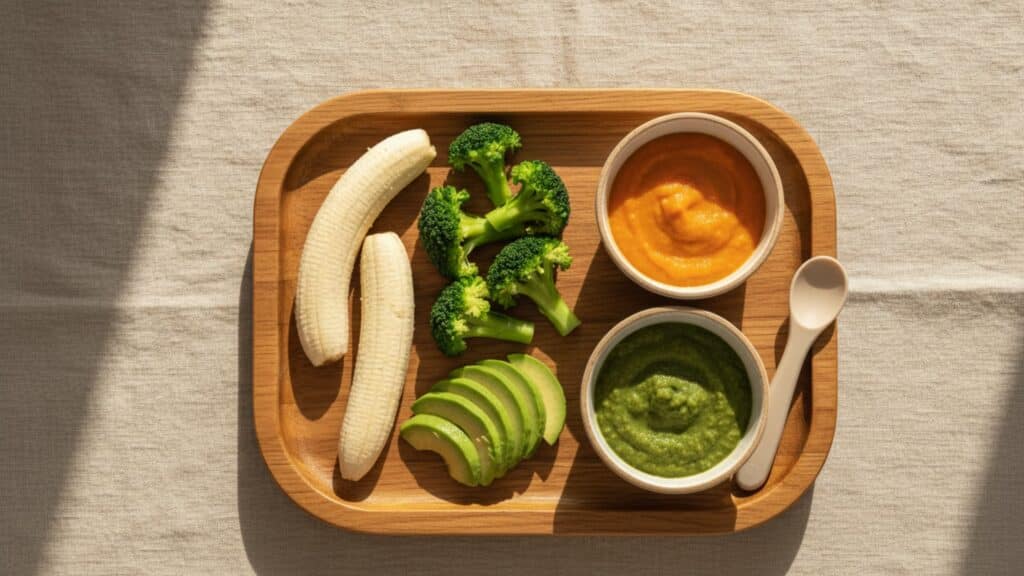
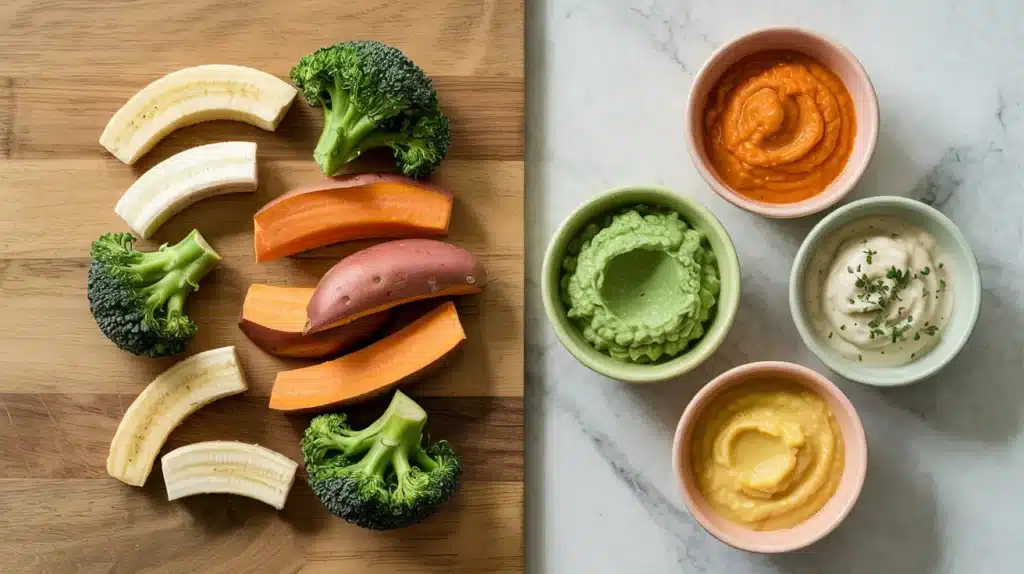
Both methods share the same goal: helping your baby become comfortable with solid foods. But the way they get there is very different. Here are five key differences that every parent should know before choosing a method.
1. Who Controls the Feeding
With baby-led weaning, your baby is in charge. They pick up the food, decide how much to eat, and stop when they are full. With purees, the parent is in charge.
You decide how much goes on the spoon and when the meal ends. This is one of the biggest differences between the two methods.
BLW builds early independence around food, while purees put more control in the parent’s hands.
2. Food Texture and Preparation
Baby-led weaning uses soft, whole-finger foods cut into strips or pieces that are easy for small hands to grip.
Purees use smooth, blended food with no chunks. As your baby grows, puree textures should get thicker and lumpier.
With BLW, the goal from day one is real food in a safe, soft form. Getting the texture right is key for both methods.
3. Starting Age
Both methods are generally started around 6 months of age, when most babies show signs of readiness. However, some doctors allow purees to begin as early as 4 months in specific cases.
Baby-led weaning should never start before 6 months, as babies need the muscle strength and coordination to handle solid food safely. When in doubt, your baby’s pediatrician is the best guide.
4. Skill Development
Baby-led weaning supports fine motor development from the very first meal. Babies practice gripping, moving food to their mouths, and chewing, all on their own.
Puree feeding does not offer the same early skill-building opportunity. Babies who eat purees learn self-feeding later, when they transition to finger foods.
If early independence around food matters to you, BLW gives your baby that chance sooner.
5. Transition to Table Foods
Babies who start with BLW often move to table foods more smoothly. They are already used to a variety of textures, shapes, and flavors.
Babies raised on purees sometimes take longer to accept lumpy or chunky foods, especially if purees were used past 10 months.
Experts recommend introducing thicker textures between 8 and 10 months, regardless of the method you use.
| Can You Do Both?
Yes, you can do both. Many parents combine baby-led weaning and purees in the same meal by offering soft finger foods plus a preloaded spoon of puree, then letting the baby decide what to try first. |
Best First Foods for Baby Led Weaning and Purees
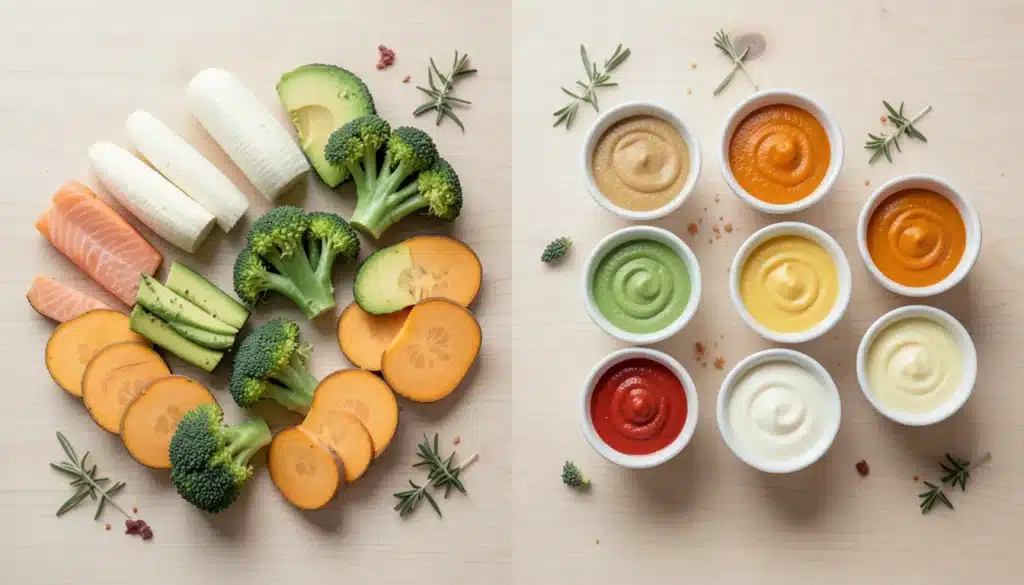
Starting solids is a big step for your baby. The foods you offer first can set the tone for how comfortable your baby gets with eating. Here is what works well for each method.
Best First Foods for Baby Led Weaning
Stick to soft, easy-to-grip foods that your baby can manage safely:
- Ripe banana strips: soft, easy to hold, naturally sweet
- Steamed broccoli florets: a perfect size for little hands to grip
- Soft avocado slices: smooth texture, full of healthy fats
- Sweet potato wedges: soft when cooked, naturally filling
- Soft scrambled eggs: a great iron-rich protein option
- Flaked salmon or shredded chicken: easy to chew, high in nutrients
Best First Puree Foods for Babies
Start with single-ingredient purees and introduce one new food every 3 to 5 days:
- Sweet potato puree: mild flavor, easy to digest
- Pea puree: high in protein and iron
- Apple or pear puree: naturally sweet, great starter fruit
- Butternut squash puree: smooth texture, gentle on the stomach
- Iron-fortified oatmeal: mixed with breast milk or formula for added nutrition
- Carrot puree: easy to blend, widely loved by babies
| What Do Pediatricians and Nutritionists Say?
The American Academy of Pediatrics (AAP) recommends starting solid foods at around 6 months of age, but does not officially favor one method over the other. Pediatric nutritionists focus more on what your baby eats than how it is served. The priority is making sure your baby gets enough iron, zinc, and calories, and both methods can support that when done thoughtfully. |
Signs Your Baby Is Ready for Solid Foods
Starting too early can cause problems. Starting too late can slow down skill development. Watch for these clear signs before introducing any solid food, no matter the method you choose.
Getting the timing right makes a big difference. Look for a combination of these signs, not just one or two:
- Sits up with little support and holds their head steady without wobbling
- Shows interest in food by watching others eat or reaching for food on your plate
- Has lost the tongue-thrust reflex and no longer automatically pushes things out of their mouth
- Opens their mouth when food comes near
- Has doubled their birth weight and weighs at least 13 pounds
- Is around 6 months old, and most health organizations agree that this is the right time to start
Common Mistakes Parents Make with Both Methods
Even with the best intentions, it is easy to make small mistakes when starting solids. Here are the most common ones for each method, and what to do instead.
| Baby Led Weaning Mistakes | Puree Mistakes |
|---|---|
| Offering round or hard foods like whole grapes or raw carrots | Keeping the baby on purees past 10 months without moving to textures |
| Starting before the baby can sit upright without help | Adding sugar, salt, or honey to homemade purees |
| Panicking during normal gagging (gagging is not choking) | Not increasing the texture thickness as the baby grows |
| Not offering iron-rich foods from the start | Forcing the spoon when the baby turns away or closes their mouth |
| Giving up too soon because of the mess | Skipping the step of letting the baby hold or explore the spoon |
| Not supervising meals closely | Relying only on store-bought pouches without variety |
Knowing what to avoid saves you time, stress, and a lot of cleanup. These mistakes are more common than you think.
Baby-Led Weaning vs. Purees: Which Is Safer?
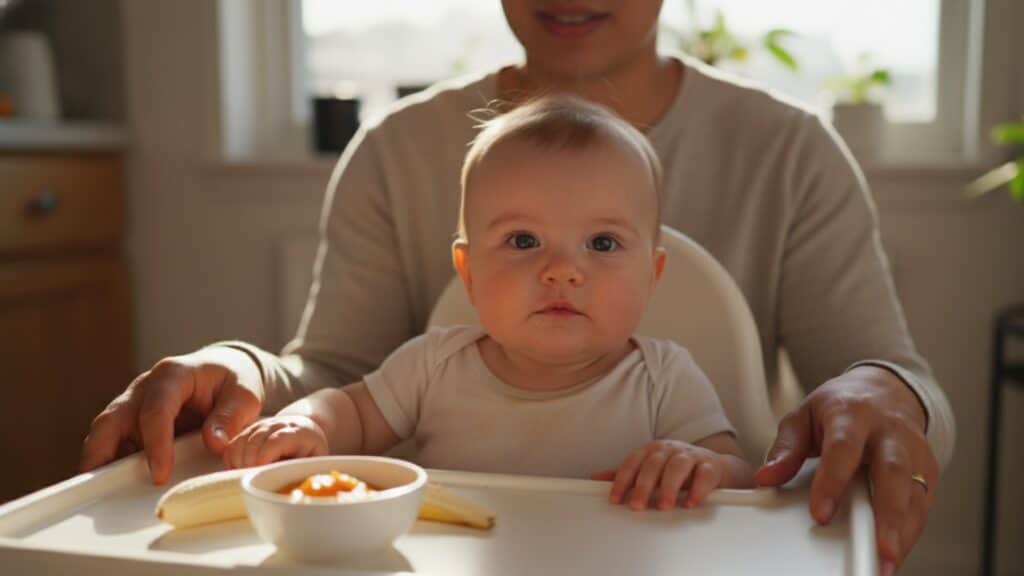
Both methods are safe when done correctly. Baby-led weaning is safe when parents prepare foods in the right shape and texture, supervise every meal, and know the difference between gagging and choking.
Purees are also safe, but can create issues if babies stay on smooth textures for too long. The safest choice is the one that matches your baby’s developmental stage and your comfort level as a parent.
If your baby was born early or has any health concerns, always check with your pediatrician before starting either method.
To Sum It Up
Both baby-led weaning and purees have a place in feeding your baby well.
Neither is perfect, nor is it wrong. The right method depends on your baby’s development, your family’s routine, and what feels manageable for you every day.
Many parents find that a mix of both works best. Start with whatever feels most comfortable, watch your baby’s cues, and adjust as you go.
What matters most is that your baby is eating safely, growing well, and building a healthy connection with food.
Still not sure which to pick? Talk to your baby’s pediatrician. They know your baby best and can guide you toward the right fit.
Have you tried baby-led weaning, purees, or both? Share your experience in the comments below!