

Nobody tells you that the moment you find out you’re expecting, your brain starts running a permanent to-do list.
Nursery, finances, car seats, doctors. It gets long fast.
And most advice online either overwhelms you with gear lists or skips the parts that actually trip new parents up, like the money side, the emotional weight, and the conversations you need to have before the baby even arrives.
This guide covers how to prepare for a baby in a way that’s actually useful. We’ll go section by section, so nothing important gets missed.
When Should You Start Preparing for a Baby?
The second trimester is the sweet spot for most parents. Morning sickness usually eases around week 14, giving you the energy to start ticking things off the list.
Use these weeks for the bigger tasks: reviewing your health insurance, choosing a pediatrician, and looking into childcare options early, since waitlists in many U.S. cities run six months to a year out.
By the third trimester, shift focus to the nursery, your hospital bag, and getting your home ready. The goal is to have the big stuff sorted before week 36, so the final weeks feel calm, not chaotic.
How to Prepare for a Baby: The Full Checklist at a Glance
Getting ready for a new baby covers more ground than most people expect. Here’s a quick overview of the key areas before we dig into each one in detail.
| Category | Key Tasks |
|---|---|
| Home and Nursery | Set up crib or bassinet, organize changing area, and add storage |
| Baby Gear and Essentials | Diapers, clothing, feeding supplies, car seat, baby monitor |
| Health and Medical | Choose a pediatrician, attend prenatal visits, and take a childbirth class |
| Finances | Build an emergency fund, review insurance, and check parental leave policy |
| Hospital and Birth Prep | Pack hospital bag, write birth plan, install car seat |
| Emotional and Relationship | Talk to your partner, build your support network, and process the change |
13 Things to Prepare for a Baby
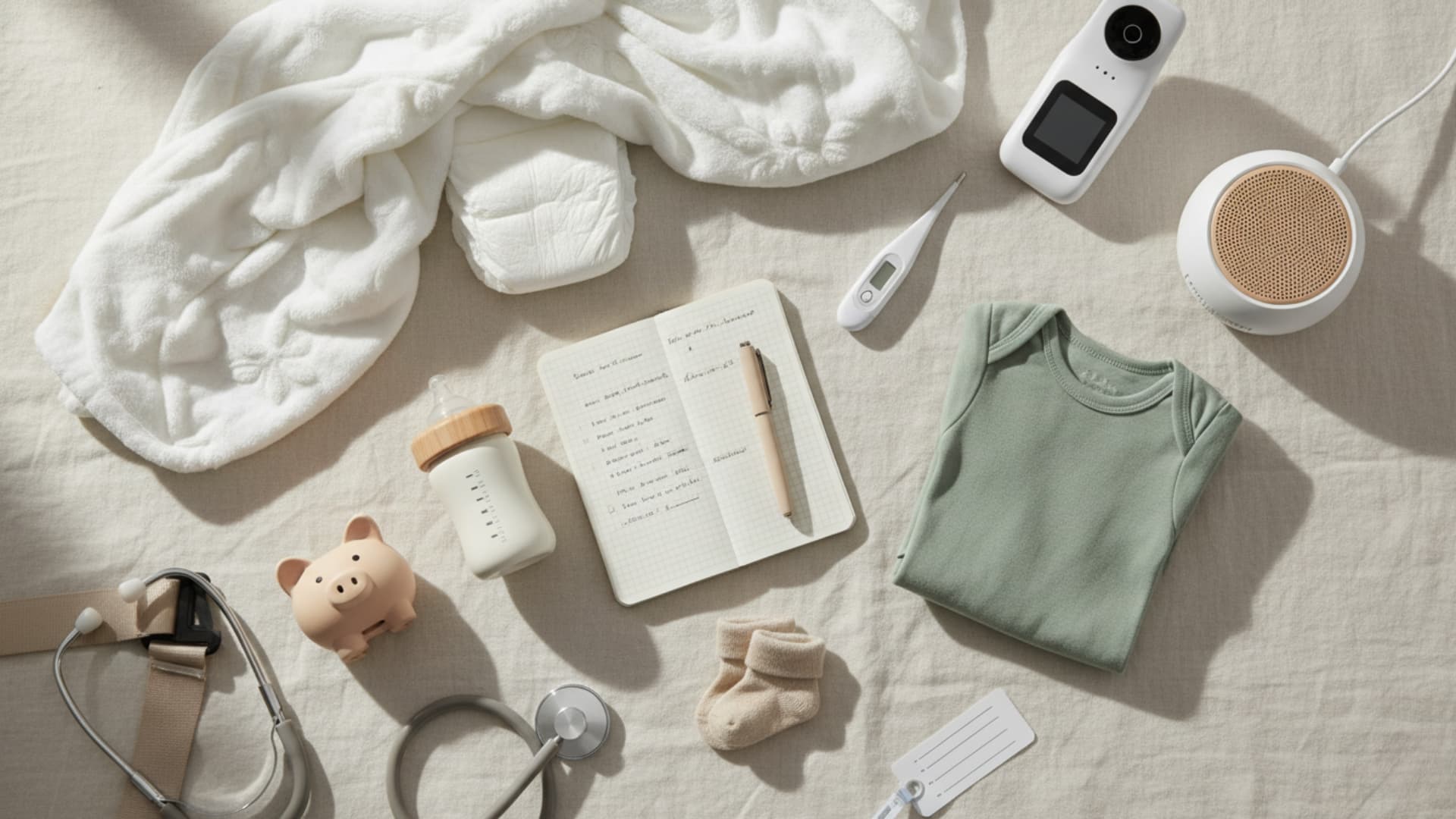
Alt Text: Baby essentials laid out on the bed, including blanket, diaper, bottle, monitor, thermometer, and clothes
Getting ready for a baby is not just about buying things. Here are 13 areas every expecting parent should work through before the due date.
1. Set Up a Safe Sleep Space
A firm, flat mattress in a crib or bassinet is what your baby needs. No pillows, no loose blankets, no bumpers. The American Academy of Pediatrics recommends keeping the baby in your room for at least the first six months, but in their own sleep space, not your bed.
2. Choose a Pediatrician Before Birth
Most pediatricians offer a prenatal visit. Go ahead and book one. Ask about their vaccination approach, after-hours availability, and whether they accept your insurance. Finding out the practice is full after the baby arrives is a stressful situation you can avoid.
3. Attend a Childbirth Class
These classes cover breathing techniques, what to expect during labor, and what happens right after delivery. Even if you feel prepared, having your partner go through this with you helps both of you feel more settled on the day.
4. Write a Birth Plan
A birth plan is a written summary of your preferences for labor and delivery: pain management, who you want in the room, and skin-to-skin contact right after birth. It doesn’t lock you into anything, but it makes sure your care team knows your wishes.
5. Pack Your Hospital Bag Early
Have it ready by week 35. Only about 5 percent of babies arrive on their actual due date, so waiting until the last minute is a gamble. Include your ID, insurance cards, one or two outfits for the baby, a going-home outfit for yourself, chargers, snacks, and any comfort items.
6. Install the Car Seat
You cannot leave the hospital without a properly installed car seat. Do this a few weeks early, and consider getting it checked at a certified inspection station. Many fire stations offer this service free of charge.
7. Stock Up on Diapering Essentials
Newborns go through roughly 10 to 12 diapers a day. Buy a good supply, but hold off on stocking up too heavily in the newborn size since babies grow out of it quickly. Add hypoallergenic wipes and a waterproof changing pad to the list.
8. Set Up Your Feeding Station
Whether you plan to breastfeed or bottle-feed, set up a dedicated spot before the baby arrives. Keep a water bottle, burp cloths, and your phone charger within reach. You’ll spend a lot of time there in the early weeks.
9. Freeze Meals Ahead of Time
Start batch-cooking around 32-34 weeks. Soups, casseroles, and breakfast burritos freeze well. Post-birth cooking is harder than it sounds when you’re running on two hours of sleep.
10. Review Your Health Insurance
Confirm what your plan covers for delivery, hospital stay, and newborn care. Find out how to add the baby to your policy. This needs to happen within 30 days of birth in most cases, so knowing the process in advance saves a scramble later.
11. Baby-Proof Before the Baby Becomes Mobile
Your newborn won’t be crawling for months, but tackling baby-proofing early takes the pressure off. Cover electrical outlets, secure heavy furniture to walls, and move medications and cleaning supplies to locked or high storage.
12. Build Your Support Network
Figure out who can help with meals, older children, or just a few hours of sleep relief in those first weeks. Be specific when you ask. “Can you drop off dinner on Thursday?” gets a better response than a general offer to help.
13. Prepare Emotionally
Talk to your partner. Talk to a counselor if that feels right. Process the change before the baby arrives, not in the middle of it. This is one of the most skipped steps in baby prep, and one of the most important.
What to Buy Before the Baby Arrives: Newborn Essentials List
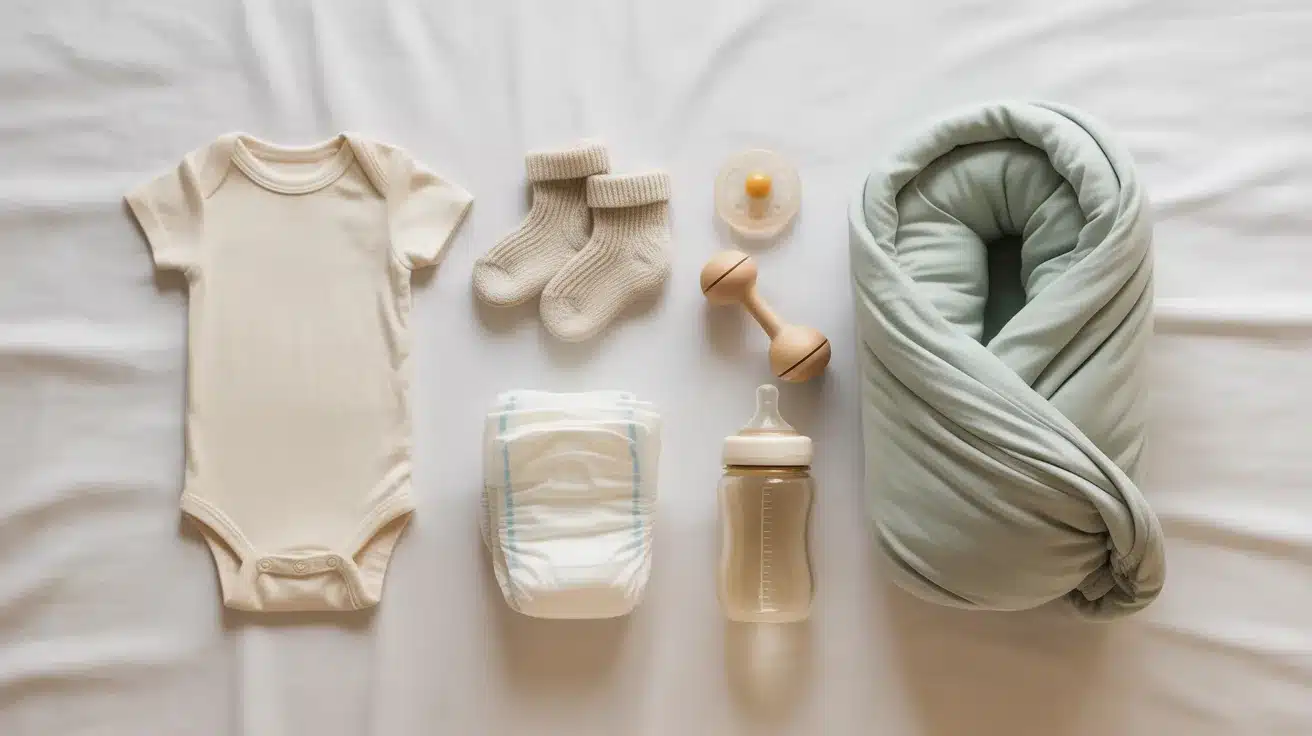
Alt Text: Baby essentials including onesie, socks, diaper, bottle, and swaddle
You don’t need everything in the baby store. You need the right things. Here’s a straightforward breakdown of what actually matters in those first weeks.
Diapering
- Diapers (stock a variety of sizes, not just newborn)
- Hypoallergenic wipes
- Waterproof changing pad and a couple of washable covers
- Diaper pail with a lid
Sleeping
- A crib or bassinet that meets current safety standards
- Firm, flat mattress with a fitted sheet
- Sleep sacks (a safer option than loose blankets)
- White noise machine (not required, but genuinely useful for sleep)
Feeding
- If breastfeeding: nursing pads, a breast pump (check if your insurance covers one), and lanolin cream
- If bottle-feeding: start with 2 to 3 bottles to test before buying more. Babies often have preferences, and you won’t know until they’re here
- Burp cloths (buy more than you think you need)
- Bibs
Clothing
- 5 to 7 onesies with snaps (easier than buttons at 3 am)
- Footed sleepers
- Swaddle blankets
- A few pairs of baby mittens to prevent scratching
- One size up from newborn. Many babies skip that size entirely
Health and Safety
- Baby thermometer
- Nasal aspirator
- Petroleum jelly (for diaper rash and circumcision care)
- Acetaminophen for infants (ask your pediatrician before using)
- Basic first aid kit
Gear
- Infant car seat
- Stroller or baby carrier
- Baby monitor
- Bouncer or swing (optional, but many parents swear by them)
Pro Tip: Before buying bottles, pacifiers, or a specific formula brand, wait and see what your baby accepts. These are the items most commonly returned or left unused.
How to Financially Prepare for a Baby?
Alt Text: Hands holding tiny knitted baby booties, one white and one beige, with a softly blurred nursery basket in the background
The first year with a new baby costs most families between $12,000 and $16,000, covering childcare, healthcare, and daily essentials.
Start by looking at what you already have: review your health insurance to confirm what delivery and newborn care costs are covered, check your employer’s parental leave policy, and find out if your company offers a Dependent Care FSA, which lets you set aside up to $5,000 pre-tax for childcare costs.
Aim to have three to six months of living expenses in savings before the baby arrives. If your budget is tight, lean on your registry, accept hand-me-downs, and borrow gear where you can.
Babies grow fast, and most items don’t need to be brand new.
What NOT to Do When Preparing for a Baby
A lot of baby prep guides tell you what to do. This one is worth reading, too.
| Mistake | What to Do Instead |
|---|---|
| Overstocking newborn-size clothes | Buy a range of sizes. Most babies grow out of newborn within weeks. |
| Buying bottles and pacifiers in bulk | Test one or two brands first. Babies have strong opinions. |
| Skipping financial planning | Childcare waitlists and insurance gaps can catch you off guard. Plan early. |
| Ignoring your own mental health | Postpartum depression affects many parents. Talk to your doctor before birth, not just after. |
| Waiting to install the car seat | Do it at week 35. Get it checked at a certified station. |
| Expecting the birth plan to go exactly as written | Have preferences, but stay open. Flexibility matters more than a perfect plan. |
| Assuming your support system will just show up | Ask specific people for specific help. Nobody wants to guess what you need. |
| Skipping the prenatal visit with your pediatrician | This is your chance to ask questions before things get busy. Don’t skip it. |
How to Prepare Your Relationship and Support System
One of the most honest things you can do before the baby arrives is sit down with your partner and talk through the stuff nobody puts on a checklist.
Who handles the night feeds? What happens if one of you needs more recovery time than expected? How will you make decisions together when you’re both exhausted and stressed?
These conversations are easier before the baby comes than during the first month. Beyond your partner, who else is in your corner? Other parents who’ve been through it recently are some of the best people to talk to.
They’ll tell you what actually helped, what they wished they’d skipped buying, and what no one warned them about. That kind of honest, firsthand advice is worth more than any product list.
Summing It Up
Getting ready for a new baby is one part planning and one part letting go of the idea that you can prepare for everything.
The parents who feel most settled are the ones who sorted the practical stuff early, had the real conversations with their partner, and didn’t try to do it all alone.
You don’t need a perfect nursery. You need a safe sleep space, a pediatrician you trust, a budget that accounts for the real costs, and people around you who will show up.
That’s how to prepare for a baby in a way that actually holds up. What’s the one thing on this list you haven’t tackled yet?