


Does your grocery bill ever feel like a complete mystery until you’re staring at the total on the receipt? You go in with a budget, but walk out having spent $40 more than you intended.
It’s incredibly frustrating, especially given that grocery prices are currently 19.1% higher than they were four years ago.
The truth is, you don’t need an extreme lifestyle change or a pile of paper coupons to lower your costs. It really comes down to a few steady, sustainable habits.
I’ve put together this guide to help you take control of your spending, from meal planning hacks to leveraging apps, so you can eat well for less.
How Much Should You Spend on Groceries?
There is no single right number, but the USDA breaks spending into four food plans: Thrifty, Low-Cost, Moderate-Cost, and Liberal.
A family of four with two young children spends anywhere from $566 to over $1,100 per month, depending on which plan they follow.
If saving money on groceries is your goal, aim for the Thrifty or Low-Cost range. A simple starting point: multiply your monthly take-home income by 10–15% and treat that as your grocery ceiling.
31 Ways to Save Money on Groceries
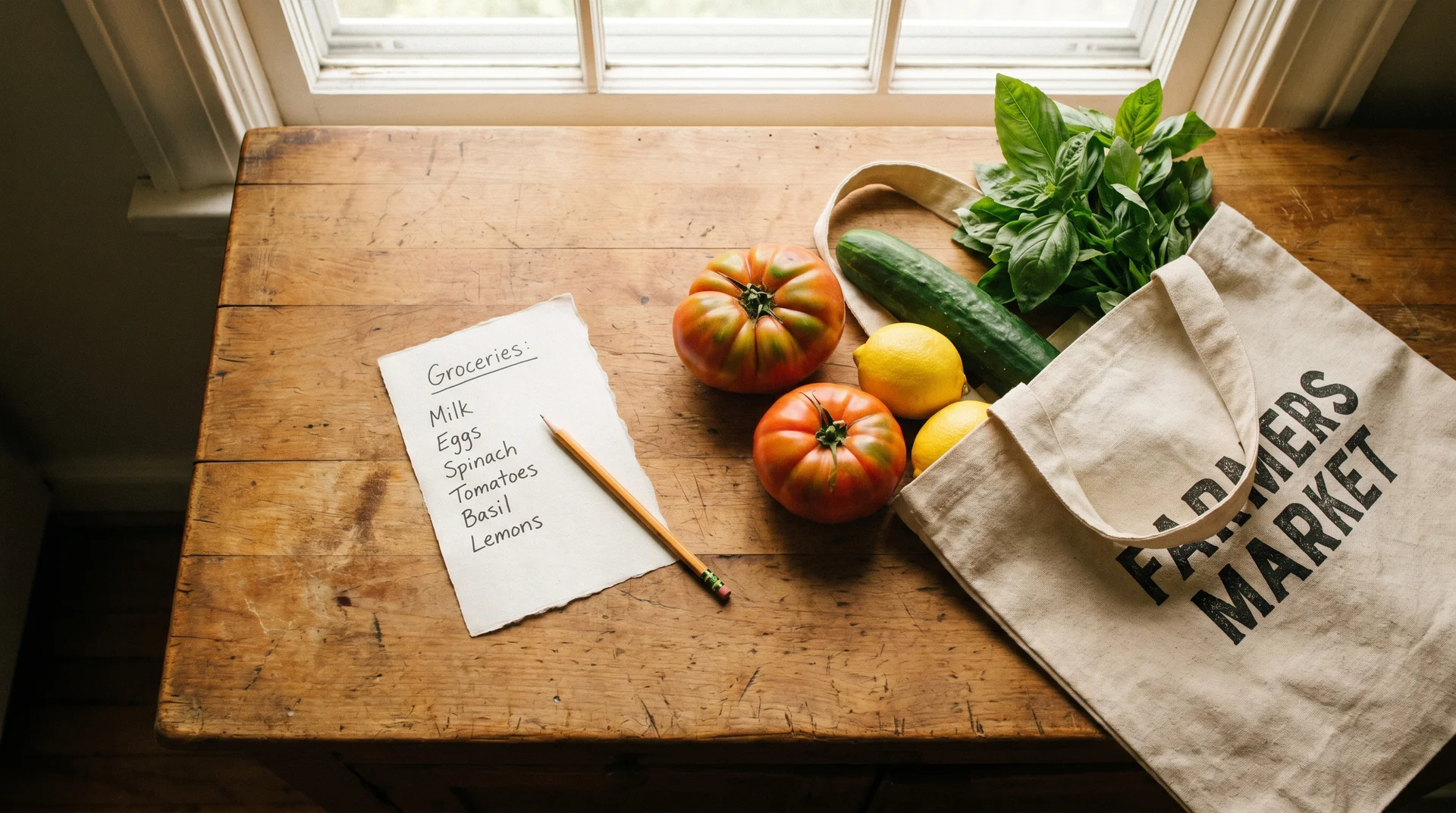
Alt Text: A wooden table featuring a grocery list on a notepad, a pencil, and a farmer’s market tote bag filled with fresh vegetables like kale and squash.
Getting your grocery bill down does not require a single dramatic change. Most families cut $50–$100 per month just by building a handful of steady habits. Start with two or three tips from this list, get comfortable, and keep adding from there.
1. Make a Weekly Meal Plan: Decide what you will eat for breakfast, lunch, and dinner before you shop. When you know exactly what you need, you stop buying things that sit in the fridge and get thrown away. Meal planning is the single most effective first step for anyone trying to save money on groceries.
2. Check Your Pantry Before You Shop: Walk through your fridge, freezer, and cupboards before writing your list. You will often find pasta, canned goods, or frozen protein that can anchor two or three meals, which means you spend less at the store that week.
3. Write a Grocery List and Stick to It: Build your list from your meal plan, not from memory in the parking lot. Once you are in the store, buy only what is on the list. This one habit alone removes most impulse spending.
4. Group Your List by Store Section: Organize items by produce, dairy, meat, and pantry before you walk in. Moving through the store with a purpose means fewer detours down tempting aisles and less time spent wandering.
5. Set a Budget Before You Walk In: Decide your spending limit before you leave the house. Whether you use cash or a card, treat the number like a hard stop. Tracking your running total on your phone as you shop keeps you honest at checkout.
6. Never Shop Hungry: Everything looks good when you are hungry. A full stomach makes it much easier to buy what is on your list and skip the items that are not.
7. Switch to Store Brands: Many store brand products are made in the same factories as name brands; the only real difference is the label and the price. Switching even ten pantry staples to store brands can save a family $75–$100 per month.
8. Compare Unit Prices, Not Sticker Prices: The bigger package is not always the better deal. Check the price per ounce or price per pound, which most stores print right below the item’s total price. That is the number that actually tells you which option costs less.
9. Buy in Bulk for Pantry Staples: Rice, pasta, canned beans, and oats are safe bets for bulk buying because they last. Compare the per-unit cost with the cost of individual packages at your regular store before committing to the larger size.
10. Shop the Weekly Sales Flyer: Check your store’s circular before you plan your meals, not after. Build the week’s dinners around what is already discounted. If ground beef and canned tomatoes are on sale, that is your cue for pasta, tacos, or chili.
11. Know the Store Sales Cycle: Most stores rotate the same products on sale roughly every six to eight weeks. Once you notice the pattern, you can stock up at the low point and skip buying at full price.
12. Shop Loss Leaders Every Week: Loss leaders are the deeply discounted items stores put on the front page of their circular to pull you in. Grab those items, especially protein, dairy, and fruit, but do not let them lure you into buying ten other things you did not plan for.
13. Join Your Store’s Free Loyalty Program: Kroger, Safeway, Target, and most major chains offer free loyalty programs with personalized coupons and reward points. You sign up with your phone number, and savings apply automatically at checkout.
14. Use Cashback Apps Like Ibotta: Before you shop, open a cashback app and check which items have offers that week. After your trip, scan your receipt or link your store account to earn cash back on items you were already going to buy. Apps like Ibotta, Checkout 51, and Receipt Hog all work this way.
15. Stack Coupons With Loyalty Discounts: Combining a manufacturer coupon, a store loyalty discount, and a cashback app offer on the same item is called stacking. Done regularly on the items you buy anyway, this adds up to real savings over the course of a year.
16. Use a Grocery Rewards Credit Card Wisely: Some credit cards offer 3–6% back on grocery spending. That can shave hundreds of dollars off your annual bill, but only if you pay the card off in full every month. Carrying a balance wipes out every cent of reward you earned.
17. Try Grocery Pickup to Avoid Impulse Buys: Ordering online and picking up curbside forces you to think before adding items. The running total is right in front of you the whole time, and there is no bakery smell or end-cap display pulling you off your list.
18. Buy Seasonal Produce: Out-of-season fruits and vegetables cost more because they travel further to reach the store. Buying what is in season right now costs less and usually tastes better, too.
19. Choose Frozen Vegetables Over Fresh: Frozen produce is picked at peak ripeness and frozen immediately, so you still get solid nutritional value. It also lasts far longer than fresh and costs significantly less, especially for peas, corn, spinach, and broccoli.
20. Reduce Food Waste at Home: The USDA estimates the average American family wastes over $1,500 worth of food per year. Before planning your next shop, check what is about to expire and build at least one meal around those items.
21. Use Your Freezer Strategically: Soups, cooked meats, mashed potatoes, and lasagna all freeze and reheat well. If you end up with more than you can eat in two days, freeze it before it goes bad, rather than after you have already given up on it.
22. Repurpose Leftovers Into New Meals: A roast chicken on Monday becomes tacos on Tuesday and soup on Wednesday. Planning meals with intentional leftovers reduces the number of ingredients you need to buy and cuts prep time for the rest of the week.
23. Buy Cheaper Cuts of Meat: Chicken thighs, drumsticks, and bone-in cuts cost far less than boneless breasts. Chuck roast, pork shoulder, and ground turkey are all solid, affordable proteins. They take a little longer to cook, but the price difference is real.
24. Build Meals Around What’s on Sale: This is the flip of normal meal planning. Instead of deciding what you want to eat and then finding the ingredients, check the sales first and let those items drive your menu. Flexibility here saves more than almost any other single habit.
25. Shop at Discount or International Stores: Hispanic and Asian grocery stores often charge significantly less for produce, spices, and meat than mainstream supermarkets. Stores like Aldi, Lidl, and Trader Joe’s consistently undercut larger chains on everyday staples.
26. Shake and Weigh Produce Before Buying: Wet greens, lettuce, and broccoli carry extra water weight. Give them a shake before you put them in your bag; you are paying by the pound, so you should not pay for water. For bagged produce, pick up a few and choose the heaviest one at the same price.
27. Check Your Receipt Before Leaving: Scan errors and missed discounts happen more often than most people realize. Some stores will give you the item free if it scans at the wrong price. A 30-second receipt check at checkout costs nothing and occasionally pays off.
28. Grow Your Own Herbs at Home: A pot of basil, parsley, or rosemary on a sunny windowsill costs around $3 to start and lasts for weeks. Store-bought herb bunches run $3–$4 each and often go bad before you finish them. This is one of the smallest changes with a surprisingly steady return.
29. Cook in Batches and Freeze Portions: Cook a large batch of protein, chicken, ground beef, or beans, portion it out, and freeze what you will not use this week. This removes the “I don’t know what to make” panic that leads to takeout orders on tired evenings.
30. Use the 50/30/20 Grocery Rule: Allocate roughly 50% of your grocery budget to essentials like produce, protein, and grains; 30% to convenience items like snacks and frozen meals; and 20% to treats and specialty items. This structure keeps your spending intentional without cutting out everything enjoyable.
31. Track Your Spending Every Month: Review your grocery receipts at the end of each month. When you can see exactly where the money went, patterns become obvious, and so do the easiest places to cut back. Apps like YNAB and EveryDollar make this quick.
Grocery Shopping Mistakes to Avoid
Most overspending at the grocery store is not random. It comes from a handful of predictable habits. The table below shows the most common mistakes and what to do instead.
| Mistake | What to Do Instead |
|---|---|
| Shopping without a list | Write a list based on your meal plan |
| Ignoring unit prices | Always check the price per ounce or pound |
| Shopping at only one store | Compare prices at 2–3 stores each week |
| Bulk buying perishables | Only buy long-shelf-life or freezable items |
| Shopping on an empty stomach | Eat before shopping or bring a snack |
| Forgetting what you already have | Check the pantry, fridge, and freezer before shopping |
| Ignoring store apps | Download apps for exclusive digital coupons |
| Buying pre-cut or marinated foods | Buy whole ingredients and prep at home |
Grocery Saving Tips Checklist
Small habits done consistently make the biggest difference in your grocery budget. Use this checklist before and after every shopping trip.
Before You Shop
✓ Meal plan for the week is written
✓ Pantry, fridge, and freezer checked for existing items
✓ Grocery list written and grouped by store section
✓ Store sales flyer checked
✓ Cashback app offers loaded
✓ Budget set for this trip
At the Store
✓ Ate before arriving
✓ Compared unit prices on key items
✓ Checked produce weight before adding to the bag
✓ Stayed out of aisles not on the list
✓ Kept a running total while shopping
At Checkout
✓ Loyalty card or number used
✓ Receipt checked for scan errors before leaving
At Home
✓ Perishables stored properly right away
✓ Items nearing expiration moved to the front
✓ Leftovers labeled with the date
✓ Freezer used for extra portions
Money-Saving Tools Worth Using

Alt Text: A collage of app and store logos, including Ibotta, Flipp, and Kroger, representing tools for saving money on groceries.
The right tools take almost no time to set up and can quietly save you $20–$50 per month without much effort.
- Ibotta: Scan your receipt or link your loyalty account to earn cash back on groceries you were already buying. It works with most major chains and is free to use.
- Flipp: Aggregates weekly sales flyers from multiple stores in one place, so you can compare deals before you decide where to shop that week.
- YNAB: A budgeting app that helps you assign every dollar a purpose, including your grocery allowance, so you can see exactly where you stand at any point in the month.
- EveryDollar: A simpler, free alternative to YNAB that works well for families who want to track grocery spending without a steep learning curve.
- Checkout 51: Similar to Ibotta, this app offers weekly cashback offers on specific grocery items. Upload your receipt and collect cash once your balance reaches $20.
- Your Store’s Own App: Kroger, Safeway, Target, and most major chains now offer digital-only coupons and personalized deals through their apps. These are often better than anything in the paper circular.
Final Thoughts
Saving money on groceries is not about deprivation. It is about shopping with a clear plan instead of winging it every week.
The biggest wins come from three habits: making a meal plan before you shop, cutting food waste at home, and switching to store-brand pantry staples.
None of these requires extra time or effort once they become routine. Start with one change this week, even picking one meal to plan around what is already in your fridge.
That one decision compounds over a month, then a year. Your grocery bill is one of the few household costs you actually control. Use it.
Frequently Asked Questions
What Is the 30 Day Rule to Save Money?
You wait 30 days before buying any non-essential item. If you still want it after 30 days, you buy it; if not, you skip it.
How Can We Save Money on Food?
Plan meals before you shop, stick to a list, buy store brands, reduce food waste, and use cashback apps on items you already buy.
What Is the 5 4 3 2 1 Grocery Rule?
It is a meal-planning structure in which you plan 5 dinners, 4 lunches, 3 breakfasts, 2 snacks, and 1 treat per week to keep spending predictable.
What Is the Cheapest Way to Buy Groceries?
Shop at discount stores like Aldi or Lidl, buy store brands, use cashback apps, and plan meals around whatever is on sale that week.