

Monday morning. Laptop open, coffee getting cold, and a three-year-old sitting on your feet asking for a snack for the fourth time.
This is the reality of working from home with kids, and if your workday looks anything like this, you already know how much mental energy it takes just to get started.
The good part? It does not have to feel like controlled chaos every single day.
With the right structure in place, you can actually get your work done, be present for your kids, and not feel completely drained by 3 PM.
This blog breaks down real, tested ways to make it work for real families, not perfect ones.
Does Working from Home with Kids Actually Work?
Yes, but only when you stop expecting it to look like a regular office day.
Working from home with kids works best when you build your schedule around your children’s natural rhythms instead of fighting them.
It takes some trial and error, but once you find your groove, it becomes far more manageable than it sounds. Small adjustments like flexible work blocks and realistic expectations can make a big difference.
Over time, you learn what works for your routine and what to let go of, which makes the setup feel more sustainable.
What Working Parents Are Actually Dealing With
Before we get into what to do, it helps to name what is actually making this hard. Because the struggle is not just about time. It runs deeper than that.
- Constant interruptions during focused work: Finding a quiet moment for a video call or focused task can feel nearly impossible when toys, cartoons, or sibling arguments are part of the background noise.
- The guilt of saying no: The blurred lines between home and work create guilt when you say no to your kids, and frustration when they do not respect your space.
- Financial pressure driving the decision: With child care costs soaring, many parents are not working from home with kids by choice. They are doing it because the alternative simply costs too much.
- Burnout that builds quietly: Without enough support, the mental load of doing two demanding jobs at once increases the risk of anxiety, depression, and strained relationships over time.
- The unequal split at home: Research consistently shows that working women in heterosexual relationships carry a significantly larger share of caregiving responsibilities, even when they are the primary earner.
Before We Start: Setting Up for Success
Getting your workspace and tools sorted before anything else saves you a lot of back-and-forth once the workday starts. Think of this as your foundation. Without it, even the best strategies will struggle to stick.
| What to Set Up | Why It Matters | Quick Action |
|---|---|---|
| A consistent workspace | Signals to your brain and your kids that work mode has started | Pick one spot and use it daily |
| A work cue | Creates a mental switch between parent and work mode | Use headphones, music, or a desk lamp only during work hours |
| Noise-canceling headphones | Cuts audio distractions during calls | Invest in a decent pair |
| A shared family calendar | Aligns your schedule with school runs and kids’ activities | Use Google Calendar or a printed weekly sheet |
| Kids activity stations | Gives children something to do independently | Rotate activity bins weekly to keep them interesting |
| Reliable internet setup | Prevents mid-call freezes and lost work time | Test your speed and use a wired connection if possible |
14 Ways to Work from Home with Kids
Now that the basics are in place, let us get into the part that actually changes your day. These ways are not theoretical. They come from real parents, child development experts, and workplace researchers who have studied what actually holds up when life gets messy.
1. Build a Daily Schedule
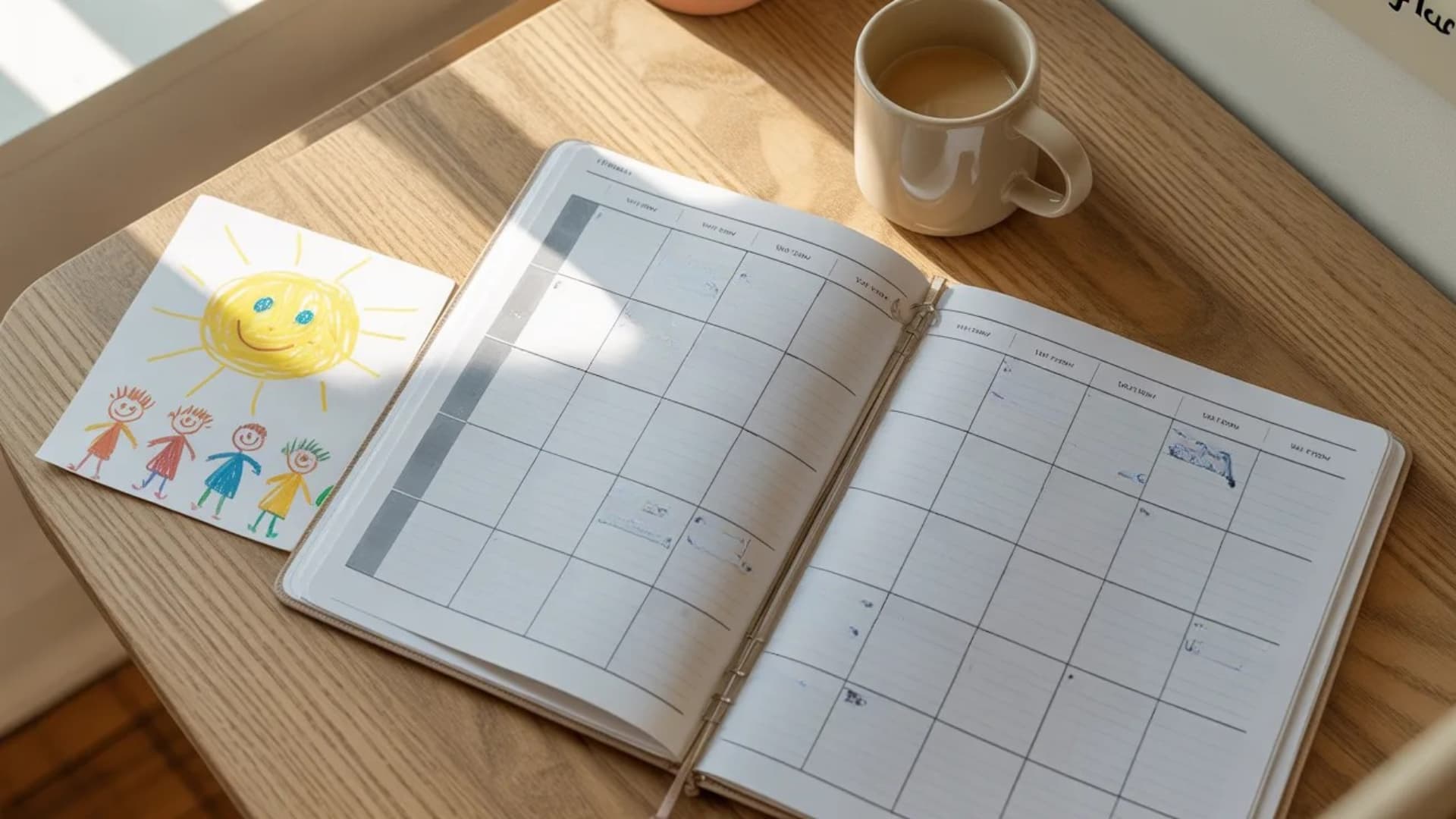
Alt Text: Open daily planner on a wooden desk with a child’s drawing and a cup of coffee, showing a simple home scheduling setup
A loose daily framework, not a rigid timetable, gives both you and your kids something to count on. When children know what comes next, they stop asking constantly, which means fewer interruptions for you.
How to make it work:
- Align your deep focus work blocks with your kids’ most independent hours, such as early morning or after lunch
- Post a visual schedule with pictures for younger children
- Build transitions in like snack time, outdoor play, and quiet time so the day has natural breaks
2. Use “Do Not Disturb” Signals

Alt Text: Child’s colorful “Do Not Disturb” sign taped on a door, with a parent working on a laptop in the background at home
Kids respond much better to a visual signal than to being told “not now” repeatedly. Work with your kids to create a sign for your workspace, something like a stop sign or a thumbs up, that tells them clearly when you should not be interrupted unless it is an emergency.
How to make it work:
- Let kids help make the sign so they feel ownership over it
- Pair it with a small reward when they respect it consistently
- For older kids, a closed door or a specific lamp being on works just as well
3. Set a Meal and Snack Routine
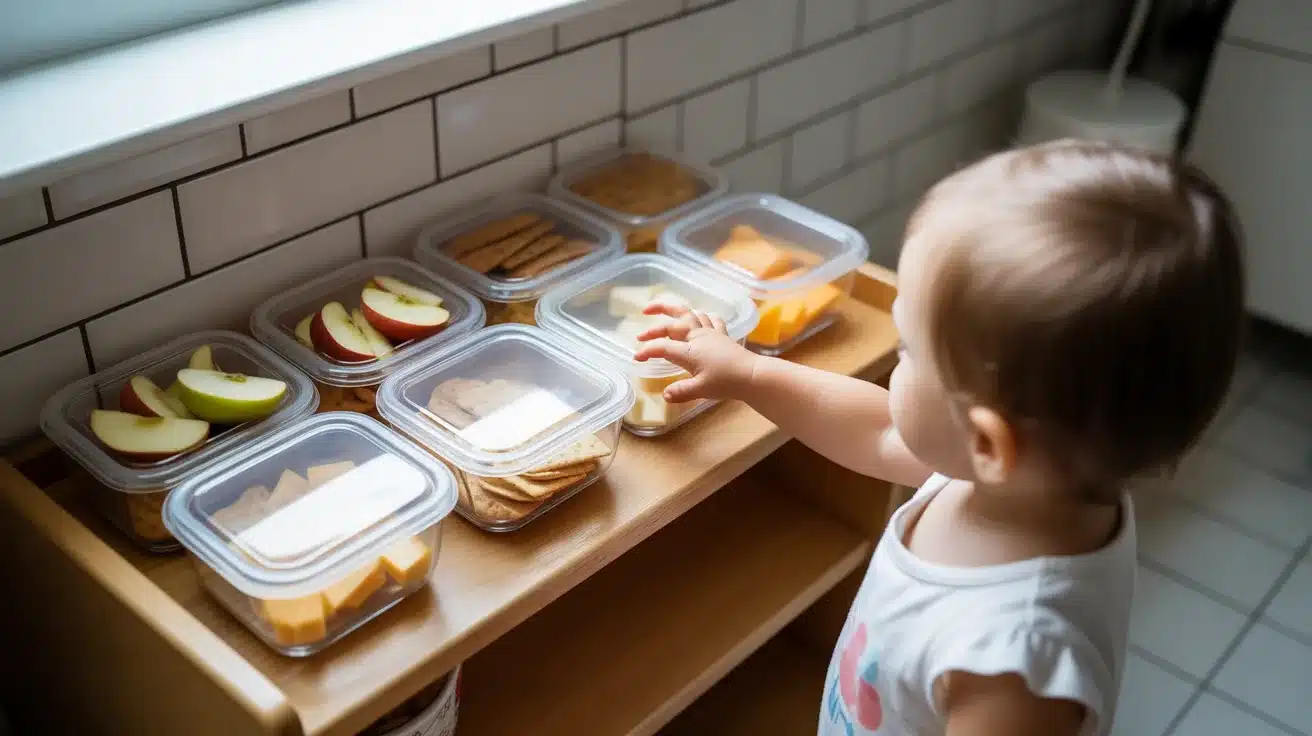
Alt Text: Toddler reaching for pre-portioned snacks in small containers on a low shelf, showing a simple and organized snack routine setup
One of the most practical and underrated strategies for working parents. When kids know when food is coming, they stop asking for it every 20 minutes, and that alone removes a surprising number of daily interruptions.
How to make it work:
- Feed toddlers every 2 to 3 hours and older kids every 2.5 to 4 hours
- Prep snacks the night before or first thing in the morning
- Set up a low shelf or snack station that kids can access on their own during certain hours
4. Protect Nap Time and Quiet Hour

Alt Text: Child sleeping peacefully with a teddy bear in bed while a parent works quietly in the background during nighttime
A child’s nap window, anywhere from one to three hours, is one of the best focused work periods a parent has, and it should not be spent on chores or phone scrolling. For kids who no longer nap, a structured quiet hour works just as well.
How to make it work:
- Reserve nap time for your highest priority tasks only
- Introduce quiet hour gradually for resistant kids. Start with 20 minutes and build up
- Keep quiet hour activities calm, such as audiobooks, drawing, puzzles, or building sets
5. Rotate Activity Bins
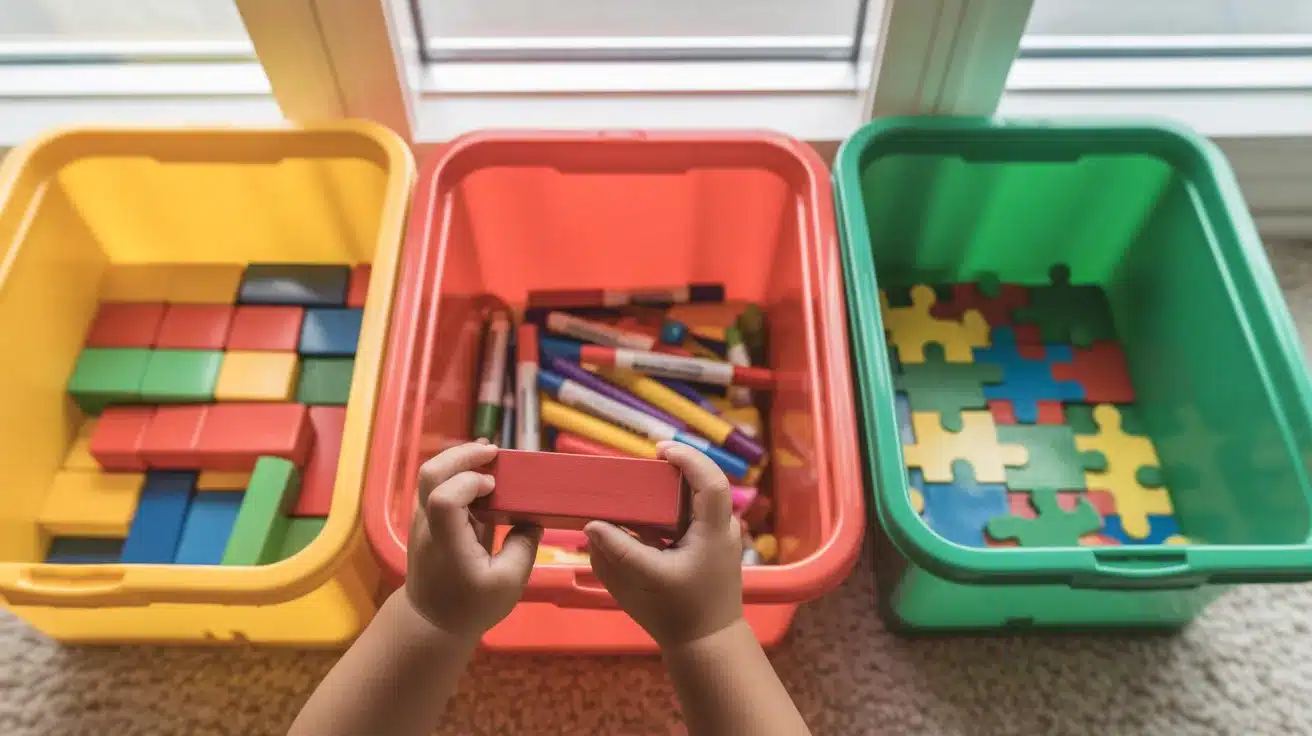
Alt Text: Child organizing various toys and materials in colorful bins, holding a red block in their hands with yellow, red, and green bins in the background.
The same toys every day stop being interesting fast. Rotating bins of activities weekly keeps kids engaged longer without you needing to supervise or entertain them.
How to make it work:
- Prepare three to five activity bins and swap them out each week
- Include one special box, opened only during your work hours. Novelty keeps kids curious
- Age-appropriate ideas include sensory bins for toddlers, art kits for preschoolers, and building sets for older kids
6. Be Upfront with Your Employer

alt text: A woman sits at a desk with a laptop, participating in a video conference. She has a notebook, a pen, and a coffee mug that says “Mother Hustler Leader.
Many parents avoid this conversation, but it is one of the most important ones to have. The pressure to prove your value while working from home can lead to taking on more than you can realistically handle. Being transparent with your manager early prevents this from quietly becoming a bigger problem.
How to make it work:
- Have a brief, professional conversation about your home situation. Most managers are more understanding than you expect
- Ask about flexible scheduling, asynchronous communication, or adjusted meeting windows
- Give colleagues a heads up during school holidays or when kids are sick
7. Stop Multitasking

Alt Text: Split image of a woman working on a laptop at a desk on the left, and the same woman smiling and playing with her child on the right, both enjoying separate activities.
Working while half-watching a toddler, answering emails, and listening to a podcast means none of it gets done properly. When you split your attention that thinly, productivity drops and patience goes with it.
How to make it work:
- Time block your day. Assign specific hours to work and specific hours to your kids
- When you are in work mode, be fully in it. Kids can sense divided attention, too
- Use a simple task list with one to three priorities per work block, so you stay on track
8. Ask for Help

Alt Text: A cozy kitchen scene with a mother and grandmother laughing as they play with a young child, while a man sits at a table working on a laptop.
Experts are clear on this. The more supported a parent feels, the healthier and more connected the entire family becomes. Asking for help is not an admission of failure. It is what makes the whole thing sustainable.
How to make it work:
- If you have a partner, divide the day. One person takes mornings, the other takes afternoons
- Loop in grandparents, neighbors, or trusted friends for even a few hours a week
- Look into parent cooperatives in your area, where families take turns watching each other’s children
9. Use Screen Time with Intention

Alt Text: Toddler sitting on the floor using a tablet at home, showing intentional and supervised screen time in a calm living room setting
Screen time gets a bad reputation, but the problem isn’t screens. It is passive, unstructured screen time with no time limits. The right content at the right time is genuinely useful for working parents.
How to make it work:
- Look for apps with parental controls, no ads, and age-appropriate content that children can use independently without needing constant guidance.
- Treat screen time as a scheduled activity, not a default rescue option
- Set a timer so kids know when it ends. It reduces pushback significantly
10. Take Real Breaks

Alt Text: Parent and child walking hand in hand down a quiet, tree-lined street during a peaceful outdoor break
Taking regular breaks when working from home with kids is important for both productivity and avoiding burnout. It is not a luxury; it is a functioning strategy. Working straight through rarely produces better results. It usually just leaves parents more tired.
How to make it work:
- Try the Pomodoro method: 25 minutes of focused work, 5-minute break, repeat
- Use break time to check in with your kids. It also reduces interruptions during your next work block
- A short walk, a glass of water, or five minutes of stretching resets focus far better than pushing through
11. Set a Clear End of Day

Alt Text: Parent closing a laptop on a table while a young child plays in the background, showing the end of the day and unplugging from work
A significant number of remote workers still struggle to disconnect because they lose track of time or feel pressure to stay available beyond regular hours. Without a clear stopping point, the workday bleeds into the evening, and that is where burnout starts.
How to make it work:
- Set a phone alarm for your end-of-workday and actually stop when it goes off
- Create a shutdown routine, such as closing the laptop, changing clothes, or stepping outside briefly
- Let your kids see you do this. It shows them that work has an end and family time has a beginning
12. Teach Kids About Your Work

Alt Text: A mother and daughter happily looking at a laptop, with the mother pointing at something on the screen while the daughter draws in her notebook.
Children cooperate far better when they understand what is happening and why. Explaining your work in age-appropriate terms helps them feel included rather than pushed aside.
How to make it work:
- For toddlers, use simple role-play. “Mommy has a meeting, just like you have story time.”
- For school-age kids: let them see you close the laptop at the end of the day. It models healthy limits
- Involve older kids in setting house rules around work hours. They are far more likely to follow rules they helped create
13. Watch for Burnout Before It Hits

Alt text: A woman in a cozy sweater holds a mug, sitting at a table with a laptop. They appear relaxed and content, near a window with natural light.
This is the section most work-from-home blogs skip, and it is one of the most important ones. The mental health cost of doing two demanding roles at once, without enough support, shows up as exhaustion, emotional numbness, and a creeping sense of failing at both jobs.
How to make it work:
- Check in with your mood regularly. If it keeps dropping, do not push through. Take a mental health day, adjust your load, or speak to a therapist.
- Build one small self-care habit into your day, such as a morning walk, ten minutes of quiet, or a phone call with a friend
- Normalize getting professional support. A therapist is a tool, not a last resort
14. Give Yourself Room to Get It Wrong

Alt text: A woman and young child sit on the floor in a living room, smiling and surrounded by toys, with a couch and bookshelf in the background.
Some days, the schedule collapses before 9 AM. A child gets sick, a call runs long, and the internet cuts out. That is not a sign that the system does not work. It is just a regular day with kids.
How to make it work:
- Accept that flexibility is part of the strategy, not a break from it
- Reset mid-afternoon when a morning falls apart. A bad morning does not have to mean a bad day
- Self-compassion is a skill you practice, not a feeling you wait for
Age by Age: Adjusting Your Approach
Every stage of childhood comes with different needs, different attention spans, and different ways of responding to boundaries. What works for a five-year-old will completely miss the mark with a toddler or a teenager. Here is how to adjust your approach by age so your strategy actually fits your child, not just the idea of one.
Toddlers (1 to 3 years)
- Shortest attention spans and highest unpredictability. Plan for frequent resets
- Work best during naps or when a second adult is present
- Keep them in a safety-proofed play area with sensory bins, stacking toys, or simple puzzles
- Rotate activities every 20 to 30 minutes to hold interest
Preschoolers (3 to 5 years)
- Can handle 20 to 30 minutes of independent activity with the right setup
- Respond very well to visual schedules with pictures. They love knowing what comes next
- Love feeling helpful. Give them small jobs like sorting crayons or putting books away
- Educational apps with voice guidance work well for focused 30-minute windows
School Age Kids (6 to 12 years)
- More self-directed and capable of working through a simple task list of their own
- In school for most of the day. Use that time for your most demanding work blocks
- Understand and respect boundaries when explained clearly and consistently
- Homework time can run alongside your focused work time for parallel productivity
Teenagers (13 and above)
- Largely self-sufficient but still benefits from check-ins and clear house rules
- Set shared expectations around noise levels and common spaces during work hours
- Can help with younger siblings for short stretches if asked respectfully
- Model your work habits openly. They absorb more than they let on
|
A Note for Single Parents If you are managing this on your own, the same strategies still work, but support matters more. Lean on trusted people, local programs, or parent communities where you can share and get help. Also, look into childcare tax benefits to ease some of the pressure. You don’t have to figure everything out alone to ask for support. |
When Kids Are Home and Work Cannot Wait
A sick child, a canceled playdate, a deadline landing on the same day as a school holiday, these moments are part of working from home with kids, and no amount of planning fully prevents them.
Keep a short backup plan ready: a lighter task list for hard days, one person you can call in a pinch, and a few emergency activities that buy you 20 minutes of quiet when you need it most.
The goal is not to have a perfect week every week. The goal is to recover quickly when the day does not go as planned.
Final Reflections
Working from home with kids is not something you figure out overnight. Some days go smoothly, some days do not, and both are completely normal.
What matters is that you keep adjusting until you find a rhythm that actually fits your family, not someone else’s highlight reel.
Start small. Pick one or two strategies from this blog and try them this week. See what sticks. Build from there.
And remember, no system is perfect when kids are involved. Flexibility is not a fallback plan, it is the actual plan.
If this helped or you have your own tips that work for your family, drop them in the comments below. Would love to hear what is working for you.