
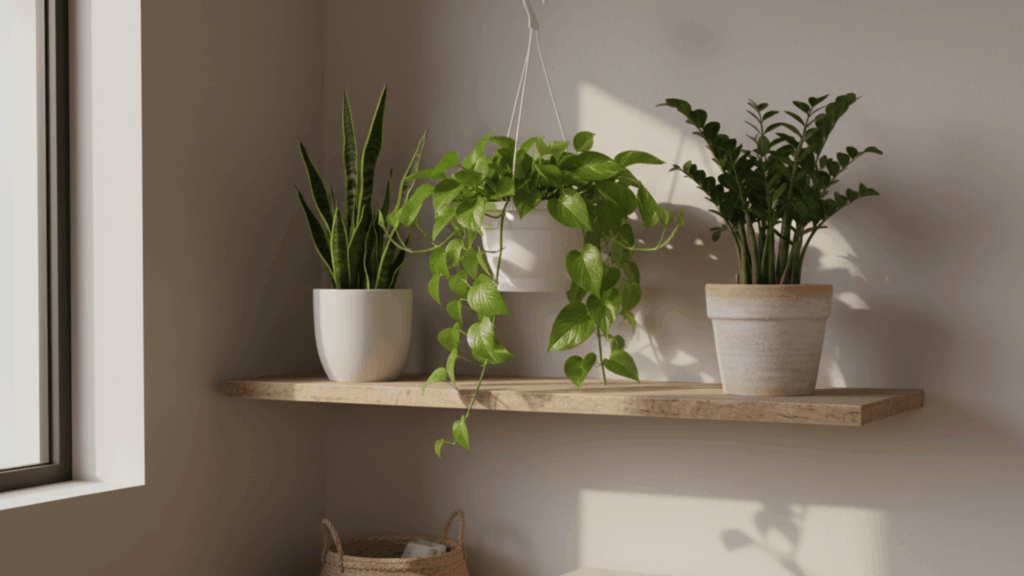
Most apartments and homes have at least one dark corner. You want plants there, but everything you try turns yellow or dies within weeks. It feels impossible.
But here’s what changed for me: I stopped buying plants that need bright windows.
I started choosing species that actually prefer shade. My dim hallway now has three thriving plants. My windowless bathroom has two more.
In this post, you’ll learn what low light really means, which plants handle it best, and how to care for them long term. You’ll also find out the biggest mistakes people make and how to avoid them.
Let’s get your dark spaces green.
What Is Considered Low Light Indoors?
Low light means your plant gets indirect sunlight for most of the day. It does not mean total darkness. No plant survives without any light at all.
Common low-light spots include corners far from windows, north-facing rooms, hallways, and bathrooms with small windows. Many people confuse indirect light with low light.
Indirect light is bright but filtered. Low light is much dimmer. If you can read a book comfortably without turning on a lamp, that space has medium to bright indirect light, not low light.
Do Low Light Indoor Plants Need Extra Lighting?
Most low-light plants do fine without grow lights if they get some natural light daily. But there are times when extra lighting can help your plants stay healthy and grow better.
- When grow lights are helpful: Grow lights help when your plant shows signs of struggle, like pale leaves, leggy stems, or no new growth for months.
- When they’re unnecessary: Most low-light plants do fine without extra lighting if they get at least a few hours of natural light each day.
- Simple lighting improvements: Move plants closer to windows, use white walls to reflect more light, or keep curtains open during daytime hours.
Low-Light Indoor Plants That Flourish Indoors
Now that you know what low light means, let’s look at specific options. Here are plants that actually thrive in dim spaces without constant care or bright windows.
1. Snake Plant (Dracaena Trifasciata)
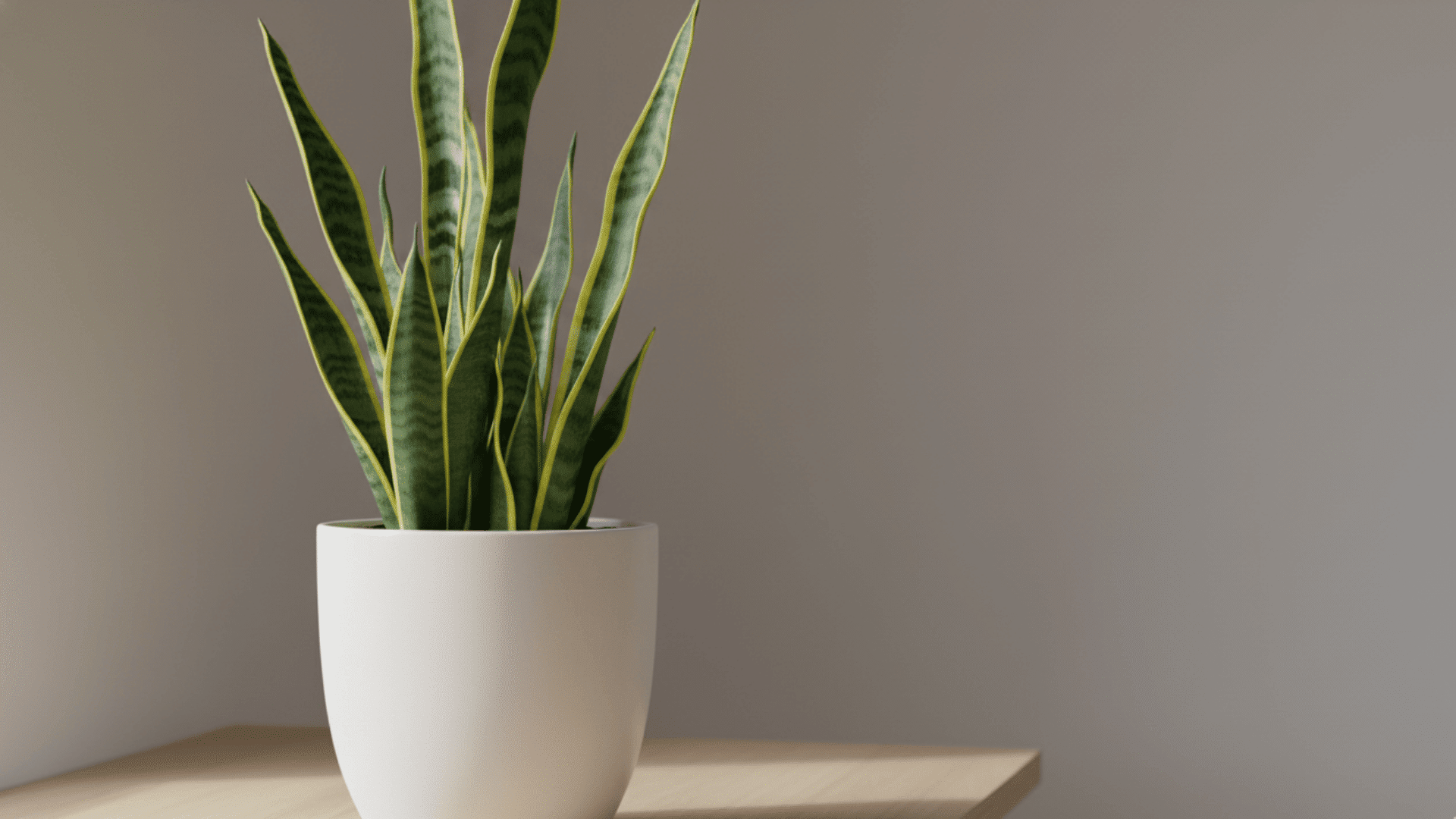
The snake plant is one of the toughest indoor plants you can own. Its tall, sword-shaped leaves stand upright and look modern in any room.
- Light requirements: Tolerates low to bright indirect light but grows faster near windows.
- Watering needs: Water every 2 to 3 weeks or when the soil is dry.
- Basic care tips: Use well-draining soil and avoid cold drafts below 50°F.
- Best indoor placement: Bedrooms, offices, or corners with minimal natural light.
2. ZZ Plant (Zamioculcas Zamiifolia)
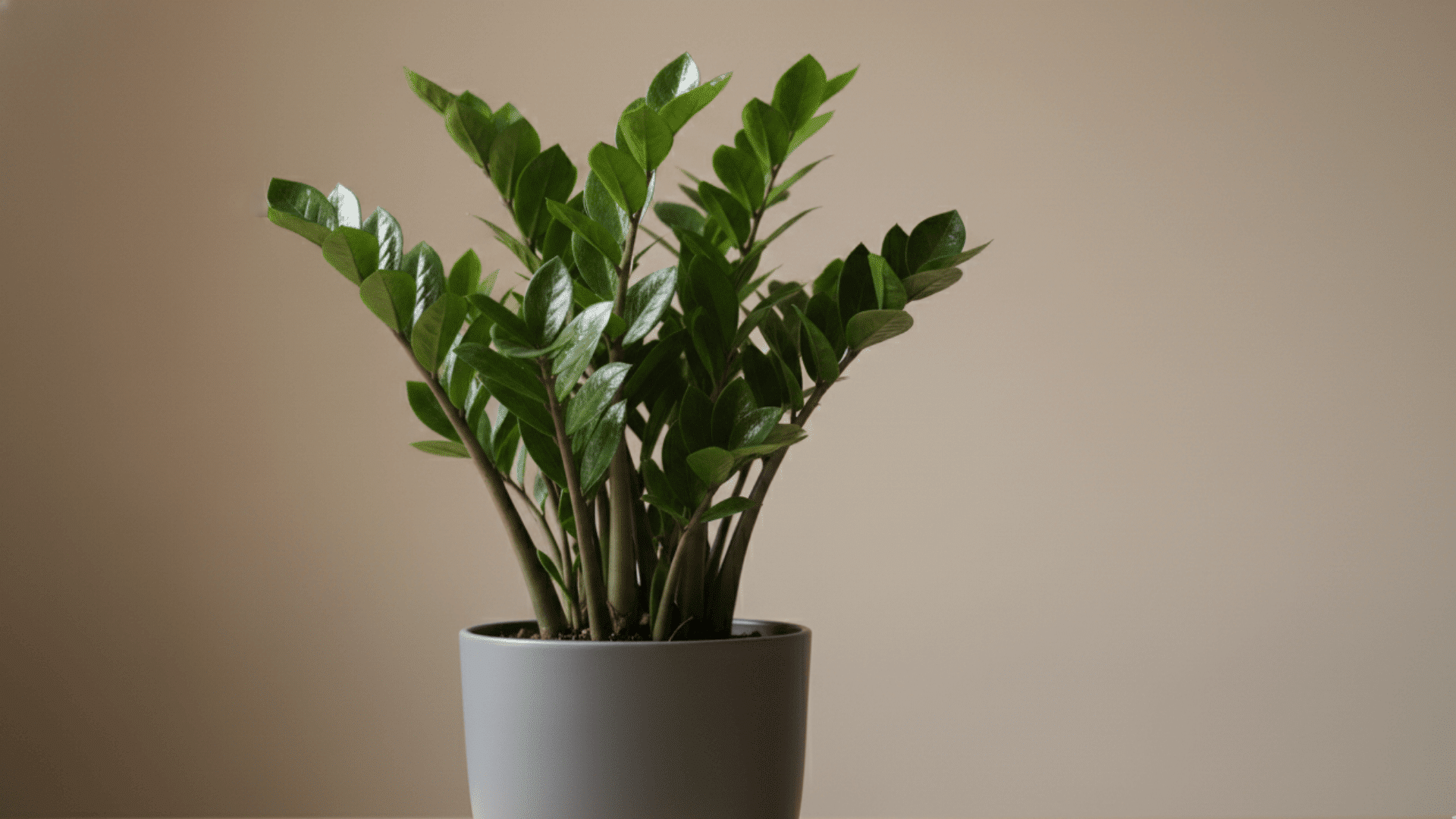
The ZZ plant has thick, glossy leaves that reflect light beautifully. It survives weeks of neglect and still looks fresh.
- Light requirements: Grows in low light but prefers medium indirect light for fuller growth.
- Watering needs: Water once every 2 to 4 weeks, depending on temperature.
- Basic care tips: Keep away from direct sun to prevent leaf burn.
- Best indoor placement: Hallways, bathrooms, or rooms without south-facing windows.
3. Pothos (Epipremnum Aureum)
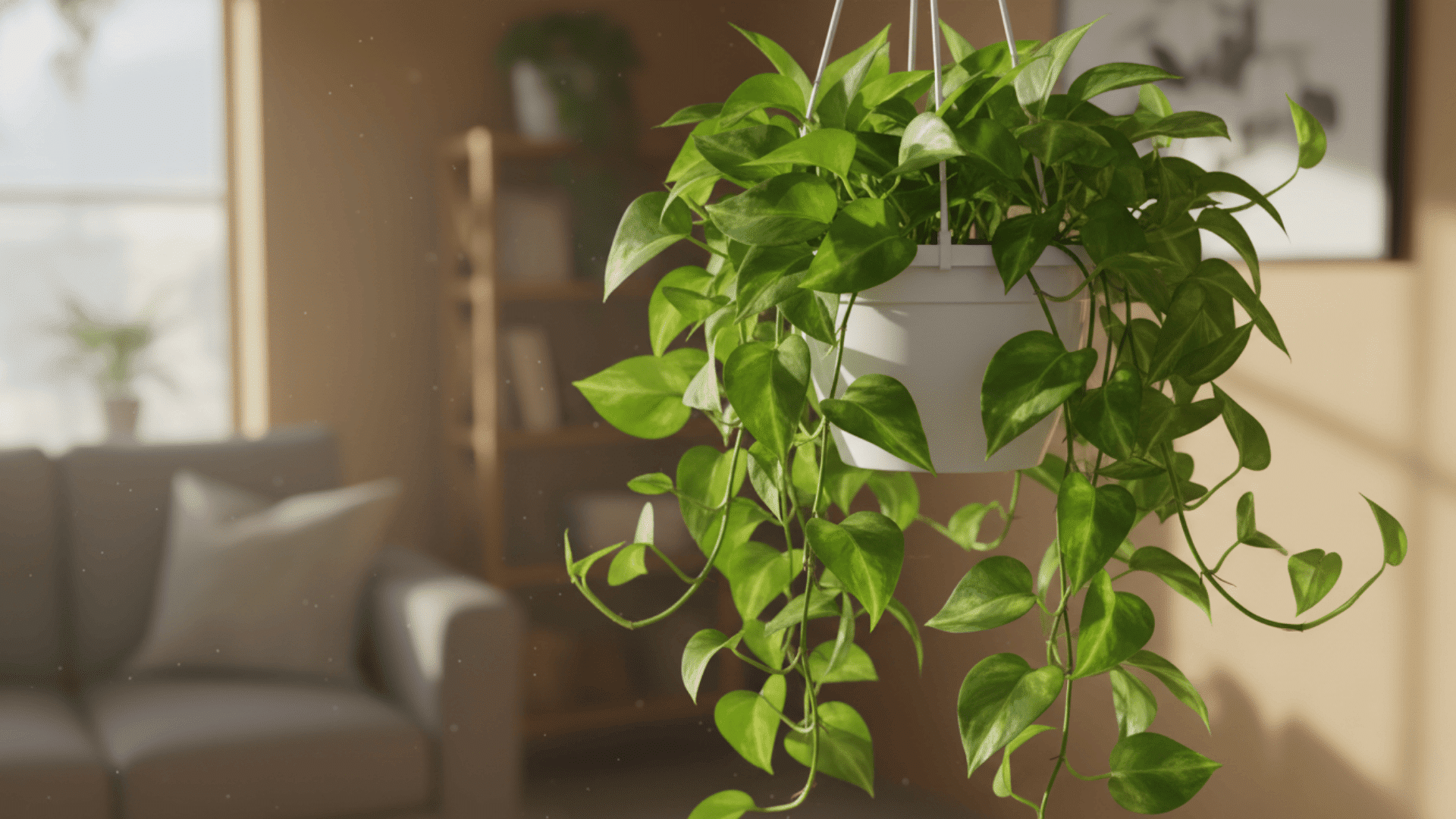
Pothos has heart-shaped leaves that trail down beautifully from shelves or hangers. It grows quickly even in dim conditions.
- Light requirements: Adapts to low light, but variegated types need more brightness.
- Watering needs: Water when the top 2 inches of soil feel dry to the touch.
- Basic care tips: Trim long vines to encourage bushier growth.
- Best indoor placement: High shelves, hanging baskets, or above kitchen cabinets.
4. Peace Lily (Spathiphyllum Wallisii)
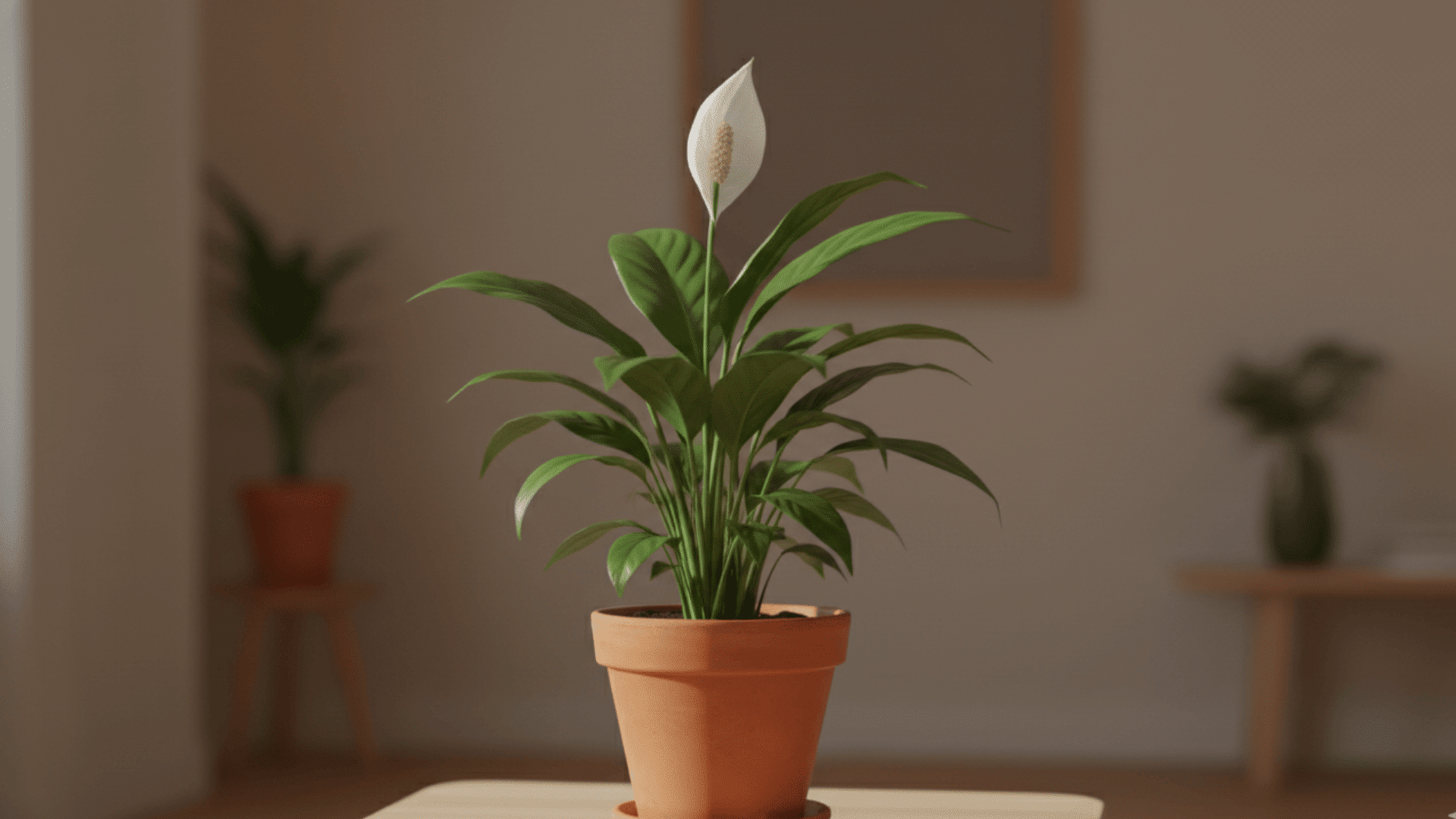
The peace lily produces white flowers even in shaded rooms. Its dark green leaves arch gracefully and fill space well.
- Light requirements: Prefers low to medium light but blooms more with brighter exposure.
- Watering needs: Water when leaves start to droop slightly as a signal.
- Basic care tips: Mist leaves weekly to maintain humidity around the plant.
- Best indoor placement: Bathrooms, living rooms, or any corner with filtered light.
5. Cast Iron Plant (Aspidistra Elatior)
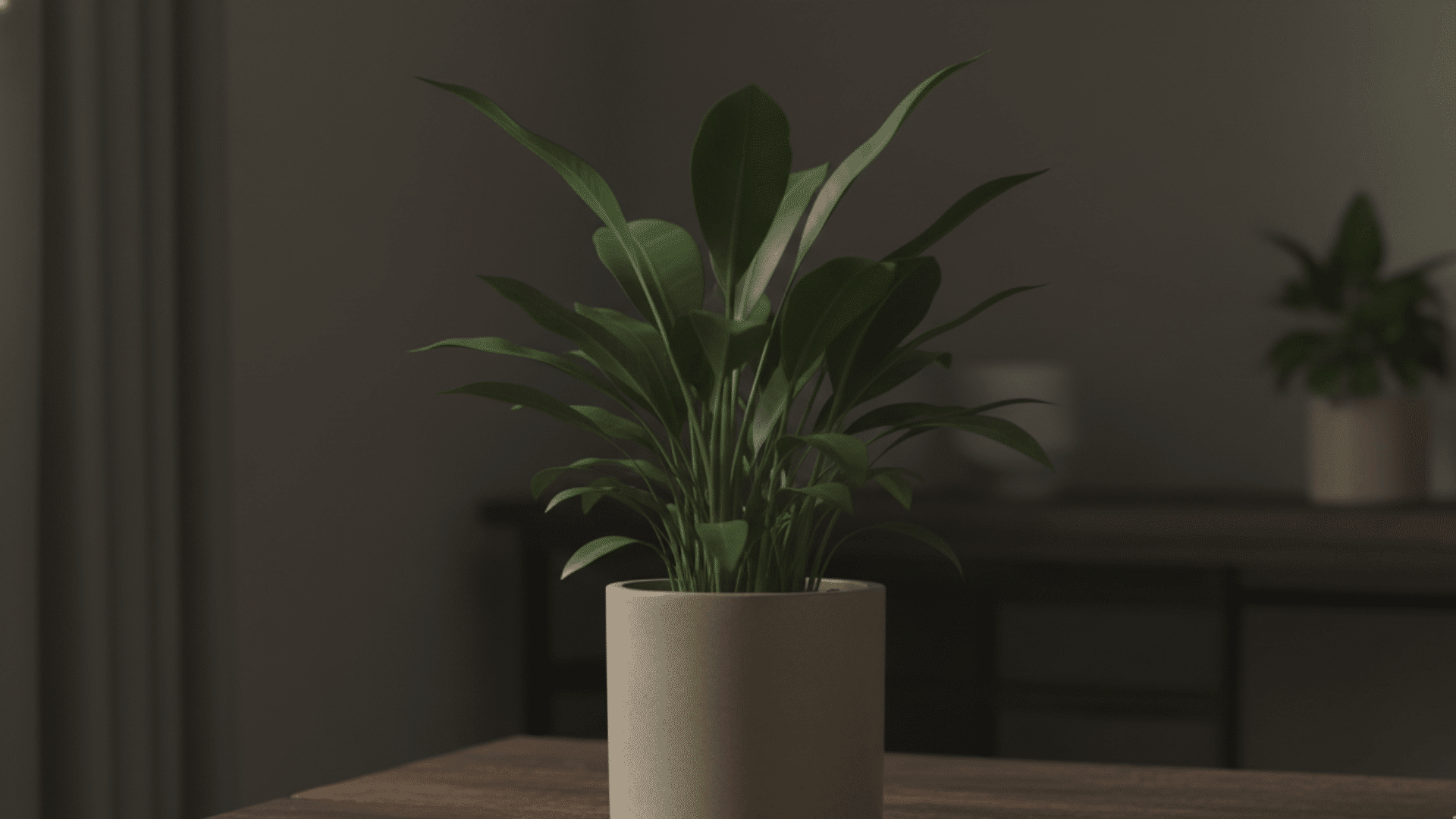
The cast iron plant earns its name by surviving almost any condition. Its broad, dark green leaves grow slowly but stay healthy for years.
- Light requirements: Tolerates very low light better than most houseplants.
- Watering needs: Water every 2 weeks or when the top half of the soil dries.
- Basic care tips: Wipe dust off leaves monthly to help them absorb light.
- Best indoor placement: Entryways, windowless offices, or dark hallways.
6. Chinese Evergreen (Aglaonema Commutatum)
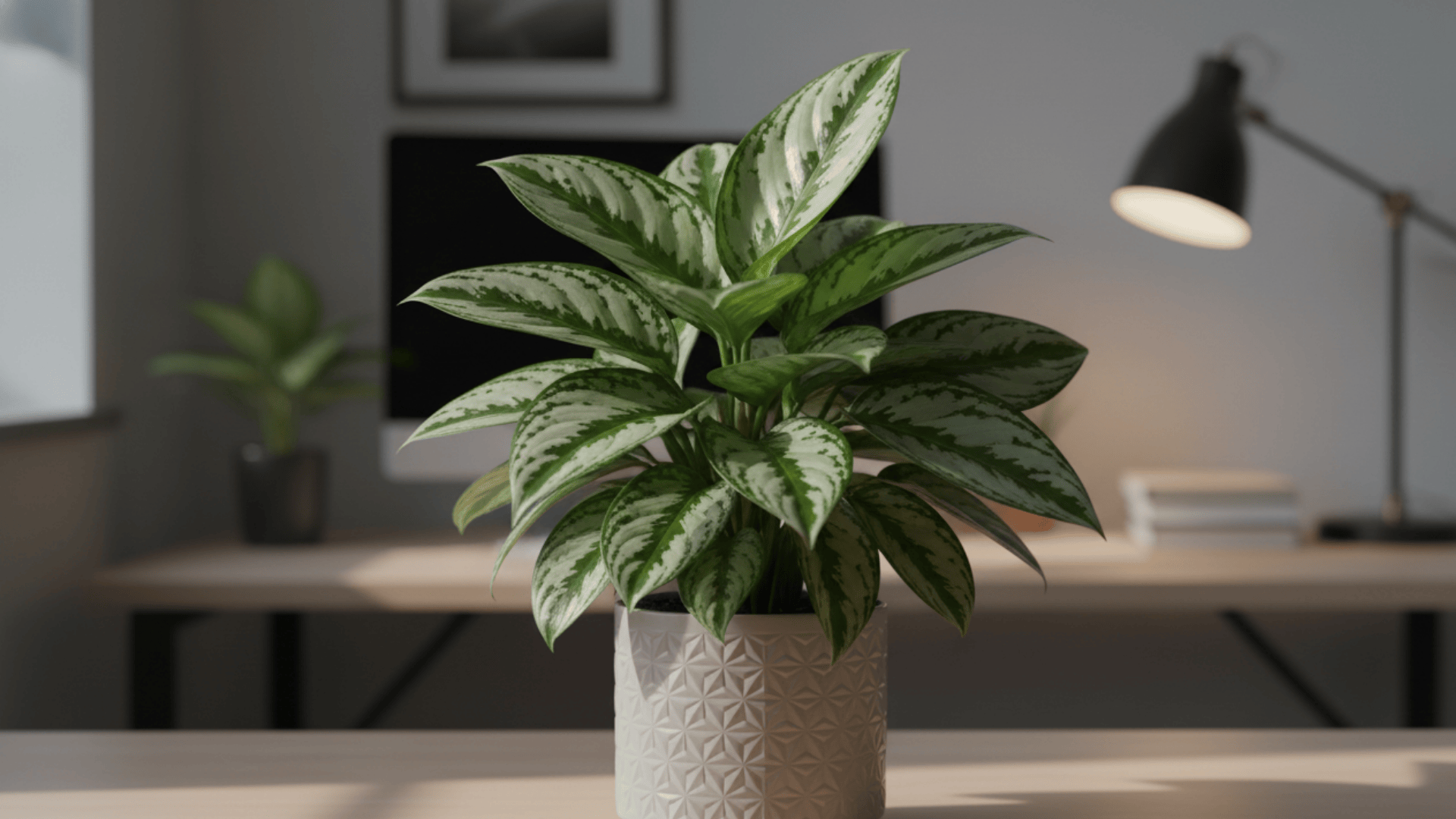
Chinese evergreen has colorful leaves with patterns in silver, pink, or red. It stays compact and fits easily on desks or shelves.
- Light requirements: Needs low to medium light; darker varieties handle shade better.
- Watering needs: Water when the top inch of soil is dry but not bone dry.
- Basic care tips: Keep soil slightly moist but never soggy to prevent root rot.
- Best indoor placement: Office desks, side tables, or north-facing windowsills.
7. Philodendron (Philodendron Hederaceum)
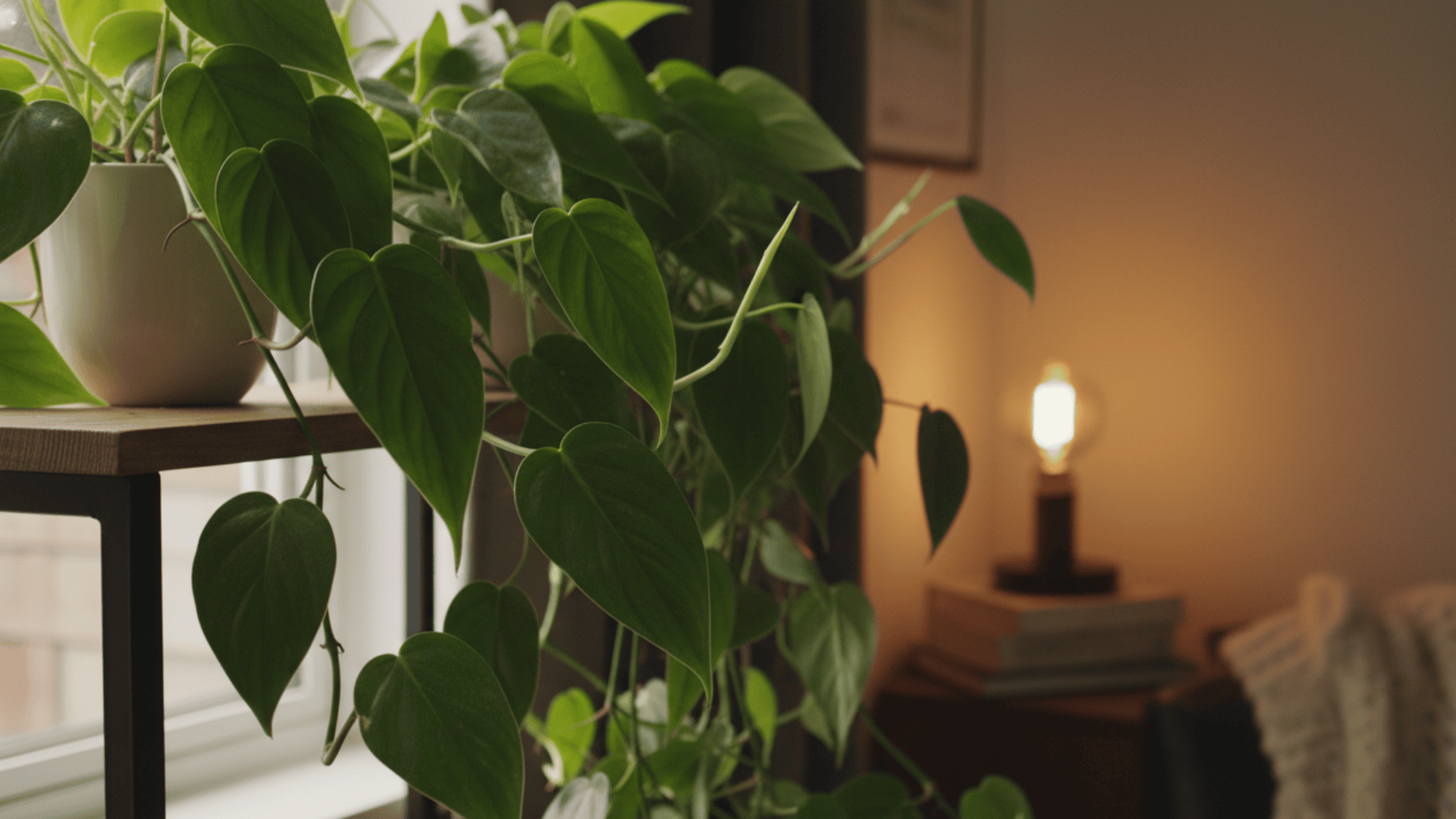
Philodendrons have vining stems covered in glossy, heart-shaped leaves. They grow fast and look lush in hanging planters.
- Light requirements: Grows in low light but produces bigger leaves with more brightness.
- Watering needs: Water once a week or when the soil feels dry 1 inch down.
- Basic care tips: Pinch off leggy stems to keep the plant looking full.
- Best indoor placement: Bookshelves, plant stands, or suspended from ceiling hooks.
8. Spider Plant (Chlorophytum Comosum)
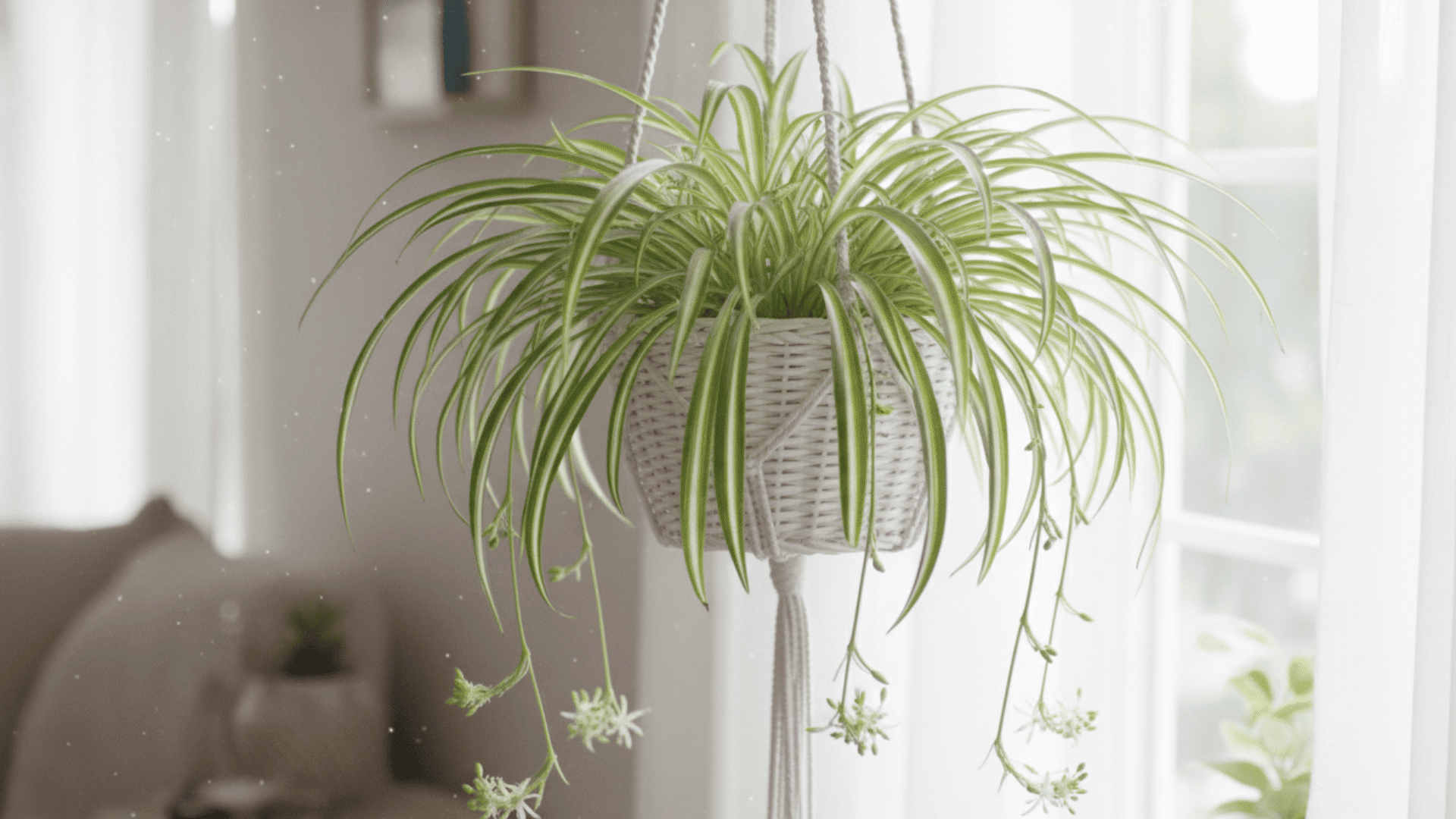
Spider plants produce long, arching leaves with white or yellow stripes. They grow baby plantlets that dangle from the mother plant.
- Light requirements: Prefers medium light but adjusts well to shaded spots.
- Watering needs: Water twice a week in warm months, once in cooler seasons.
- Basic care tips: Remove brown leaf tips with clean scissors for appearance.
- Best indoor placement: Hanging baskets near windows or on tall plant stands.
9. Dracaena (Dracaena Fragrans)
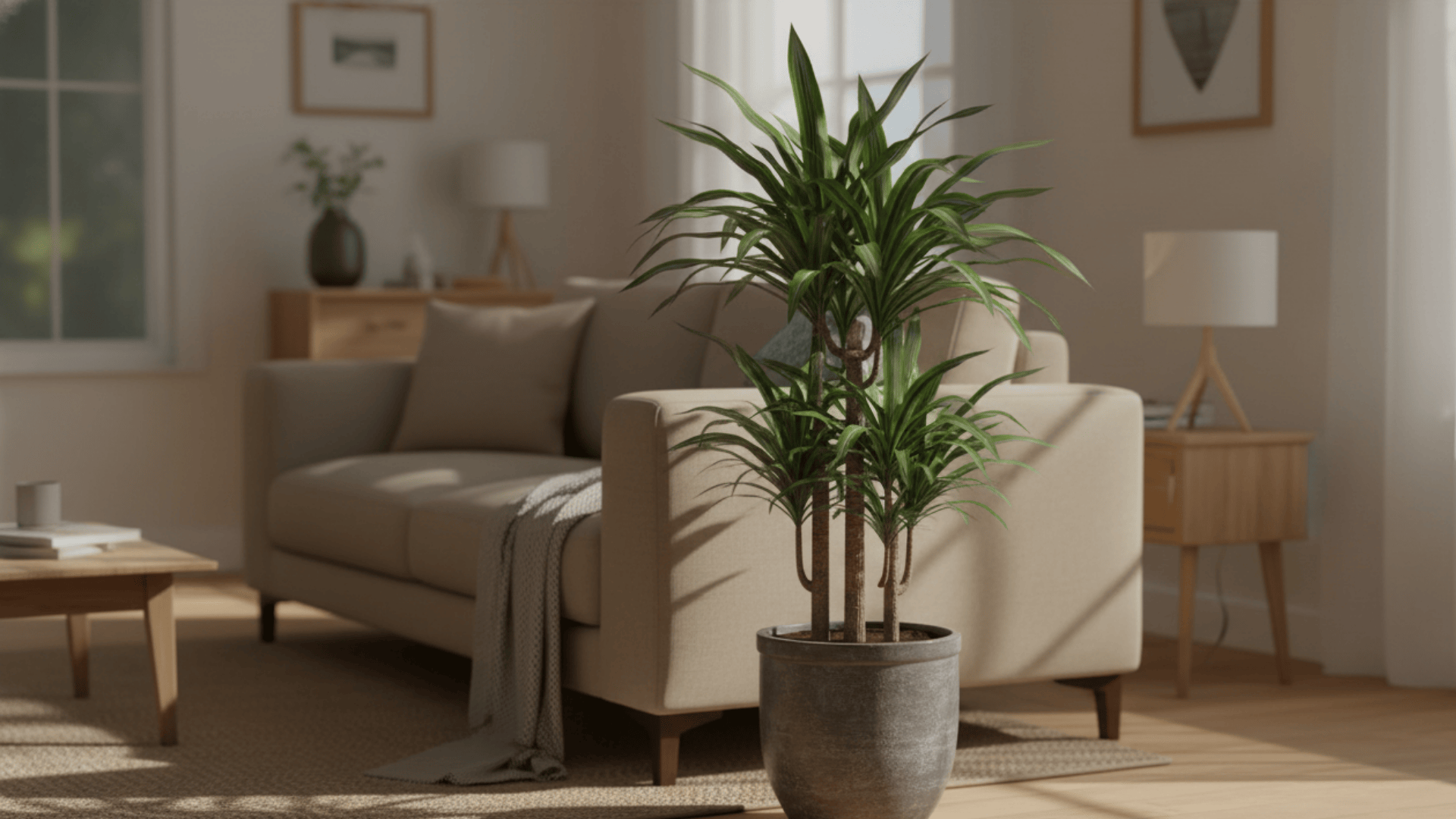
Dracaena plants have long, narrow leaves that grow in clusters. They reach several feet tall and make great floor plants.
- Light requirements: Handles low to medium light with slow but steady growth.
- Watering needs: Water when the top 2 to 3 inches of soil feel dry.
- Basic care tips: Use filtered or distilled water to avoid brown leaf tips.
- Best indoor placement: Living room corners, beside sofas, or near staircases.
10. Parlor Palm (Chamaedorea Elegans)
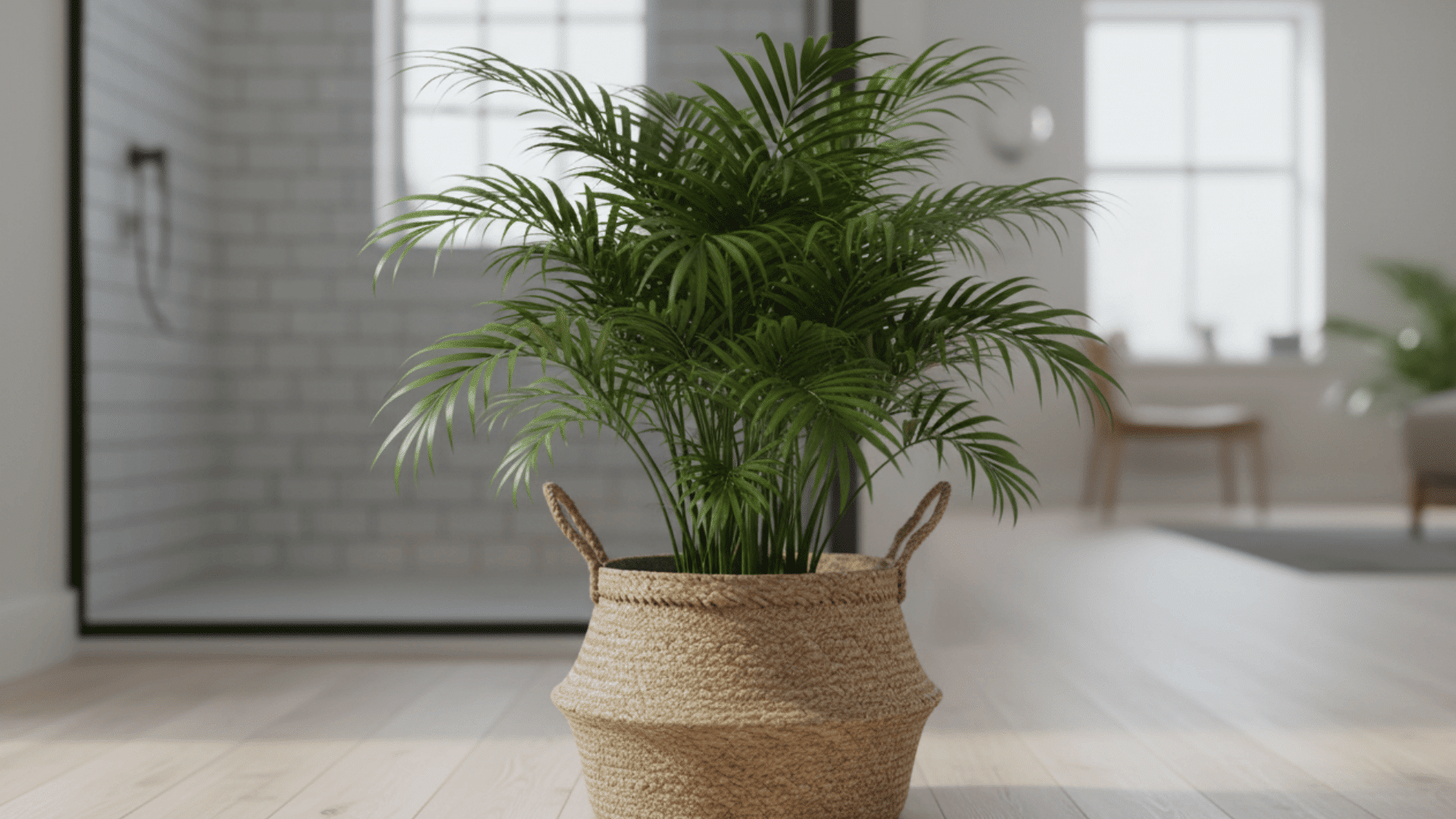
The parlor palm brings a tropical feel to low-light rooms. Its feathery fronds grow slowly and stay manageable in size.
- Light requirements: Thrives in low to medium indirect light conditions.
- Watering needs: Keep soil lightly moist but allow it to dry slightly between waterings.
- Basic care tips: Mist fronds regularly to increase humidity and prevent browning.
- Best indoor placement: Bathrooms, living rooms, or shaded patios indoors.
11. Aglaonema (Aglaonema modestum)
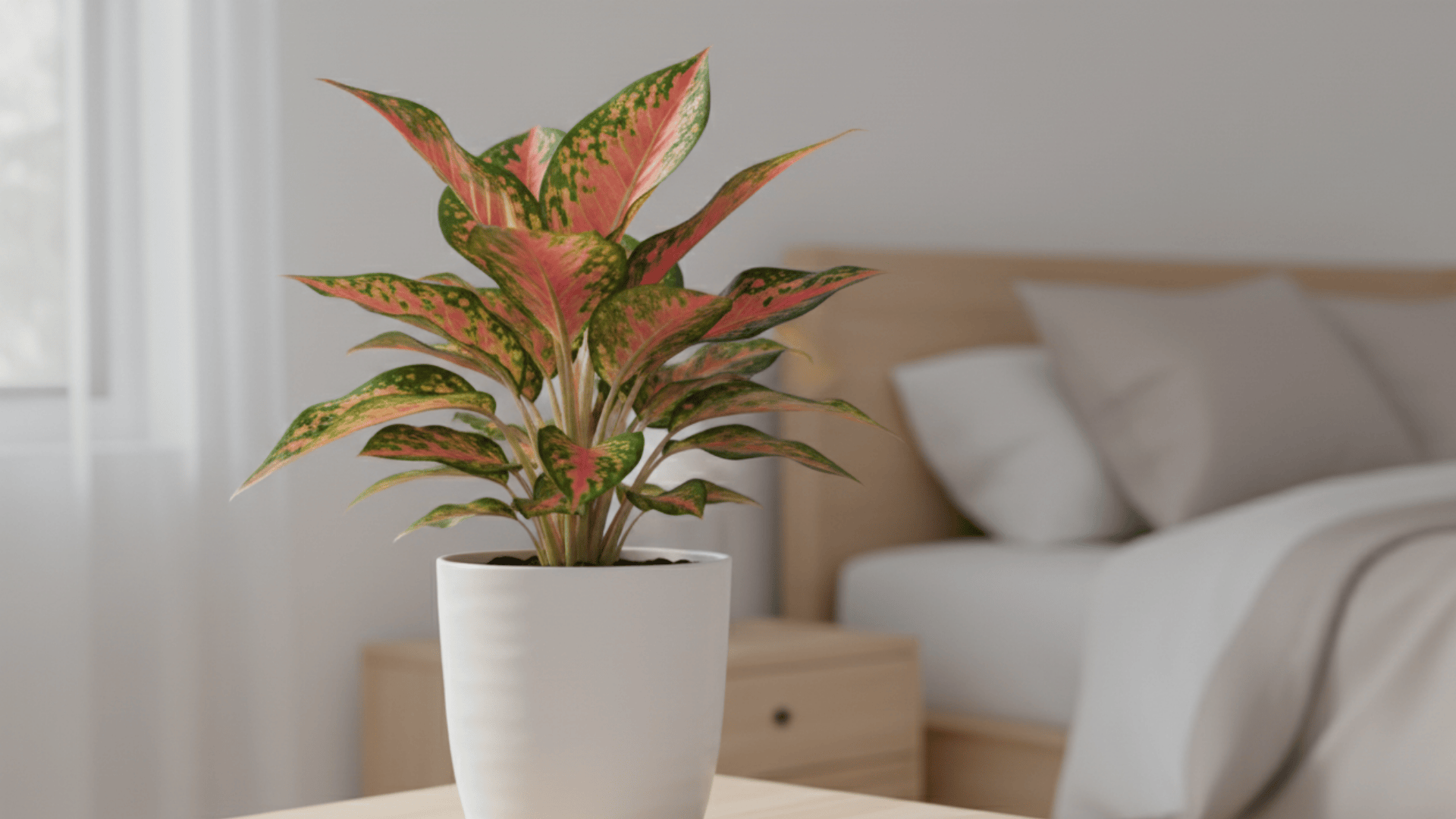
Aglaonema varieties come in many colors, from green to red to pink. They grow upright and maintain a tidy appearance without much effort.
- Light requirements: Does best in low to medium light away from windows.
- Watering needs: Water when the top 1 to 2 inches of soil are dry.
- Basic care tips: Avoid cold temperatures below 60°F for healthy growth.
- Best indoor placement: Offices, bedrooms, or any space with artificial lighting.
12. Rubber Plant (Ficus Elastica)
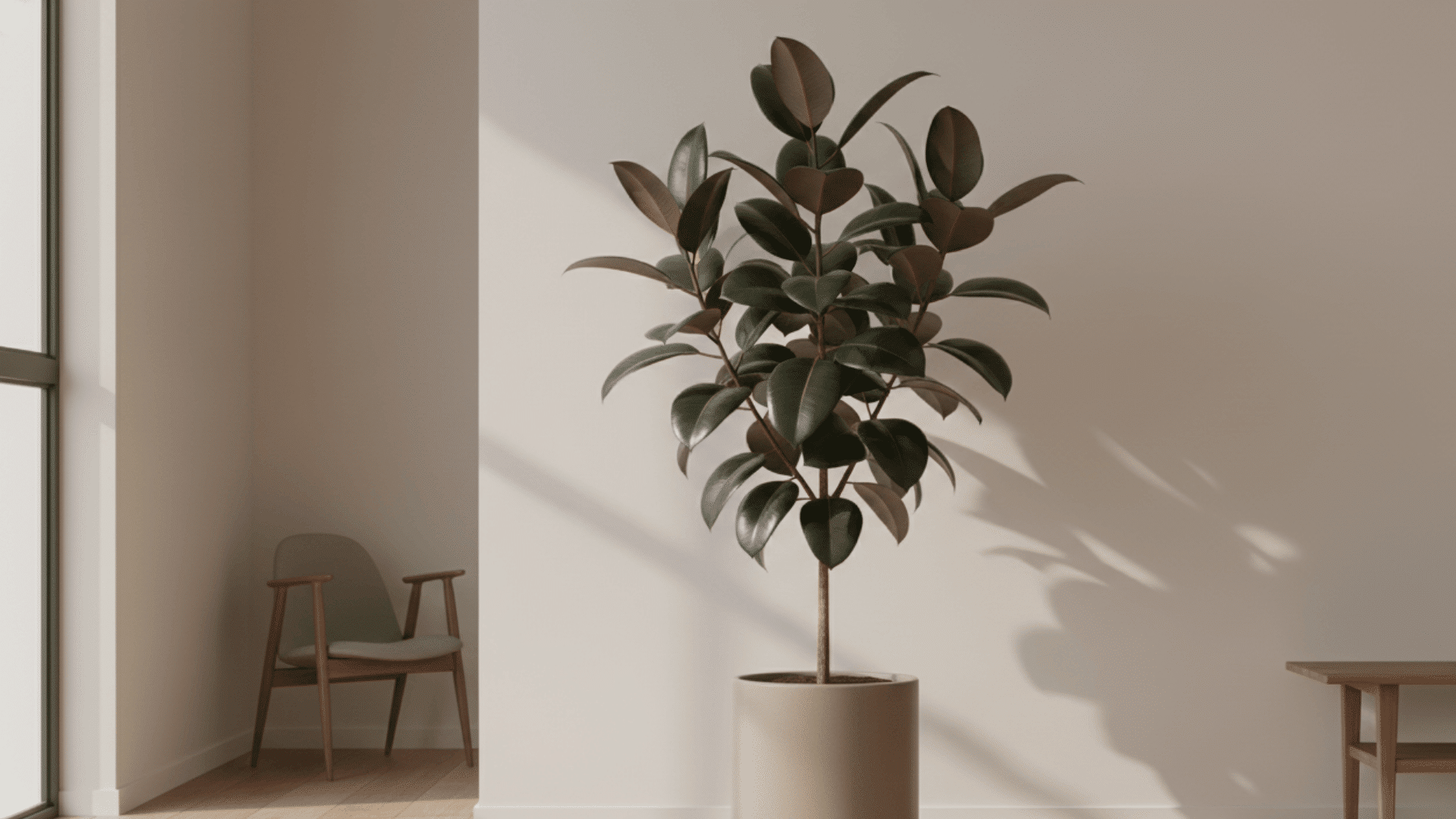
Rubber plants have large, thick leaves with a waxy finish. They grow tall over time and make bold statement pieces.
- Light requirements: Prefers medium light but tolerates lower light with slower growth.
- Watering needs: Water weekly in summer, every 10 days in winter.
- Basic care tips: Wipe leaves with a damp cloth to remove dust buildup.
- Best indoor placement: Floor spots in living rooms or near bright, indirect windows.
13. Dieffenbachia (Dieffenbachia Seguine)
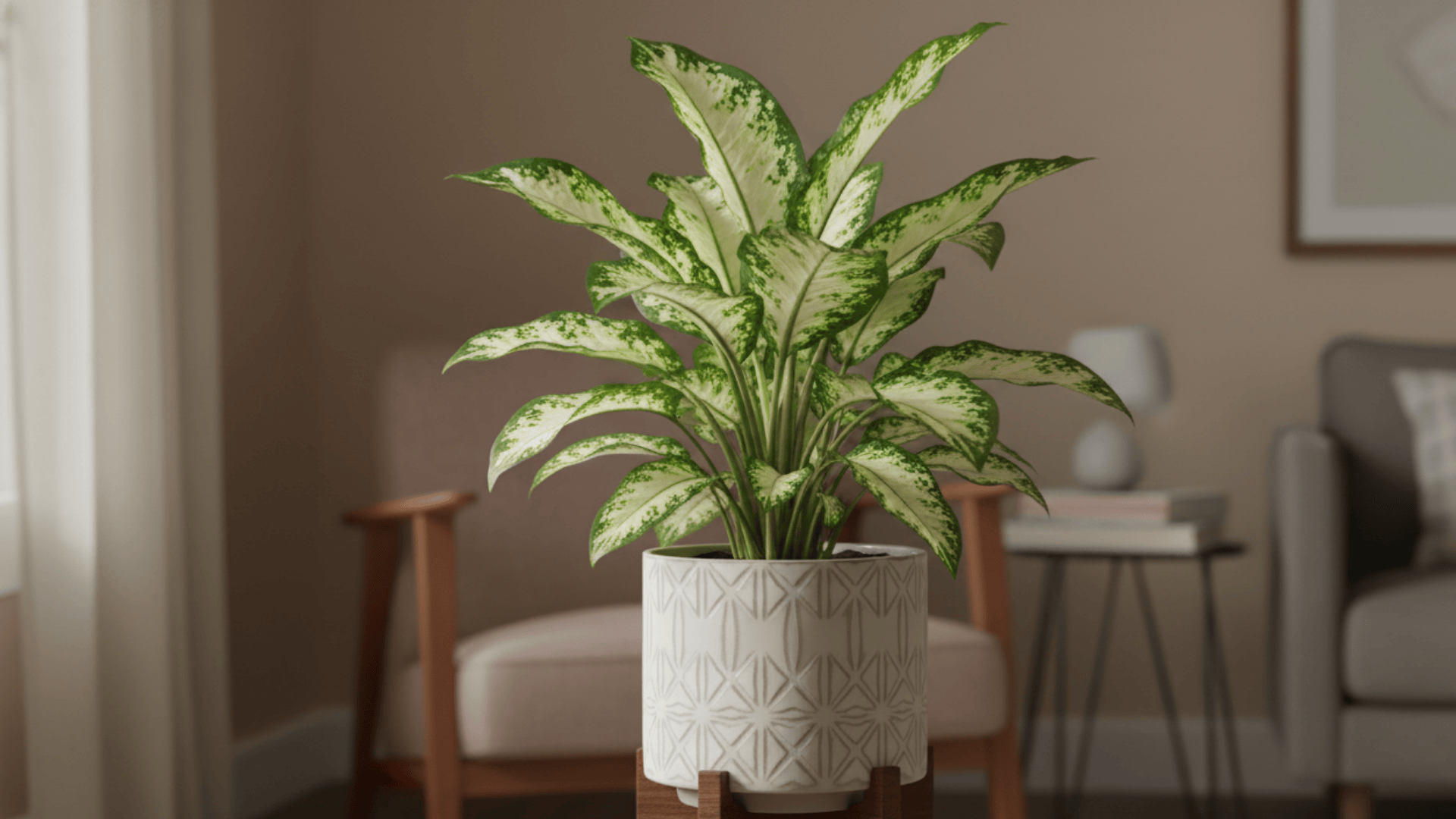
Dieffenbachia has broad leaves with cream or white markings. It grows bushy and fills empty spaces quickly.
- Light requirements: Grows well in low to medium light but not total darkness.
- Watering needs: Water when the top inch of soil dries out completely.
- Basic care tips: Keep away from pets and children as leaves are toxic.
- Best indoor placement: Home offices, dining rooms, or shaded room corners.
14. Heartleaf Philodendron (Philodendron Scandens)
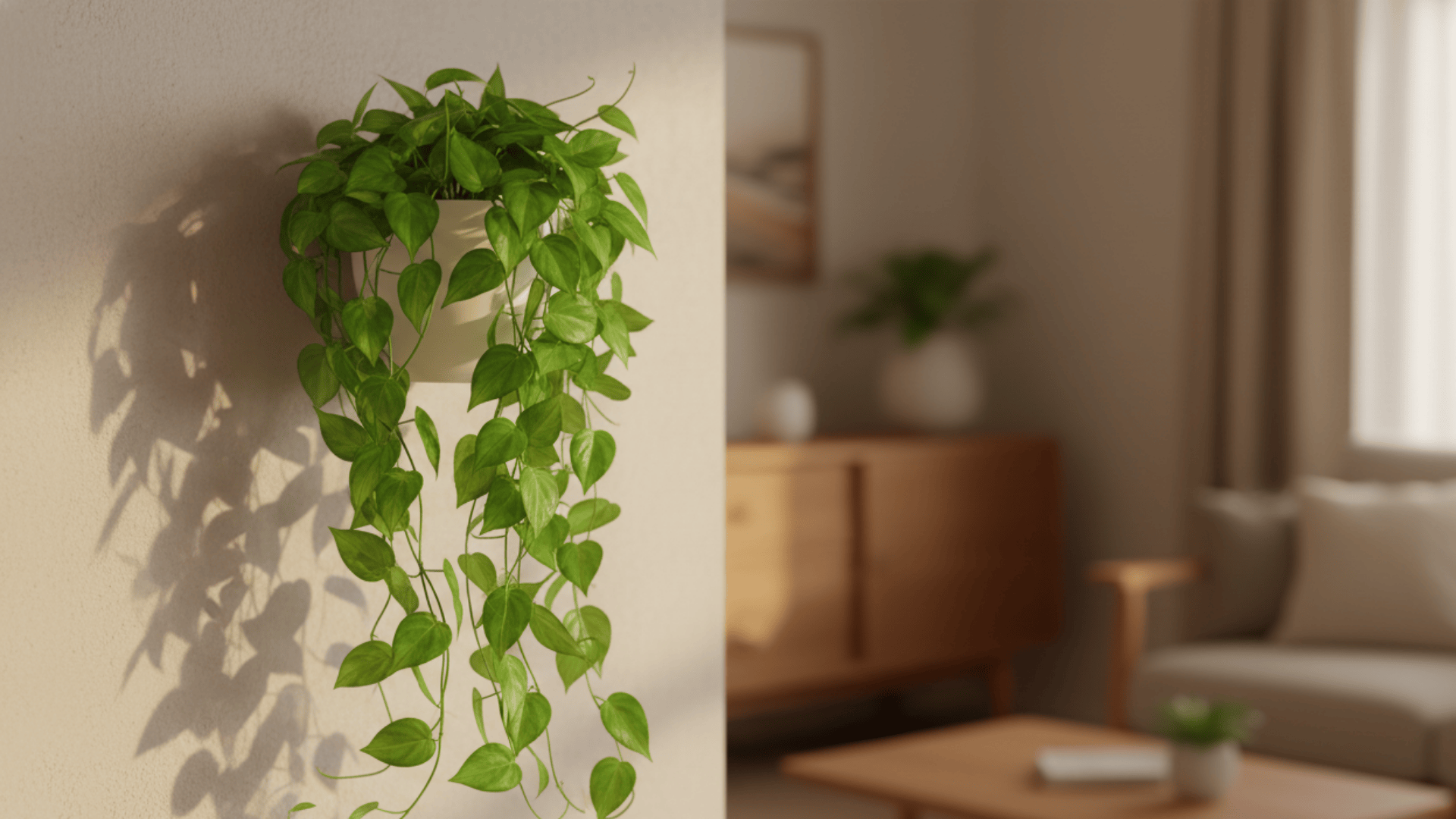
The heartleaf philodendron is a fast-growing vine with small, heart-shaped leaves. It trails beautifully and adapts to most indoor conditions.
- Light requirements: Handles low light well but grows fuller in medium light.
- Watering needs: Water once weekly or when the soil surface feels dry.
- Basic care tips: Prune regularly to control length and encourage branching.
- Best indoor placement: Hanging planters, bookcase edges, or wall-mounted pots.
What You’re Doing Wrong With Low Light Plants
You’ve picked the perfect plant for your dim corner, but it still struggles. Most problems with low-light plants come from how you care for them, not the light itself.
| Mistake | Why It Happens |
|---|---|
| Overwatering in shaded spaces | Low light slows growth. Plants need less water. Soil stays wet longer and causes root rot. |
| Expecting fast growth in low light | Plants grow slowly without intense light. New leaves take weeks or months. This is normal. |
| Incorrect placement assumptions | Zero light kills all plants. Even low-light plants need some light daily. |
| Not adjusting watering in winter | Winter light is weaker. Plants use less water. Keep the same summer schedule, and roots grow. |
| Ignoring warning signs | Yellow leaves or brown tips mean problems. Early action prevents bigger issues later. |
How to Care for Low-Light Indoor Plants Long Term
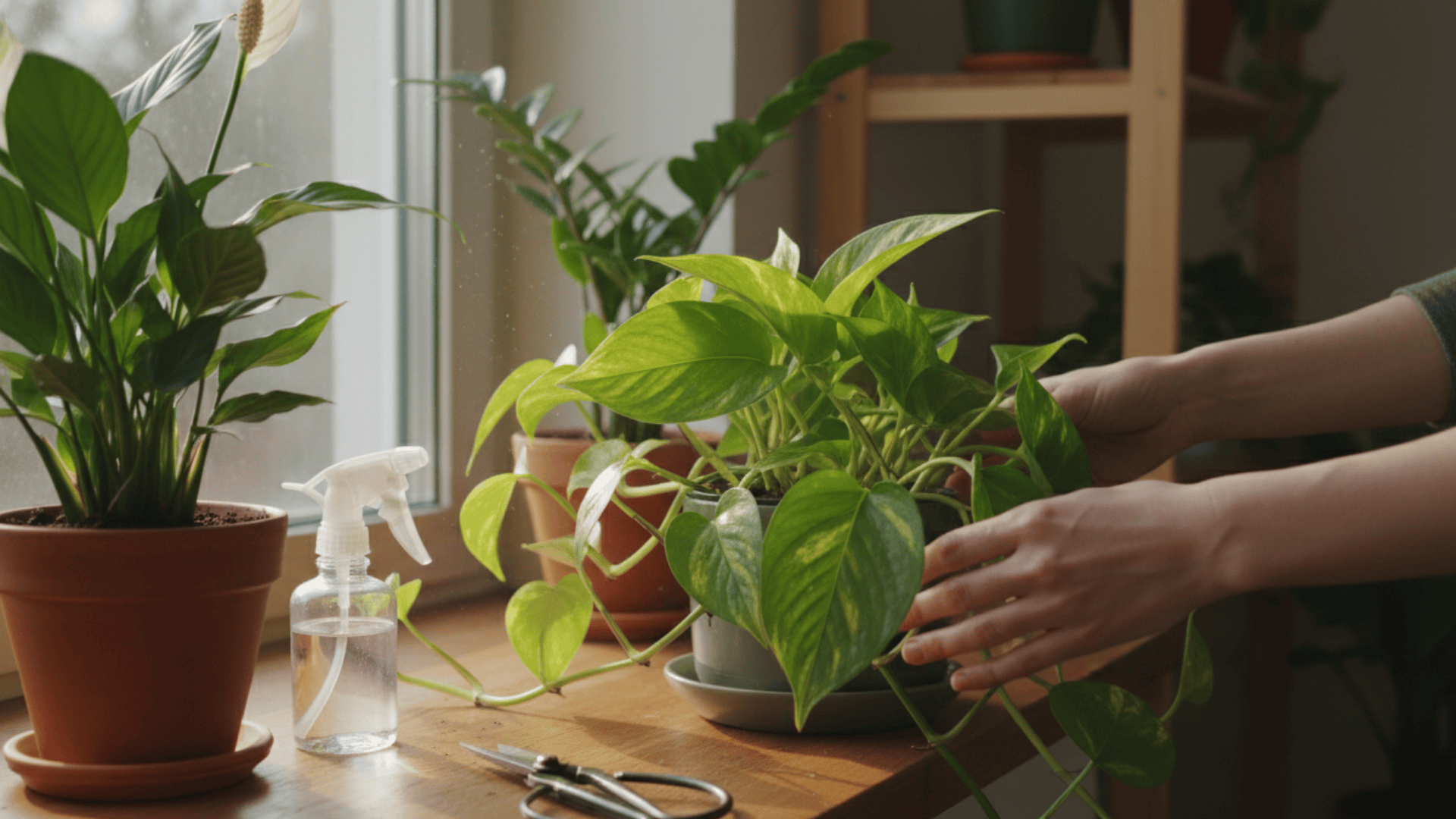
Getting a low-light plant to survive the first month is easy. Keeping it healthy for years requires a few simple habits that most people skip.
Adjusting Watering Schedules
Low-light plants need less water than those in bright spots. Check soil moisture before watering instead of following a fixed schedule. Stick your finger 1 to 2 inches into the soil. If it feels dry, water the plant. If it still feels damp, wait a few more days.
Soil and Drainage Considerations
Use well-draining soil that doesn’t hold too much moisture. Regular potting mix works fine for most low-light plants. Always choose pots with drainage holes at the bottom. Water should flow out freely, not pool inside. Empty the saucer under the pot after 30 minutes to prevent root problems.
When to Rotate or Relocate Plants
Rotate your plants every 2 to 4 weeks so all sides get equal light. This prevents lopsided growth toward the light source. Move plants closer to windows during winter when daylight is shorter. If leaves turn yellow or stems get leggy, your plant needs more light. Relocate it to a brighter spot right away.
How to Choose the Right Low-Light Indoor Plants?
Look for plants with dark green or thick leaves. These traits help them survive in dim conditions. Variegated or colorful plants often need more light to maintain their patterns.
Expect slow growth in shaded rooms. Most low-light plants add only a few leaves per month. This is healthy, not a problem. Watering habits matter more than light levels for plant survival.
Overwatering kills more low-light plants than lack of sunlight. Check soil moisture regularly and water only when needed.
The right plant, combined with proper watering, keeps your indoor space green for years.
The Bottom Line
Low-light indoor plants can thrive in your home when you choose the right species. Snake plants, pothos, and ZZ plants are great starting points for beginners.
Remember that low light means some light, not complete darkness. Water less often in shaded rooms and check soil moisture before each watering.
Start with one or two plants and see how they do in your space. Watch how they respond over a few weeks. Then add more as you gain confidence.
Which low-light plant will you try first? Drop a comment below and let us know. We’d love to hear about your indoor plant setup and answer any questions you have.