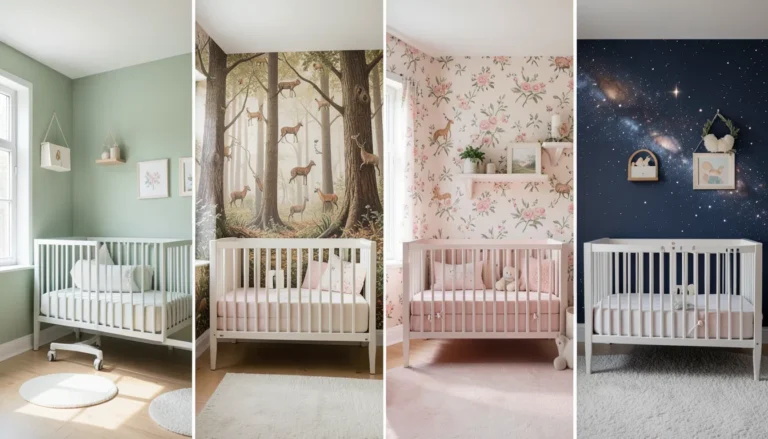

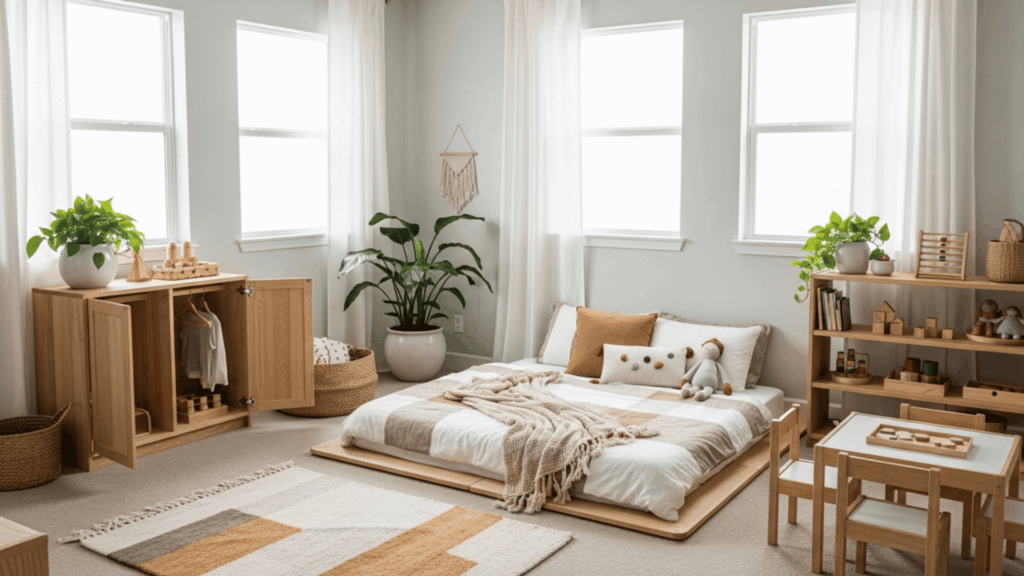
Ever walked into your toddler’s room and felt overwhelmed by the chaos? Toys everywhere. A crib they’re trying to climb out of. Furniture that they can’t reach without your help.
A Montessori bedroom flips that script. It puts your child in control of their space. No more calling for you every time they want a book or need to get dressed.
In this guide, you’ll learn what makes a Montessori bedroom work, from floor beds to toy rotation systems.
We’ll cover setup steps, budget-friendly alternatives, and age-specific tips. Plus, you’ll see real examples and design ideas that actually fit your home.
Ready to create a room where your child can thrive independently?
What Is a Montessori Bedroom?
A Montessori bedroom is a child-centered space designed to encourage independence and freedom of movement.
The room features a floor bed instead of a crib, low shelves for easy toy access, and child-height furniture. This setup lets your child make choices about their environment without adult help.
The main benefits include better motor skills, improved confidence, and stronger decision-making abilities from an early age.
Parents notice their kids become more self-reliant and comfortable exploring their own space safely.
Core Elements of Montessori Bedroom Design
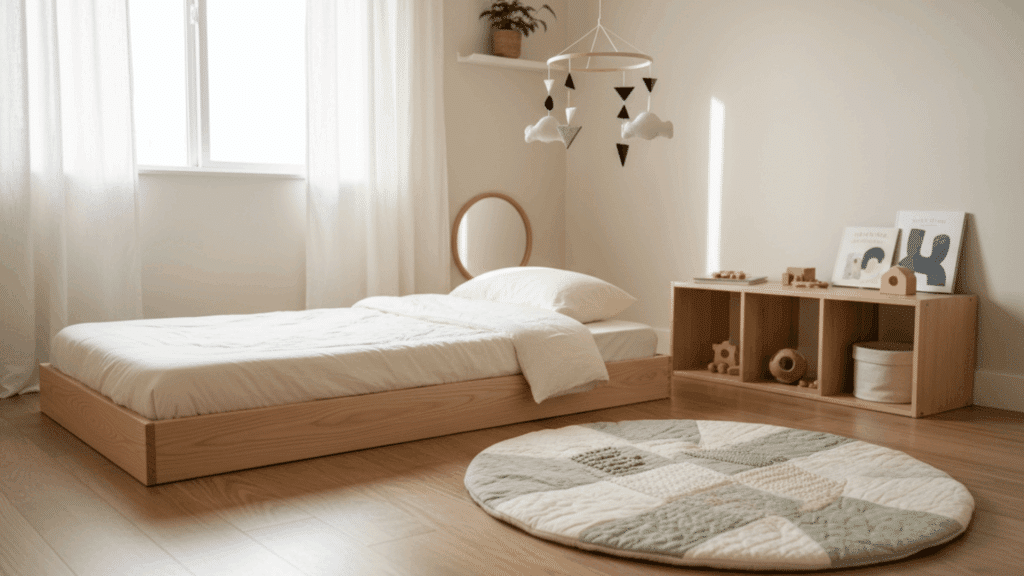
Creating a Montessori bedroom means getting a few key elements right. These basics work together to support your child’s growth and independence.
- Floor Bed: A floor bed sits directly on the ground or uses a low frame, giving your child complete freedom to get in and out without help.
- Zones That Matter: Break the bedroom into clear zones for sleeping, reading, playing, and moving so your child knows where to go.
- Child-Friendly Furniture at Reachable Heights: All furniture should be sized for your child, including low shelves, small hooks at eye level, tiny chairs and tables, and mini wardrobes that they can open on their own.
- Minimal and Calm Aesthetic: Keep the room simple with soft whites, beiges, grays, and muted earth tones, adding warmth through cotton blankets, wool rugs, and wooden toys.
- Lighting, Natural Materials & Sensory Comfort: Maximize natural light with sheer curtains, add warm lamps for evenings, and choose wooden furniture with cotton bedding and natural fiber rugs.
Step-by-Step Montessori Bedroom Setup Guide
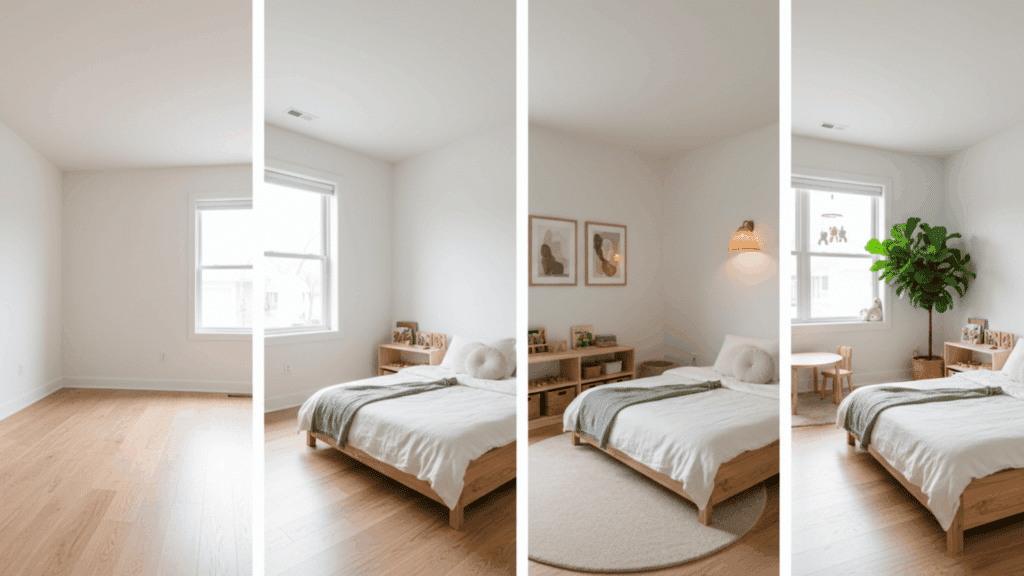
Ready to set up a Montessori bedroom? Follow these practical steps to create a space your child can use independently.
Step 1: Clear Out Excess Toys
Start by removing most toys and keeping only 5-8 favorites on display. Too many choices overwhelm young children and make it hard for them to focus on one activity. Store extra toys in a closet and rotate them every few weeks to keep things fresh.
Step 2: Set Up the Floor Bed
Place the floor bed against a wall for safety and away from windows or heaters. Put it in a quiet corner where your child can see the door when lying down. Use bed rails for toddlers who roll over in their sleep, and always place a soft rug beside the bed.
Step 3: Build Activity Stations
Create three clear areas in the room for different activities. Set up a low bookshelf with a cushion for reading time. Add a small table with one chair for art or puzzles. Install hooks at your child’s height for hanging clothes and bags.
Step 4: Childproof Everything
Anchor all furniture to walls using L-brackets to prevent tipping accidents. Cover electrical outlets with safety plugs and add corner guards to sharp furniture edges. Remove small objects that could be choking hazards and keep cords out of reach. Check the room from your child’s height to spot any dangers you might miss.
Montessori Bedroom Tours & Inspiration
Looking for visual ideas to spark your creativity? These real-world examples show how different families adapt Montessori bedroom designs to their homes.
| Style/Space Type | Key Features | Design Tips |
|---|---|---|
| Cozy & Neutral | Whites, beige, natural wood | Keep 80% neutral, minimal decor |
| Themed Rooms | Forest, sky, or ocean accents | Limit to 2-3 colors, stay subtle |
| Small Spaces | Wall shelves, vertical storage | Keep the floor clear, use wheels |
| Minimalist | All neutral, 5 toys max | Best for distracted children |
| Playful | Neutral base, bright accents | Add 2-3 colorful pillows or rugs |
7 Montessori Bedroom Ideas to Inspire Your Setup
Looking for fresh ways to design your Montessori bedroom? These seven ideas will help you create a functional and inspiring space your child will love.
1. Create a Nature-Inspired Space
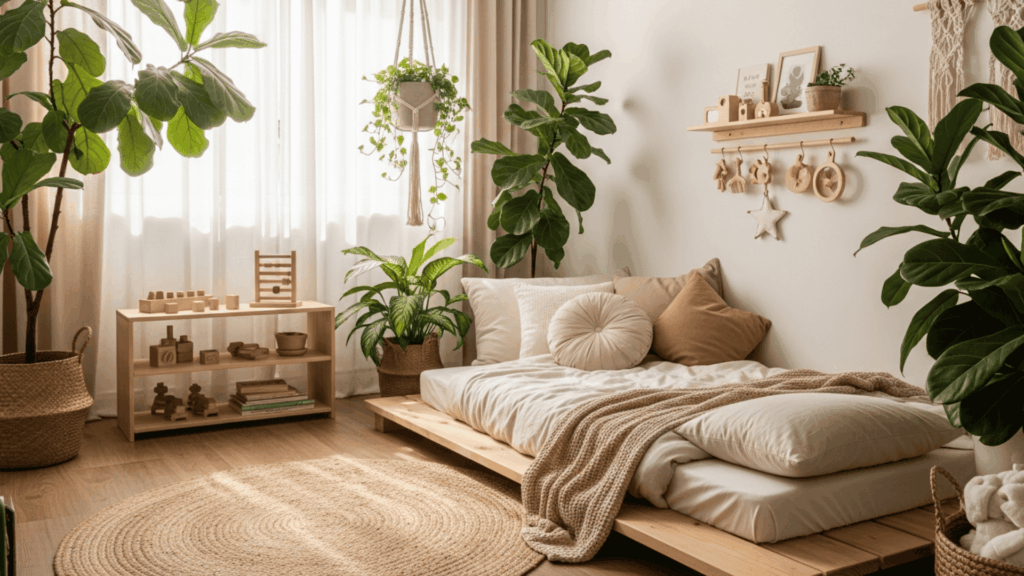
Bring the outdoors inside by using natural materials throughout the room. Wood, wool, cotton, and stone create a calming environment that feels warm and grounded. Add wicker baskets for toy storage and place a few child-safe plants in corners to teach your child about caring for living things.
Inspiration:
- Wooden floor bed as the room’s focal point
- Wicker or bamboo baskets for organizing toys
- Large, safe plants like rubber plants or spider plants
- Natural fiber rugs in neutral tones
2. Interactive Wall Stations
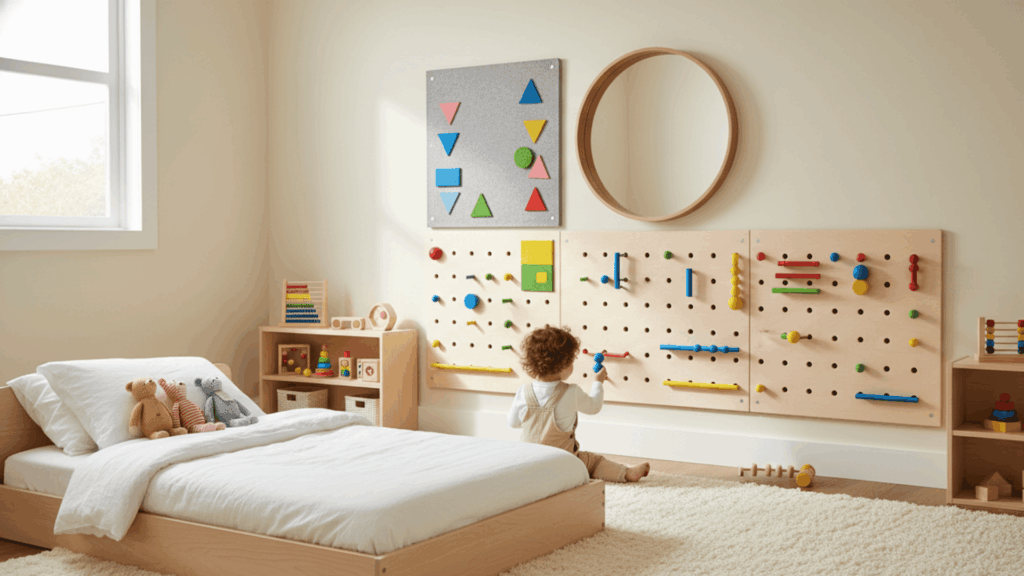
Give your child hands-on learning right on the walls. Install tactile panels with different textures like felt, sandpaper, or fabric swatches at their height. A wall-mounted mirror helps them recognize themselves and build self-awareness as they get dressed.
Inspiration:
- Small unbreakable mirror mounted low on the wall
- Corkboard for displaying their artwork
- Felt boards with shapes that they can rearrange
- Pegboards with movable wooden pieces
3. Montessori Bookshelf for Easy Access
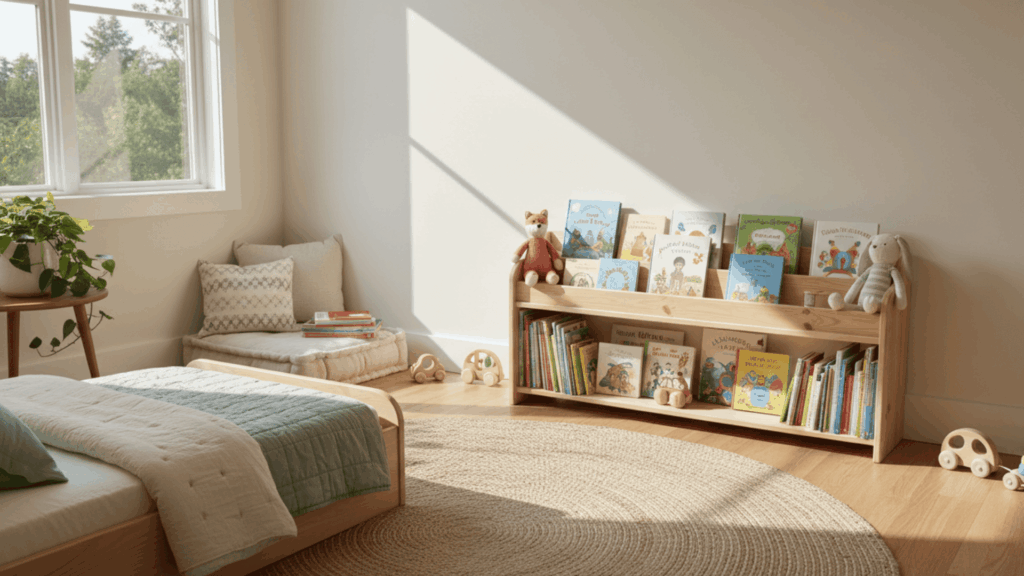
Display books with covers facing forward on low shelves so your child can see and choose them easily. Keep only 8-10 books out at once to avoid overwhelming them. Swap books every two weeks to maintain interest and excitement about reading.
Inspiration:
- Forward-facing book display at the child’s eye level
- Wooden book ledges or low cube shelves
- Rotating selection of age-appropriate books
- Cozy reading cushion placed nearby
4. Soft Play Zone
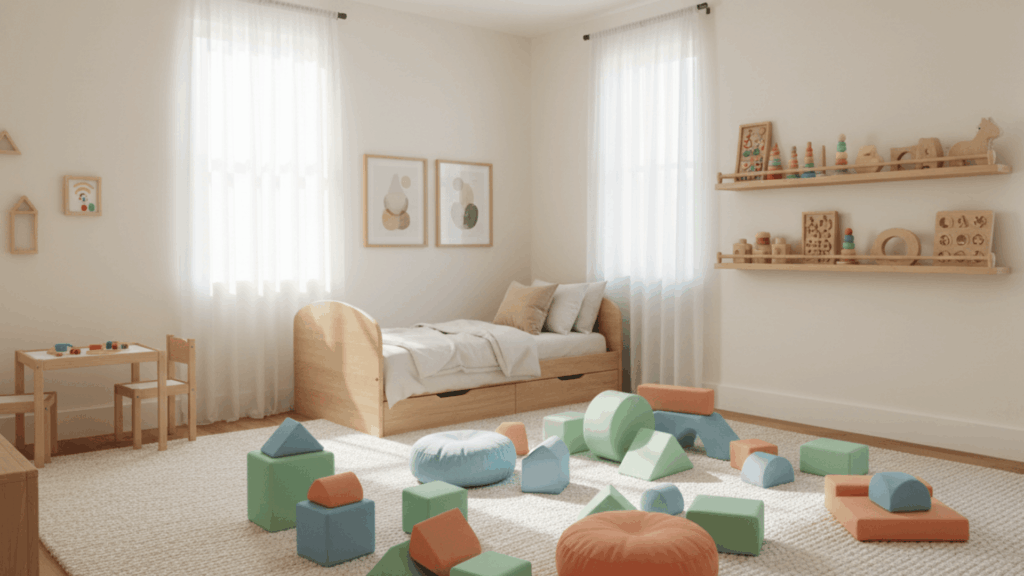
Set aside a corner with soft materials where your child can move freely and safely. Foam mats, large cushions, and bean bags create a comfortable area for tumbling, rolling, and building motor skills. This gives them a designated space to burn energy indoors.
Inspiration:
- Foam play mats in neutral colors
- Large floor cushions for sitting and climbing
- Soft fabric tunnel for crawling through
- Low foam blocks for stacking and building
5. Montessori Toy Rotation System
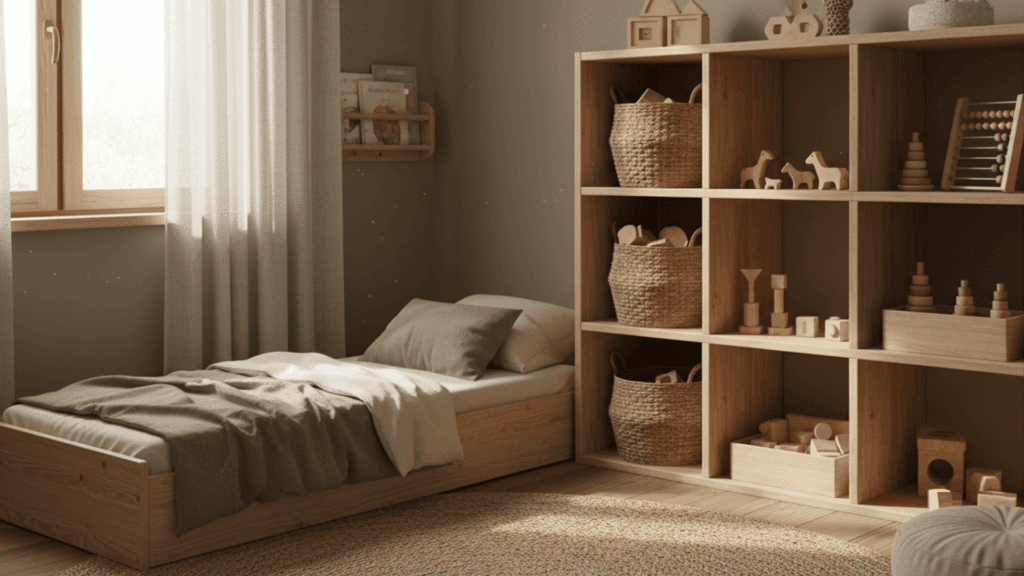
Keep only a few toys visible and store the rest away in bins. Rotate toys every week or two to keep your child engaged without overwhelming them. This system helps them focus better and appreciate each toy more fully.
Inspiration:
- Open low baskets or bins for current toys
- Closet storage for backup toy rotation
- 5-8 toys maximum on display
- Weekly or bi-weekly swap schedule
6. Sensory Play Materials Station
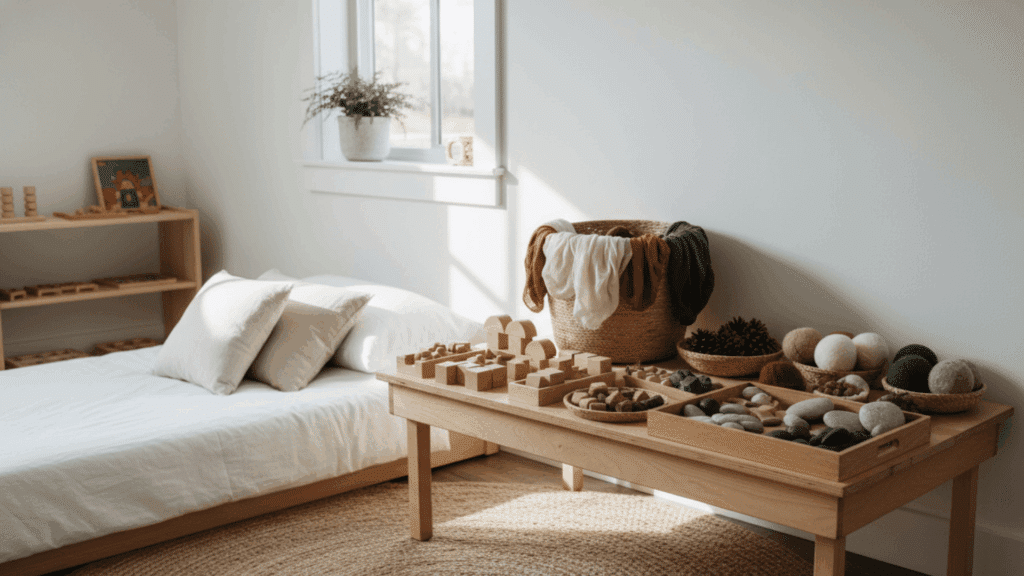
Create a small area with items that engage different senses through touch, sight, and smell. Wooden toys, fabric squares, smooth stones, and pinecones give your child varied textures to explore. Keep these materials in a low basket that they can access whenever curiosity strikes.
Inspiration:
- Natural objects like shells, stones, and wood pieces
- Fabric swatches in different textures
- Wooden sensory toys and puzzles
- Small basket at an accessible height
7. Personalized Growth Chart Wall
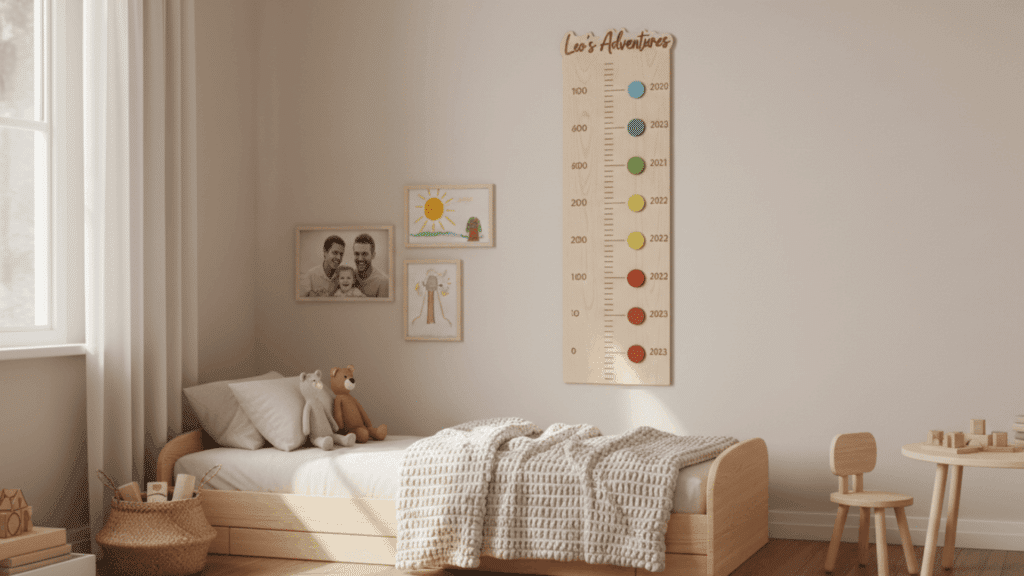
Track your child’s height with a simple wooden or fabric growth chart mounted on the wall. Kids love seeing how much they’ve grown over time. This visual reminder builds confidence and gives them something to feel good about as they get bigger.
Inspiration:
- Simple wooden ruler-style growth chart
- Fabric hanging chart with measurement marks
- Placement near the door or mirror
- Regular measuring sessions as a fun routine
Blending Montessori Bedroom with Other Design Styles
Your Montessori bedroom doesn’t have to look plain or boring. You can blend Montessori principles with your favorite design styles while keeping functionality intact.
| Design Style | How to Blend | Key Elements |
|---|---|---|
| Scandinavian | Natural wood, white walls | Light wood, simple lines |
| Bohemian | Textured rugs, earth tones | Woven baskets, plants, rattan |
| Modern Farmhouse | Rustic wood, neutral palette | Cotton bedding, vintage hooks |
| Japanese Zen | Low furniture, open space | Floor cushions, bamboo |
| Coastal | Light blues, natural fibers | Rope baskets, airy curtains |
Montessori Bedroom Setup for Different Ages
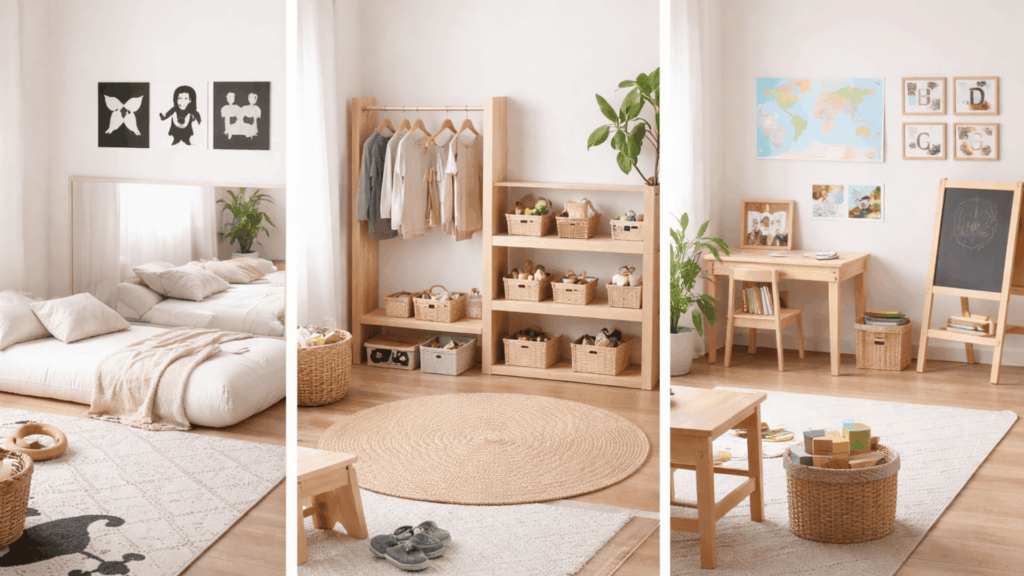
For babies up to 12 months old, keep a floor bed with a soft play mat, add a floor mirror at ground level, and hang black-and-white contrast images on the walls, since infants respond best to high-contrast visuals.
Toddlers aged 1-3 need a low clothing rail or hooks for choosing outfits, toy rotation systems with 5-8 items on accessible shelves, and a small step stool near the wardrobe for dressing themselves.
Kids aged 3-6 benefit from a small desk and chair for activities, a reading corner with forward-facing bookshelves, and learning materials such as world maps, alphabet cards, and a small chalkboard.
Final Thoughts
Setting up a Montessori bedroom doesn’t require a huge budget or a design degree. You just need a few key elements: a floor bed, low furniture, simple organization, and a calm environment.
The payoff is huge. Your child gains confidence, independence, and the freedom to learn at their own pace.
Start small. Pick one area to change this week. Maybe it’s lowering those toy shelves or swapping the crib for a floor mattress.
Watch how your child responds. You’ll likely see them take ownership of their space faster than you expected.
Have questions about your specific setup? Drop a comment below and let’s figure it out together. Your Montessori bedroom is just a few changes away.