
Should I send my 3-year-old to preschool? Wait, is pre-K different?
The confusion is real. Parents everywhere are trying to figure out which program is right for their child.
Some say preschool is just playtime. Others insist pre-K is absolutely necessary. The truth? They serve different purposes at different ages.
This post breaks down preschool vs pre-K in plain terms. You’ll learn what each program offers, how they differ in structure and cost, and which one fits your child’s age and readiness.
By the end, you’ll know exactly what to look for when making this critical decision.
What Is Preschool?
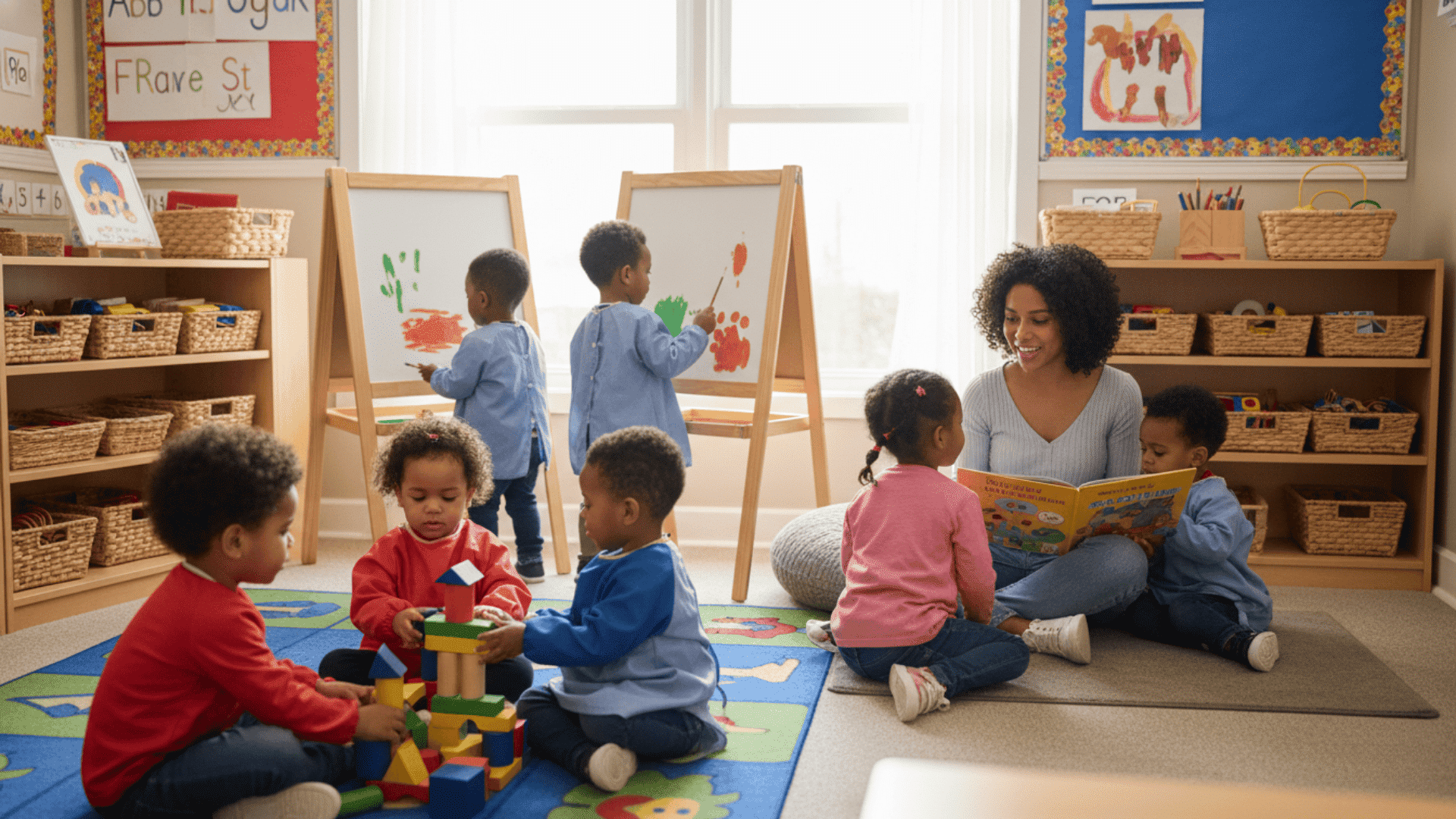
Preschool is an early learning program designed for young children before they enter kindergarten. It focuses on helping kids develop social skills, build confidence, and learn through play.
Most preschools use a flexible schedule with activities that teach colors, shapes, numbers, and letters. The classroom environment is warm and welcoming.
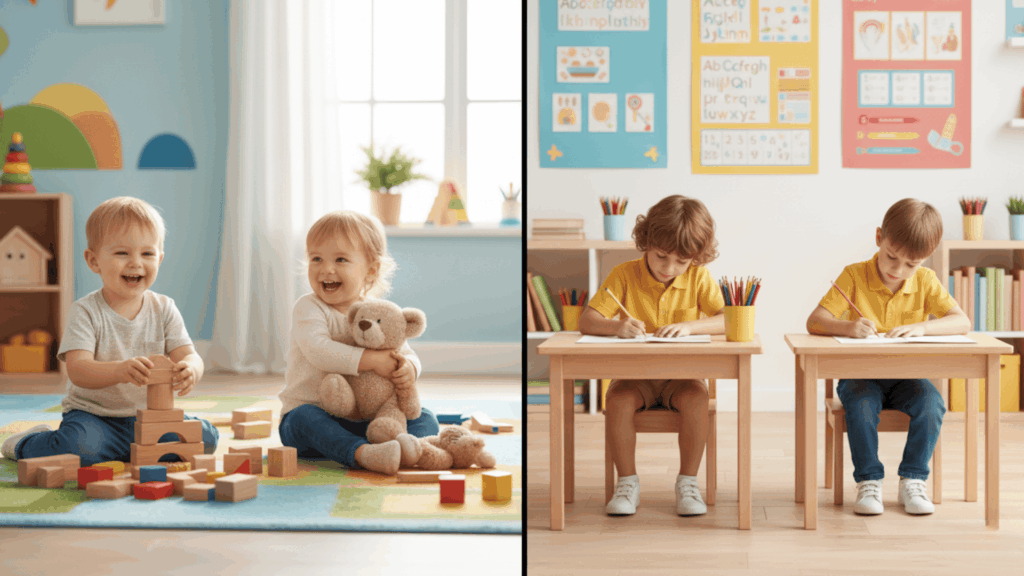
Children spend time playing, creating art, listening to stories, and working together. Teachers guide learning through games and hands-on activities rather than formal lessons.
Preschool Age Range:
| Program Type | Typical Age Range |
|---|---|
| Preschool | 2 to 5 years old |
| Most Common Entry Age | 3 years old |
Benefits of Preschool:
- Social Development and Emotional Growth
Children learn to share, take turns, and express feelings in healthy ways while building friendships. - Introduction to Routines and Group Learning
Kids get comfortable with daily schedules, following directions, and participating in group activities. - Encourages Curiosity and Independence
Preschool sparks a love for learning and helps children feel confident doing things on their own.
What Is Pre-K?
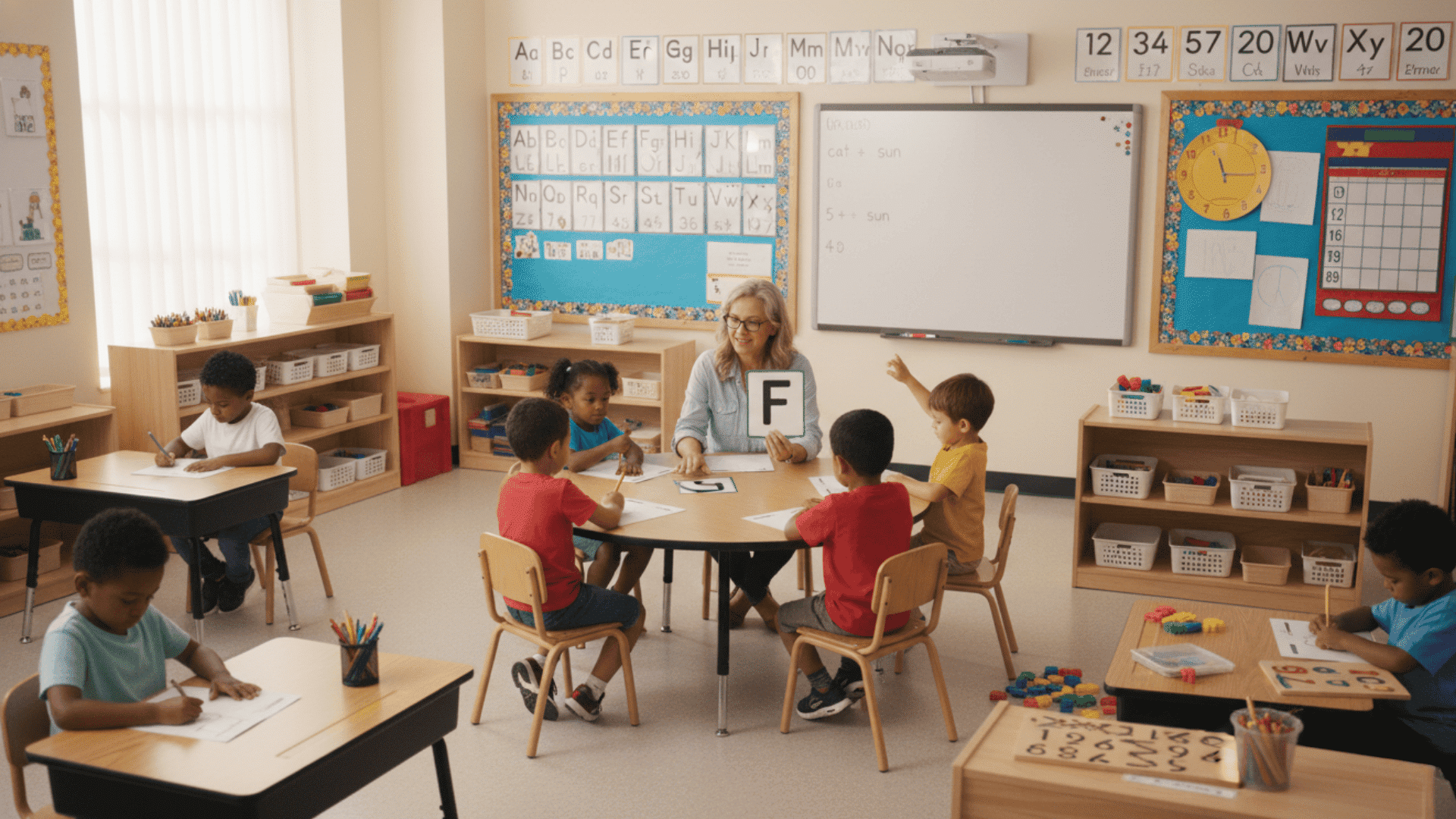
Pre-K, or prekindergarten, is a school readiness program designed explicitly for children one year before kindergarten.
It focuses heavily on preparing kids for the academic and social demands of elementary school. Pre-K introduces early literacy, basic math concepts, and classroom behavior in a more structured setting.
The learning approach includes both play and teacher-led activities. Children practice writing letters, counting, recognizing words, and following multi-step directions.
Pre-K acts as a bridge between preschool and kindergarten. It helps children feel ready and excited for the next big step in their education.
Pre-K Age Range:
| Program Type | Typical Age Range |
|---|---|
| Pre-K | 4 to 5 years old |
| Most Common Entry Age | 4 years old (by specific cutoff date) |
Benefits of Pre-K:
- Strong Focus on Kindergarten Readiness: Pre-K prepares children with the exact skills they need to succeed in kindergarten and beyond.
- Early Literacy and Math Exposure: Kids learn letter sounds, sight words, counting, patterns, and fundamental problem-solving in fun ways.
- Builds Confidence with Structured Learning: Children become comfortable sitting for lessons, completing tasks, and participating in a classroom setting.
Preschool vs Pre-K: Key Differences Explained
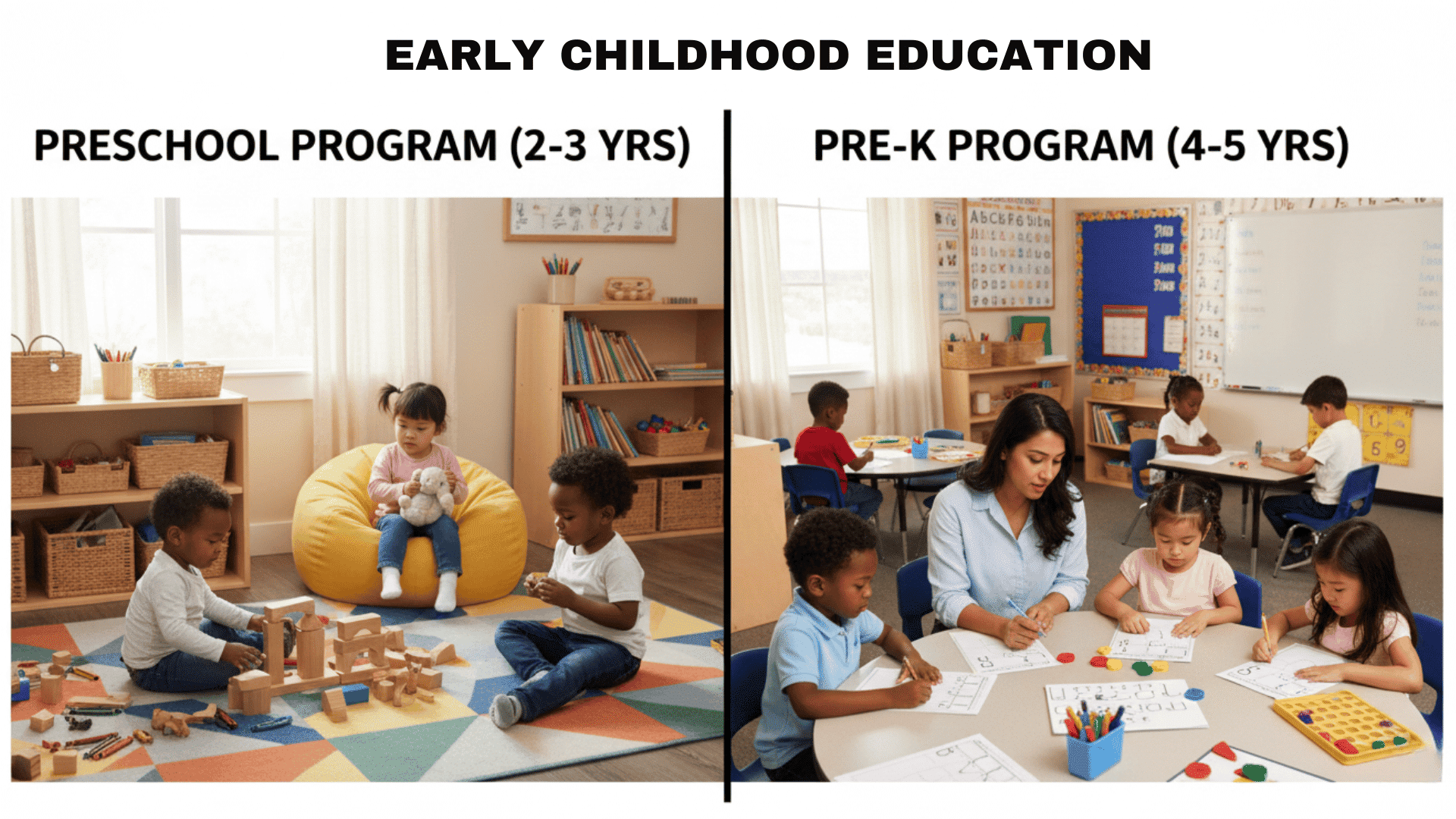
Now that you understand what each program offers, let’s break down the main differences. Here’s what actually separates preschool from pre-K in terms that matter to parents.
1. Age and Eligibility
- Preschool: Preschool accepts children between 2 and 5 years old, with most programs starting at age 3. Enrollment is flexible, and parents can choose when to start based on their child’s readiness.
- Pre-K: Pre-K is designed for 4 to 5-year-olds who will enter kindergarten the following year. Most public programs have strict age cutoff dates, often requiring children to turn 5 by a specific date.
2. Educational Goals
- Preschool: The primary focus is socialization, emotional development, and learning through play. Children learn to share, take turns, follow simple routines, and build confidence in group settings.
- Pre-K: Pre-K prioritizes academic preparation and kindergarten readiness. Children practice letter sounds, counting, writing their names, and sitting through structured lessons to prepare for elementary school.
3. Daily Schedule and Classroom Structure
- Preschool: Sessions are typically 2 to 3 hours long, offered 2 to 5 days per week. The day includes free play, snack time, story time, art projects, and outdoor activities with minimal structure.
- Pre-K: Programs run 3 to 6 hours daily, usually 5 days a week, mirroring a kindergarten schedule. The day includes circle time, teacher-led lessons, learning centers, lunch, and structured play.
4. Social and Academic Expectations
- Preschool: Children are expected to separate from parents comfortably, share with peers, and follow basic classroom rules. Academic learning happens naturally through play and exploration.
- Pre-K: Kids must participate actively in lessons, complete simple assignments, and demonstrate early literacy and math skills. Teachers track progress, and children work more independently with longer attention spans required.
Cost Comparison: Preschool vs Pre-K
Money matters when choosing early education. Let’s look at what you can expect to pay for preschool versus pre-K and why the costs differ so much.
- Typical Preschool Tuition Ranges: Private preschool costs range from $4,000 to $15,000 per year, depending on location, schedule, and program quality.
- Why Pre-K Is Often Lower Cost or Free: Many states offer free public pre-K programs funded by government initiatives to improve kindergarten readiness for all children.
- Public vs Private Program Cost Differences: Public pre-K is usually free or low cost, while private pre-K programs charge tuition similar to preschool rates, often $5,000 to $12,000 annually.
- Factors That Influence Pricing: Location, teacher qualifications, classroom size, program hours, and whether the school is public, private, or faith-based all affect costs.
Preschool vs Pre-K vs Kindergarten
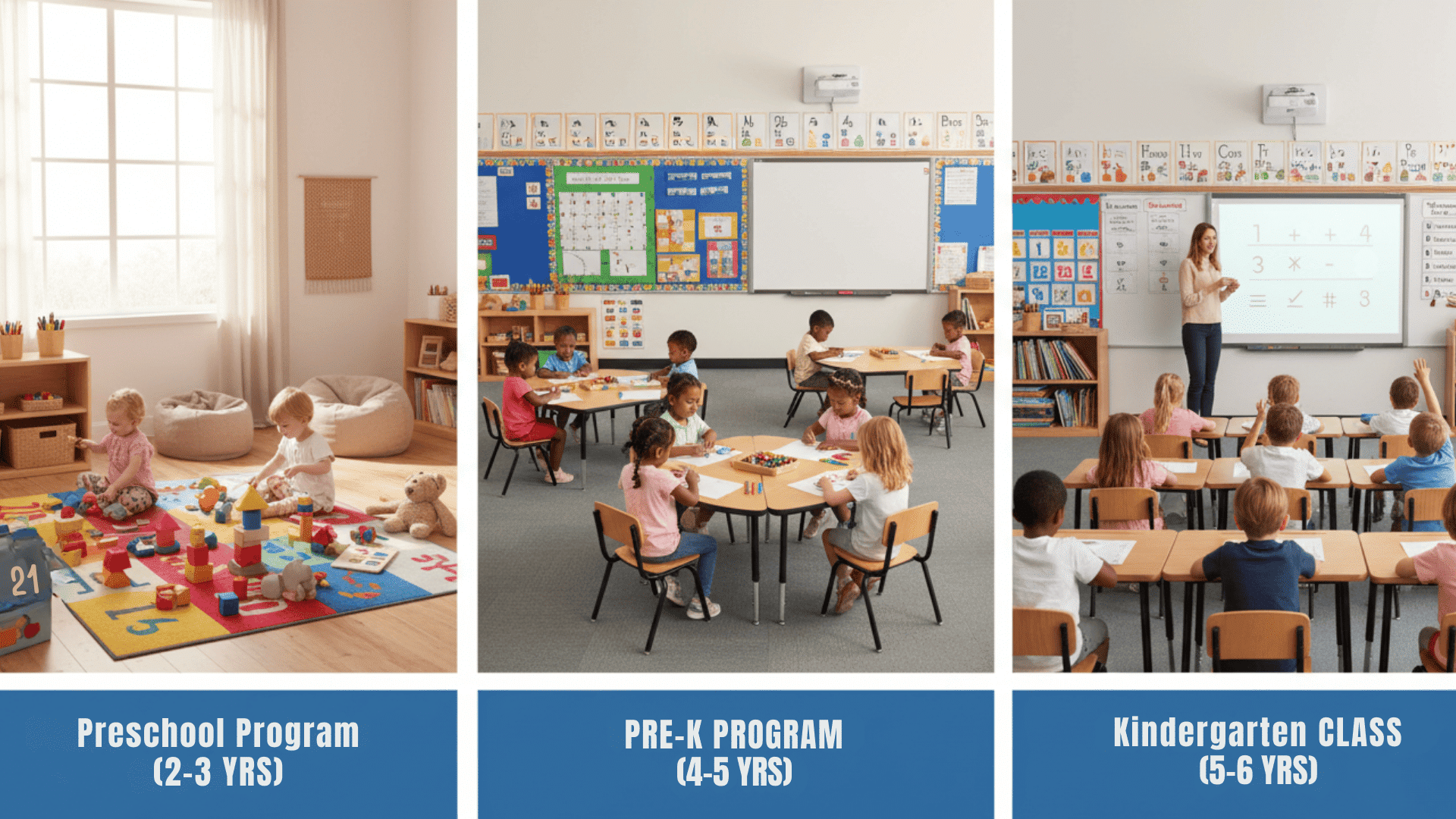
Understanding how these three stages connect helps you see the bigger picture. Here’s how preschool, pre-K, and kindergarten each fit into your child’s early learning path.
| Category | Preschool | Pre-K | Kindergarten |
|---|---|---|---|
| Typical Age | 2 to 5 years old | 4 to 5 years old | 5 to 6 years old |
| Primary Focus | Socialization, play, and emotional development | School readiness, early academics | Formal learning, reading, and math skills |
| Learning Style | Play-based with minimal structure | Mix of play and teacher-led lessons | Structured classroom with daily lessons |
| Daily Schedule | 2 to 3 hours, 2 to 5 days per week | 3 to 6 hours, usually 5 days per week | Full school day, 5 days per week |
| Academic Expectations | Recognizing colors, shapes, and letters | Letter sounds, counting to 20, writing name | Reading simple words, adding, subtracting |
| Teacher Qualifications | Varies by state and program type | Often requires teaching certification | State-certified teacher required |
| Cost | $4,000 to $15,000+ per year (private) | Often free (public) or $5,000 to $12,000 (private) | Free in public schools |
How to Choose the Right Program for Your Child?
Choosing between preschool and pre-K depends on your child’s age, development, and your family’s needs. If your child is 2 or 3 years old, preschool is the right fit.
If they are 4 and starting kindergarten next year, pre-K makes more sense. Think about your child’s learning style. Some kids thrive with lots of free play, while others do well with more structure.
Consider their attention span, too. Can they sit and focus for short lessons? Look at practical factors like cost, location, and schedule.
Does your family need full-time care or just a few hours? Does the program fit your budget? Visit programs in person, ask questions, and trust your instincts.
The best choice is one where your child feels safe, happy, and ready to learn.
Final Thoughts
Preschool vs pre-K isn’t about which one is better. It’s about what your child needs right now. Preschool works well for younger kids who are learning to socialize and play with others.
Pre-K is designed for 4-year-olds getting ready for kindergarten. Both programs help children grow in different ways.
Think about your child’s age, personality, and what they need to succeed. Visit local programs. Ask questions. Trust what feels right for your family.
What has your experience been with preschool or pre-K? Drop a comment below and share your story. Other parents would love to hear what worked for you!