
Ever bought a rug for your bedroom only to realize it looks completely wrong once you put it down? Too small, awkwardly positioned, or just… off.
Getting bedroom rug placement right isn’t about guessing. It’s about knowing which size fits your bed, where to position it for balance, and how room dimensions change everything.
A well-placed rug ties your bedroom together and feels great under your feet every morning.
In this guide, you’ll learn the best placement styles for different bed sizes, room layouts, and practical tips to avoid common mistakes that make rugs look out of place.
What Is Bedroom Rug Placement?
Bedroom rug placement refers to how you position a rug in relation to your bed, furniture, and room layout. The right placement creates visual balance and makes your space feel complete.
It also affects your daily comfort when you step out of bed or walk around the room. Where you place your rug and what size you choose can make a small bedroom look spacious or a large room feel cozy.
Good placement ties the room together and ensures the rug serves both practical and decorative purposes.
Think of it as the foundation that anchors your bedroom design while giving you a soft landing for your feet each morning.
Where to Put a Rug in a Bedroom?
Now that you know what bedroom rug placement means, let’s look at the actual positions that work best. Each option offers different benefits depending on your room size and furniture layout.
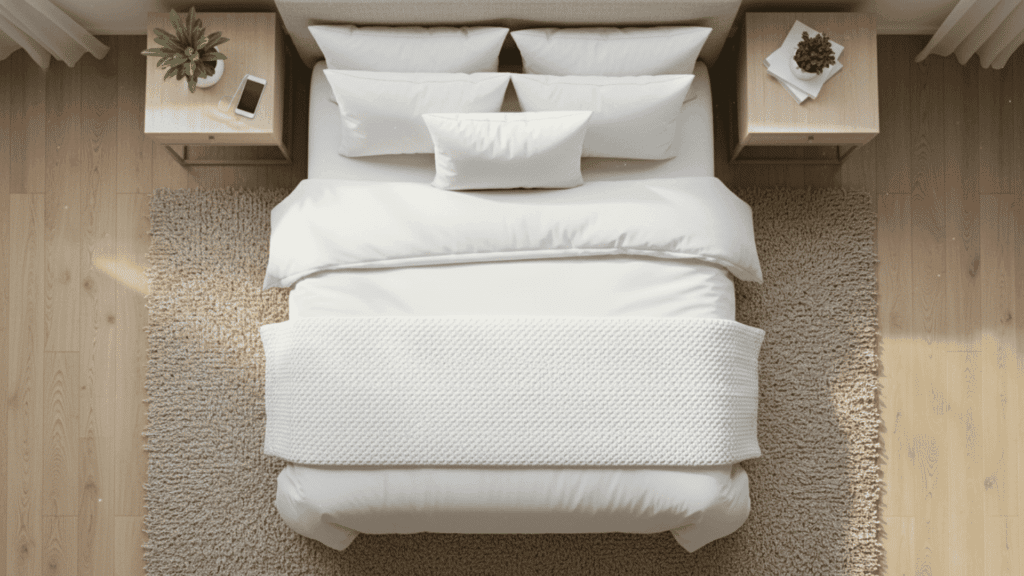
- Rug Under the Lower Two-thirds of the Bed: The rug sits under the bottom half of your bed, with 18 to 24 inches extending on each side and at the foot.
- Rug Fully Under the Bed and Nightstands: The rug goes completely under your bed and nightstands, with at least 18 inches showing on all sides.
- Rugs on Each Side of the Bed: Two smaller rugs are placed on either side of the bed for comfort in narrow spaces.
- Rug at the Foot of the Bed: A single rug sits at the foot of the bed, often paired with a bench or seating.
Bedroom Rug Placement by Bed Size
Your bed size determines what rug dimensions will look proportional in your room. Smaller beds need compact rugs, while larger beds require bigger sizes to maintain visual balance. Here’s what works for each bed type.
1. Twin Bed Rug Placement
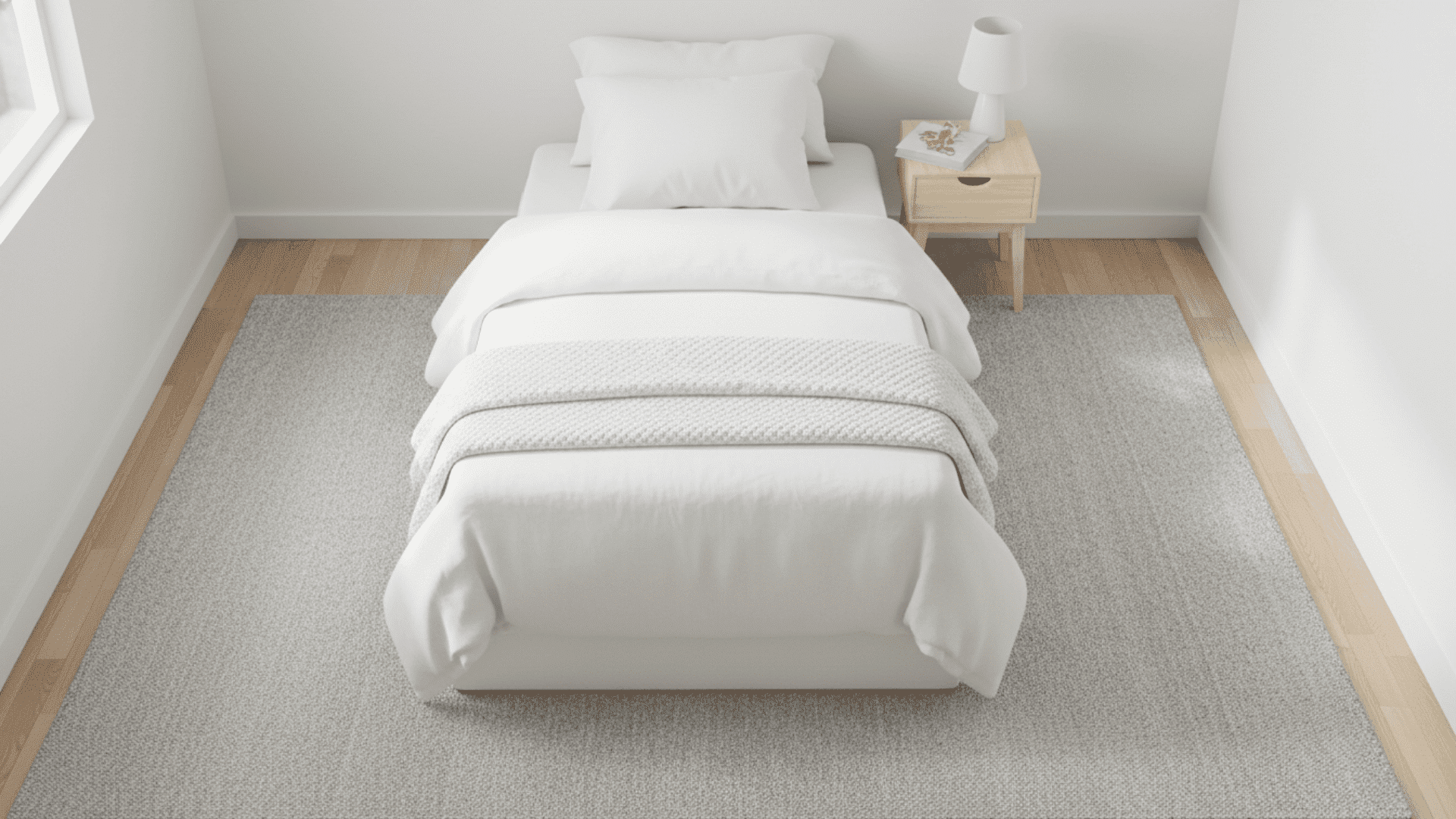
Twin beds fit well in smaller spaces, such as kids’ rooms or guest bedrooms. A rug that’s too large will overwhelm the compact bed frame. Stick to modest sizes that give you comfort without dominating the floor.
- Recommended Size: 4×6 or 5×7 foot rug
- Runner Option: 2.5×8-foot runner along one side
2. Full Bed Rug Placement
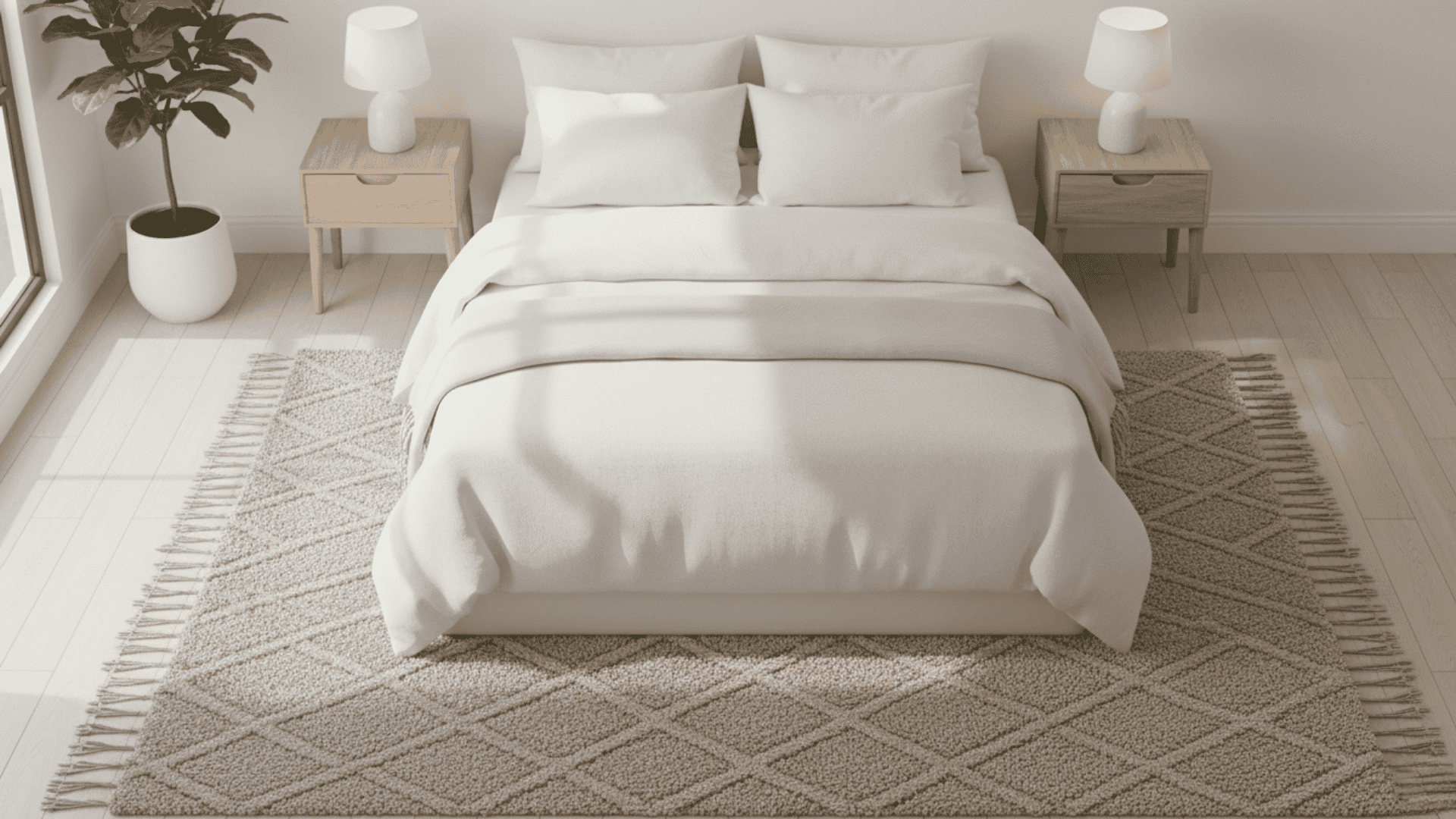
Full beds need medium-sized rugs that show balance without looking skimpy. The rug should extend about 18 inches from the sides and foot of the bed. Anything too small makes the furniture look disconnected from the floor.
- Recommended Size: 5×8 or 6×9 foot rug
- Avoid: Anything smaller than 5×7
3. Queen Bed Rug Placement
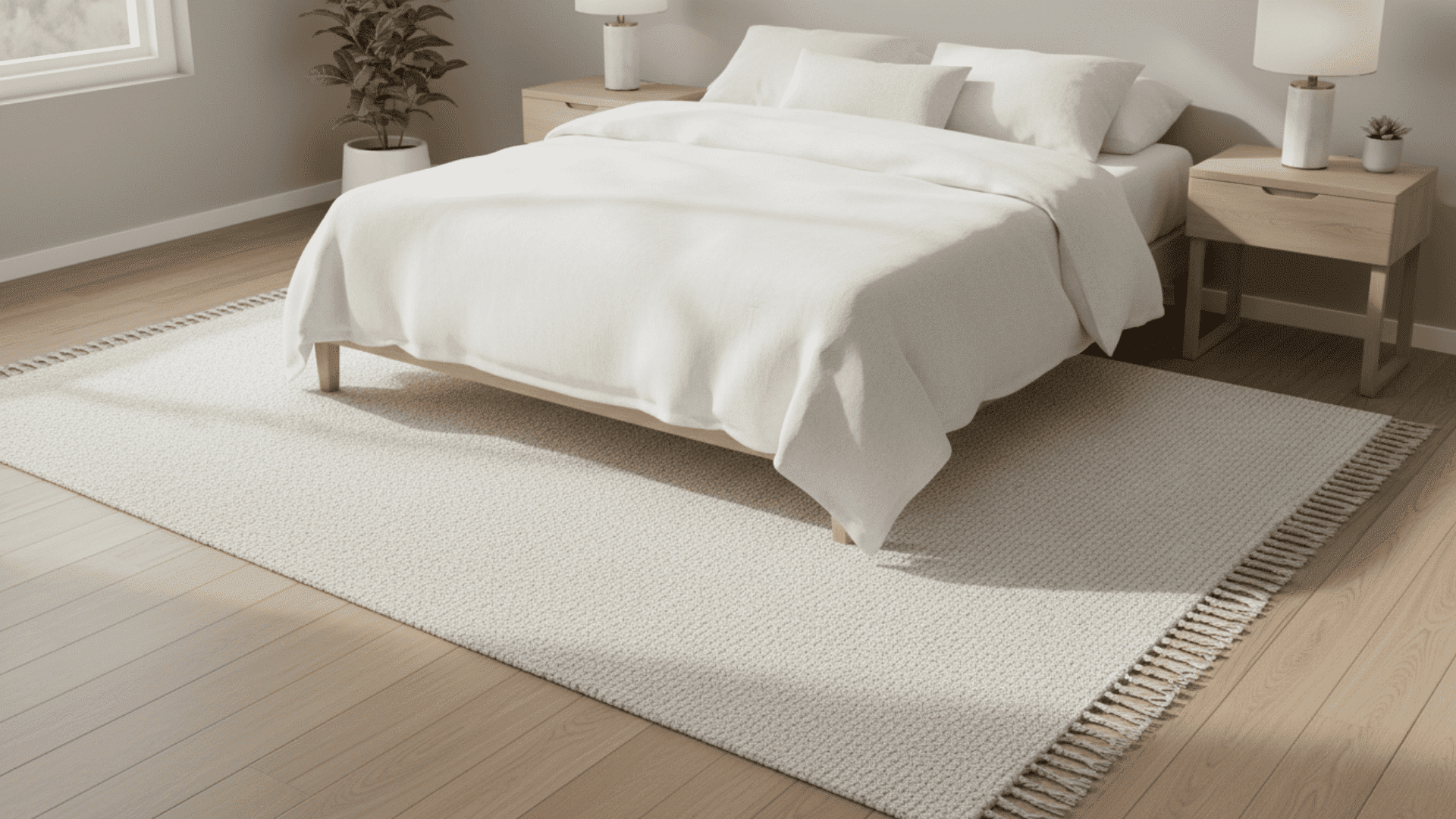
Queen beds are the most common size and offer flexibility with rug choices. You can adjust the rug size based on your room dimensions. This bed size pairs well with multiple rug options, depending on your layout preference.
- Standard Choice: 8×10 foot rug
- Compact Rooms: 6×9-foot rug
- Spacious Rooms: 9×12-foot rug
4. King Bed Rug Placement
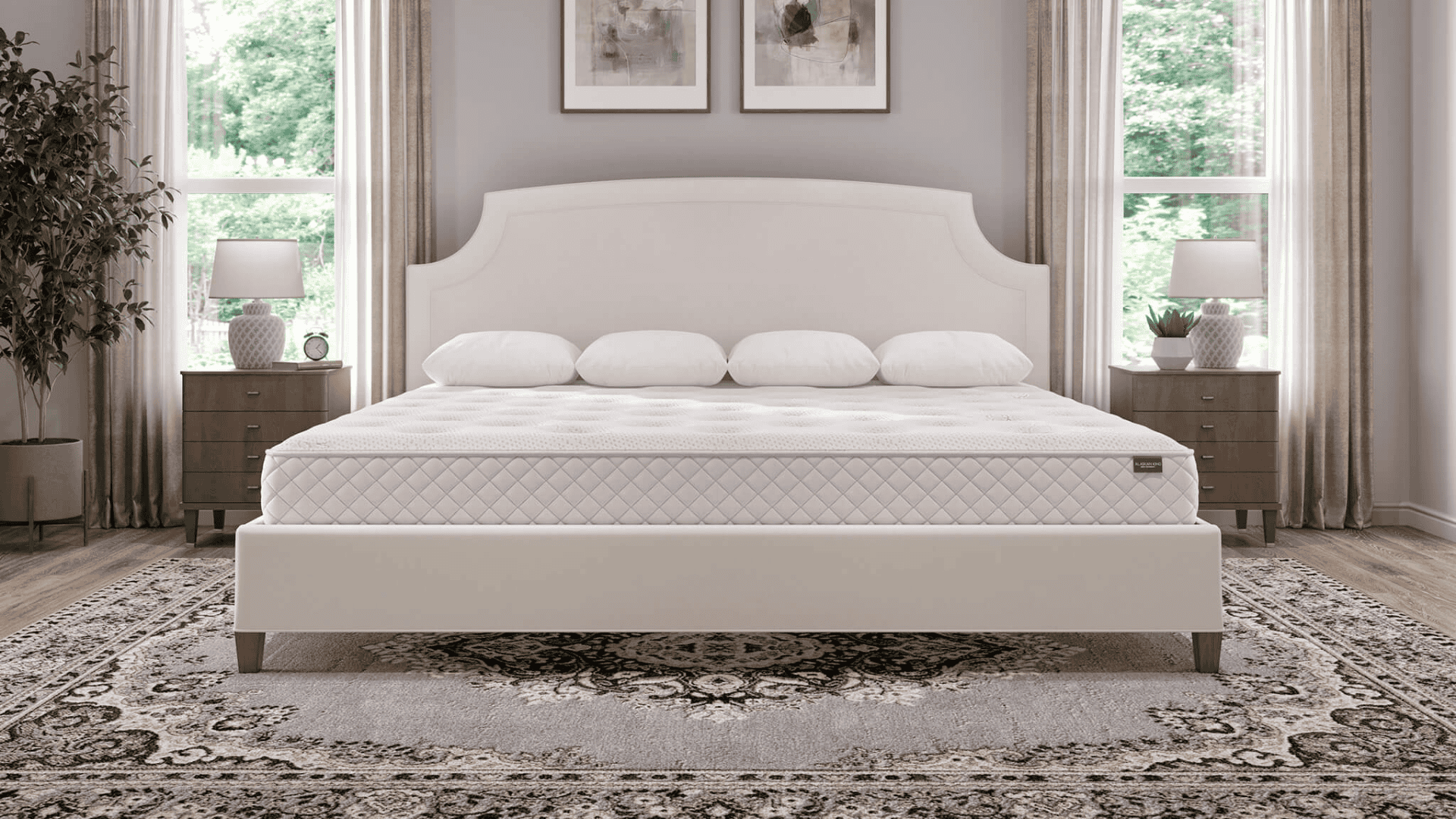
King beds are substantial and need larger rugs to look proportional. A small rug will disappear under the bed, making the placement look off. Plan for generous coverage that extends well beyond all sides of the bed frame.
- Ideal Size: 9×12 foot rug
- Minimum Option: 8×10 foot rug
- Side Extension: 18 to 24 inches on each side
Bedroom Rug Placement Dos and Don’ts
Following a few simple rules can save you from common mistakes when placing your bedroom rug. Here are the key things to do and avoid for the best results.
| Dos | Don’ts |
|---|---|
| Choose a rug that extends beyond the bed | Don’t use a rug that barely peeks out from under the bed |
| Align the rug with the bed frame | Don’t place the rug centered in the room; place it under the bed |
| Use a rug pad for stability and comfort | Don’t ignore nightstand placement |
| Consider pile height for door clearance | Don’t skip measuring before buying |
Bedroom Rug Placement by Room Size
Room dimensions matter just as much as bed size when placing your rug. A layout that works in a large bedroom might feel cramped in a smaller space, so adjust your approach based on available floor area.
1. Small Bedrooms
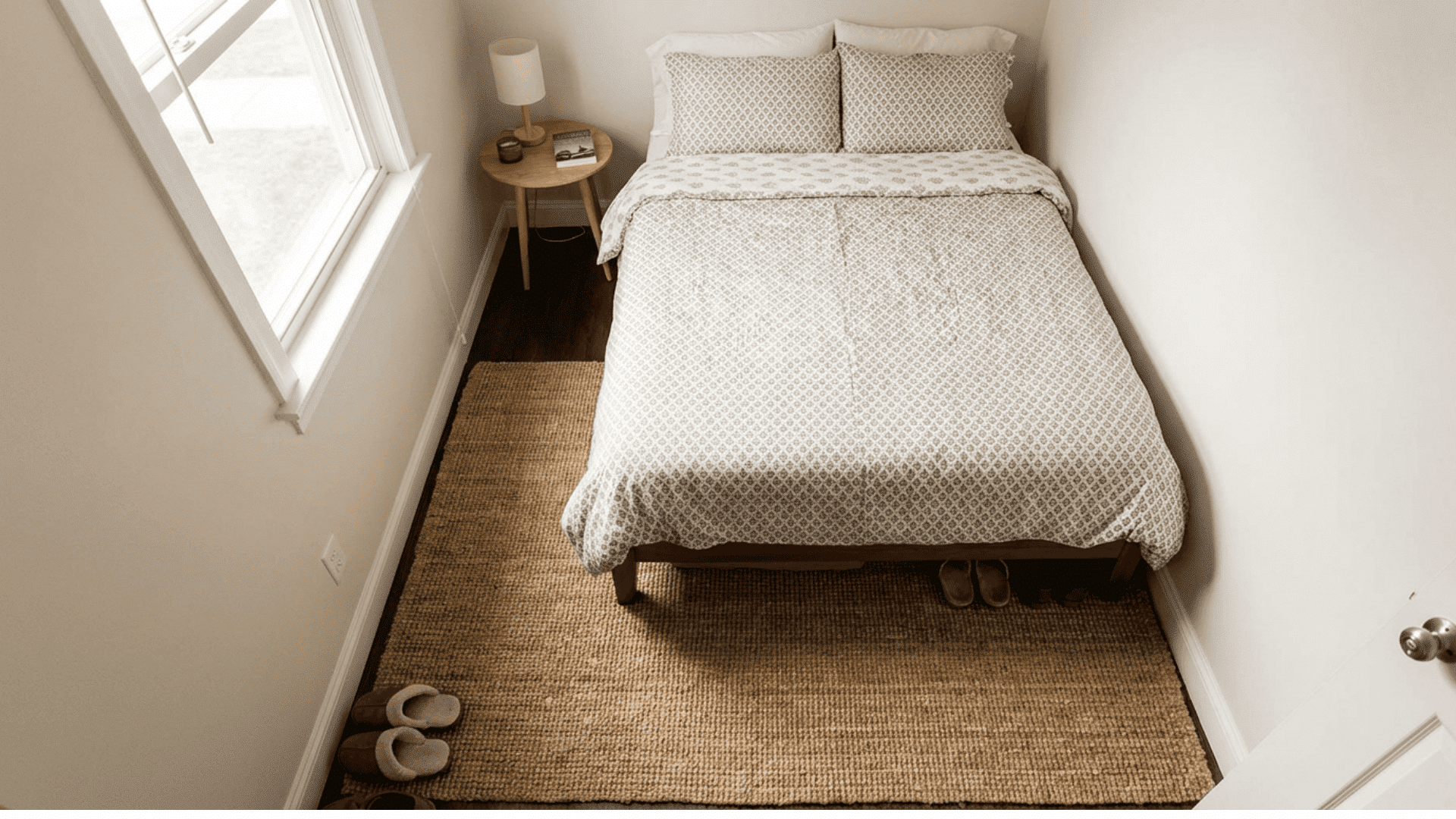
Place the rug under the lower two-thirds of the bed, with a few inches extending on each side and at the foot. This gives you comfort without eating up too much floor space. In very tight rooms, try two small runner rugs along each side of the bed instead of one large rug.
2. Medium Bedrooms
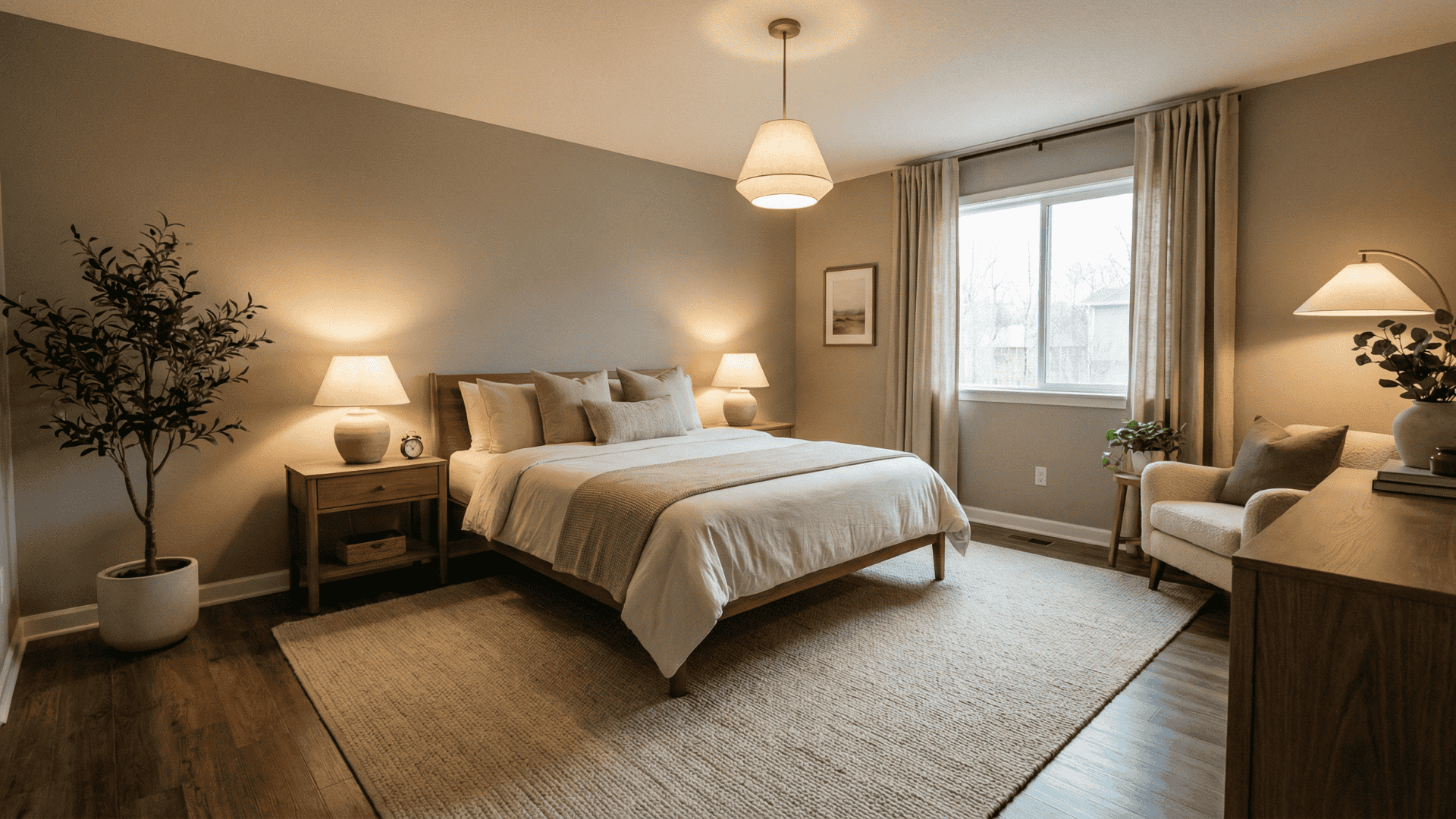
A rectangular rug under the bed that extends evenly on both sides and at the foot works best here. You have enough room to include nightstands on the rug if you want a unified look. Maintain equal spacing on both sides the create a layout that feels intentional and balanced.
3. Large Bedrooms

Go with a generous rug that sits fully under the bed and nightstands to anchor the sleeping area. Leave a border of exposed flooring around the edges rather than pushing the rug all the way to the walls. A rug that’s too small will make your bed look like it’s floating, so size up when in doubt.
Rug Placement Living Room Basics
While this guide focuses on bedroom rug placement, living room rug placement follows similar principles with a few key differences. Here are the basics if you’re styling other rooms in your home.
- Center the Rug Under the Coffee Table: Place the rug so your coffee table sits in the middle with all furniture legs either on or off the rug for a cohesive look.
- Use Larger Rugs for Open Layouts: A rug that’s too small makes the seating area feel disconnected, so go bigger to anchor the furniture grouping.
- Leave 12 to 18 Inches of Space Around Edges: Keep a border of exposed flooring between the rug edge and walls to frame the space properly.
- Get Front Furniture Legs on the Rug: At minimum, the front legs of sofas and chairs should rest on the rug to tie the seating area together.
- Layer Rugs for Added Texture: Place a smaller decorative rug over a larger neutral one to add visual interest without committing to bold patterns everywhere.
Common Bedroom Rug Placement Mistakes
Even with the best intentions, it’s easy to make mistakes when positioning your bedroom rug. Avoid these common errors to ensure your rug looks great and functions well in your space.
| Mistake | Why It’s a Problem |
|---|---|
| Choosing rugs that are too small | Makes the bed look disconnected, and the room feel unbalanced |
| Misaligned or uneven placement | Creates a sloppy appearance and disrupts visual harmony |
| Blocking doors or walkways | Causes tripping hazards and makes the room less functional |
| Skipping rug pads | Leads to sliding, bunching, and premature wear on both rug and floor |
Choosing the Right Rug for Bedroom Functionality
Bedroom rug placement works best when you also choose the right rug for daily use.
Choose soft materials like wool, cotton, or synthetic blends that feel comfortable underfoot and hold up to regular traffic.
Pay attention to pile height since thick rugs can block doors and trap dirt, while low-pile options sit flat and clean easily.
Always use a rug pad to prevent sliding, add extra cushioning, and protect your floor from scratches. The right combination of material, thickness, and padding makes your rug both functional and long-lasting.
The Bottom Line
Getting bedroom rug placement right makes a real difference in how your space looks and feels each day.
The right size and position create balance, add comfort, and tie your room together without much effort.
Remember to match your rug to your bed size, consider your room dimensions, and leave enough extension on all sides. Don’t forget to use a rug pad for safety and longevity.
Now that you know the basics, it’s time to measure your space and find the perfect rug that works for your bedroom layout.
Have questions or tips to share? Drop a comment below and let us know what worked for you.