

If you are a parent, you have probably heard mixed advice about when your child should first visit the dentist. Some grandparents will tell you to wait until all the baby teeth are in.
A friend might say to hold off until kindergarten. And somewhere between those opinions and your own busy schedule, that first appointment keeps getting pushed further down the list.
The good news is that the answer is simpler than most parents think, and starting early makes the years ahead easier for everyone. Here is a practical guide to when kids should begin seeing the dentist, how often to go after that, and what to expect at each stage.
The First Visit Should Happen Earlier Than You Think
Pediatric dentists and major health organizations agree on a clear guideline. A child should see the dentist by their first birthday, or within six months after their first tooth comes in, whichever happens first.
That may sound early, but there is a reason for it. Baby teeth are more vulnerable to decay than most parents realize, and problems can start long before a child is old enough to describe any discomfort.
An early visit gives a kid’s dentist the chance to spot issues, check that teeth and gums are developing normally, and coach parents on the small daily habits that prevent bigger problems later.
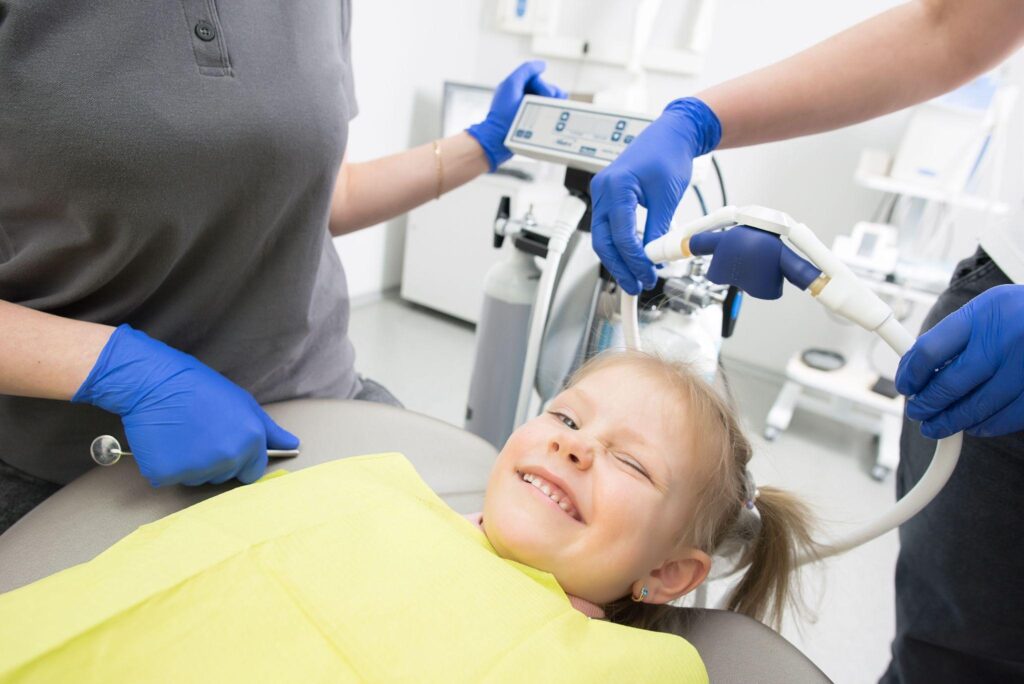
It also does something less obvious but just as valuable. It introduces your child to the sights, sounds, and smells of a dental office while they are still too young to feel nervous about them. By the time they are three or four, the office already feels familiar. That familiarity pays off for years.
Why Waiting Can Cost You Later
Tooth decay in young children is more common than most people expect. According to the Centers for Disease Control and Prevention, cavities are one of the most common chronic conditions in childhood, and untreated decay can affect eating, sleeping, speech development, and school attendance.
Starting dental visits early is one of the simplest ways to stay ahead of that risk. When a dentist has been watching a child’s mouth since infancy, small changes get noticed quickly, and treatment stays gentle and minimally invasive when it is needed at all.
How Often Should Kids Go to the Dentist?
Once that first visit happens, most children should return every six months for a routine checkup and cleaning.
This twice a year rhythm works well for a few reasons:
- Children’s mouths change quickly, and six months is short enough to catch shifts in development
- Cleanings remove plaque from areas that little hands cannot reach on their own
- Regular visits keep the experience low stress by making it predictable
- Preventive treatments like fluoride varnish and sealants can be applied at the right moments
Some kids do need more frequent visits. Children who are cavity prone, who have special healthcare needs, or who wear orthodontic appliances may benefit from checkups every three or four months.
Your dentist will let you know if that applies to your child, and a good practice will explain the why in language you can actually understand.
What Visits Look Like at Each Age
The first appointment for an infant or toddler is short and gentle. The dentist checks the teeth that have come in, looks at the gums, reviews feeding and brushing habits with you, and answers your questions. Your child may sit on your lap for the whole visit. There is no drilling, no lecture, and usually no tears.
By ages three to five, most children can sit in the chair on their own for a short exam and cleaning. This is also when sealants and fluoride treatments often come into play, both of which help protect the back teeth that are hardest to brush.
School age visits add a stronger focus on habits. The dentist may talk directly with your child about brushing, flossing, and food choices, which lands differently coming from someone who is not a parent.
Permanent teeth start arriving around age six, and regular visits help make sure they come in cleanly and in the right positions.
Teens usually keep the same twice a year schedule, with added attention to wisdom teeth, orthodontic follow up, and the effects of sports, snacking, and busy schedules on their oral health.

Finding a Practice That Fits Your Family
Not every dental office is set up for young patients, and the difference matters. A practice that specializes in children will have staff trained to work with wiggly toddlers, anxious first timers, and kids with sensory sensitivities. The waiting room, the lighting, and the pace of the visit all get designed with children in mind.
For example, a dentist in Federal Hill Baltimore like Sparkling Charms Dental Studio offers pediatric care alongside adult general dentistry, so parents and kids can be seen at the same place. Families in the Baltimore area often tell us that having one trusted office for everyone takes real weight off the calendar.
Wherever you go, look for a team that explains things clearly, welcomes your questions, and treats your child’s pace as a feature of the visit rather than a problem to solve.
A Quick Recap for Busy Parents
- First visit by age one, or within six months of the first tooth
- Routine checkups every six months for most children
- More frequent visits for kids at higher risk or with special needs
- Choose a practice that is genuinely comfortable with young patients
Starting early and staying consistent is the quiet secret of families whose kids grow up without dental anxiety. It is not about perfect brushing or a fancy office. It is about small, calm visits that add up over time.
The Long View
Kids who grow up seeing the dentist twice a year, in a practice that meets them where they are, tend to become teenagers and adults who do not dread dental care. They learn that their mouth is worth taking care of, that professionals are worth trusting, and that a checkup is just a checkup.
That is the real payoff of starting early. Not just healthy baby teeth, though those matter. A relationship with dental care that quietly serves your child for the rest of their life.