
Last weekend, a friend called me frustrated. She had just scrubbed a pencil mark off her living room wall, only to end up with a shiny patch that looked worse than the original mark.
The culprit? Flat paint on walls. It looks great on day one. Clean, soft, smooth. But it comes with rules. Ignore them, and you end up repainting rooms you just finished.
This guide breaks down what flat paint actually is, where it holds up well, where it does not, and how to keep it looking good for as long as possible.
What Is Flat Paint?
Flat paint is a finish with almost no shine. It sits at the very bottom of the sheen scale, below matte, eggshell, satin, and semi-gloss.
Unlike glossy paint, which bounces light back into the room, flat paint absorbs it. The result is a soft, even surface that looks the same from every angle, with no glare or bright spots.
It is available in nearly every color and is one of the most widely used finishes in home painting, especially on ceilings and in new construction.
How Does Flat Paint Work on Walls?
Flat paint does not just look different from other finishes; it also performs differently. It behaves differently at a surface level. Two things explain most of how it works.
How It Absorbs Light
- The pigment particles in flat paint sit packed closely on the surface.
- This structure scatters incoming light rather than sending it back into the room.
- The wall looks the same from every angle, with no glare or uneven bright spots.
Why It Hides Wall Flaws
- When light does not bounce off a surface, small dents, filled holes, and drywall seams stay far less visible.
- Shinier finishes catch and reflects light, which makes the same flaws stand out clearly.
- This is why flat paint is a common choice for older walls and surfaces that are not perfectly smooth.
Where Flat Paint Works Best: Room by Room
Flat paint does not perform the same way in every room. The finish that holds up well in a bedroom can become a problem in a hallway. Here is a clear breakdown by room.
1. Bedrooms
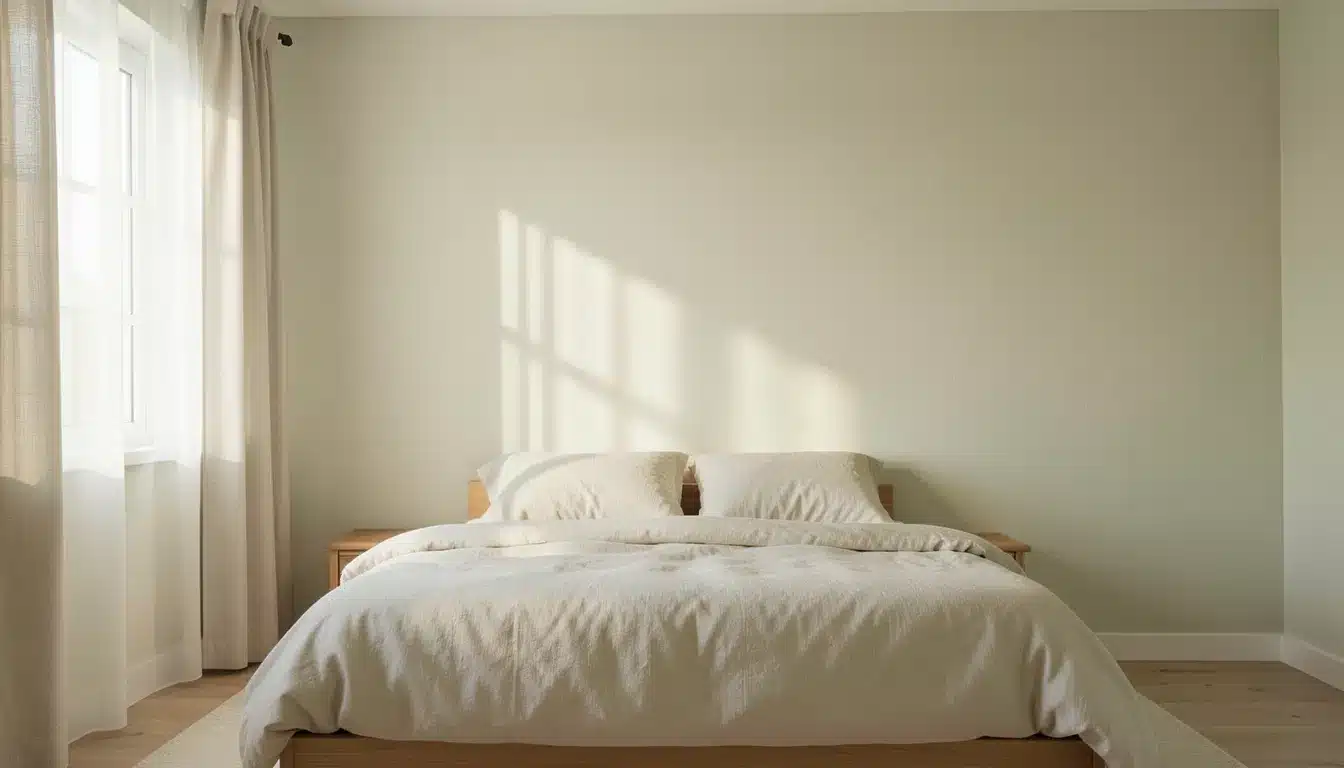
Alt Text: Minimalist bedroom with a neatly made bed, soft natural light from a window, and smooth light-colored painted walls creating a calm atmosphere.
Bedrooms are one of the best places for flat paint on walls. Traffic is low, walls are rarely touched, and the soft finish cuts glare from lamps and morning light. It also keeps minor wall flaws far less noticeable, which is useful in older homes where walls are not perfectly smooth.
2. Formal Living Rooms
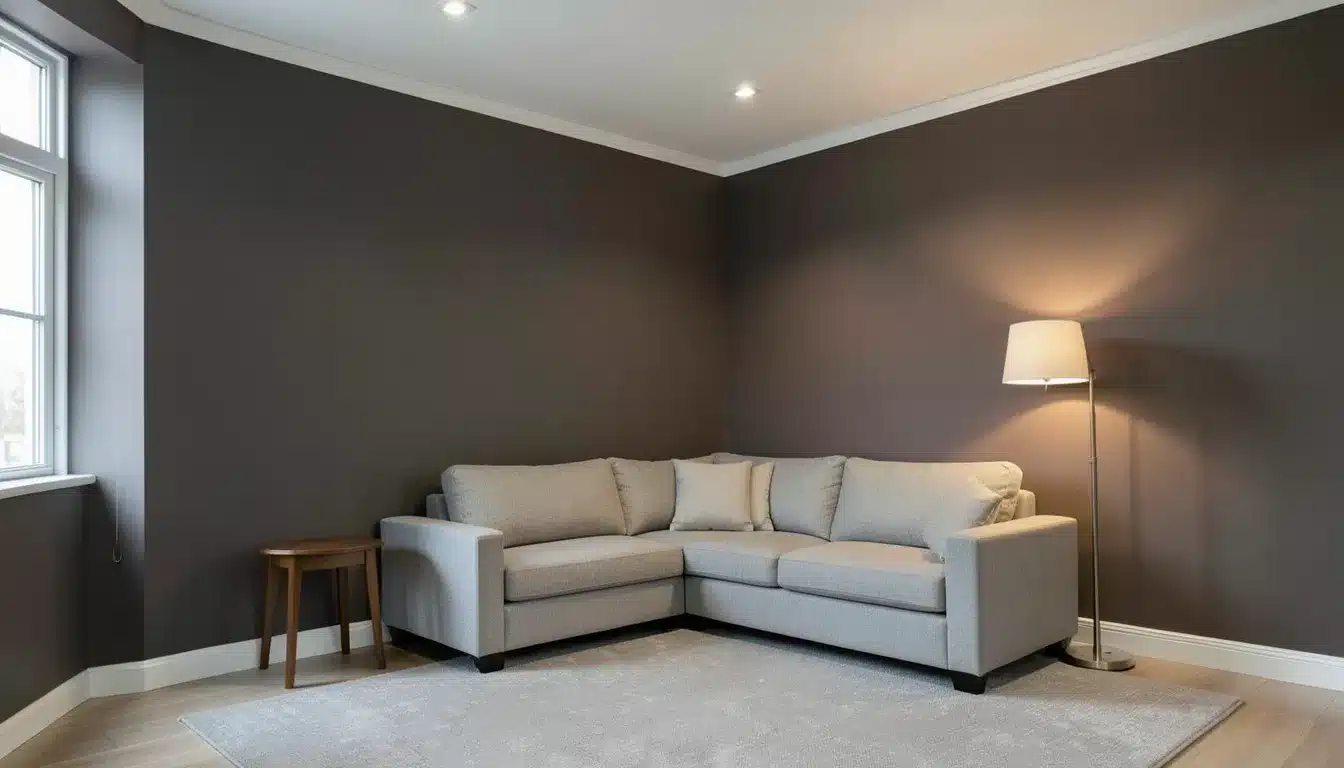
Alt Text: Modern living room with dark painted walls, a light-colored sectional sofa, a floor lamp, and minimal furniture creating a cozy, elegant space.
In a formal living room with limited daily use, flat paint holds up well. It maintains color consistency across large wall surfaces and avoids shiny patches that higher-sheen finishes can create under strong or direct light.
3. Dining Rooms
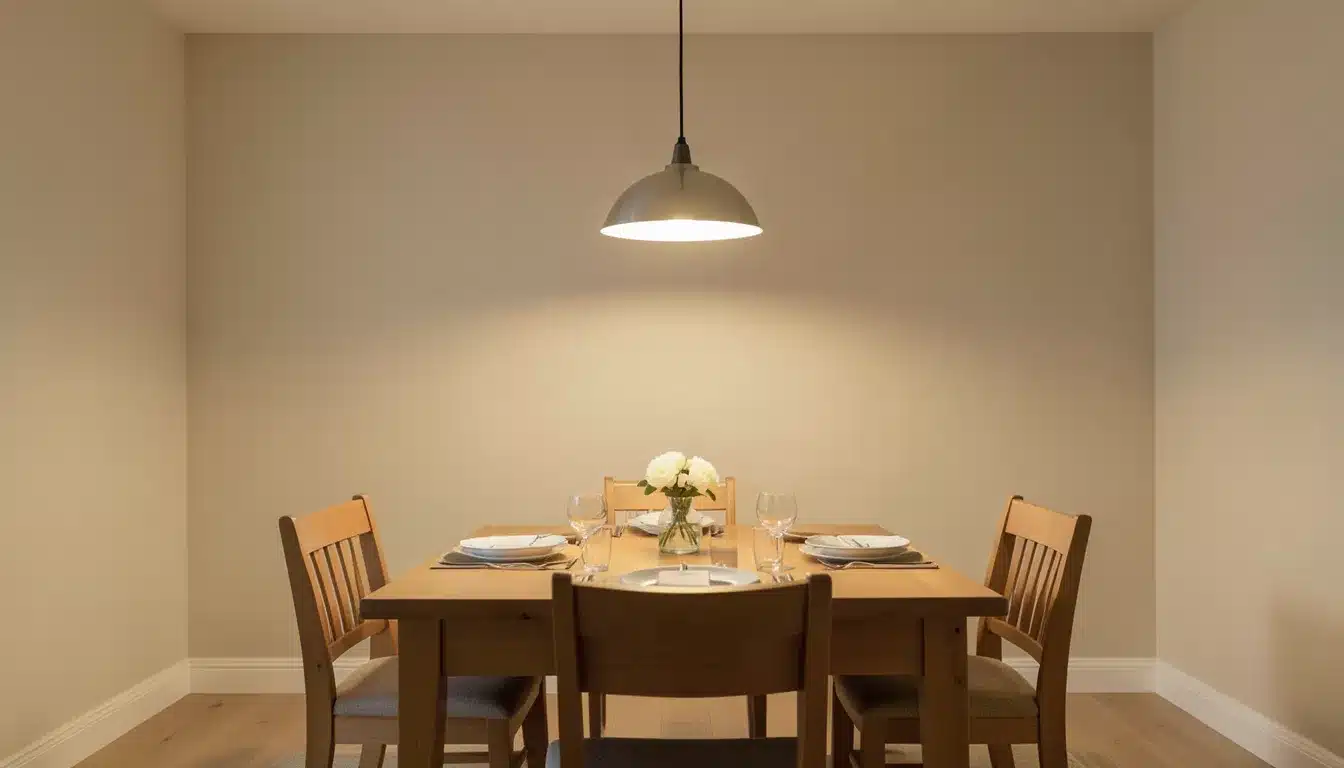
Alt Text: Simple dining room with a wooden table set for four, chairs, and a hanging pendant light against smooth beige painted walls.
Dining room walls stay cleaner for longer because contact mostly happens at the table, not with the walls. The soft, muted finish serves as a quiet backdrop, letting furniture, lighting, and table settings take the spotlight.
4. Ceilings
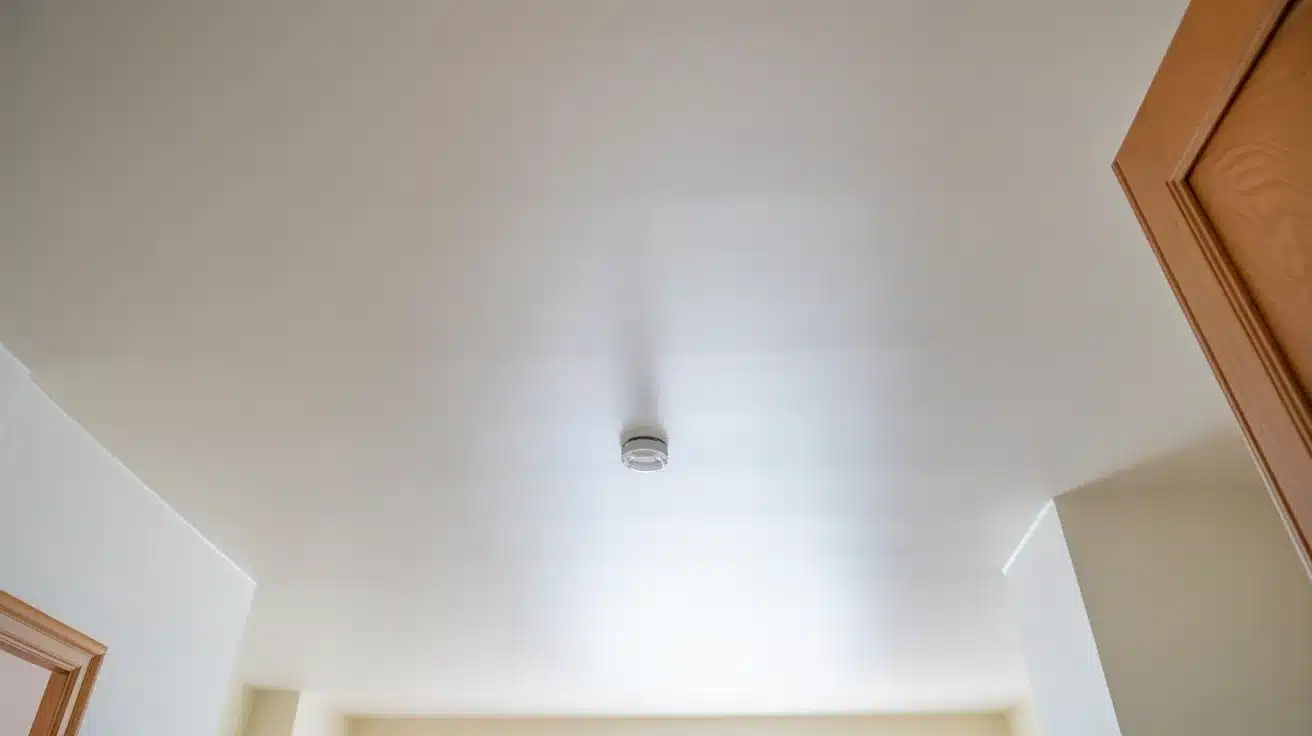
Alt Text: Smooth white ceiling with a flat paint finish and a central light fixture.
Ceilings are where flat paint truly belongs. They catch light from multiple angles, and any sheen on a ceiling creates glare, making roller marks visible. Flat paint absorbs that light, keeping the surface looking clean and consistent. Since ceilings are almost never touched, its low durability is not a concern.
5. Home Offices

Alt Text: Minimalist home office desk setup with a laptop, white desk lamp, potted plant, and stacked notebooks against a smooth light gray painted wall.
A low-use home office works fine with flat paint. It creates a calm, distraction-free background that feels professional without being clinical. If multiple people move through the space constantly, matte or eggshell holds up better over time.
|
Rooms Where Flat Paint Does Not Work Well Kitchens deal with steam, grease, and splashes that flat paint cannot handle. Bathrooms are regularly exposed to moisture, which can lead to staining and surface deterioration. Hallways and entryways are in constant contact with people, bags, and furniture. Kids’ rooms and playrooms are high-contact, high-mess spaces where flat paint marks quickly and don’t clean easily. |
Pros and Cons of Using Flat Paint on Walls
Flat paint has clear strengths and just as clear limitations. Knowing both sides makes it much easier to decide if it is the right finish for your space.
Pros:
- Hides wall flaws better than any other finish: Dents, patches, and uneven surfaces become far less visible without extra prep work.
- Touch-ups blend in cleanly: A small fresh coat on a damaged spot disappears into the wall, which is not the case with satin or eggshell.
- No glare or shine: The soft finish works well in rooms with a lot of natural light or strong overhead lighting that would bounce off shinier walls.
- Colors look deeper and richer: Without sheen washing out the tone, paint colors stay true to their appearance on the swatch.
- Easy to apply: No wet-edge management is required, making it a forgiving choice for first-time painters.
- Lower cost: One of the most affordable finishes available, with solid coverage often achieved in fewer coats.
Cons:
- Hard to clean without causing damage: Scrubbing removes paint, leaving shiny patches where the matte surface wears down.
- Marks and scuffs easily: The lower resin content means the surface offers little resistance to everyday contact.
- Not moisture-resistant: The porous surface absorbs water rather than repelling it, leading to staining and wear over time.
- Wears down faster in busy spaces: Needs repainting sooner than eggshell or satin in rooms with heavy daily use.
- Attracts dust more than other finishes: The slightly porous, flat surface holds dust particles that smoother finishes tend to repel.
- Low-quality versions chalk over time: budget flat paints used in some new builds develop a powdery surface within a few years of use.
Flat Paint vs. Other Finishes: A Clear Comparison
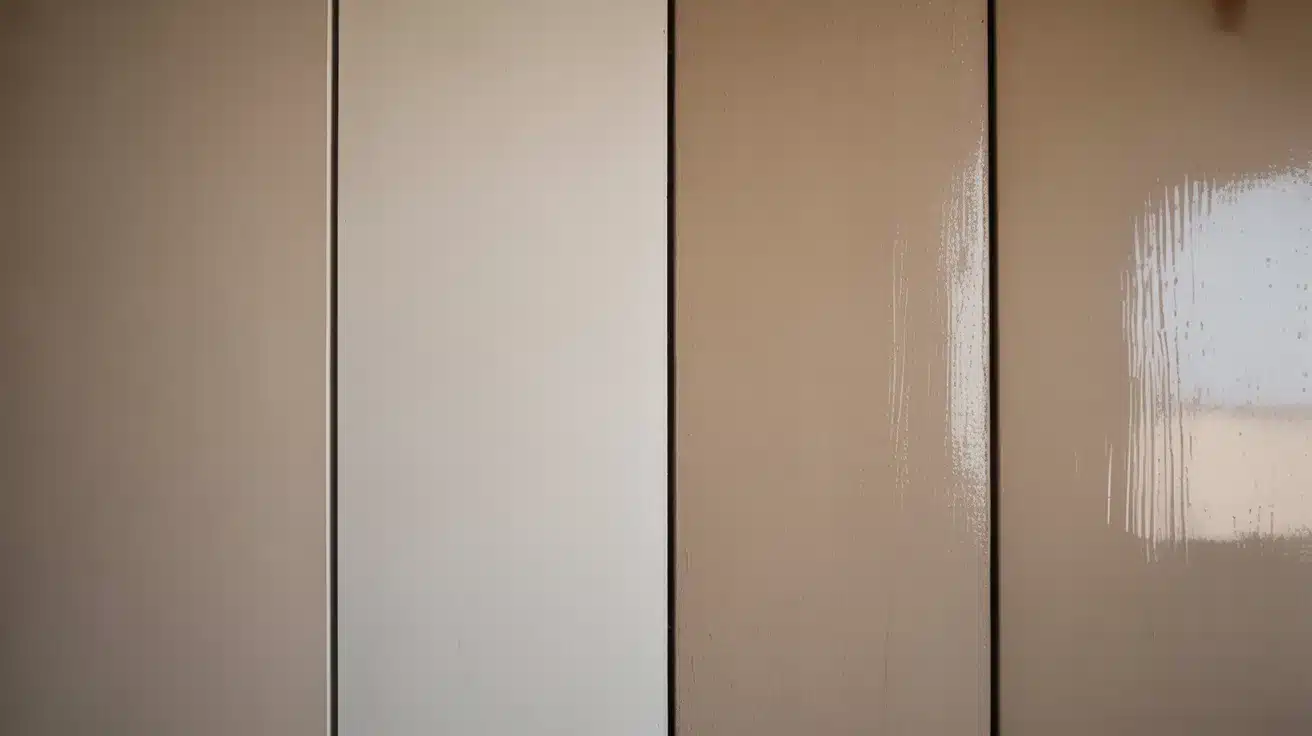
Alt Text: Side-by-side comparison of wall paint finishes showing matte, eggshell, satin, and glossy surfaces with varying levels of sheen and reflectivity.
Flat paint is just one option on the sheen scale. Seeing how it compares to matte, eggshell, and satin makes it easier to pick the right finish for each room in your home.
| Feature | Flat | Matte | Eggshell | Satin |
|---|---|---|---|---|
| Sheen Level | None | Very Low | Low | Medium |
| Hides Flaws | Best | Very Good | Good | Less |
| Durability | Low | Medium | Medium-High | High |
| Cleanability | Poor | Fair | Good | Very Good |
| Touch-Up Ease | Excellent | Good | Fair | Difficult |
| Best For | Ceilings, low-traffic rooms | Bedrooms, formal spaces | Living rooms, hallways | Kitchens, bathrooms |
| Cost | Lowest | Low to Medium | Medium | Medium to High |
How to Care for and Clean Flat Paint on Walls?
Flat paint needs a lighter hand than other finishes. The wrong cleaning method often does more damage than the original stain. Here is how to handle it the right way.
- Use a soft cloth and mild soap: Mix a small amount of dish soap with warm water. Dampen the cloth lightly, but do not soak it. Too much water on a flat surface can cause streaks and leave marks even after drying.
- Blot, do not scrub: Press the cloth gently onto the stain and lift it away. Scrubbing in circles wears down the paint and creates shiny patches that stand out sharply against the matte finish.
- Act fast on stains: Fresh marks lift far more easily than old ones. The longer a stain sits on flat paint, the deeper it sets into the porous surface. Old stains are much harder to remove without taking some paint with them.
- Test before you clean: Before using any cleaning product on a visible wall area, test it on a small hidden spot first. Some solutions react poorly with flat paint, causing discoloration or streaking on the surface.
- Keep a touch-up supply ready: Store a small amount of the original paint in a sealed jar. For this finish, a fresh touch-up blends in far better than repeated cleaning attempts on a stubborn or set-in stain.
How to Apply Flat Paint on Walls the Right Way?
Flat paint is one of the easier finishes to apply, but a few small steps make the difference between a clean, even result and a patchy one. Follow these in order.
- Use a roller with a 3/8- to 1/2-inch nap for standard smooth walls.
- Apply paint in a W or zig-zag pattern across the wall, then go back to fill gaps evenly.
- There is no need to maintain a wet edge while rolling, unlike with satin or semi-gloss.
- Let each coat dry fully before applying the next one.
- Two coats are usually enough for complete, even coverage on most walls.
- Use a primer on new drywall or on dark-colored surfaces before applying flat paint.
- Keep brush use to edges and corners only, as flat paint shows brush strokes more easily than matte or eggshell on open wall surfaces.
Is Flat Paint the Right Choice for Your Walls?
Flat paint on walls is a solid choice when it’s used in the right room. Low-traffic spaces with visible wall flaws, where a soft and shine-free look matters more than durability, are where it performs best.
It is the wrong call for rooms that take heavy contact, deal with moisture, or need regular wall cleaning. If the room fits the first description and the budget is a factor, flat paint makes sense.
If not, a matte or eggshell finish gives a very similar look with noticeably better long-term results.
Wrapping It Up
Flat paint on walls is not a bad choice. It just needs the right room. In a bedroom or dining room, it can look great for years. In a hallway or kitchen, it will let you down fast.
The key is knowing what you are working with before you buy the first can. Think about how much traffic the room gets, how often the walls get touched, and whether moisture is a factor.
Get those three things right, and flat paint will do exactly what you need it to. Tried flat paint somewhere in your home? Drop your experience in the comments below. We would love to hear how it held up.