

Most pet owners have the obvious supplies covered. Food, treats, bowls, leashes, litter, beds and toys tend to appear before a new pet has even settled into the house.
The less obvious supplies are easier to forget, usually until there is a mess, minor injury or stressful situation that makes you wish you had planned ahead. A well-stocked pet cabinet does not need to resemble a veterinary clinic.
It simply needs a handful of practical items that help you handle everyday problems, travel and unexpected disruptions without scrambling at the worst possible time.
Basic Cleaning and Care Supplies
Pets have a remarkable talent for developing small problems outside normal business hours. Keeping basic care supplies together gives you an easy place to start when something minor happens.
Gauze pads, self-adhering bandage wrap, blunt-tip scissors, disposable gloves and a digital thermometer designed for pets are useful additions.
A pet eye wash is another item owners may overlook until dust, loose fur or debris irritates an animal’s eye. Choose products specifically intended for pets rather than assuming a human product is interchangeable.
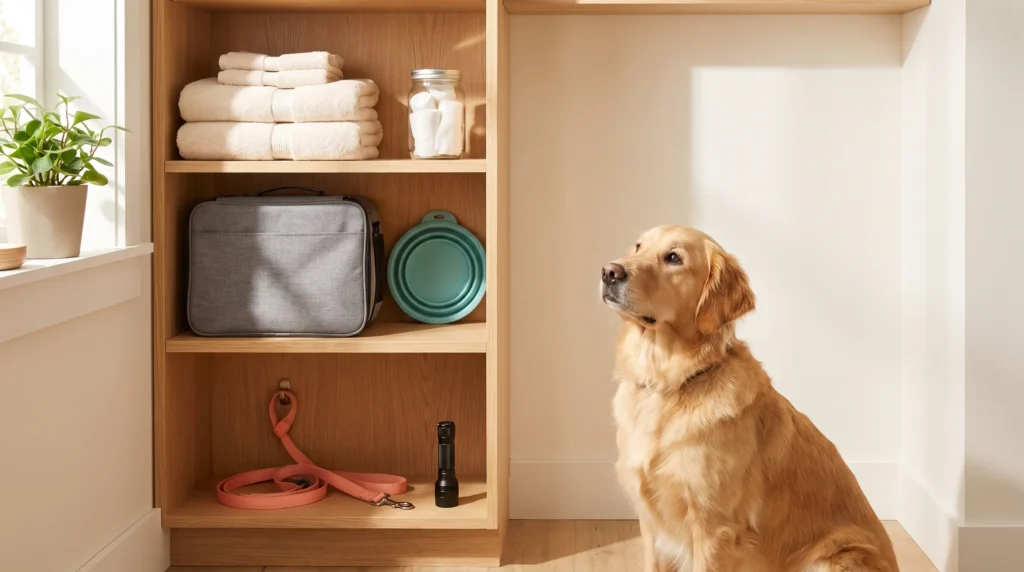
Add several clean towels to your supplies, including at least one you would not mind sacrificing to mud, vomit or another unpleasant surprise.
A flashlight is also surprisingly useful for examining paws, checking fur and getting a better look at an irritated area. Store veterinary contact information nearby so nobody has to search for it during a stressful moment.
Cleanup Supplies Beyond Paper Towels
Paper towels can handle plenty of pet messes, but they are not always enough. An enzymatic cleaner deserves a permanent spot in homes with dogs or cats because it breaks down organic material associated with urine, feces and vomit. Ordinary household cleaners may make an area smell clean to humans while leaving odors that pets can still detect.
Keep pet-safe stain remover, waste bags and a small supply of old rags nearby as well. Waterproof disposable pads are useful even if you do not have a puppy. They can protect a car seat during an unexpected trip, line the bottom of a carrier or provide an easy-to-clean surface when a pet is sick.
A dedicated lint roller or reusable fur remover is another inexpensive purchase that earns its keep, particularly five minutes before guests arrive and you realize the couch appears to have grown its own coat.
Travel Gear Before You Need It
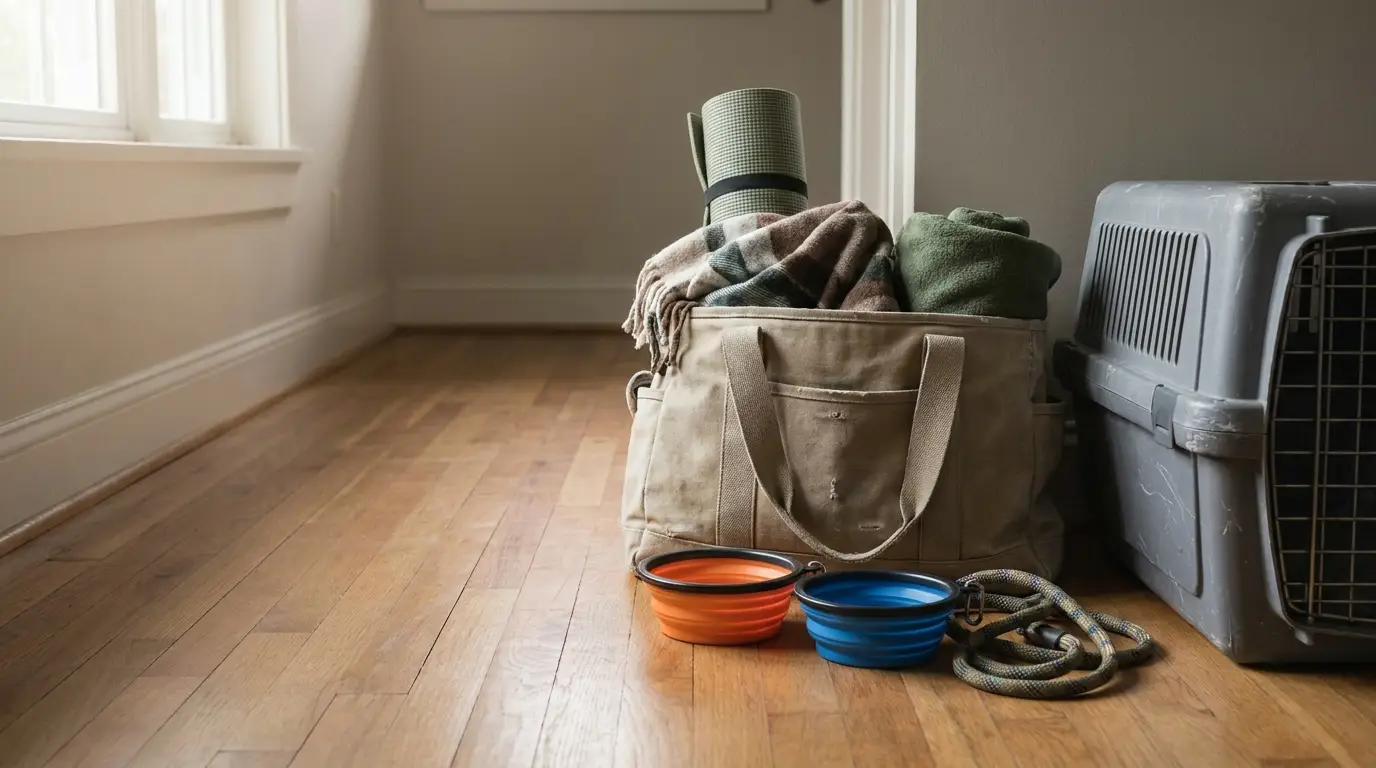
Pet travel supplies often get purchased minutes before they are needed, which is not an ideal way to prepare. Every pet should have access to an appropriate carrier, crate or vehicle restraint that fits correctly.
Collapsible food and water bowls take up little room, while a spare leash can prevent a genuine problem if the regular one breaks or disappears.
These supplies become especially useful when boarding your pet, visiting relatives or dealing with an unexpected overnight stay away from home. Keep a small travel bag ready with a few days’ worth of food, waste bags, familiar bedding and copies of important records.
If your pet takes medication, maintain an updated list containing the medication name, dosage and prescribing veterinarian. You may never need to grab everything in a hurry, but preparation is considerably easier than reconstructing your pet’s routine from memory while trying to get out the door.
Backup Food and Water
People prepare for storms and power outages, but pet supplies sometimes get left out of household emergency planning. Keep enough of your pet’s regular food to cover several extra days.
Rotating that supply into normal use prevents it from sitting forgotten until it expires. Pets with sensitive stomachs may not respond particularly well to an abrupt menu change simply because the local store is closed.
Water deserves the same consideration. Household emergency water supplies should account for every animal in the home, not just the humans. A manual can opener is worth keeping nearby if your pet eats canned food.
Owners of cats should maintain extra litter, while dog owners can store additional waste bags and an inexpensive spare leash with emergency supplies. A current photo of each pet and copies of vaccination records can also prove useful if severe weather, evacuation or another disruption separates you from home.
Comfort Items and Identification
Not every useful pet supply belongs in a first-aid kit. Familiar objects can make unfamiliar situations easier for animals. A favorite blanket, durable toy or familiar-smelling towel can provide comfort during travel, boarding or an unexpected stay somewhere new. Keeping one extra familiar item aside means you have something ready without stripping your pet’s everyday bed apart before leaving.
Identification deserves regular attention, too. Check collars periodically for wear and make sure identification tags remain readable.
If your pet is microchipped, confirm that the registration information is current, particularly after moving or changing phone numbers. Keep a recent clear photograph showing your pet’s face and body where you can access it easily.
Pet preparedness is mostly about thinking through ordinary problems before they become inconvenient ones. You do not need cabinets full of specialized equipment.
A few overlooked supplies, kept organized and replaced when necessary, can make everyday pet ownership easier and leave you better prepared when plans suddenly change.