
That half-empty can of exterior paint has been sitting in your garage since last summer.
You spent good money on it. Throwing it out feels like a waste. The bedroom walls could use a fresh coat anyway. So the thought crosses your mind: why not just use exterior paint inside?
It seems logical. Paint is paint, right?
Not quite. Exterior and interior paints are built for very different purposes. Using the wrong one on your walls not only costs you more money but also compromises your walls.
It can also affect your family’s health in ways you would not expect. This blog covers everything you need to know before you open that can.
Can You Use Exterior Paint Inside?
Technically, yes, you can apply exterior paint to indoor walls. The roller works the same way. But that does not mean it is safe or a good idea.
Exterior paint is formulated with chemicals designed to withstand rain, heat, and UV rays. Inside a closed room, those same chemicals become a real problem.
They release harmful gases, take much longer to dry, and do not hold up well on indoor surfaces like drywall. So, while you can physically use exterior paint inside, the clear answer is: you should not.
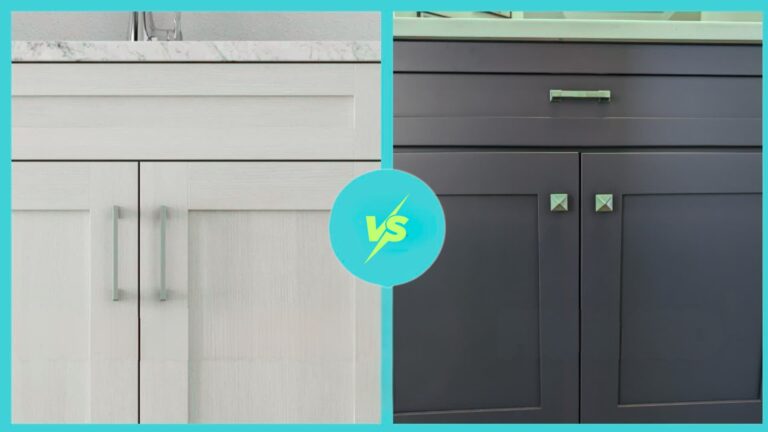
Exterior Paint vs. Interior Paint: Key Differences
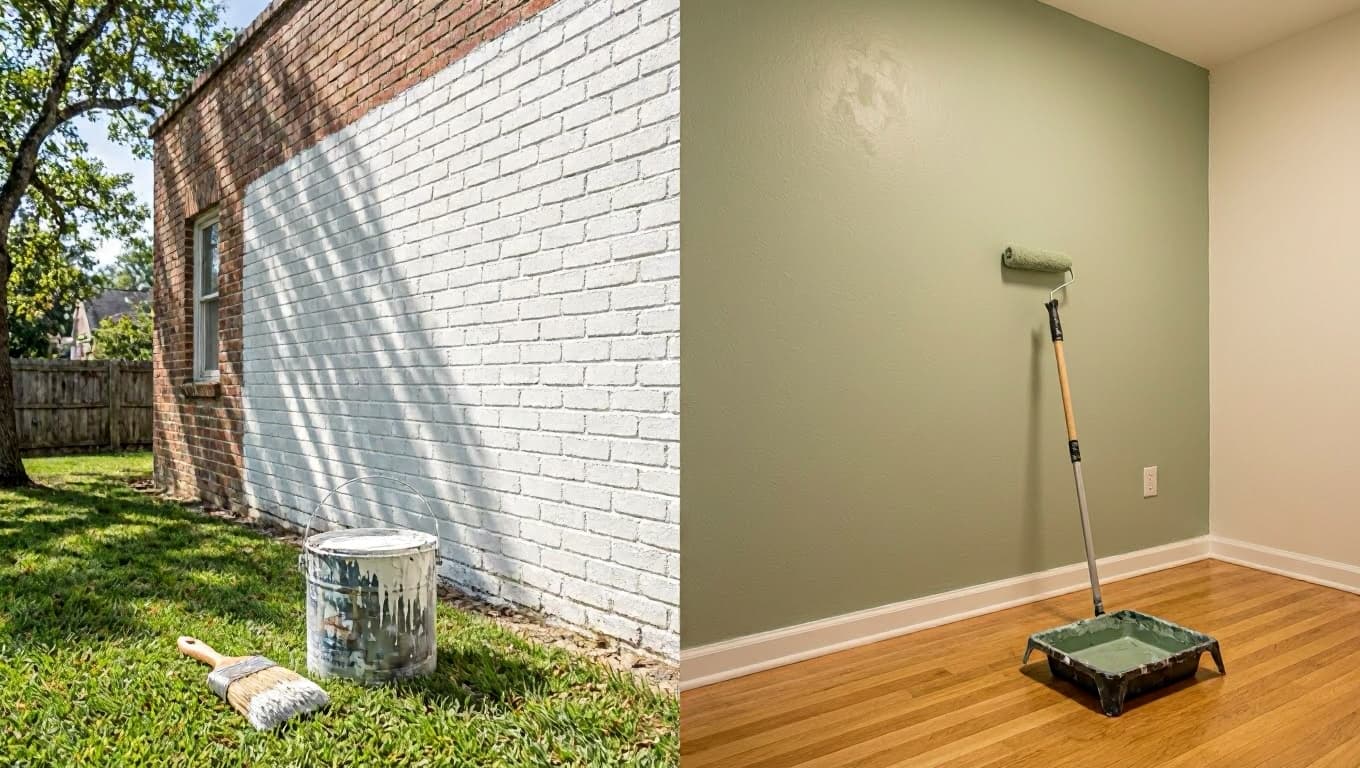
Alt Text: Split image of exterior brick wall being painted white outside and an interior wall painted green with a roller indoors.
What Is Exterior Paint?
Exterior paint is built for tough outdoor conditions: rain, UV rays, heat, and freezing temperatures. It uses soft, flexible resins that let the paint expand and contract without cracking.
It also contains fungicides, mildewcides, and UV blockers. These ingredients work well outside. Inside a home, they become the problem.
What Is Interior Paint?
Interior paint is built for safe, comfortable living spaces. It uses rigid resins that resist scuffs and daily wear. It is low-odor, fast-drying, and bonds well with drywall.
Because it skips the heavy additives in exterior paint, it carries very low or zero VOC levels, making it safe for people and pets indoors.
These two types of paint look similar in the can. But what is inside tells a very different story.
| Feature | Exterior Paint | Interior Paint |
|---|---|---|
| VOC Level | High | Low to Zero |
| Resin Type | Soft, flexible | Rigid, firm |
| Washability | Low | High |
| Drying Time | Slower | Faster |
| Surface Texture | Often gritty | Smooth |
| Safe for Indoors | No | Yes |
| UV Resistance | Yes | Not needed |
| Weather Resistance | Yes | Not needed |
| Cost | Higher | Lower |
| Bonds with Drywall | Poorly | Yes |
The biggest difference is the resins and additives each paint uses. Exterior paint has soft resins that handle outdoor temperature changes. Interior paint uses rigid resins that resist scuffs and daily wear. Each is built for its own setting. Using one in the other’s place leads to real problems.
Why You Should Not Use Exterior Paint Inside?
Knowing the differences is one thing. Understanding what actually happens when exterior paint is applied to indoor walls is another. The consequences go well beyond a bad smell.
- It Releases Harmful Chemicals Indoors: Exterior paint contains high VOC levels that get trapped in enclosed spaces and build up fast, causing headaches, dizziness, and long-term health risks.
- It Does Not Stick Well to Indoor Surfaces: Exterior paint is made for brick, wood, and stucco. On drywall, it bonds poorly and starts peeling or chipping within months.
- The Finish Looks and Feels Wrong: The thick, additive-heavy formula often dries with a chalky, gritty texture on interior walls, making it hard to clean and easy to scratch.
- You Pay More for What You Do Not Need: The higher price covers UV resistance and weather protection. Neither of those features serves any purpose on an indoor wall.
Using exterior paint inside costs you more upfront, performs worse over time, and puts your family’s health at risk. Interior paint is the safer, smarter, and more cost-effective choice for every room in your home.
Which Rooms Can Use Exterior Paint Inside?
Alt Text: Person using a paint roller to apply white paint on an interior wall.
The answer is nearly always no. But every room in your home comes with its own conditions, so it helps to go through each one on its own terms.
1. Living Room and Bedroom
Do not use exterior paint in living rooms or bedrooms. These are the spaces where your family spends the most time. Even low-level VOC exposure over long periods can add up and become a health concern. A low-VOC or zero-VOC interior paint is always the right call here.
2. Bathroom
Bathrooms are small, humid, and enclosed, which accelerates and intensifies VOC buildup. The mildewcide in exterior paint can also make the chemical smell worse in a tight space. Use a high-humidity interior paint rated for wet areas instead.
3. Kitchen
Chemical fumes near food preparation are a genuine concern. Exterior paint does not belong in any kitchen. Go with a low-VOC, scrubbable interior paint that handles grease, steam, and regular cleaning without losing its finish.
4. Nursery and Children’s Rooms
This is a firm no. Children are the group most sensitive to VOC exposure. For any room where a child sleeps or plays, only zero-VOC interior paint is appropriate. There are no exceptions here.
5. Garage and Unfinished Basement
These are the only spaces where exterior paint can sometimes be considered.
Garages and unfinished basements tend to have better airflow, higher moisture levels, and temperature swings that are closer to outdoor conditions.
Even so, make sure the space is well-ventilated. Do not use exterior paint in any area that connects directly to your main living spaces.
|
I Accidentally Used Exterior Paint Inside. What Now? Open all windows and doors right away. Use fans to push air out and keep people and pets out of the room until it fully dries. Once dry, apply a full coat of primer over the surface, then repaint with the correct interior paint. The primer seals the exterior paint beneath it and prevents further off-gassing. Do not skip it. Applying interior paint directly without primer will not fully block the chemicals below. |
Interior/Exterior Dual-Use Paints: Are They a Safe Option?
Some paint cans carry an “interior/exterior” label. These are designed to work in both settings, with VOC levels between a standard exterior paint and a zero-VOC interior paint.
| Feature | Dual-Use Paint |
|---|---|
| VOC Level | Lower than exterior, higher than zero-VOC interior |
| Best Used In | Laundry rooms, mudrooms, enclosed porches |
| Safe for Bedrooms | No |
| Safe for Nurseries | No |
| Weather Resistance | Moderate |
| Washability | Moderate |
| Cost | Mid-range |
Dual-use paints work well in transition spaces such as mudrooms, utility rooms, and covered porches. They are not a fit for bedrooms, kitchens, or nurseries. Always check the VOC rating on the label before buying, regardless of what the packaging says about versatility.
How to Pick the Right Interior Paint for Any Room?
Alt Text: Woman selecting paint cans from a store aisle with shelves labeled paints and stains.
Choosing interior paint does not have to feel like a big decision. A few clear criteria make it simple and fast.
- Check the VOC level first. Look for low-VOC paint with less than 50 grams per liter, or zero-VOC paint with less than 5 grams per liter. For bedrooms, nurseries, and kitchens, zero-VOC is the safest pick.
- Go with acrylic latex for most rooms. It is water-based, dries fast, cleans up with water, and bonds well with drywall.
- Match the finish to the room. Flat or matte for ceilings and low-traffic areas. Eggshell for bedrooms and living rooms. Satin for kitchens and bathrooms. Semi-gloss or gloss for trim, doors, and cabinets.
- Read the surface compatibility note on the label. Not every interior paint works on every surface. A quick check at the store saves a frustrating redo later.
Spending a few extra minutes on the label before you buy makes the actual painting process much smoother. The right paint sticks better, lasts longer, and looks cleaner on the wall.
Cost Comparison: Exterior Paint vs. Interior Paint
It might feel like using a leftover can saves money upfront. But when you factor in performance, lifespan, and possible health costs, the numbers shift quickly.
| Cost Factor | Exterior Paint Used Indoors | Interior Paint |
|---|---|---|
| Price per gallon | Higher | Lower |
| Features useful indoors | Very few | All of them |
| Drying time | Longer | Faster |
| Durability of drywall | Poor | Good |
| Expected time before repainting | 1 to 2 years | 5 to 10 years |
| Ease of cleaning | Difficult | Easy |
| Health risk | High | Low |
Pro Tips Before Painting Any Room
Good preparation before you start makes the finished job look better and last longer. These tips apply to any room, any paint, any wall.
- Buy the right amount before you start. Measure your wall area and check the coverage rate on the can. Running out mid-project means a second store trip. Buying too much creates the exact leftover situation this blog is about.
- Test a patch on the wall first. Paint looks different once it dries. A small test in a less visible corner shows you the real color and finish before you commit to the full room.
- Read the full label, not just the color. The label provides VOC content, surface compatibility, drying time, and the number of coats required for the job. That information saves you from surprises halfway through.
- Ventilate the room while you paint. Open windows and use a fan to push air out, even when using low-VOC interior paint. Good airflow speeds up drying and keeps the space comfortable while you work.
- Use primer when the surface needs it. New drywall, patched walls, and surfaces previously painted with the wrong type all need a coat of primer first. Skipping this step leads to uneven color and poor adhesion later on.
Good preparation takes an extra hour at most. That hour almost always saves you several hours of fixing problems after the job is done.
What to Do With Leftover Exterior Paint?
Do not pour leftover exterior paint down the drain or throw it in the trash while it is still wet. The chemicals in it can harm water systems and soil.
Check with your local Household Hazardous Waste facility for a safe drop-off point. Many cities run paint take-back programs that accept unused cans throughout the year.
You can also donate paint in good condition to community groups, local theaters, or Habitat for Humanity ReStores.
If the paint has fully dried and turned solid, some areas allow it in regular trash. Always check your city’s disposal rules before tossing anything.
Summing It Up
Using exterior paint inside might seem like a smart way to save money. But the risks are real.
High VOC levels alone make it a poor choice for any room where people live. Add poor wall adhesion and a rough finish, and the case against it becomes even clearer.
The right interior paint is safer, performs better, and costs less over time. It does not peel, it cleans up easily, and it does not fill the room with chemical fumes.
If you have a leftover can of exterior paint, use the disposal tips in this blog to handle it safely. Have thoughts or questions? Drop them in the comments below.