
Children face stress every day. School pressure, friendship troubles, and big emotions can feel overwhelming.
When kids don’t know how to handle these feelings, they may act out, shut down, or struggle silently.
As parents and caregivers, watching a child deal with anxiety or frustration without the right tools is tough.
The good news? You can teach your child simple coping skills that actually work.
These strategies help kids manage their emotions in healthy ways and build confidence for life.
This guide will show you practical coping skills for kids that are easy to learn and use.
You’ll find techniques for different age groups, tips to practice at home, coping skills to teach your kid in a PDF worksheet, and ways to support your child through difficult moments.
What Coping Skills Mean?
Coping skills are actions that help kids manage stress and regulate emotions in daily life.
These steps guide the body and mind back toward a calmer and steadier state when feelings rise quickly.
Kids need to learn coping skills because school demands, homework pressure, friendship issues, changes in routine, and overstimulation can all lead to strong emotional reactions.
With coping skills, kids have clear options rather than reacting impulsively. This reduces tension, supports focus, and improves communication.
When Kids Use Coping Skills?
Regular practice makes it easier for kids to use these skills early, before emotions grow too strong.
Coping steps are helpful in moments such as:
- Homework frustration
- Conflicts with peers or siblings
- Transitions between activities
- Nervousness before tests or events
- Bedtime worries
- Sensory overload in busy spaces
Is your kid lacking in social skills? You can try these easy ways to teach social skills for kids.
Types of Coping Skills for Kids
Here are some highly effective, practical, and healthy coping skills for kids, categorized to help them manage emotions through their bodies, minds, creativity, and connection.
| Coping Skill Type | Examples Kids Can Use |
|---|---|
|
Body-Based Skills Releases tension through gentle physical activity and helps kids notice body signals early. |
• Slow breathing patterns • Stretching arms, legs, and shoulders • Short walks • Light movement breaks • Holding a warm or cool object • Using a soft stress ball |
|
Calming Skills Supports steady breathing and slower thinking during strong emotions. |
• Guided imagery prompts • Muscle relaxation (tighten and release) • Closing eyes and counting • Listening to calm audio • Quiet corner breaks • Breath counts such as “in for three, out for four.” |
|
Creative Skills Provides emotional release in a low-pressure way. |
• Coloring • Drawing shapes or lines • Writing short notes • Playing soft music • Building with blocks • Simple crafting |
|
Social Skills Builds comfort through connection and communication. |
• Talking with a trusted adult • Asking for help • Time with a friend • Time with a pet • Cooperative play |
|
Thinking Skills Helps kids organize thoughts and shift focus with more intention. |
• Naming the emotion • Listing three things they can see or hear • Simple helpful thoughts (“I can take this one step at a time”) • Gratitude prompts • Checking if a thought is based on worry or fact |
You’ll find a coping skills for kids PDF attached with more coping ideas. These can help you choose simple activities your child can practice at home.
How Can You Teach Coping Skills to Your Child?
A quick coping skills activity helps kids to settle their emotions when they rise very fast. Slow breathing is often enough. A short stretch can also help.
Some kids calm down by naming colors they see or sounds they hear. Gentle hand pressure works for others.
These steps are simple and can be used almost anywhere to calm the kid.
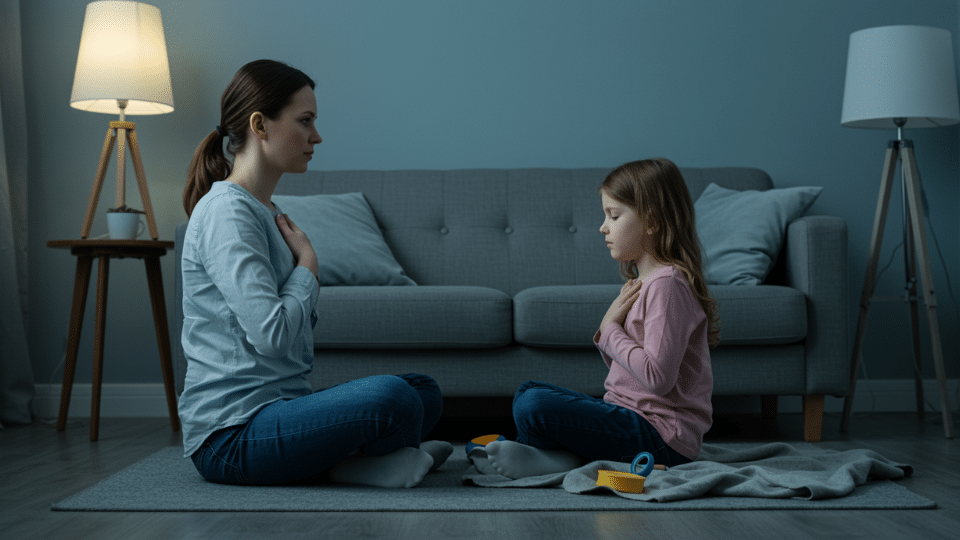
Bedtime Coping Skills Activities

The transition to sleep often becomes a challenging period, as the mind, finally quiet, begins to process the day’s lingering worries and stress.
These specialized bedtime coping skills activities are expertly designed to gently shift the brain from an active, worried state to a calm, restful one, significantly promoting better sleep and reducing nighttime anxiety.
1. The Gentle Body Scan
While your child is lying cozily in bed, guide them to focus their attention deliberately on different parts of their body, starting right at their toes and slowly progressing upwards toward their head.
The instructions should be simple and soft:
“Notice your feet. Are they tight? Now let them sink down and feel heavy and soft against the mattress.”
This methodical process helps children consciously release accumulated muscle tension that they often carry without realizing it, which is crucial for physical relaxation before sleep.
2. Gratitude Go-Round
Focusing on the positive is a remarkably powerful antidote to bedtime anxiety.
Before they drift off, ask your child to identify just three things, whether large achievements or small moments of kindness, that they were truly grateful for during that day.
This simple, positive ritual successfully shifts the brain’s emotional focus away from circulating stressors, serving as a highly effective coping skill for anxiety and worry at night.
3. Peaceful Visualization
Narrate a soothing, repetitive scene tailored for calmness. Suggest they create a mental picture:
“Imagine yourself floating gently on a warm, soft cloud… The air surrounding you is peaceful and quiet… You feel completely safe and wonderfully cozy.”
A guided, imaginative mental journey encourages the mind to switch off active planning or problem-solving modes, promoting natural sleepiness.
4. The Worry Dump
If specific, recurring concerns are responsible for keeping them awake, introduce the concept of a dedicated notebook, the “Worry Journal,” and a pen.
They can quickly write down or even draw their troubling thoughts.
This simple act of externalizing their concerns allows them to tell those worries confidently,
“I will address you tomorrow. You are safely stored here for the night.”
This provides an immediate, tangible separation from the stressor until morning, clearing the mental space for rest.
Coping Skills Activities for Kids at School
The school environment introduces unique stressors: everything from rigid academic expectations to complicated social dynamics.
It is critical that children have access to quick, discreet, and highly effective calming activities for kids that can be utilized right at their desk or even while standing in line.
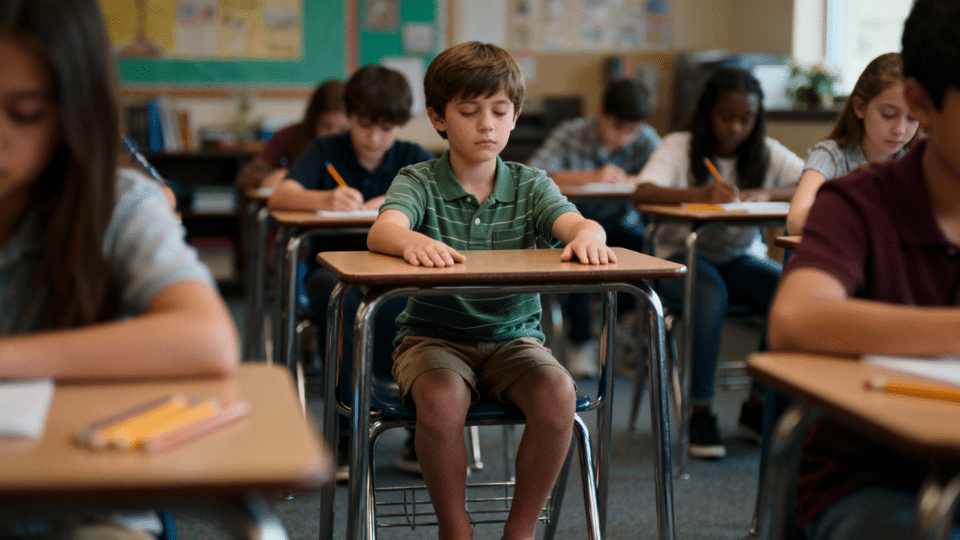
5. The Desk Anchor
When anxiety unexpectedly begins to build, teach your child this immediate grounding technique.
Instruct them to place both feet solidly and flatly on the floor, simultaneously resting their hands firmly on the desk surface.
Encourage them to focus entirely on the cool, stable feeling of the materials beneath their palms and soles.
This simple, quiet action provides instant, stabilizing tactile grounding that breaks the cycle of anxious thought.
6. Finger Tracing Breath
This is perhaps the most private and effective coping skill for anxiety available in a classroom setting.
The child holds one hand open. Using the pointer finger of their other hand, they slowly trace up one finger (inhaling deeply) and then slide down the other side (exhaling slowly).
They repeat this regulated movement for all five fingers.
This rhythmic, silent action offers a physical, visual focus that immediately encourages slow, deep breathing without drawing any external attention.
7. Pocket Focus Tool
Provide a small, unobtrusive item, perhaps a polished worry stone, a smooth marble, or a tiny piece of soft putty that your child can keep in their pocket.
When they experience rising frustration or nervousness, they can subtly squeeze, rub, or fidget with the item out of sight.
This silent, repetitive action channels nervous energy away from the stressor, acting as an excellent physical release.
8. Silent “I Can” Mantras
Collaborate with your child to develop three empowering, easy-to-recall affirmations (e.g., “I can take a minute,” “I can ask for help,” “I can be calm”).
When a moment feels too big or intimidating, they can silently repeat these short sentences.
This internal dialogue immediately shifts their mindset from fear and helplessness toward agency and competence.
Coping Skills Activities for Kids at Home

The home is the primary sanctuary where children can safely practice new habits.
These coping skills activities for kids at home are tailored to enhance self-regulation and strengthen family connection.
9. The Volcano Breath: A Physical Release
When emotions feel explosive, try this dramatic technique. Instruct your child to raise their hands high above their head, forming a “volcano peak.”
As they slowly inhale through their nose, they gather the tension.
Then, with a sudden, forceful “WHOOSH!” they let their arms drop rapidly to their sides, releasing all the accumulated frustration and big feelings.
This is a wonderfully physical and immediate way to employ deep breathing for stress relief.
10. Mindful Munching: Anchoring in the Present
Introduce the concept of grounding by focusing on the senses.
Offer your child a small piece of food, a raisin, a cracker, or a berry. Challenge them to examine it with intense detail before taking a bite.
What does it look like? How does the surface feel? What smell does it have?
Finally, what is the texture when they chew slowly? This simple exercise redirects the mind from escalating anxiety and anchors it firmly in their physical surroundings.
11. The Calming Corner: Safe Retreat
Designate a special spot in your house as a non-judgmental Calming Corner.
Stock it with comforting items: soft pillows, a fuzzy blanket, a quiet fidget toy, or maybe a drawing pad.
Crucially, this is a “time-in” zone, a place your child chooses to retreat to voluntarily when feeling overwhelmed, not a place they are sent for punishment.
This practice teaches the fundamental coping skill for stress: recognizing the need for a break and knowing how to seek it out effectively.
12. Feelings Charades: Decoding Emotions
To build a robust emotional vocabulary, a cornerstone of strong coping skills for kids, turn identification into a game.
Write down various emotions (e.g., Joyful, Irritated, Confident, Anxious) on slips of paper. Have your child act them out.
This lighthearted activity helps children practice labeling feelings, making it far easier for them to articulate their internal state during moments of genuine crisis.
Conclusion
Teaching your child coping skills for kids is like giving them a superhero cape for their feelings!
There are many helpful tools, from breathing techniques to creating a calm spot at home, that will help your child be more relaxed.
The most important thing to remember is that you are building their inner strength.
Practice these activities often, like doing a fun game, so your child knows exactly what to do when big feelings hit, whether they are at school or getting ready for bed.
Start with just one or two skills, be patient, and celebrate every small step.
By giving them these simple tools, you are helping your child grow into a confident, resilient, and emotionally smart person!