
Your toddler was perfectly fine yesterday. Today, they’re fussier than usual, drooling on everything, and gnawing on a toy like their life depends on it.
Sound familiar? Chances are, molars in toddlers are the reason behind all that drama.
These back teeth are bigger than anything your child has dealt with before, and they push through the gum tissue over weeks. It is hard on little ones and, honestly, hard on parents too.
This guide walks you through what to expect, when it happens, and what you can actually do to help.
What Are Molars and Why Do Toddlers Get Them?
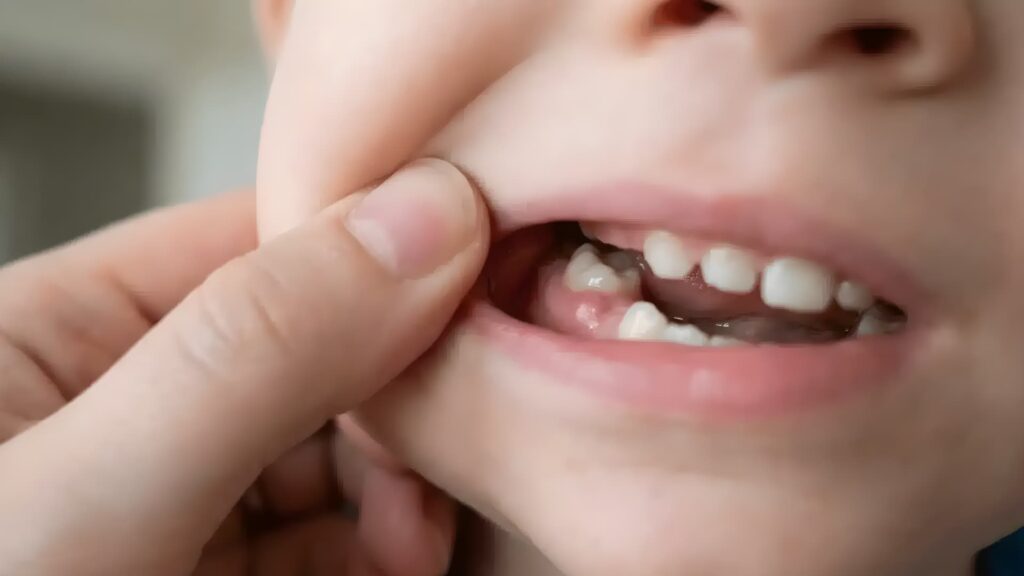
Molars are the large, flat teeth at the very back of your child’s mouth. They are the biggest teeth in the mouth, and their job is to grind and crush food so your toddler can chew properly.
A toddler gets eight baby molars in total, two on each side of both the top and bottom jaw. These teeth have thicker enamel than front teeth and sit where the jaw muscles are at their strongest.
Baby molars are not permanent, but they matter quite a bit right now. They help your child chew, speak clearly, and hold space so that adult teeth grow in the right position later on.
What Are Symptoms of Toddler Molars Coming In?
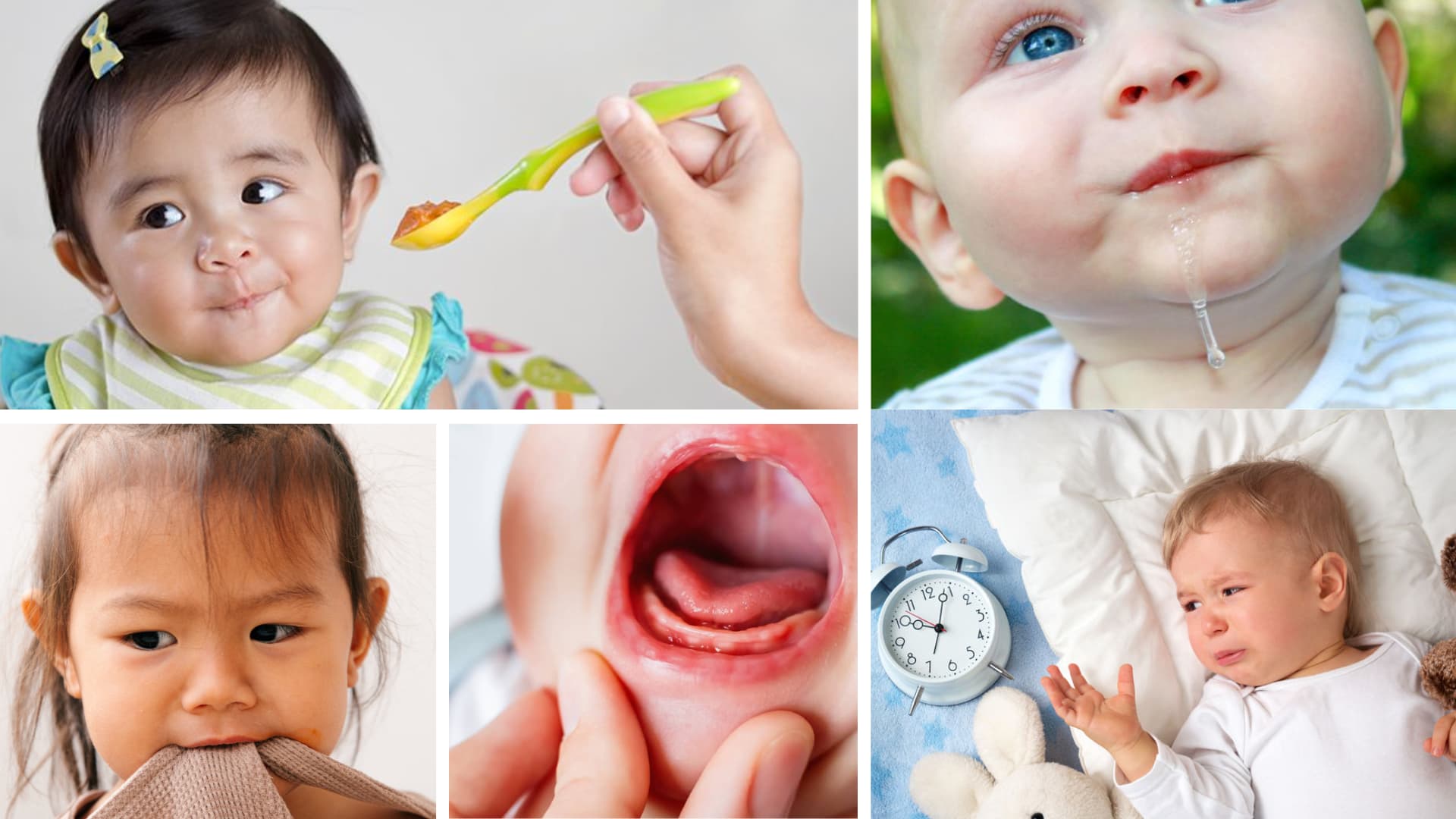
Alt Text: Collage showing toddler molar symptoms, including drooling, chewing on objects, gum swelling, irritability, and changes in eating and sleep patterns
You may notice changes in your toddler’s mood or behavior before you ever see or feel the tooth. Here are the signs that molars are on their way.
- Swollen, red gums: The area at the back of the mouth where the molar is pushing through may look puffy and feel sore to the touch.
- Increased drooling: Just as with earlier teeth, excess drooling is a common sign that something is happening in the mouth.
- Chewing on everything: Your toddler may bite down on toys, fingers, or clothing to put pressure on the sore gum.
- Sleep problems: Discomfort tends to worsen at night, when your child has no distractions, making bedtime harder than usual.
- Loss of appetite: Eating can hurt when gums are swollen, so your child may eat less or push food away.
- Irritability and mood changes: A happy, easygoing child can suddenly become clingy and tearful, seemingly out of nowhere.
- Headaches: Some children complain of head pain, which can actually be related to the pressure of molars pushing through.
- Pulling at the jaw or ear: Pain from the back gums can spread, and your child may tug at their face even if there is no ear infection.
When Do Molars Come In? Timeline for Toddlers
Every child is different, but there is a general window during which you can expect these teeth to appear.
First Molars (Baby Molars)
The first set of molars arrives during the second year of life. Most parents are caught off guard because these teeth do not replace any teeth that were already there — they come in behind the existing ones.
| Tooth | Eruption Age | Falls Out |
|---|---|---|
| Upper First Molar | 13 to 19 months | Around 9 to 11 years |
| Lower First Molar | 14 to 18 months | Around 9 to 11 years |
First molars tend to be less painful than the second set. Your child has been through teething before, and this round is slightly more manageable.
Second Molars (2-Year Molars)
The second molars, often called 2-year molars, are the last baby teeth to come in. They are larger, they take longer, and they tend to be more uncomfortable than the first molars.
| Tooth | Eruption Age | Falls Out |
|---|---|---|
| Upper Second Molar | 25 to 33 months | Around 10 to 12 years |
| Lower Second Molar | 23 to 31 months | Around 10 to 12 years |
The lower second molars usually appear before the upper ones. By the time your child turns 3, they should have all 20 baby teeth, 8 incisors, 4 canines, and 8 molars.
What If Molars Come In Late?
Some delay is completely normal. Tooth timing often runs in families, so if your own teeth came in late, your child may follow the same pattern.
That said, the American Academy of Pediatrics recommends seeing a pediatric dentist if no teeth have come in by 18 months.
If your child’s first or second molar has not appeared within six months of the expected window, or if you notice teeth growing in at odd angles or with unusual spacing, get a professional check.
How to Tell If Your Toddler’s Molars Are Coming In
Spotting molar eruption early can help you stay ahead of the discomfort and keep your child more comfortable. Here is what to look for.
- Run a clean finger along the back of the gum line: You may feel a hard bump or ridge where the tooth is starting to push through.
- Look for redness or swelling at the back of the mouth: Use a flashlight if needed. The gum tissue around the erupting molar often looks puffy and dark pink.
- Check the timing: If your child is between 13 and 33 months and suddenly fussier than usual, molars are a likely reason.
- Watch for patterns: Pain that gets worse at night, drooling that comes back, or a child who keeps putting their hand in their mouth are all strong signs.
- Notice eating changes: If your toddler suddenly refuses foods they normally love, especially harder or chewier foods, sore, swollen gums may be to blame.
Why Molar Teething Hurts More Than Earlier Teeth
Front teeth have a narrow edge that slices through gum tissue fairly quickly, but molars are wide and flat.
They push through a much larger section of gum tissue at once, which takes longer and causes more pressure and soreness in the area.
On top of that, molars sit far back in the mouth, where your toddler cannot easily point to the pain or communicate what is bothering them.
Nighttime makes it worse; without the distraction of play or people, the ache feels bigger. Some children breeze through it, while others feel it strongly for weeks. Neither response is unusual.
How to Help Your Toddler Through Molar Pain

Alt Text: Collage of toddler teething relief methods, including chewing on a cloth, caregiver soothing a child, soft foods, pain relief medicine, and avoiding teething gels
You do not have to just wait it out. There are concrete steps you can take to make this easier for your child.
1. Cold Therapy at Home
Cold reduces swelling and numbs the area for a little while. Wet a clean washcloth, fold it up, and put it in the freezer for about 30 minutes. Let your child bite and chew on it as needed.
You can also use a chilled (not frozen solid) teething ring. A cold metal spoon rubbed gently along the gum line works too. These are simple options that most toddlers accept without a fuss.
2. Gum Massage
Use one clean finger and apply gentle, steady pressure to the sore area. Move your finger in small circles along the gum line.
This can bring temporary relief and help some children settle down enough to sleep or eat. Keep your fingernails short and wash your hands well before doing this.
3. Foods That Help
Now that your toddler eats solids, food can actually be part of the relief. Cold yogurt, chilled applesauce, and frozen fruit puree in a mesh feeder are all good options.
Crunchy raw vegetables like carrot sticks, cucumber slices, and apple pieces give the gums something firm to press against, which can ease the pressure.
Cut everything into small pieces to reduce the risk of choking and encourage your child to chew on the side that is bothering them most.
4. Safe Pain Relief Medicine
If home options are not enough and your child is clearly in pain, over-the-counter medicine can help. Acetaminophen (Tylenol) is the most commonly recommended option for toddlers.
Ibuprofen is another option for children over 6 months, but it should not be given to children with asthma.
Always check the correct dosage with your pediatrician first; the right amount is based on your child’s weight, not their age. If you find yourself reaching for medicine for more than two or three days in a row, call your doctor.
What to Avoid
The U.S. Food and Drug Administration has warned against teething gels and pastes that contain benzocaine. This ingredient can cause a serious blood disorder in young children.
Homeopathic teething tablets sold in pharmacies are also not recommended by the FDA. Do not apply any numbing gel to the back of the throat; if that area becomes numb, it can affect your child’s ability to swallow safely.
Also, avoid freezing teething rings until they are rock hard, as an extremely hard surface can hurt tender gums rather than help them.
How to Take Care of Your Toddler’s New Molars
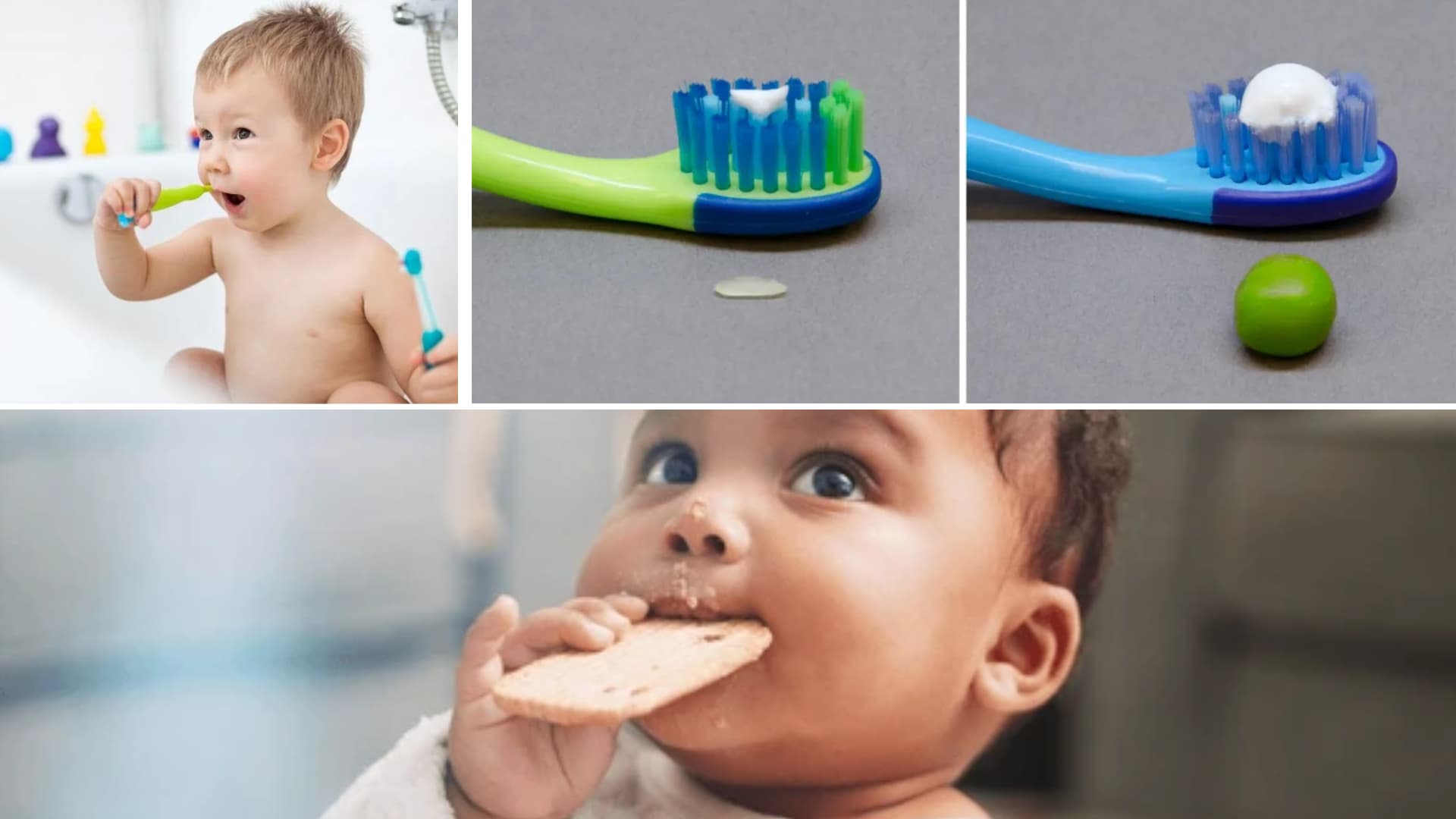
Alt Text: Collage showing toddler oral care, including brushing teeth, using the right toothpaste amount, and eating finger foods to support new molars
Getting the teeth is one thing. Keeping them healthy is the next step.
1. Brushing the Back Teeth
Brush your child’s teeth twice a day, morning and before bed. Use a soft-bristled toddler toothbrush and move it in small, gentle circles.
Pay extra attention to the back teeth, since molars sit in hard-to-reach spots where food and plaque collect easily. Angle the brush slightly toward the gum line, where buildup tends to hide.
Always supervise brushing and do the job yourself until your child has the hand coordination to do it well on their own.
2. Fluoride and Toothpaste
Start using a smear of fluoride toothpaste, about the size of a grain of rice, as soon as your child’s first tooth appears. By age 3, you can move up to a pea-sized amount.
Fluoride strengthens enamel and helps protect against decay, especially in the grooved surfaces of molars where food gets trapped.
Make sure your child spits the toothpaste out rather than swallowing it. If your tap water is not fluoridated, ask your dentist whether a supplement or in-office fluoride treatment makes sense.
3. Foods That Can Damage Baby Molars
Sugar is the main threat to baby teeth. When sugar sits in the grooves of molars, bacteria feed on it and produce acid that breaks down enamel.
Sticky snacks like gummies, dried fruit, and fruit leather are especially harmful because they cling to teeth for a long time.
Sugary drinks in a bottle at nap time or bedtime are also a problem; beyond causing decay, this habit can put pressure on molars and affect how they grow in.
Offer water between meals and save sweet foods for mealtime rather than snacking throughout the day.
When Should You See a Pediatric Dentist?
The American Academy of Pediatric Dentistry recommends a first dental visit by the time your child’s first tooth appears, or by their first birthday at the latest, with check-ups every 6 months thereafter.
Beyond routine visits, call your dentist if molar pain lasts more than two weeks, if your child stops eating or drinking due to mouth pain, if you see pus or notice obvious swelling around a tooth, or if a fever goes above 101°F alongside teething symptoms.
Those signs may point to an infection rather than a normal eruption. If molars seem to be growing in at a crooked angle or your child’s teeth look crowded, a professional check sooner rather than later is the right call.
The Bottom Line
Molars in toddlers are not fun for anyone, but they are completely normal and temporary. The discomfort tends to peak right before the tooth breaks through and settles down soon after.
Know the timeline, watch for the signs, and keep a few simple comfort options on hand. Most of all, take care of those new back teeth from the start.
Good brushing habits now protect your child’s smile and set the foundation for healthy adult teeth later. If something feels off or the pain seems more than usual, your pediatric dentist is always the right person to call.