

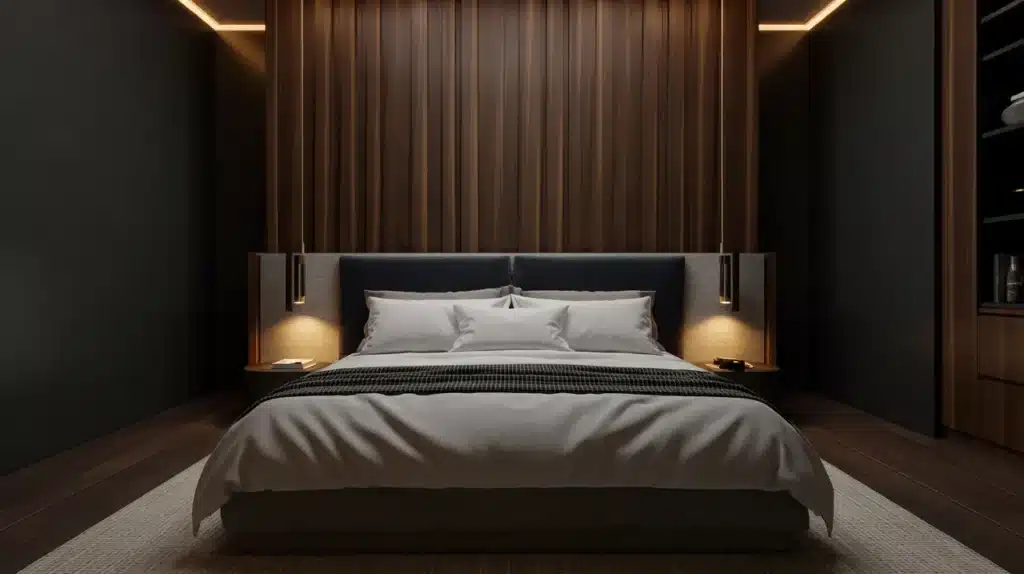
Most men do not give their bedroom much thought. A bed goes in. Maybe a nightstand. Done. But weeks later, you realize the room feels off. Nothing fits together. Nothing feels like yours.
Here is what most men miss. A bedroom is not just a place to sleep. It is the room you start and end every single day in. It should work for you, not against you.
This guide covers fresh men’s bedroom ideas for every style and budget. You will also get a decorating guide, styling tips, and a list of common mistakes to skip. By the end, you will have a clear direction.
What Makes a Bedroom Feel Masculine?
A masculine bedroom comes down to three things: color, material, and intention. Dark or neutral tones set the mood. Materials like wood, leather, and metal add weight and character.
Intention means every item in the room is there for a reason, not just because it ended up there. You do not need a bare, cold room to make it feel strong.
You just need one that looks like real choices were made.
19 Men’s Bedroom Ideas You Will Actually Love
There is no one look that works for every man. These 19 men’s bedroom ideas cover a wide range of styles, colors, and budgets. Find what fits your space and go from there.
1. Go Dark With a Charcoal or Navy Color Scheme
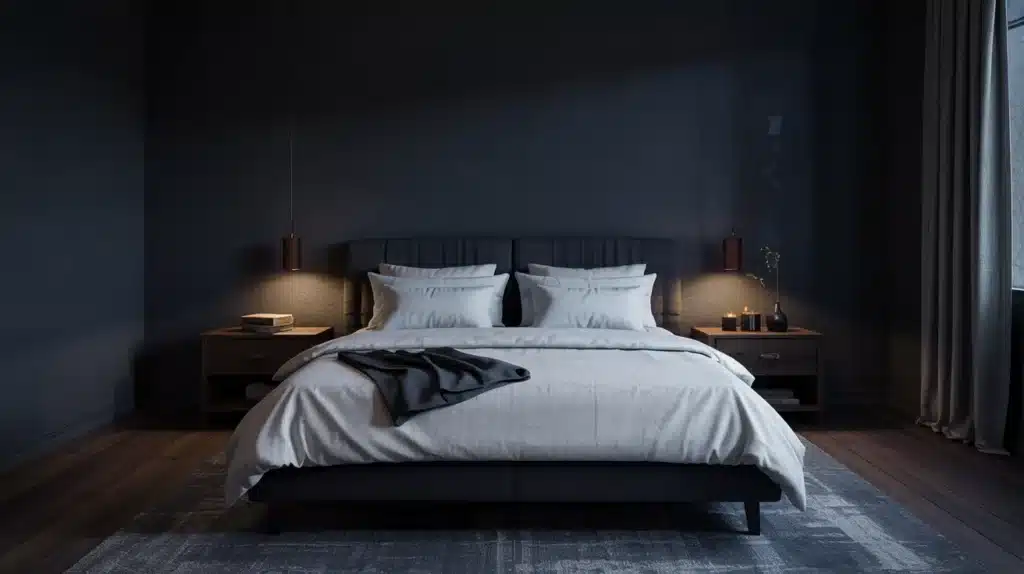
Dark walls do something interesting in a bedroom. They make the space feel enclosed, focused, and intentional. Charcoal and navy are the two colors that do this best without making the room feel like a cave.
- Best wall colors: Charcoal gray, dark navy, or near-black in a matte finish
- Balance with: White or cream bedding paired with warm wood furniture
- Lighting tip: Use warm bulbs to soften the effect of dark walls
- Works well in: Any room size, but especially effective in medium to large bedrooms
2. Try the Black and White Classic Combination
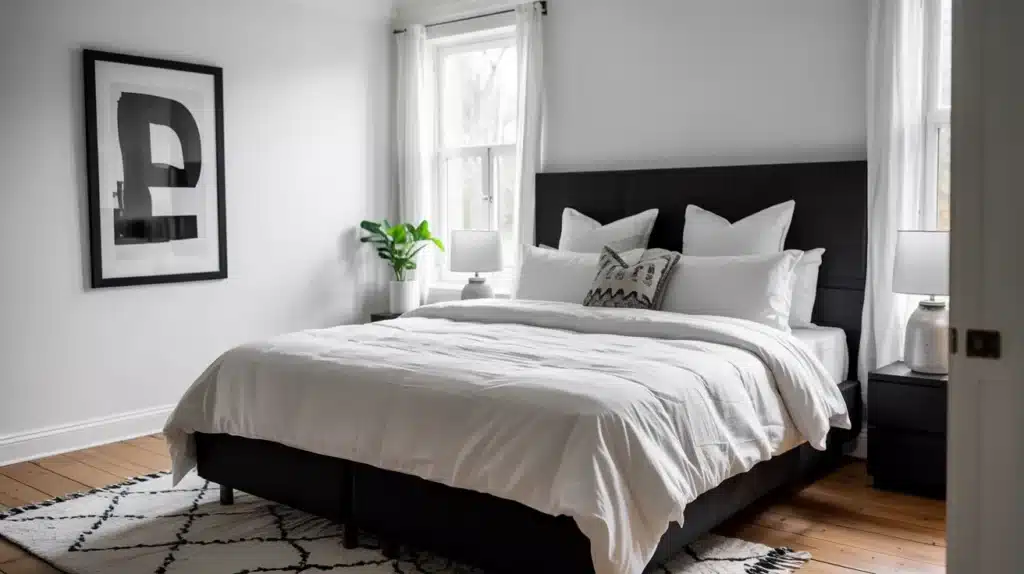
Black and white never stops working. The contrast is sharp and direct. It is one of the few color combinations that looks pulled together without much effort at all.
- Key pairing: Black headboard with white walls and bedding
- Add warmth with: A light wood floor, a natural fiber rug, or a few indoor plants
- Accent option: Soft blue, olive, or warm gray if the room starts to feel cold
- Avoid: Overloading the room with black. One or two strong black pieces are enough.
3. Build an Industrial Style Space
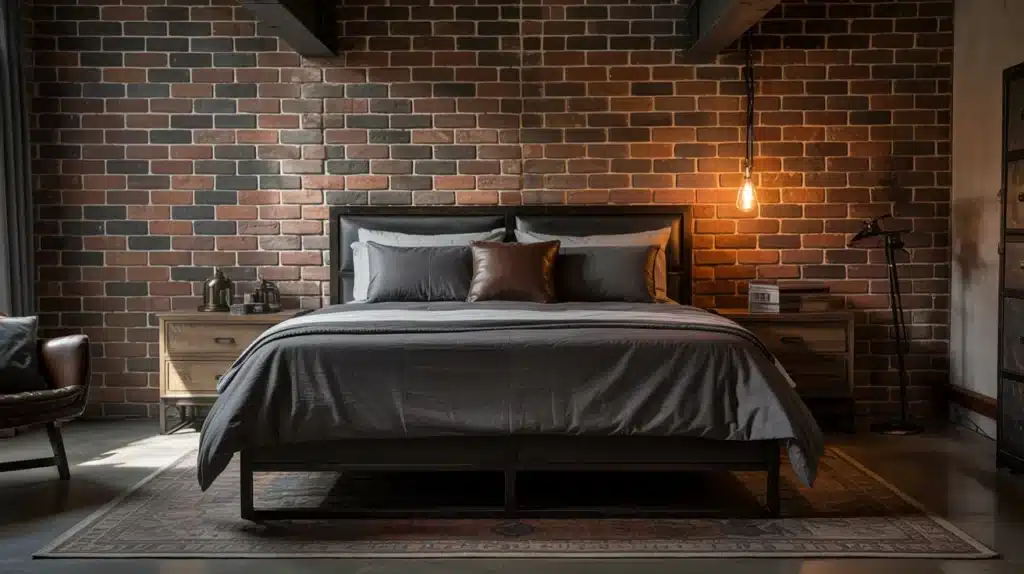
Industrial design is about showing the raw side of a room. Brick, steel, reclaimed wood, and concrete bring a strong, no-fuss personality to any space. It is a look that feels real rather than overdone.
- Key materials: Exposed brick or brick-effect wallpaper, metal bed frame, reclaimed wood dresser
- Lighting style: Edison bulb pendants or a metal floor lamp
- Soften it with: A chunky knit throw, a cotton rug, or simple linen curtains
- Color palette: Warm gray, rust, black, and natural wood tones
4. Keep It Clean With a Minimalist Setup
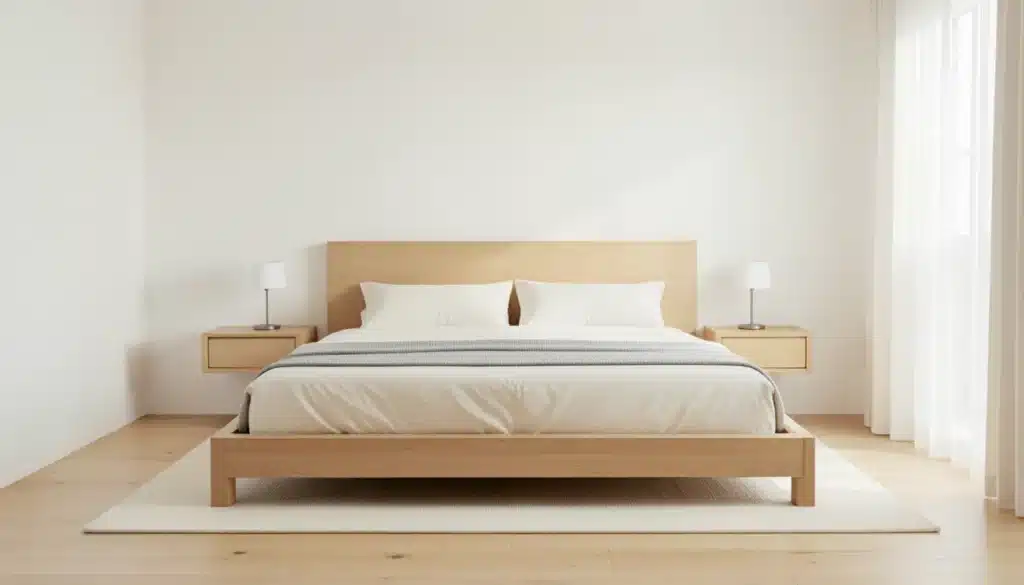
Minimalism is not about having an empty room. It is about having the right things and nothing extra. Every piece of furniture earns its place. Every surface stays clear.
- Furniture rule: Bed, two nightstands, one storage piece. That is usually enough.
- Color palette: White, off-white, warm gray, or soft beige
- Key habit: If it does not belong in the bedroom, it simply does not go in
- Storage tip: Use hidden or built-in storage to keep the overall look clean
5. Use Warm Earthy Tones for a Grounded Feel
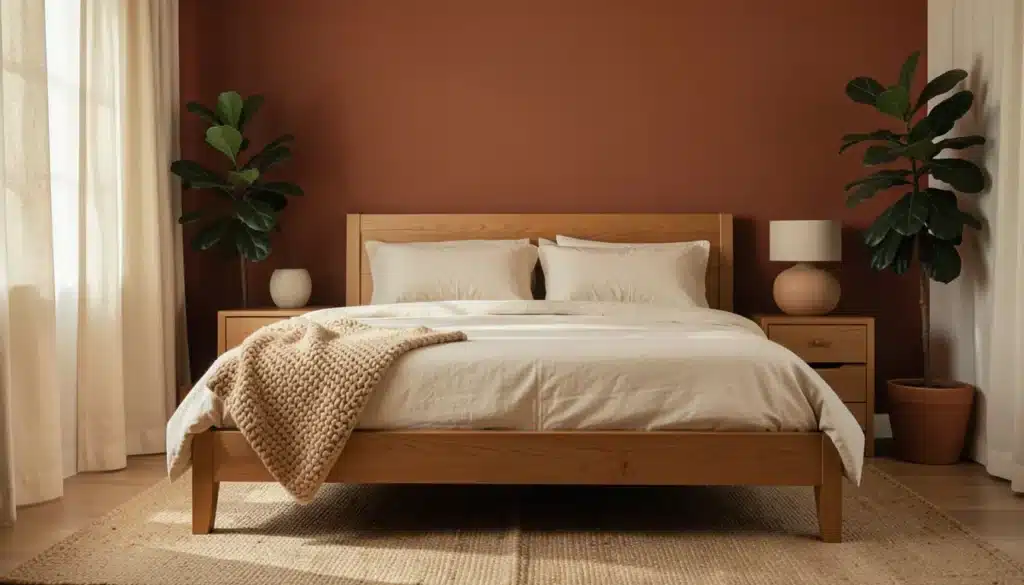
Warm earth tones are a strong alternative to the typical dark, masculine palette. Terracotta, olive, warm brown, and cream give the room a calm feel without looking soft or too neutral.
- Wall color options: Terracotta, warm brown, deep olive, or burnt sienna
- Bedding to match: Cream, oat, or sand linen tones work best here
- Furniture choice: Natural wood pieces in oak or walnut
- Finishing touch: A woven jute or cotton rug paired with a few low-maintenance plants
6. Make Wood the Star of the Room
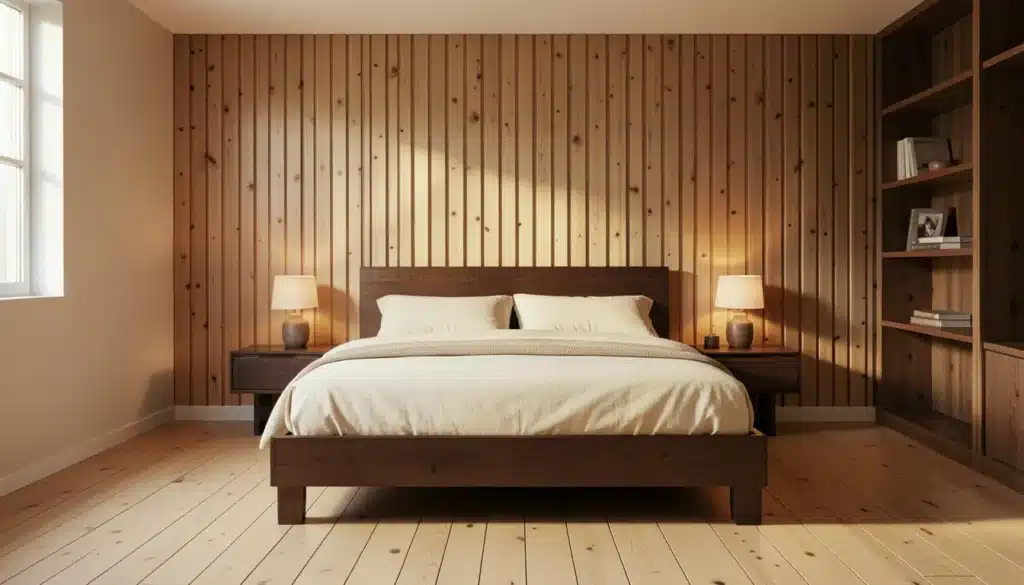
Wood adds warmth and texture in a way that almost no other material can. Used right, it brings the whole room together. The key is in how you mix different tones and finishes.
- Best uses: Slat wall panel behind the bed, solid wood bed frame, floating wood shelves
- Mix tones: Pair dark walnut with lighter oak for a clear visual contrast
- Avoid: Using only one type of wood throughout. Variety keeps it from looking flat.
- Style fit: Works best in minimalist, mid-century, or earthy bedroom setups
7. Go Bold With a Statement Headboard
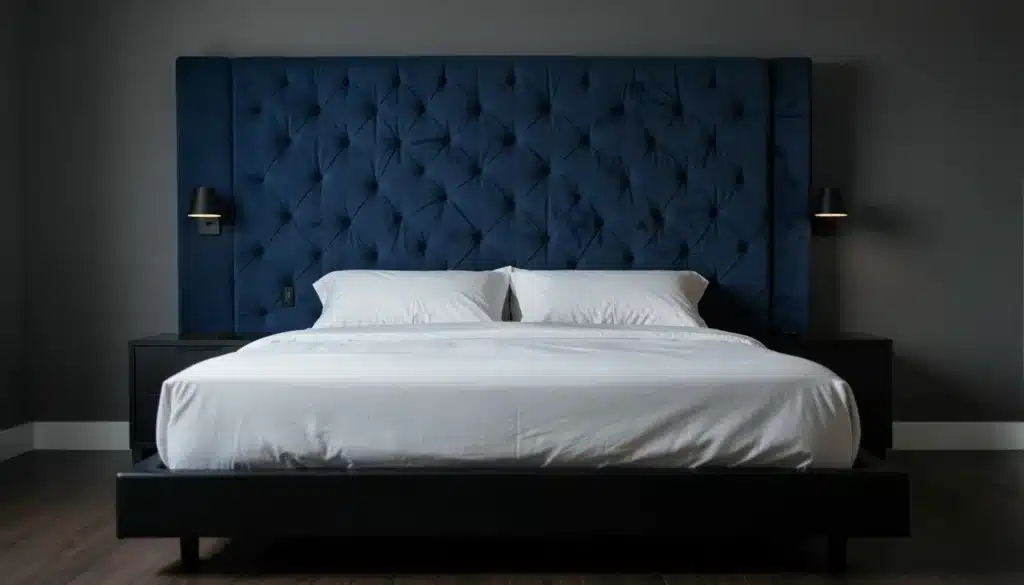
A strong headboard changes the whole room. It anchors the bed, gives the wall purpose, and sets the tone for the entire space. This is the one piece of furniture worth spending extra on.
- Top choices: Upholstered in dark gray or deep blue, tufted leather, or solid rustic wood
- Size matters: Go larger than you think. A headboard that is too small loses its impact completely.
- Pair with: Simple, neutral bedding so the headboard stays the clear focus
- Frame to match: Platform or low-profile bed frames work best under a bold headboard
8. Create a Cozy Reading Corner
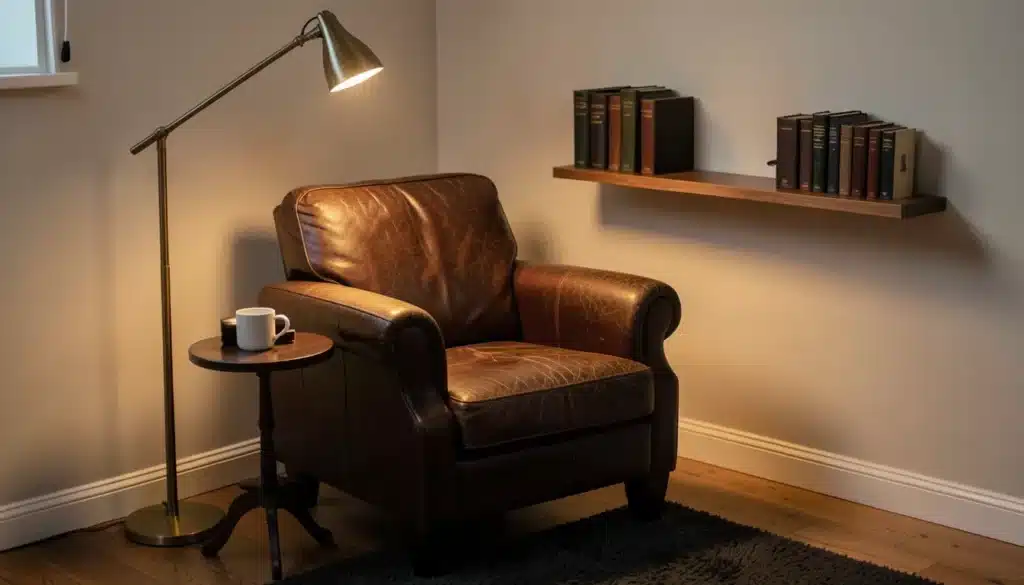
A reading corner turns a bedroom into more than just a place to sleep. It adds a second zone to the room. One chair, one lamp, and a few books are genuinely all it takes.
- Chair options: A leather armchair, a linen accent chair, or a compact wingback chair
- Lighting: A narrow floor lamp positioned over the shoulder works best for reading
- Placement: A quiet corner away from the bed, ideally near a window
- Extra touch: A small side table or wall-mounted shelf for books and a drink
9. Set Up a Bedroom Home Office Zone
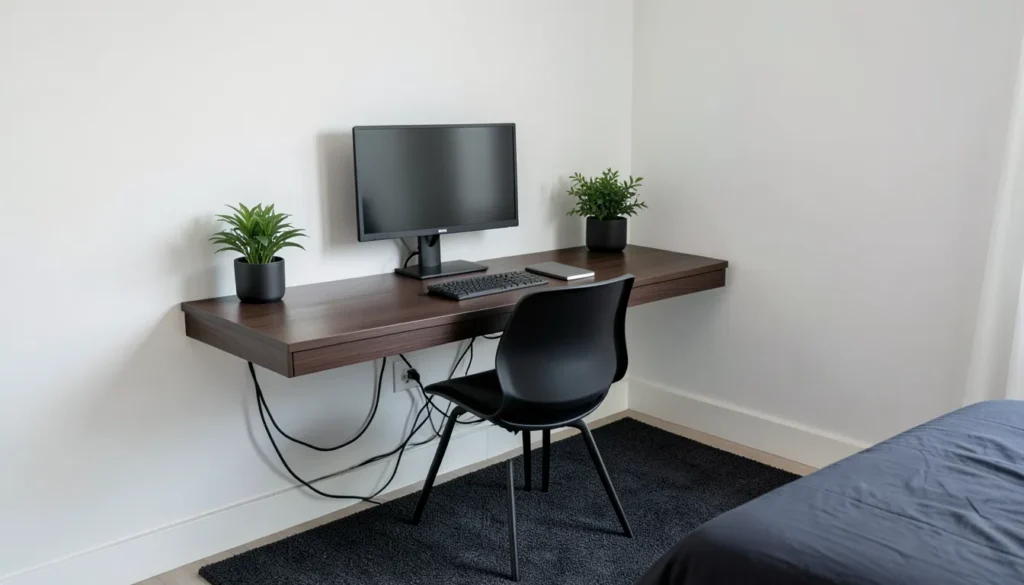
A bedroom desk setup does not have to ruin the room. With the right placement and a clean approach, it can feel like a natural part of the space. The key is keeping the work and rest areas visually separate.
- Best desk type: Wall-mounted or floating desk to save floor space
- Cable control: Use cord clips, cable boxes, or cable channels to hide wires
- Separate the zones: A rug under the desk area or a distinct light source helps define the work zone
- Position tip: Face away from the bed while working. It helps you mentally switch off later.
10. Use Leather, Metal, and Concrete Textures
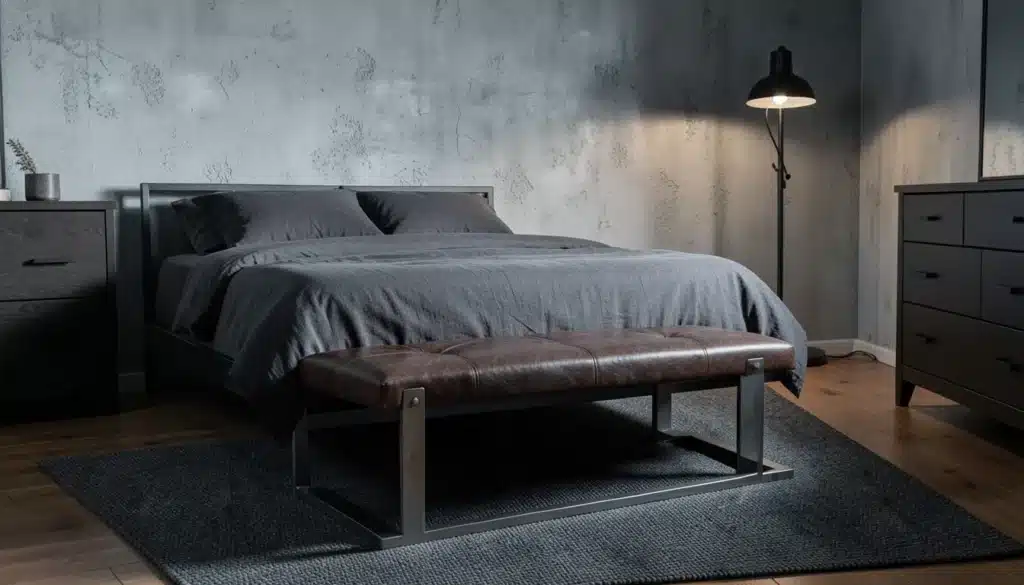
Texture is what separates a flat-looking room from one that feels designed. When you layer leather, metal, and concrete together, each material makes the others stand out more clearly.
- Where to use leather: A bench at the foot of the bed, a headboard, or a reading chair
- Metal details: Drawer handles, lamp bases, curtain rods, or a full metal bed frame
- Concrete look: Concrete-effect paint or wallpaper on one wall keeps the cost low
- Limit to: Three to four textures maximum. More than that starts to feel cluttered.
11. Try a Mid-Century Modern Look
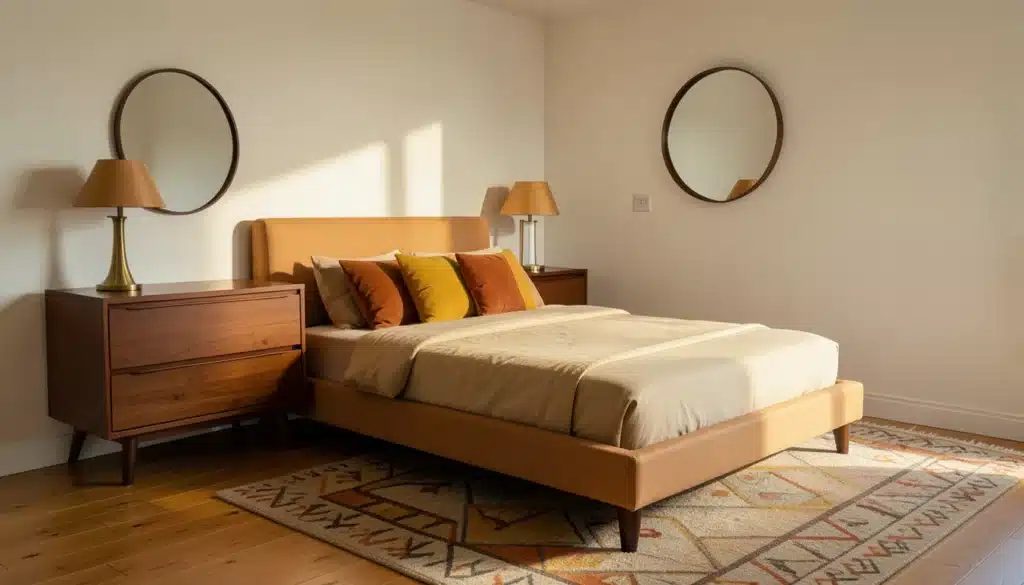
Mid-century modern has been popular for decades because it simply ages well. Clean shapes, warm wood tones, and a restrained use of color make this one of the most lasting styles for a man’s bedroom.
- Key furniture features: Tapered wooden legs, low-profile silhouettes, clean upholstered surfaces
- Color palette: Warm walnut with mustard yellow, burnt orange, or olive as accents
- Accessories: Vintage records, architectural prints, simple table lamps with cone shades
- Common pieces: A low platform bed, a teak dresser, or a classic lounge chair
12. Build a Sports or Hobby-Themed Room
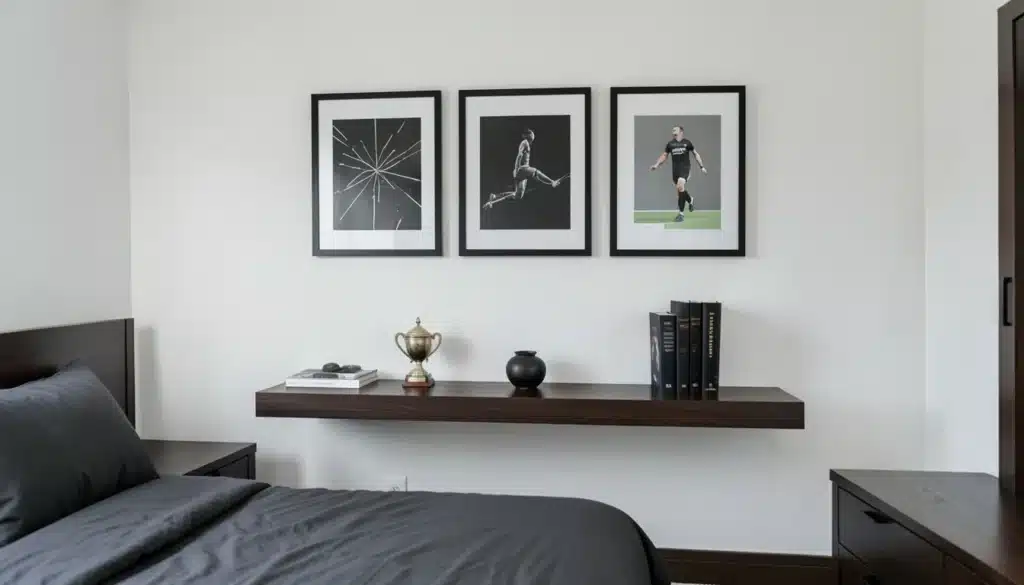
Your bedroom should reflect what you actually care about. A room built around your real interests feels personal in a way that no trend-led design can match. The trick is displaying things in a way that looks mature.
- Display ideas: Frame jerseys or prints, use wall shelves for trophies, records, or books
- Keep the base neutral: Plain walls and simple furniture let personal items stand out
- Avoid: Spreading items randomly. A focused display wall or shelf unit looks far better.
- Works well with: Dark or neutral palettes that frame the displayed items clearly
13. Use Smart Lighting to Set the Mood
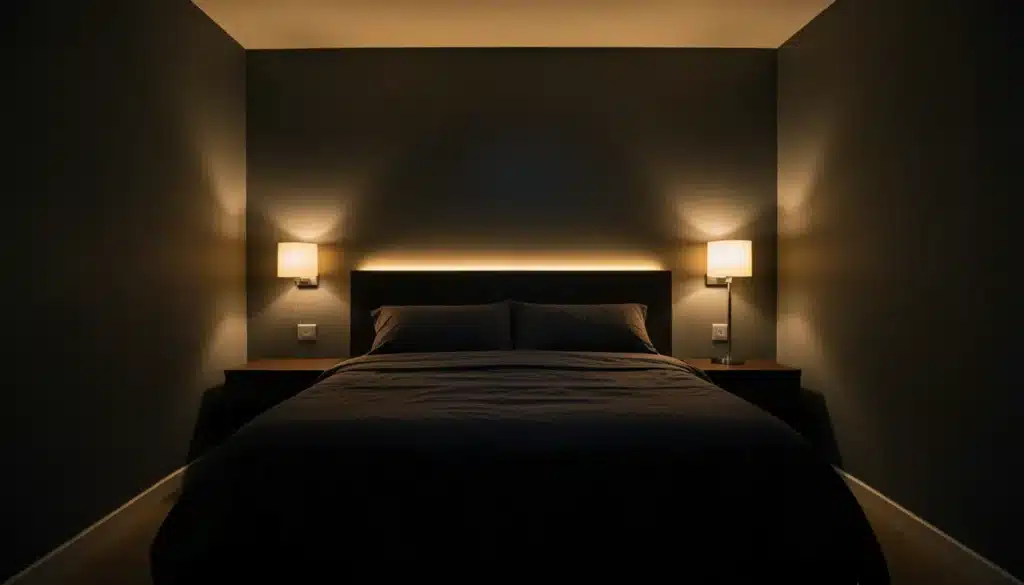
Lighting has a bigger effect on how a bedroom feels than most people realize. One bright overhead bulb is one of the most common design errors in any bedroom. Layered lighting fixes this completely.
- Three layers to use: Overhead (dimmer-controlled), bedside (warm table lamps or sconces), ambient (LED strips or a floor lamp)
- Bulb temperature: Warm white bulbs around 2700K to 3000K create the most relaxing atmosphere
- Smart option: Smart bulbs connected to Alexa or Google allow easy control without moving
- Avoid: Cool white bulbs. They disrupt sleep and make any room feel clinical.
14. Create a Gallery Wall With Masculine Art
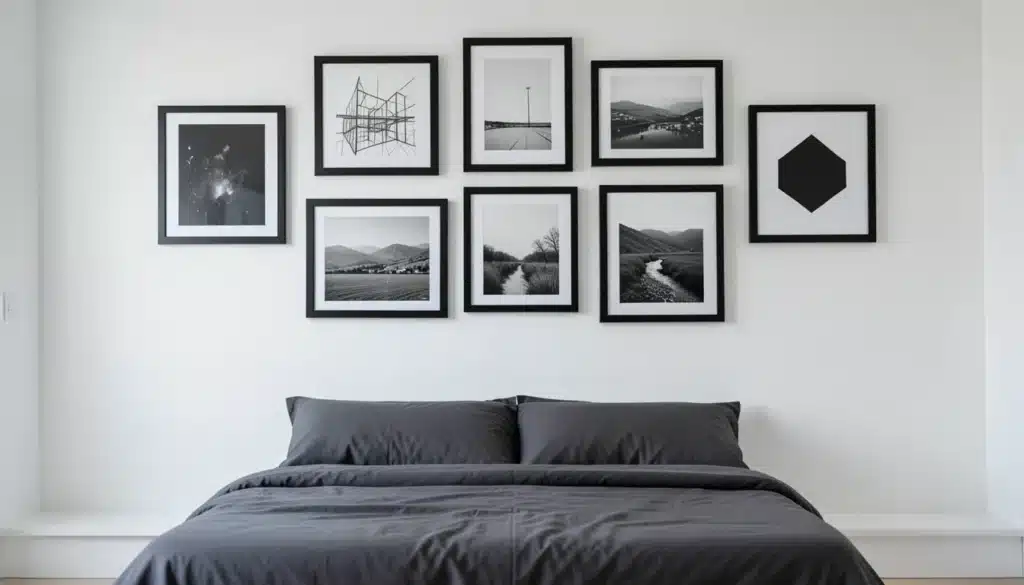
A blank wall is a missed opportunity. A gallery wall fills that space with something personal without making the room feel busy. The key is a consistent frame color and an intentional layout.
- Frame color: Black or dark wood frames work best in most masculine spaces
- Art ideas: Abstract prints, travel photography, architectural drawings, vintage maps, or black and white portraits
- Layout tip: Arrange the frames on the floor first before putting anything on the wall
- Spacing rule: Keep even gaps between frames. Around 2 to 3 inches works well for most wall sizes.
15. Work With a Monochrome Gray Palette
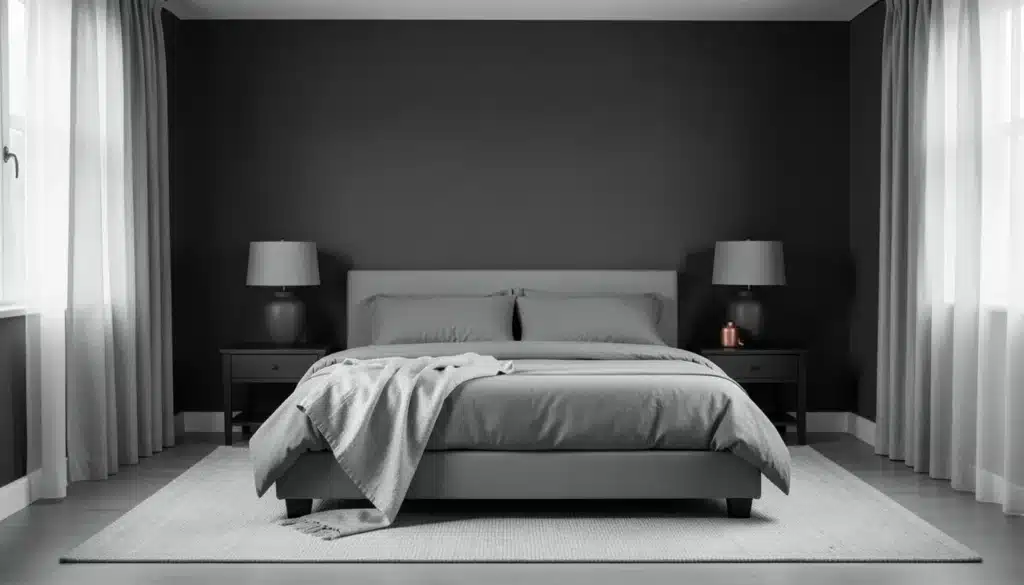
Gray is one of the most reliable colors in bedroom design. It works with almost everything. The mistake most people make is using only one shade. Layering multiple tones of gray is what gives the room real depth.
- Shade combination: Deep charcoal walls with mid-gray bedding and light silver accents
- Add contrast with: A warm wood nightstand or a copper lamp base to break up the gray
- Texture is key: Without texture, an all-gray room looks flat. Use a chunky rug or a linen throw.
- Works well with: Minimalist and industrial bedroom styles
16. Add Indoor Plants for a Fresh, Natural Feel
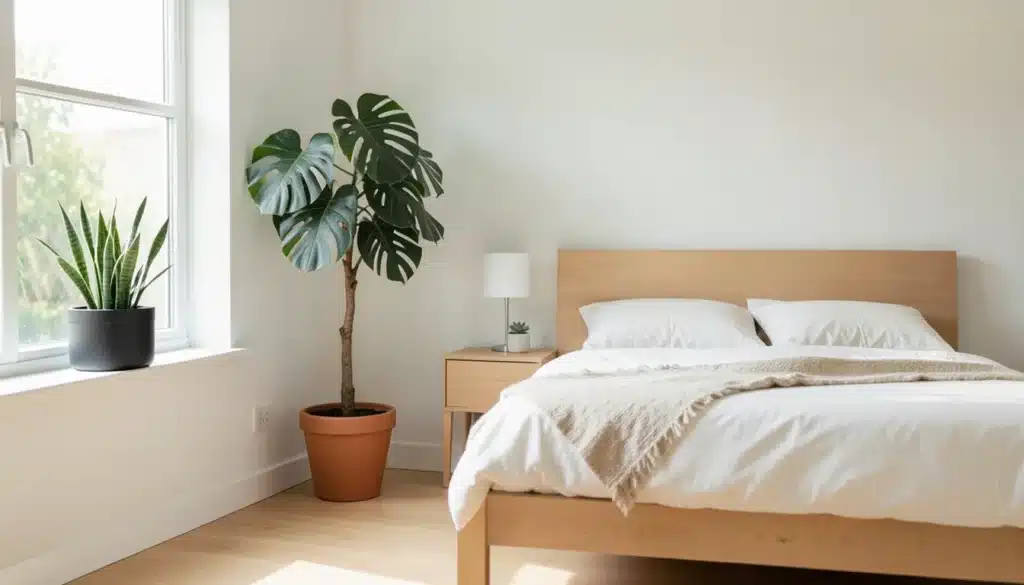
Plants change the feel of a bedroom without changing the design. They add color and softness, and, according to published research, can genuinely support better sleep quality. One or two well-placed plants make a clear difference.
- Best choices for bedrooms: Snake plant, Monstera, Pothos, or ZZ plant (all low-maintenance options)
- Placement ideas: A large plant in one corner, a small pot on the windowsill or nightstand
- For darker rooms: Choose shade-tolerant plants like Snake plants or Pothos
- Pair with: White walls or light furniture to let the green stand out clearly
17. Design a Budget-Friendly Bachelor Pad
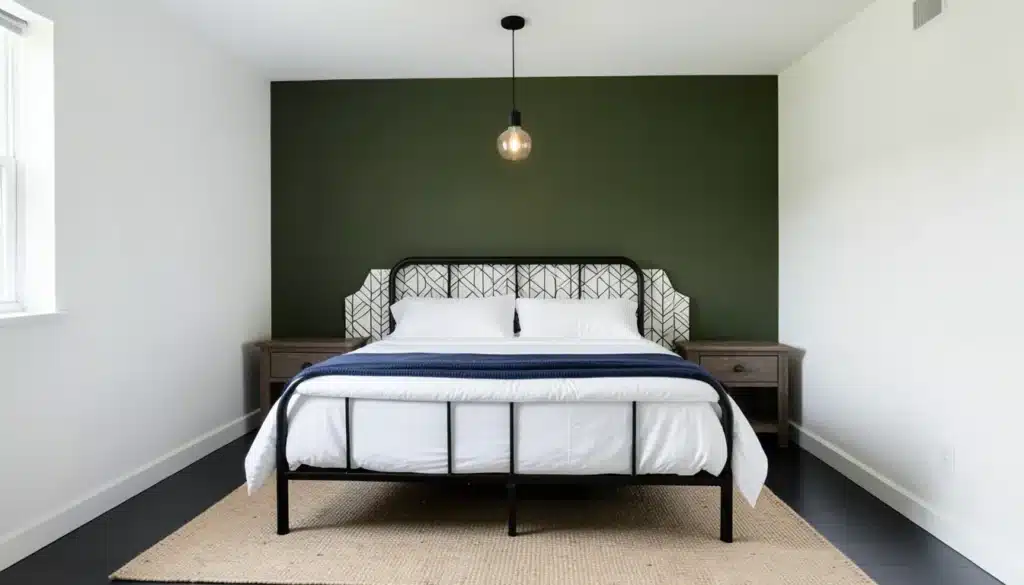
A sharp bedroom does not require a large budget. Most of the visual impact in any room comes from a few well-chosen changes. You do not need to replace everything. Focus on what the eye lands on first.
- Highest-return changes: Fresh coat of paint, upgraded bedding, and better lighting
- Low-cost accent wall: Peel-and-stick wallpaper or a DIY wood pallet wall
- Second-hand finds: Solid furniture from thrift shops can be repainted or updated with new hardware
- Spend in this order: Bed and bedding first, then lighting, then walls, then accessories last
18. Try Luxury Textures Like Velvet and Linen
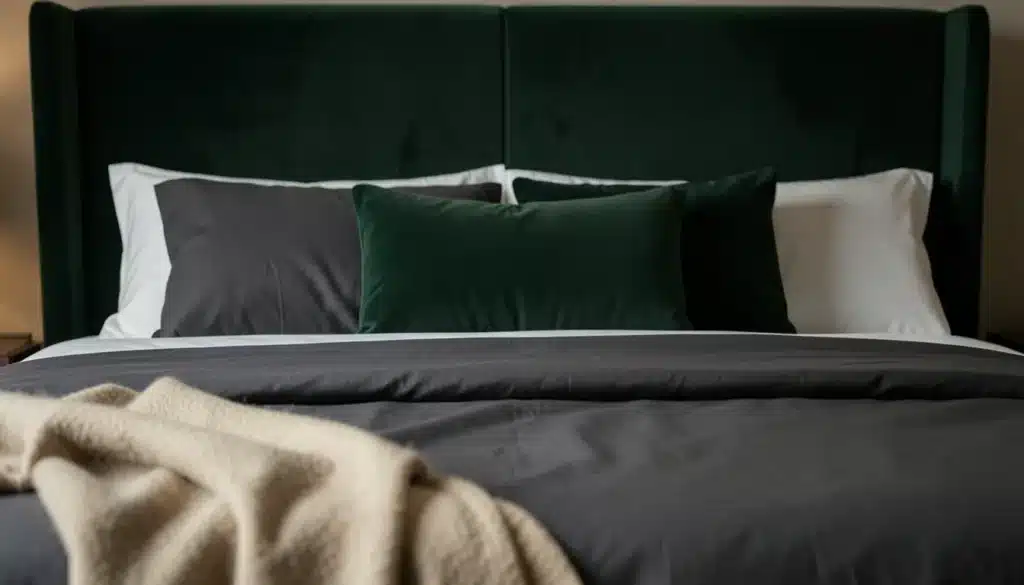
You do not need to spend a lot to make a bedroom feel expensive. The right fabrics do most of the work. Velvet, linen, and heavyweight cotton all carry a richness that cheaper materials simply do not.
- Velvet is best for: Headboards, cushions, or a bedroom chair. Deep blue, forest green, and charcoal are the strongest color choices.
- Linen is best for: Bedding and curtains. It softens the room without looking overly casual.
- Layer for effect: Mix a velvet cushion with linen bedding and a wool or cotton throw
- Care note: Velvet needs regular brushing to keep it looking sharp over time
19. Use Slat Wall Panels for a Modern Finish
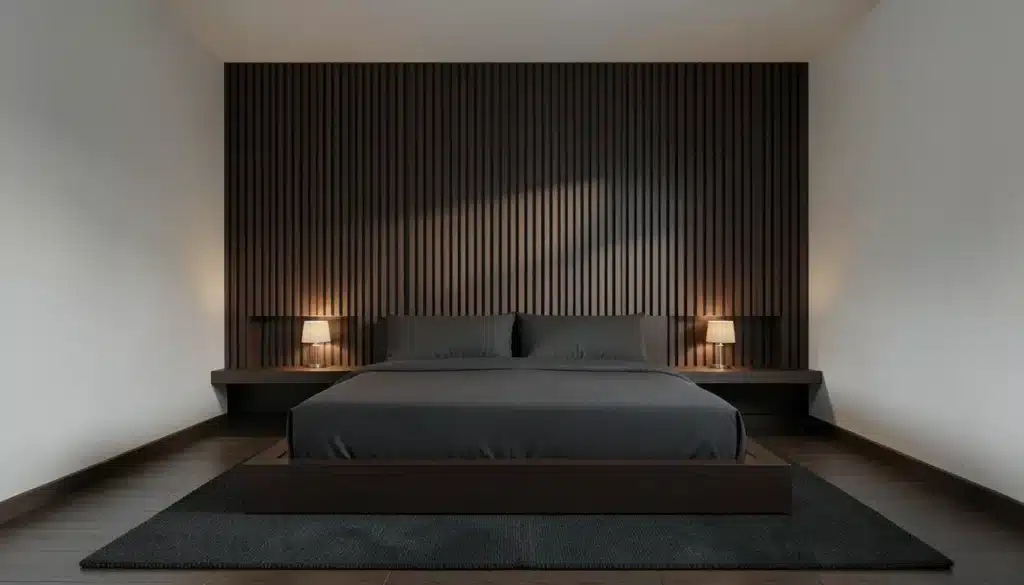
Wood slat panels have become one of the most popular choices in modern bedroom design. They add texture, depth, and a sense of quality to any wall. Most slat panel kits can be installed without a contractor.
- Best placement: The wall behind the bed, commonly called the feature or accent wall
- Wood finish options: Natural oak for a warm feel, dark walnut for a sharper and more formal look
- Installation: Pre-made slat panel kits install like large tiles. Most people complete it in a single day.
- Pair with: A platform bed in matching wood tones for a fully cohesive finish
How to Decorate a Men’s Bedroom?
Having ideas is one thing. Knowing how to put them together is another. This section walks through the key decisions, step by step, so the room actually comes together rather than just looking assembled.
1. Pick Your Color Palette First
Color sets the foundation for every other decision in the room. Get this right, and the rest becomes much easier. Start with one base color, add one secondary tone, and use a third only for small accents.
- Popular combinations: Charcoal and white with warm wood, navy and cream with brass, gray and black with copper
- Test before you commit: Paint a small section of wall and check it in both daylight and in the evening
- Starting point: If you are unsure, a medium neutral gray works with almost any furniture style
2. Choose Furniture With a Purpose
Every piece of furniture should earn its place. Start with the bed since it takes up the most visual space. From there, add only what the room genuinely needs.
- Start with: The bed frame and headboard first, then build around those
- Standard pieces: Bed, two nightstands, a dresser. A desk or chair if space honestly allows.
- Material guide: Wood for warmth, metal for a sharp modern look, upholstered pieces for comfort
- Smart buy: Beds or ottomans with built-in storage keep the room organized without extra furniture
3. Layer Your Lighting
One overhead light is simply not enough for a bedroom. A well-lit room needs at least three types of lighting. Each layer serves a different time of day and a different activity.
- Overhead: A dimmer-controlled ceiling fixture for general use during the day
- Bedside: Wall sconces or table lamps for reading and winding down in the evening
- Ambient: LED strip lighting behind a headboard or a floor lamp for soft background light
- Bulb choice: Always use warm white at 2700K to 3000K. Not cool, white.
4. Add Personal Items Intentionally
Personal items are what separate a designed room from a hotel room. But adding too many things without a plan makes the room feel cluttered. Keep it to three to five items and display them with care.
- Good personal items: A framed print you actually like, a plant, a stack of books, or one or two objects from a hobby
- Where to put them: On a wall shelf, a nightstand, or a dedicated display shelf
- The rule: If it has no meaning and no purpose, it does not belong in the room
- Seasonal swap: Switch out a heavy throw for a lighter one in warmer months
5. Get Your Storage Right
A room can look well-designed and still feel messy if storage is not planned. Good storage is not just about having enough of it. It is about making the room easy to maintain every day.
- Under-bed storage: Bed drawers or rolling bins work well for seasonal clothing and spare bedding
- Wall shelves: Floating shelves for books and display items keep all surfaces clear
- Door hook rail: A back-of-door hook rail handles bags, coats, and belts with no floor space lost
- Dresser top rule: One tray for daily items (watch, wallet, keys) is enough. Keep the rest inside the drawers.
Tips for Styling a Masculine Bedroom
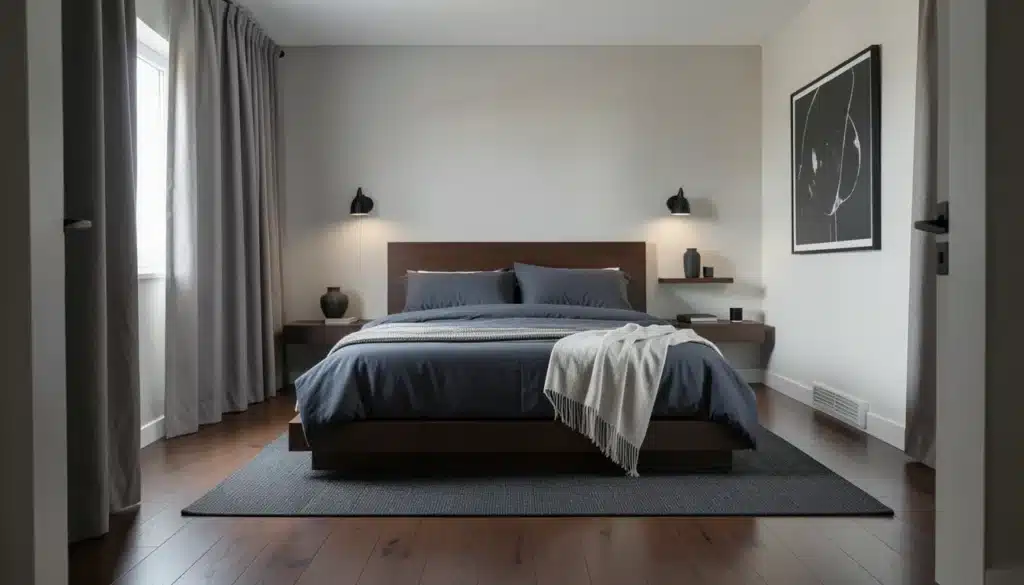
These are not major design decisions. They are smaller, practical steps that make the difference between a bedroom that looks put together and one that just looks okay.
- Start with the bed: The bed is the first thing anyone sees when they walk into the room. Style it first and let everything else follow.
- Stick to three colors: One base color, one secondary tone, and one accent. Three is almost always enough for any masculine space.
- Clear the floor: A clear floor makes any room feel bigger and cleaner immediately.
- Use odd numbers when displaying objects: Groups of three or five look more natural on a shelf than pairs do.
- Match your metal finishes: If your lamp base is black metal, use black hardware on furniture too. Consistency here matters more than variety.
- Layer your bedding: A fitted sheet, a duvet, and one throw at the foot of the bed. That three-layer setup looks sharp every time.
- Keep one surface completely clear: Even in a full room, one clear surface creates a visible sense of order.
Mistakes Men Make When Designing Their Bedroom
These mistakes show up more often than most people expect. Knowing what to skip is just as useful as knowing what to add. Here is a quick breakdown of the most frequent errors and how to correct each one.
| Mistake | Why It Happens | How to Fix It |
|---|---|---|
| No clear focal point | Furniture was added without a plan | Make the bed the main focus with a strong headboard or a feature wall behind it |
| Too many styles mixed together | Shopping in different stores with no clear direction | Pick one primary style and let accessories support it, not compete |
| Single bright overhead bulb | Lighting is usually the last thing people think about | Add bedside lamps and at least one ambient light source |
| No rug on the floor | Rugs feel like an optional extra | Add a rug under the bed, extending 18 to 24 inches on each side |
| Bare windows | Often just overlooked entirely | Hang simple linen or blackout curtains in a neutral tone |
| Overcrowded furniture | Too many pieces crammed into one room | Remove the least-used piece and give the room space to breathe |
| Flat single color or single texture | Feels safe but ends up looking unfinished | Break it up with one contrasting material or a different shade in the same color family |
The Right Way to Make a Man’s Bed Look Sharp
The bed is the main piece in any bedroom. How it looks sets the tone for the whole room. Start with a well-fitted sheet in a solid, darker, or neutral tone.
Add a duvet or comforter in a close but complementary color. Lay one throw blanket across the lower third of the bed.
Keep pillows simple: two sleeping pillows in matching cases, and at most one or two accent cushions. That is it. No extra layers, no decorative excess.
A clean, well-made bed in a calm color does more for the room than almost any other single change.
Final Thoughts
Good men’s bedroom ideas are not about copying a look from a magazine. They are about making a space that fits how you actually live.
Your bedroom is the room you come back to every day. It should feel like yours.
Start with one change. Pick a color you actually like. Swap out a light. Get a rug. Those small steps build up faster than you expect.
You do not need a complete overhaul to make your room feel different. You just need a clear idea of what you want. Then the patience to build it, step by step.
Which idea from this list are you trying first? Drop it in the comments below.