

What Families Are Doing Instead of Another Hour on the iPad
Most parents have had the same conversation with themselves over the past few years. The screens are too much. The kids are too wound up. The evenings need a different shape. The advice that follows on parenting blogs and in pediatric guidelines is consistent, more low-stimulation activity, more shared time, more hands-on engagement, but the practical question of what that actually looks like at six o’clock on a weekday remains harder to solve than the advice suggests.
A 2024 American Academy of Pediatrics survey of parents with children aged 4 to 12 found that 71 percent identified evening screen reduction as a top family priority, while only 23 percent reported having a reliable activity that successfully filled the gap when screens went down. The gap between intention and execution is where most family routines live, and it is where the more durable answers tend to come from activities that work for both parents and children at the same time.
The activities that have grown fastest in this gap share a few characteristics. They require minimal setup, they scale across age ranges, they produce something tangible at the end, and they pair well with quiet music or conversation rather than competing with them. Coloring sits squarely in this category, and a particular subset of coloring, books built around subjects children already love, has proven especially durable for families with dogs in the household.
Why Dog-Themed Materials Hit Differently
Children with a dog at home have a built-in emotional connection to dog imagery that generic coloring content does not provide. The completed page is not just a finished activity. It is a small artifact tied to a relationship the child cares about, often featuring breeds and poses recognizable from the family’s own dog.
Parents who have introduced this kind of material into their household routines consistently report a few patterns:
- Sustained attention that exceeds what the same children give to abstract or generic coloring books
- Reduced negotiation at the start of activity time, because children opt in rather than being asked to participate
- Cross-age engagement, with younger and older children both finding age-appropriate pages within the same book
- Parent participation that does not feel like babysitting, since the activity is genuinely pleasant for adults too
- The actual dog showing up at the activity, which adds another layer the kids find meaningful
The mechanism is straightforward. Children engage longer with subject matter they care about, and most children with dogs in the home care substantially about their dogs. The coloring page becomes a way to spend time on the relationship rather than just a structured activity to fill an hour.
Setting Up a Routine That Actually Sticks

Family activities fail more often from logistics than from lack of interest. The activities that survive past the first few weeks tend to be the ones with low setup friction, predictable timing, and a consistent location.
A workable setup looks like this:
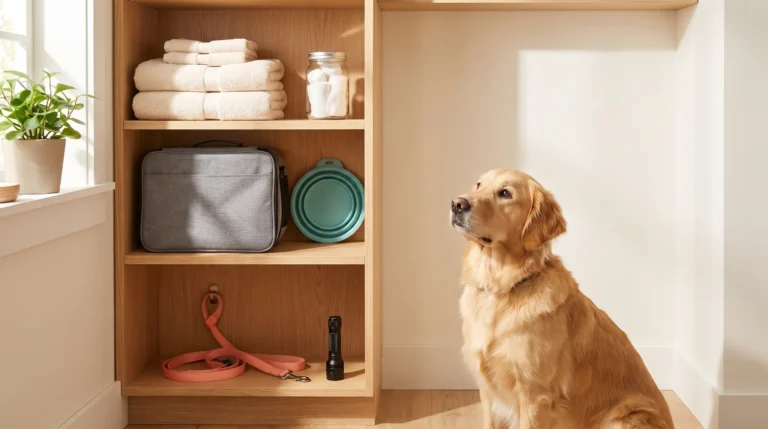
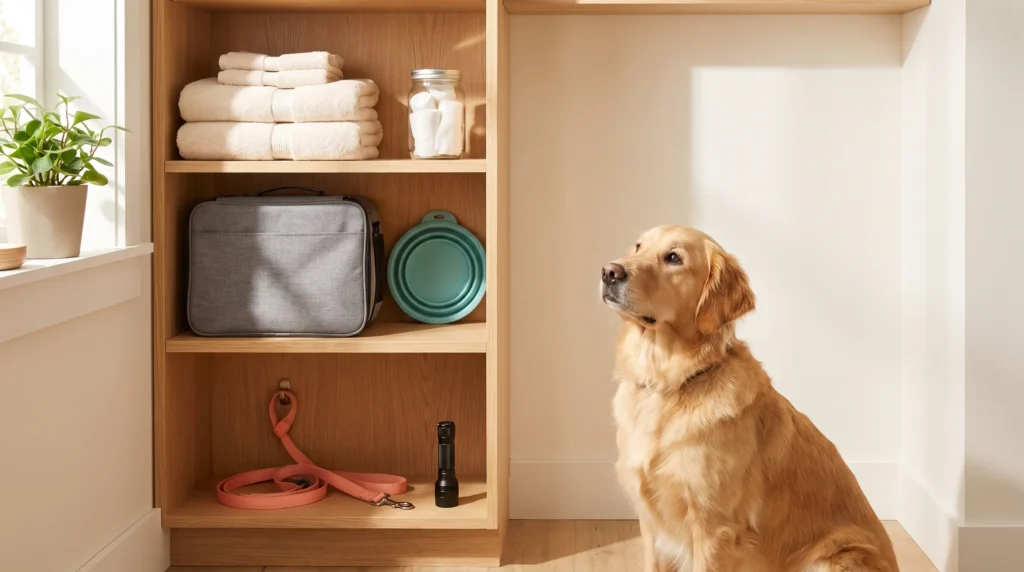
- A dedicated drawer or shelf where supplies live and stay accessible without rummaging
- A consistent location, kitchen table, family room rug, or wherever the family already gathers
- A predictable time, usually thirty to forty-five minutes that displaces a screen window rather than adding to the schedule
- A short list of supplies that does not grow into an art-store inventory: a pad of pages, a basic set of colored pencils, a sharpener, and that is it
- An open-door policy on participation rather than a strict requirement, since enthusiasm grows when the activity is not mandatory
Within two or three weeks, families that establish this kind of structure usually find the activity has settled into the household rhythm. The children begin asking for it. The parents stop having to manufacture engagement. The dog learns to settle near the activity rather than competing with it for attention.
What to Look For in Materials
Not all coloring books are equal in a family context. The ones that hold up across multiple sessions tend to share specific qualities.
Paper weight is the first thing to check. Thin paper bleeds through with markers and tears under heavy pressure. Heavier stock holds layered color and feels substantial enough to be displayed afterward.
Subject variety matters more in family contexts than in adult-only ones. Books that include multiple breeds, scenes, and pose types give children something to choose from across many sessions, while single-theme books get exhausted quickly when multiple kids are using them.
Detail level should span from simpler to more intricate within the same book. Younger children need pages with broader shapes; older children get bored without enough complexity. Books that include both expand the age range that can use the same materials.
The printable format adds practical value most families discover after a few weeks. A favorite page can be reprinted when a younger sibling claims it before an older one finishes, and worn-out favorites do not require buying an entirely new book. Comprehensive collections of dog coloring books typically offer this format alongside traditional bound books, giving families flexibility for different children and use cases.
Tool quality has a real effect on outcomes. Inexpensive colored pencils break easily, blend poorly, and produce results that frustrate children who can see what better tools would do. A mid-range set is dramatically better than a budget set without approaching the cost of professional supplies.
How the Dog Fits In
The family member who often gets the most out of this kind of routine is the dog. Dogs are remarkably attuned to changes in household energy, and a recurring quiet activity that involves the whole family registers as a meaningful shift.
Most family dogs respond by settling near the activity within a few sessions. The settle behavior is not random. It happens because the household’s overall arousal level drops during the activity, and dogs are biologically primed to align their state with their humans. A wound-up household with screens going produces a wound-up dog. A calm household with everyone quietly engaged in something hands-on produces a calm dog.
The downstream effects show up in other parts of the day. Dogs who get regular calm-time during the family’s evening routines tend to be easier to settle at bedtime, recover faster from triggering events during the day, and operate at a lower baseline arousal level overall.
What Families Notice After Adopting the Practice
The reports from families who have made coloring a regular evening activity tend to converge on a few observations.
The evening atmosphere shifts. The household feels different during and after the activity. Voices are quieter, transitions are easier, and the time leading up to bedtime is less of a daily negotiation.
Children’s relationship to “boredom” changes. Kids who have had a regular hands-on activity in their evenings tend to be more comfortable with low-stimulation moments in other parts of their day, instead of immediately reaching for a screen.
Parents notice their own state. The activity functions as a small daily wind-down for adults too. Many parents who started the routine for the kids report that they have come to look forward to it for themselves.
The keepsake aspect builds quietly. Families who keep a small folder of completed pages eventually have a visual record of months or years that produces a different kind of nostalgia than photos. The pages reflect time spent together rather than moments captured.
The Habit Worth Building
Family routines are easy to start and hard to maintain. The ones that survive tend to deliver something for everyone involved, scale across the developmental stages of the children, and require minimal effort to keep running.
A simple coloring practice with materials chosen around something the family already cares about, the dog they share their home with, fits all of these criteria. The cost is modest, the setup is straightforward, the benefits compound, and the activity grows along with the family rather than aging out as the kids get older.
The households that adopt this kind of practice rarely abandon it. The screens get used less because something better has been built in their place, the dog spends more time settled near the family, and the evening hours feel less like a daily negotiation and more like the time everyone secretly looks forward to.
That is a meaningful return on a very small investment.