

Most family reunions follow the same pattern. People arrive, hug, eat, and then sit around, not knowing what to do next. Someone checks their phone. Kids run off.
Older relatives stick to their corner. By the time everyone leaves, it feels like you barely spent time together.
Games fix that. Not because they force fun, but because they give everyone a shared reason to be in the same place at the same time.
This list covers family reunion games that work for all ages, all group sizes, and both indoor and outdoor settings. Pick a few and get started.
How to Pick the Right Games for Your Family Reunion?
Before finalizing your game list, write down the ages attending, confirm whether you have outdoor space, and ask a few family members what they actually enjoy.
A mix of one active game and one calm game keeps both ends of the energy spectrum happy, and having at least two indoor options ready means a weather change won’t cancel the whole plan.
16 Best Family Reunion Games for All Ages
These games have been played at real family gatherings with groups of different sizes and in different settings. Each one includes everything you need to run it, so there’s no confusion on the day.
1. Tug of War
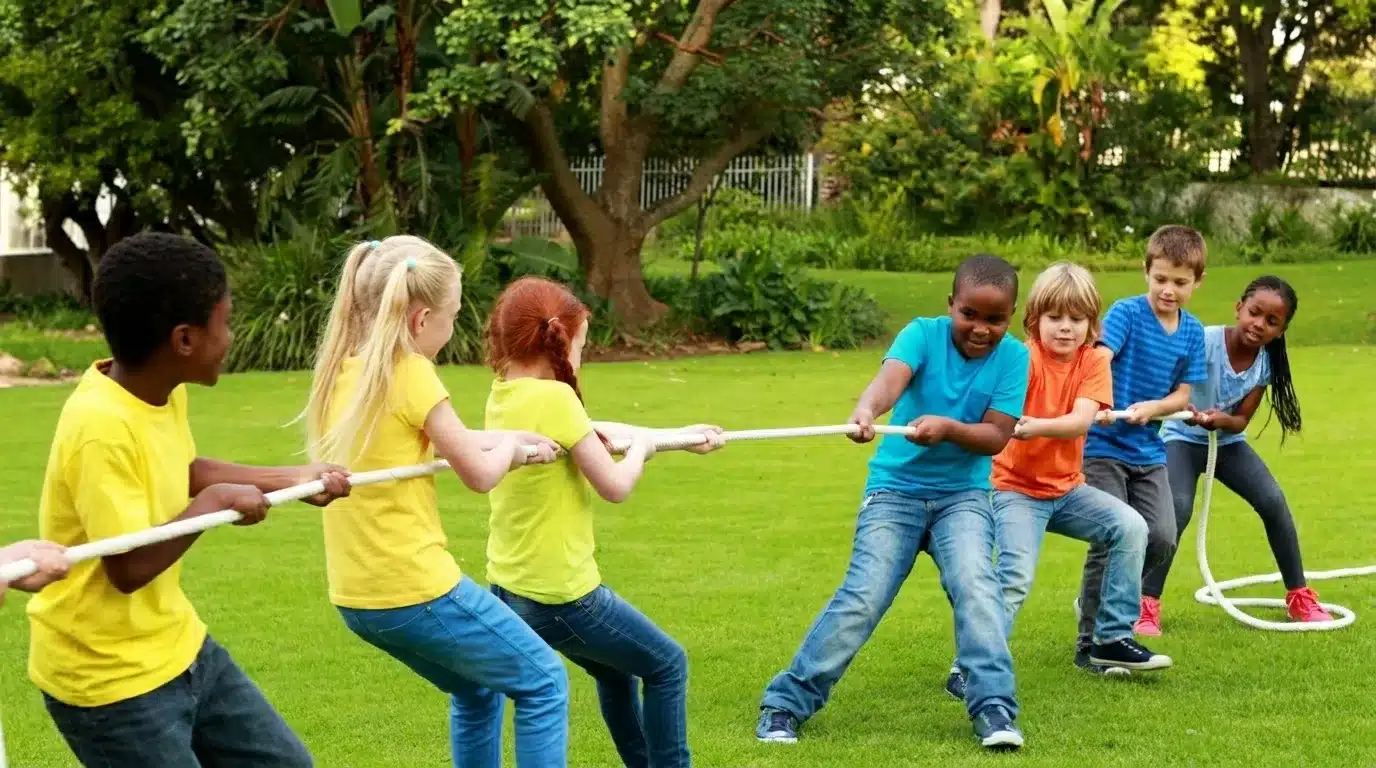
Alt text: Two teams of children playing tug of war on a grassy field, pulling a rope in opposite directions.
Players: 10 to 40 Age group: All ages Setting: Outdoors
Two teams, one rope, and a whole lot of noise. Tug of War gets the whole crowd going within the first minute.
What you need:
- Thick rope (at least 30 feet long)
- A whistle
- A small flag or marker for the rope center
How to play:
- Divide into two equal teams and place the center flag on the rope over a ground marker.
- When the whistle blows, both teams pull their side of the rope as hard as they can.
- The team that pulls the center flag past their line wins the round.
2. Family Trivia Challenge
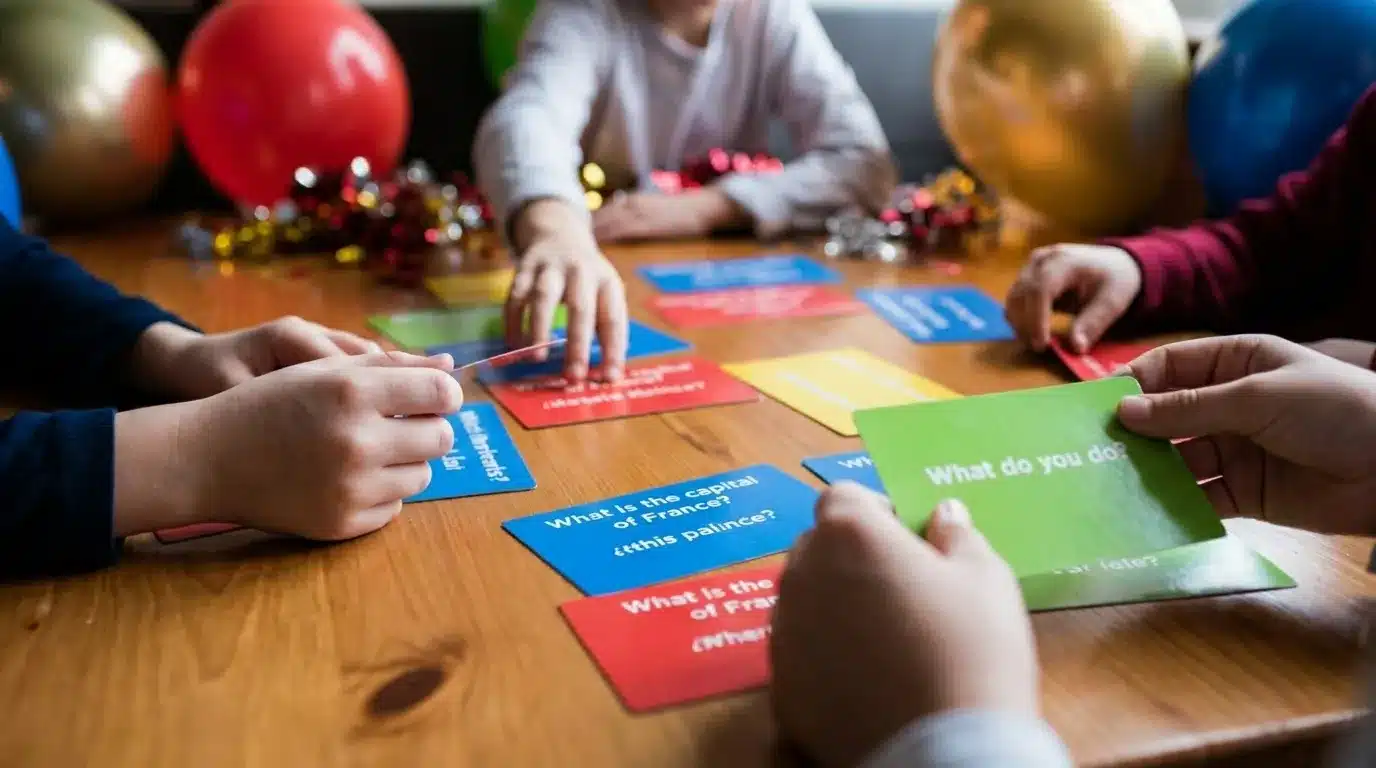
Alt text: Kids playing a trivia card game at a table with colorful question cards and balloons nearby.
Players: 6 to 50 Age group: Teens and adults (kids join mixed teams) Setting: Indoors or outdoors
This works best when the questions are actually about your family. Think: “What year did Grandma and Grandpa meet?” or “Which cousin has lived in the most states?”
What you need:
- A prepared list of family-specific questions
- Pens and paper for each team
- A scorekeeper
How to play:
- Split the group into teams of 4-6, and have each team choose a name.
- Read questions aloud one at a time while teams write down their answers.
- Collect answer sheets at the end and tally scores. The team with the most correct answers wins.
Pro tip: Ask family members to submit fun facts or old stories a few weeks before the reunion so your questions catch people off guard.
3. Charades

Alt text: Man standing and speaking to a small group of adults seated in a bright room, as if leading a game or activity.
Players: 6 to 30 Age group: All ages Setting: Indoors or outdoors
No equipment, no budget, and somehow still one of the most reliable games for getting people laughing fast.
What you need:
- Slips of paper with words or phrases written on them
- A bowl or hat to draw from
- A timer
How to play:
- Split into two teams. One player draws a slip and acts out the word or phrase without speaking.
- Their team guesses before the timer runs out. Correct guesses earn a point.
- Teams alternate turns. The team with the most points at the end wins.
Pro tip: Use family memories as prompts instead of random words. “Grandpa’s famous burnt chicken” lands much better than a generic phrase.
4. Scavenger Hunt
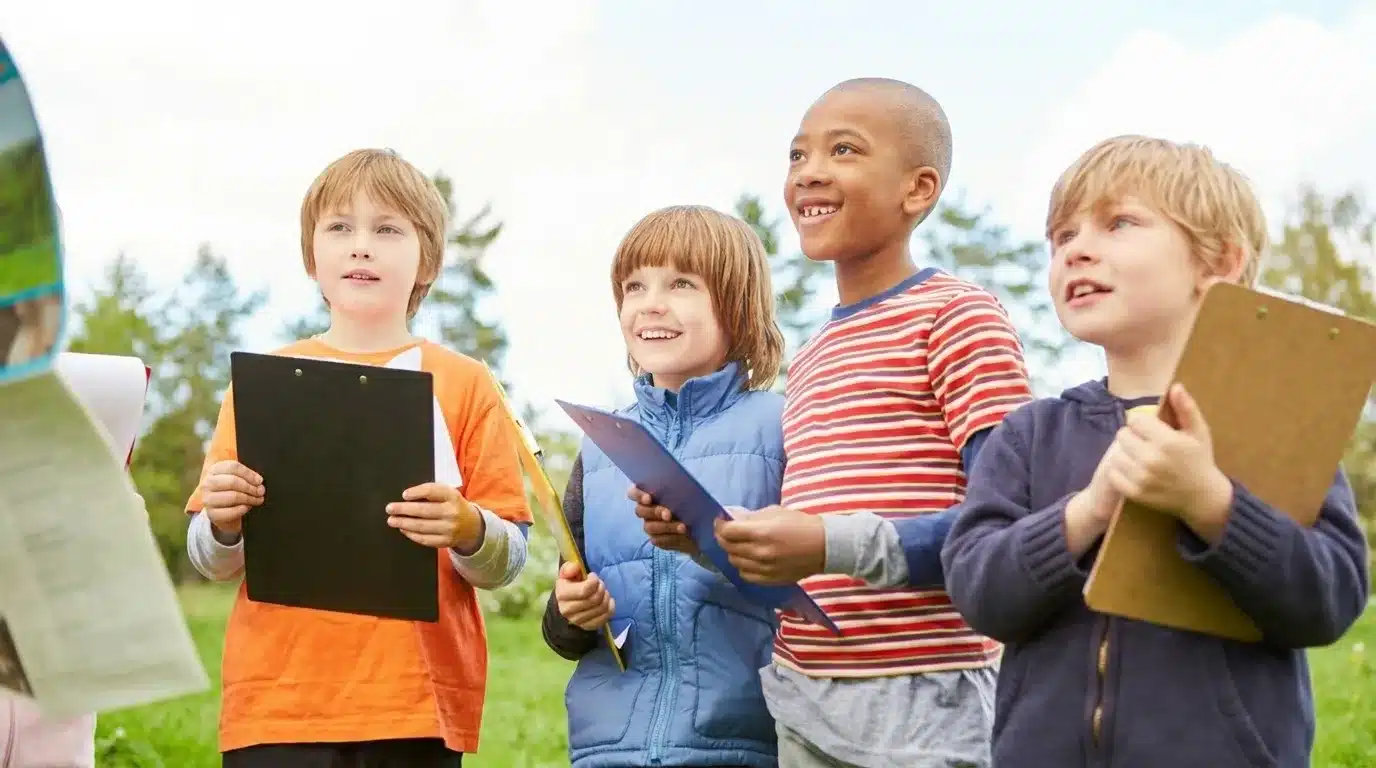
Alt text: Group of children outdoors holding clipboards, smiling and participating in a scavenger hunt activity.
Players: 10 to 60 Age group: All ages Setting: Outdoors
The photo version works best for large groups since no physical collection is needed, and it runs itself once teams are out.
What you need:
- A printed list of items or scenes to photograph
- Smartphones for each team
- A time limit and a meeting point
How to play:
- Divide into teams of 4 to 8 and hand each team the same list.
- Teams spread out and photograph as many items or scenes as possible before the time limit ends.
- Teams return and count completed items. The team with the most wins.
Pro tip: Add a few family-specific clues like “find the family member who traveled farthest to get here” to make it feel personal.
5. Sack Race

Alt text: Three children hopping forward in a sack race on a grassy field, smiling and competing side by side.
Players: 6 to 40 Age group: Kids and teens (adults welcome) Setting: Outdoors
Fast to set up, costs almost nothing, and kids will ask to run it again the moment it ends.
What you need:
- Burlap sacks or large pillowcases (one per racer)
- A clear start and finish line
How to play:
- Each player steps into a sack and holds the top at waist height.
- On the starting signal, everyone hops from the start line to the finish.
- The first player to cross the finish line wins.
Pro tip: Run age-category heats so younger kids and adults compete separately. It keeps results fair and gives everyone two rounds of excitement.
6. Water Balloon Toss
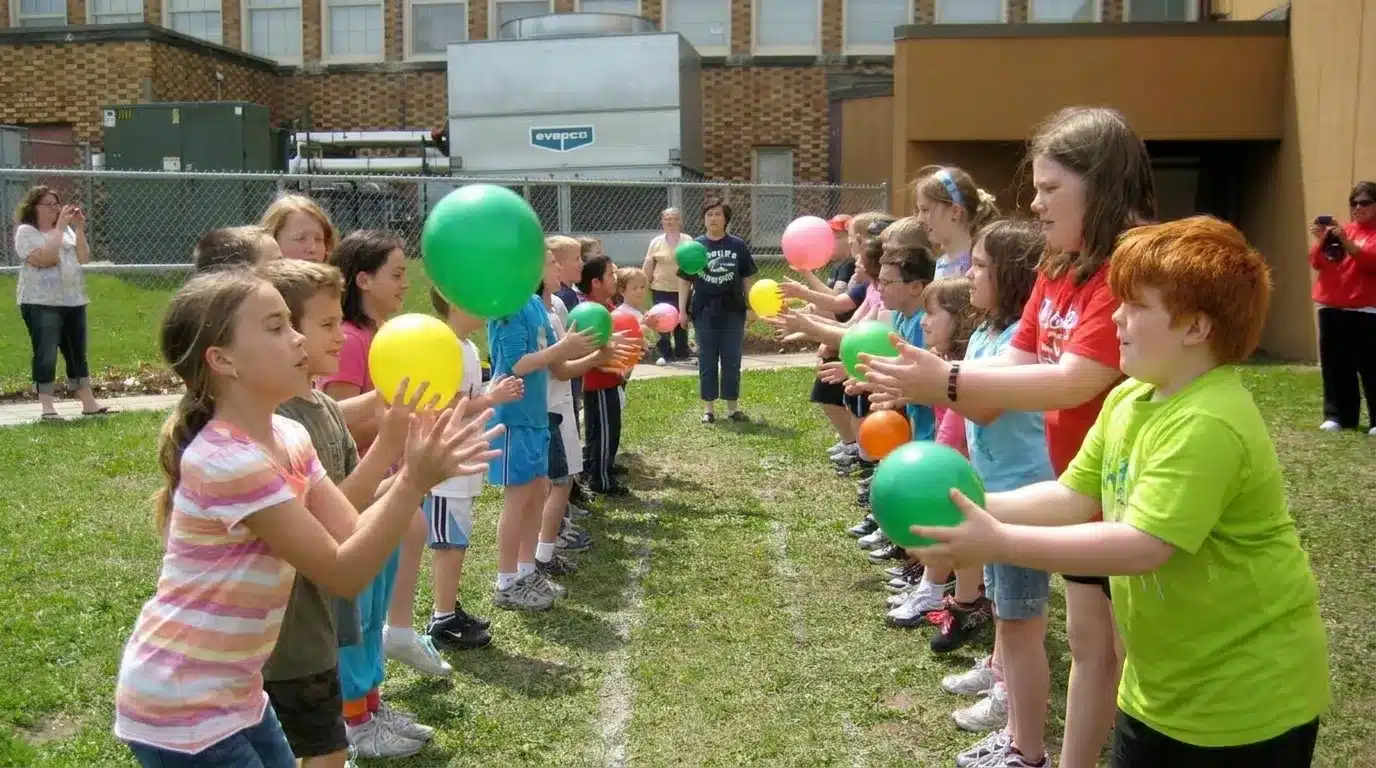
Alt text: Two lines of children facing each other outdoors, tossing colorful balloons back and forth during a group game.
Players: 8 to 40 Age group: All ages Setting: Outdoors, warm weather
Cheap, quick to set up, and almost always ends with someone getting soaked at exactly the wrong moment.
What you need:
- Pre-filled water balloons (make extras)
- Open space
How to play:
- Players pair up and stand facing each other at close range with one balloon between them.
- They toss the balloon back and forth, each taking one step back after every successful catch.
- The last pair with an unbroken balloon wins.
Pro tip: Fill balloons the night before and store them in a bucket of water so they stay fresh without bursting early.
7. Giant Jenga
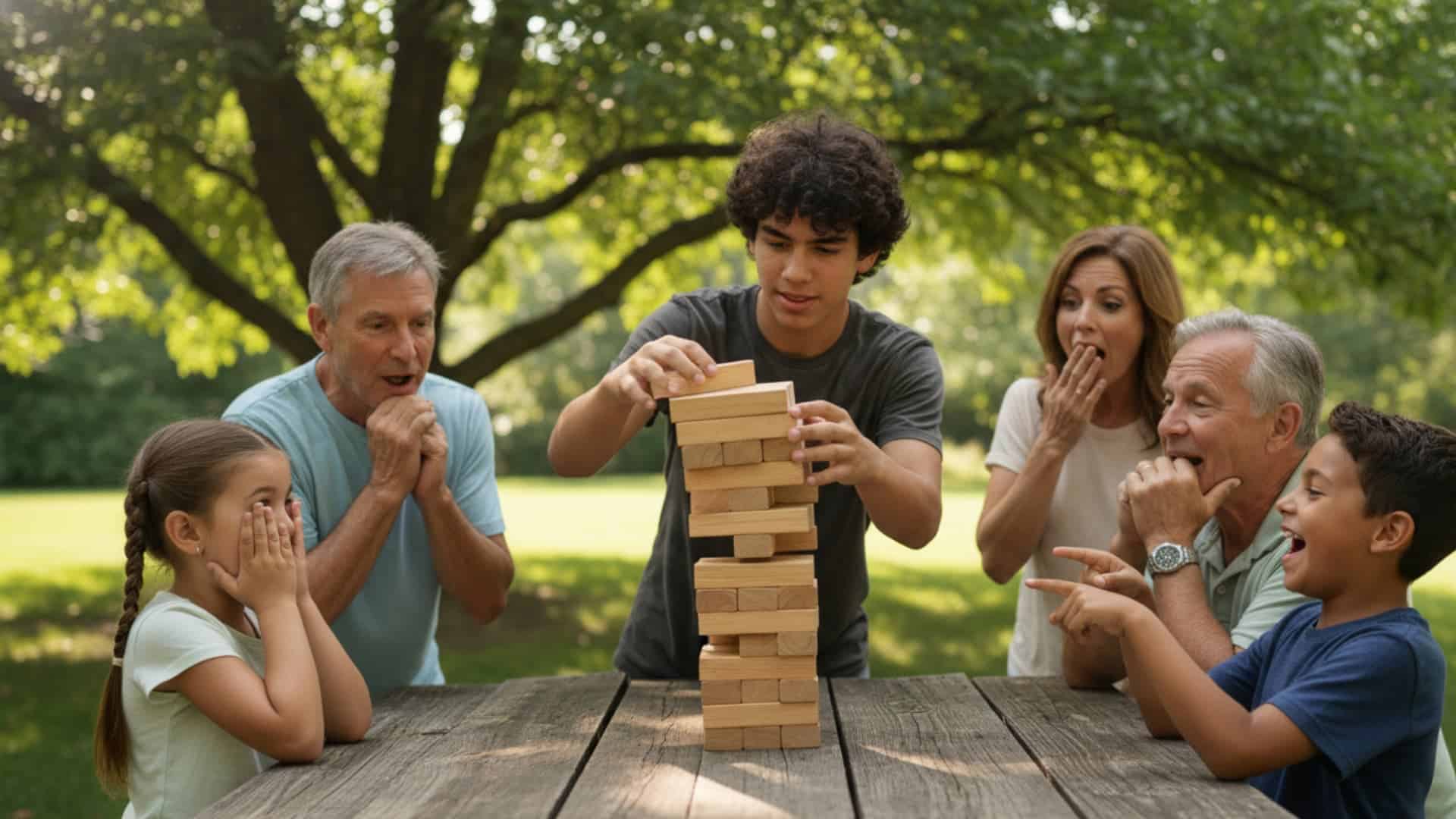
Alt text: Family gathered outdoors, playing Jenga, watching closely as a block is carefully removed.
Players: 2 to 20 (rotating) Age group: All ages Setting: Indoors or outdoors
Giant Jenga keeps a crowd gathered without anyone feeling pressured. People drift in, take a turn, and stay to watch what happens next.
What you need:
- Giant Jenga set (available at most retailers or built from 2×4 lumber)
- A flat, stable surface
How to play:
- Stack the blocks into a tower, alternating the direction of each layer.
- Players take turns pulling one block at a time from anywhere below the top layer and placing it on top.
- The player who causes the tower to fall loses.
Pro tip: Write conversation prompts or light dares on the blocks to make the game feel more personal.
8. Cornhole
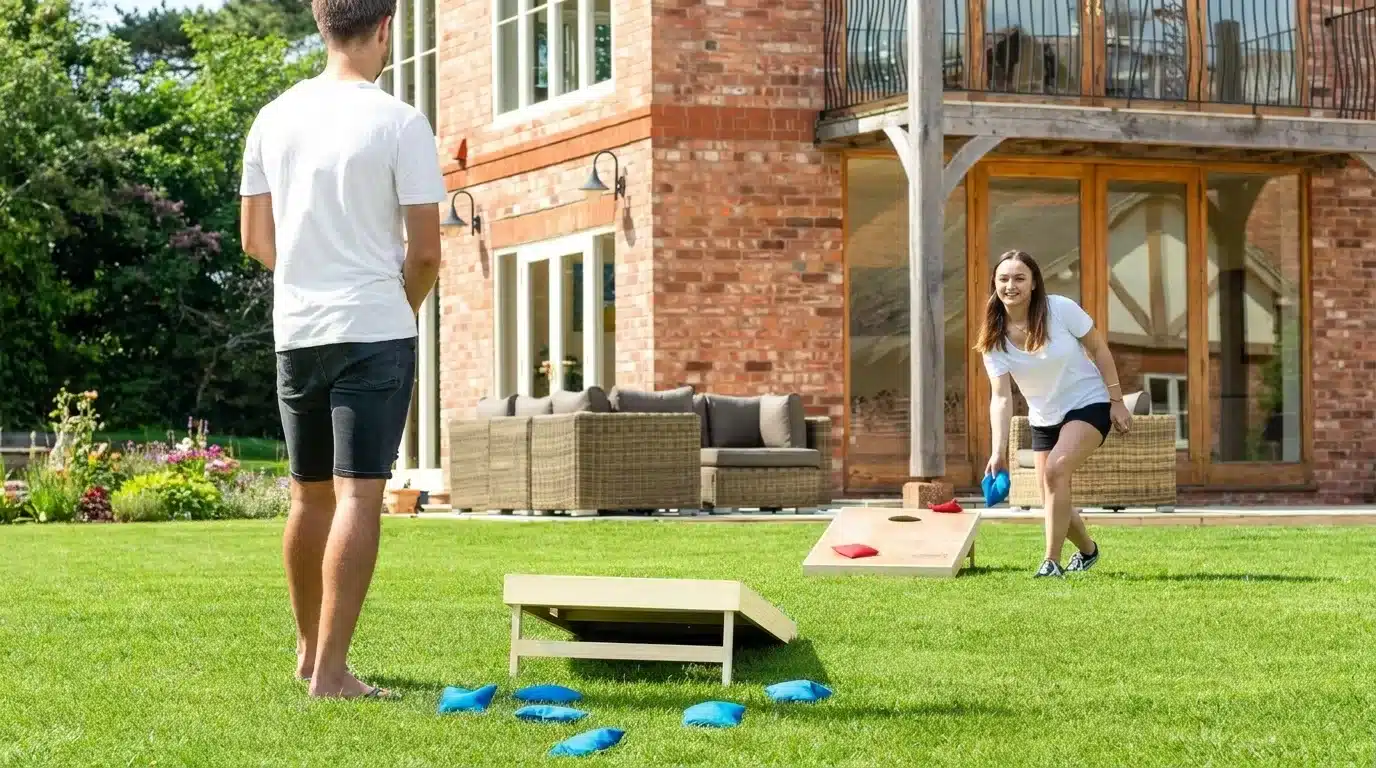
Alt text: Two people playing cornhole on a grassy lawn outside a brick house, with beanbags scattered on the ground.
Players: 2 to 8 per board Age group: Teens and adults Setting: Outdoors or large indoor space
Cornhole is low-pressure enough that people can have a full conversation while still playing. It keeps groups in one spot long enough to actually catch up.
What you need:
- Cornhole boards (two)
- Bean bags (four per team)
How to play:
- Set boards facing each other about 27 feet apart. Teams of two alternate throwing bean bags toward the opposite board.
- A bag through the hole scores 3 points. A bag landing on the board scores 1.
- First team to 21 points wins the round.
Pro tip: Set up two or three boards at once so more people can play at the same time without waiting around.
9. Relay Races
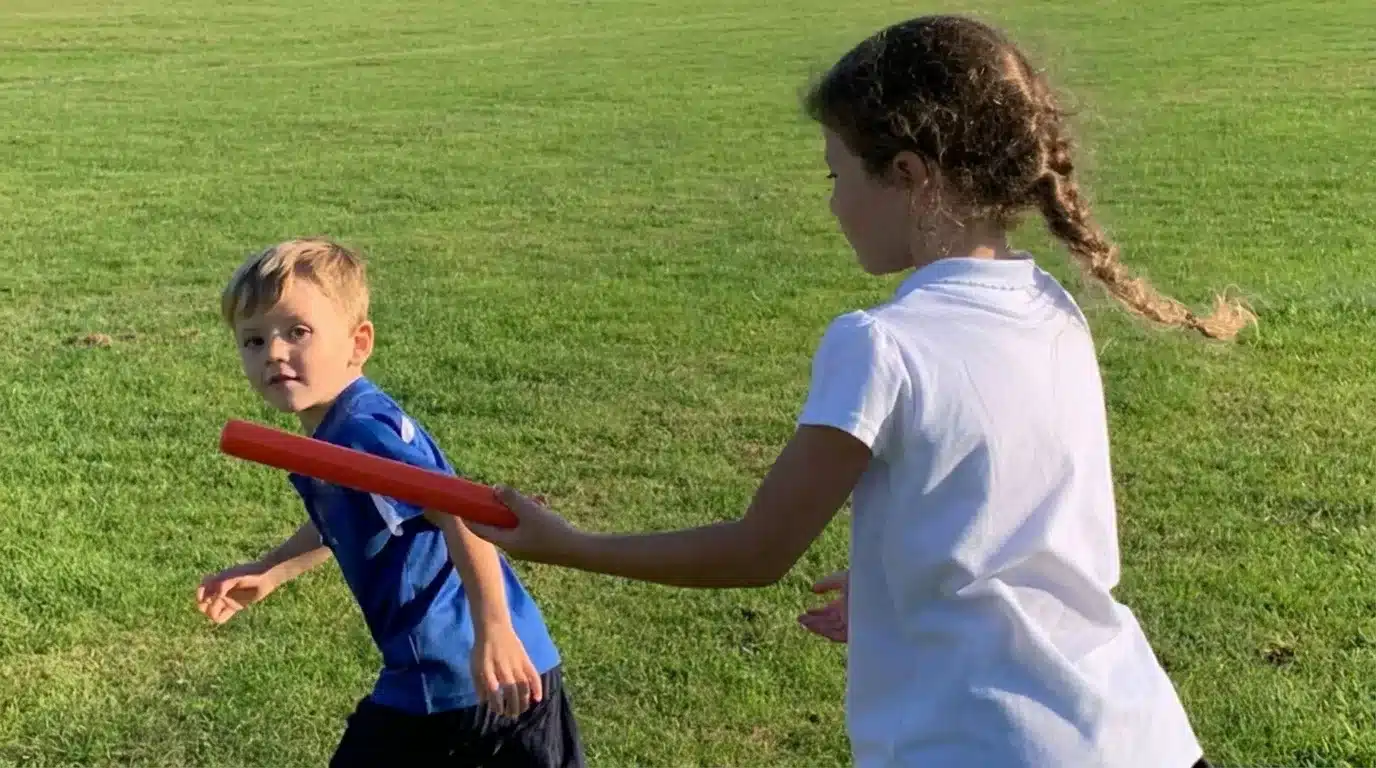
Alt text: Two children playing a relay race on a grassy field, passing a red baton.
Players: 12 to 60 Age group: All ages Setting: Outdoors
Relay races scale to any group size and stay interesting when you mix silly formats with the standard running version.
What you need:
- Cones or markers for the course
- Props depending on the race type (eggs, spoons, balloons, cups)
How to play:
- Divide into teams of 4 to 6 with mixed ages. Set up a course with a clear start and turnaround point.
- The first player from each team completes the course and tags the next player in line.
- The first team to have all members finish the course wins.
Variations to try: Three-legged race, egg-and-spoon race, balloon between the knees, water carry in a paper cup.
10. Minute to Win It
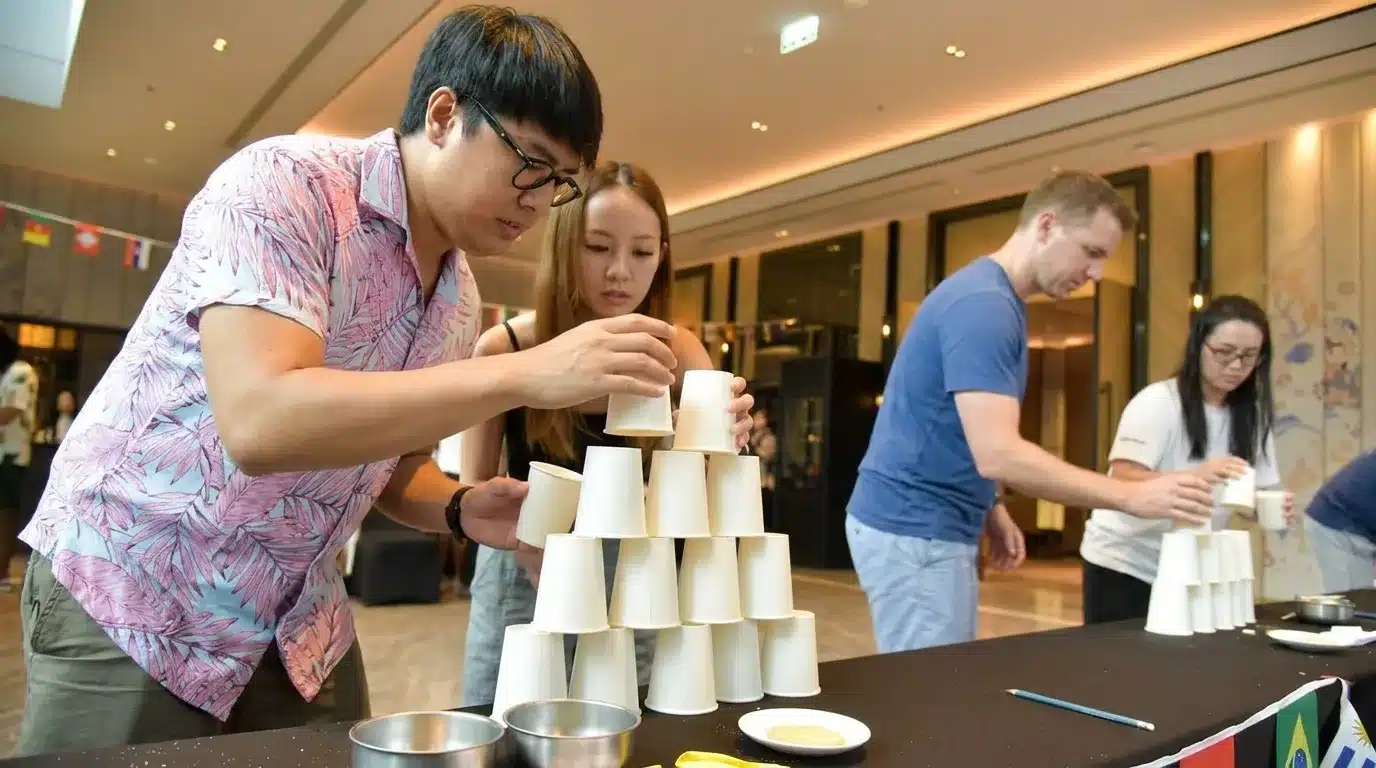
Alt text: Adults stacking paper cups into a pyramid during a fast-paced team challenge at an indoor event.
Players: Any number Age group: All ages Setting: Indoors or outdoors
This format works for every family dynamic. Players who want to compete sign up, and everyone else watches and cheers. Nobody is left out.
What you need:
- Everyday household items (cotton balls, spoons, cups, cookies, etc.)
- A timer
- Small prizes for winners
How to play:
- Set up a series of one-minute challenges using simple props.
- Each player attempts each challenge in turn and must complete the task before the timer runs out.
- Successful completions earn a point or a prize. Run as many rounds as the group wants.
Sample challenges: Stack 5 cookies from forehead to mouth without using hands. Move cotton balls from one bowl to another using only a spoon held in your mouth. Keep a balloon in the air for 60 seconds using only your head.
11. Two Truths and a Lie

Alt text: Group of friends sitting on a couch, laughing together while playing a casual party game at home.
Players: 6 to 40 Age group: Older kids, teens, and adults Setting: Anywhere
No setup, no materials, and you will learn something surprising about family members you have known your whole life.
What you need:
- Nothing
How to play:
- Give everyone two minutes to think of three statements about themselves: two true, one false.
- Each person shares their three statements in any order while the group listens.
- The group votes on which statement is the lie. The person reveals the answer.
Pro tip: The best lies come from half-truths. Give people enough time to think, and the game gets genuinely hard.
12. Telephone Game
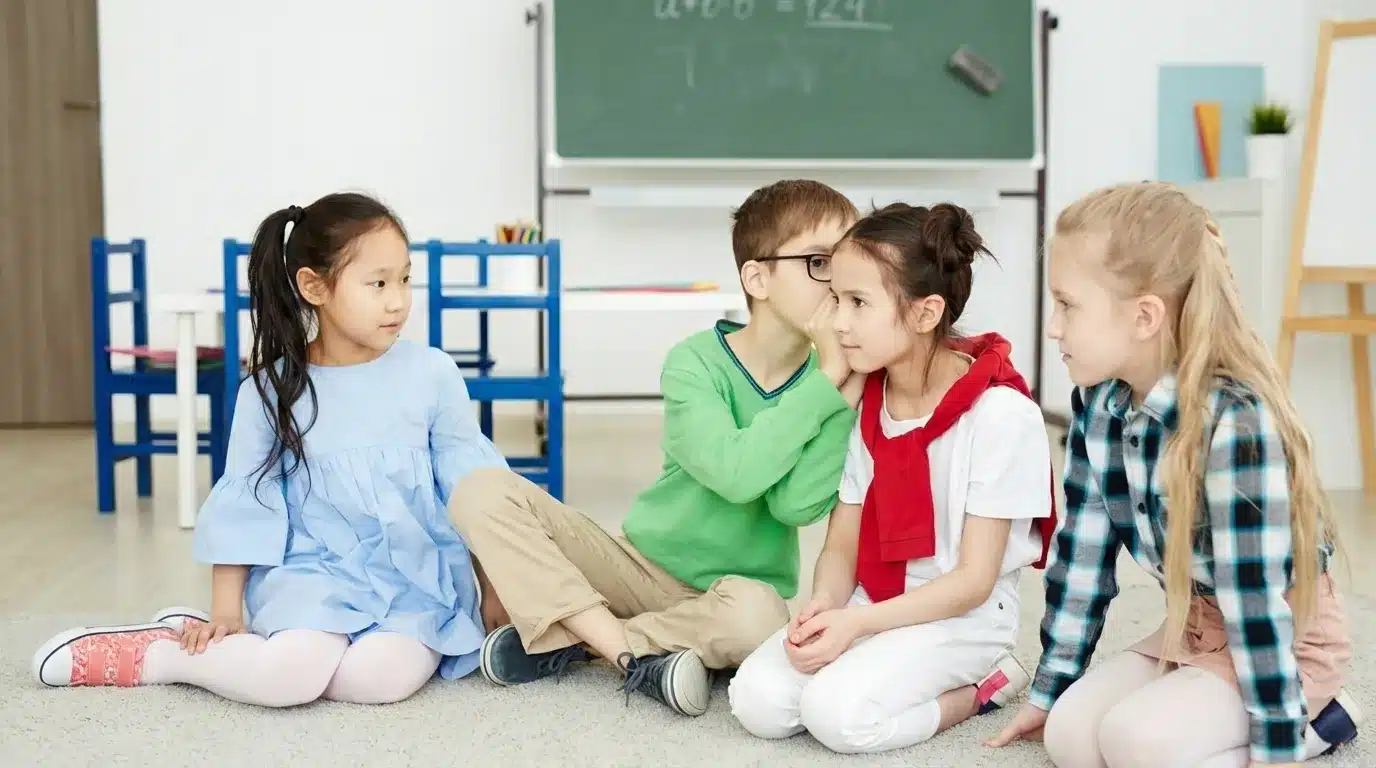
Alt text: Children sitting in a classroom circle playing the telephone game, whispering messages to each other.
Players: 8 to 30 Age group: All ages Setting: Indoors or outdoors
The telephone game costs nothing and still makes people laugh every single round. Messages almost never survive the full line intact.
What you need:
- Nothing
How to play:
- Everyone sits or stands in a single line. The first person whispers a sentence to the person next to them.
- Each person whispers what they heard to the next person down the line.
- The last person says the final message out loud. Compare it to the original.
Pro tip: Start with a specific, ridiculous family-related sentence. The more detail in the original, the more it falls apart by the end.
13. Egg and Spoon Race
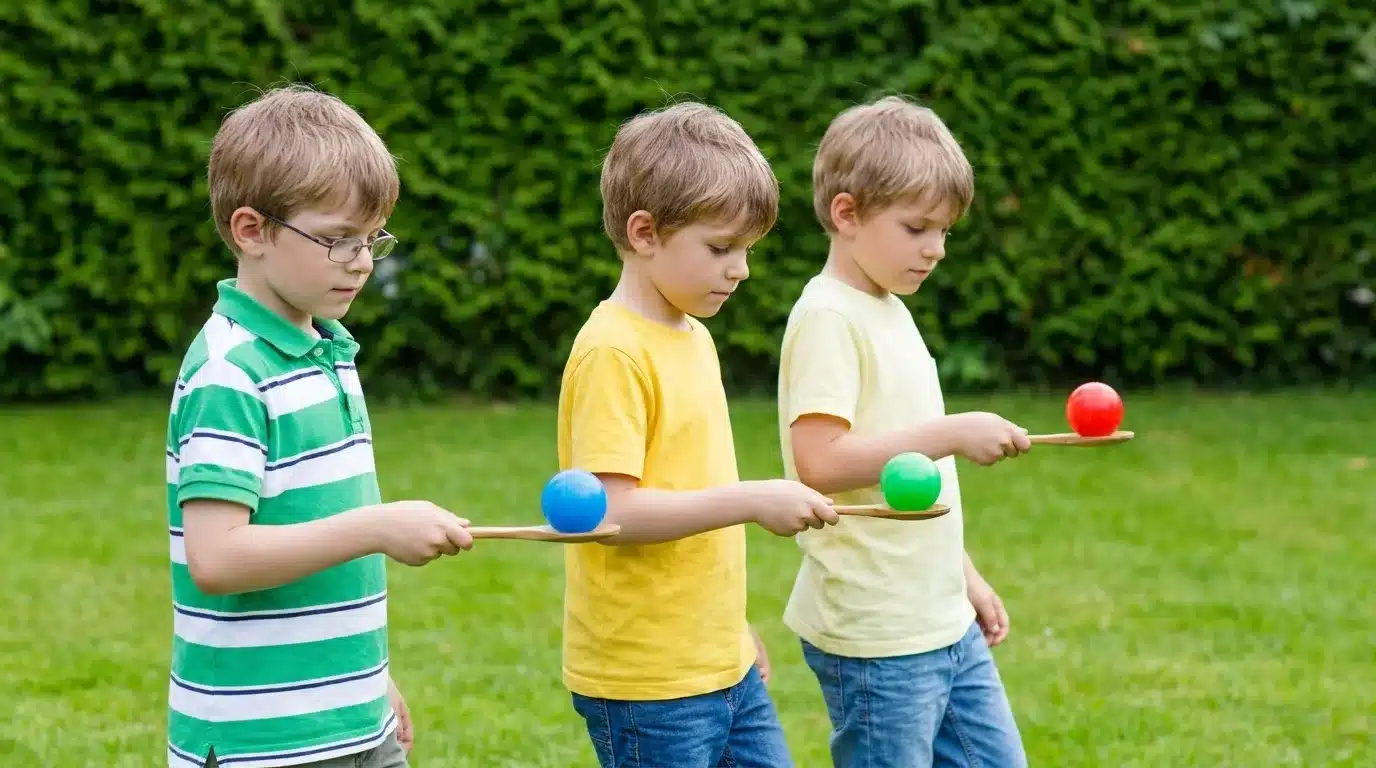
Alt text: Three children walking carefully in a race while balancing colorful balls on spoons outdoors.
Players: 6 to 30 Age group: All ages Setting: Outdoors
Old-fashioned, still genuinely fun, and the moment someone drops their egg is always the highlight of the race.
What you need:
- One egg per player (hard-boiled or plastic)
- One spoon per player
- A clear start and finish line
How to play:
- Each player places an egg on their spoon and holds the handle without gripping the egg.
- On the starting signal, players race from start to finish without dropping their egg.
- A dropped egg means starting over or being eliminated. First to finish wins.
Pro tip: Hard-boiled eggs are the safe call. Raw eggs make it memorable, but expect to bring extra paper towels.
14. Slip N Slide Kickball
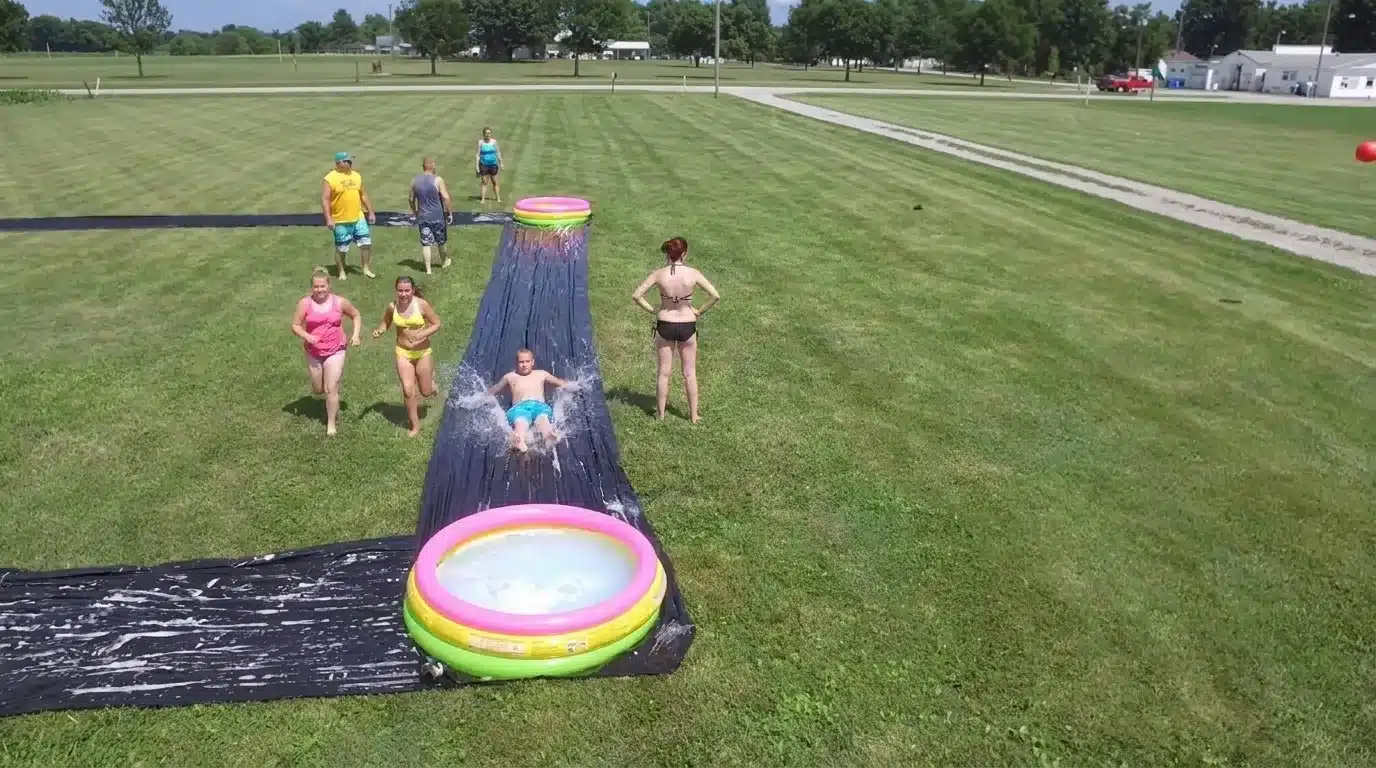
Alt text: People playing a slip-and-slide game on a grassy field, with one person sliding into a small inflatable pool while others run nearby.
Players: 12 to 30 Age group: Teens and adults (older kids with supervision) Setting: Outdoors, hot weather
Standard kickball with one wet addition: players slide to each base instead of running. Works best on a hot day with open grass.
What you need:
- A slip-n-slide or plastic tarp for each base
- Dish soap and a hose
- A kickball and cones for the bases
How to play:
- Set up bases using slip-n-slides or tarps, then apply soap and water. Mark a pitcher’s spot and a home base.
- Play kickball as normal: the pitcher rolls the ball, the kicker kicks, and the fielders try to get the runners out.
- Runners must slide into each base instead of stopping on it.
Pro tip: Keep a first aid kit nearby. Wet grass and bare feet are a reliable combination for minor slips.
15. Family Talent Show
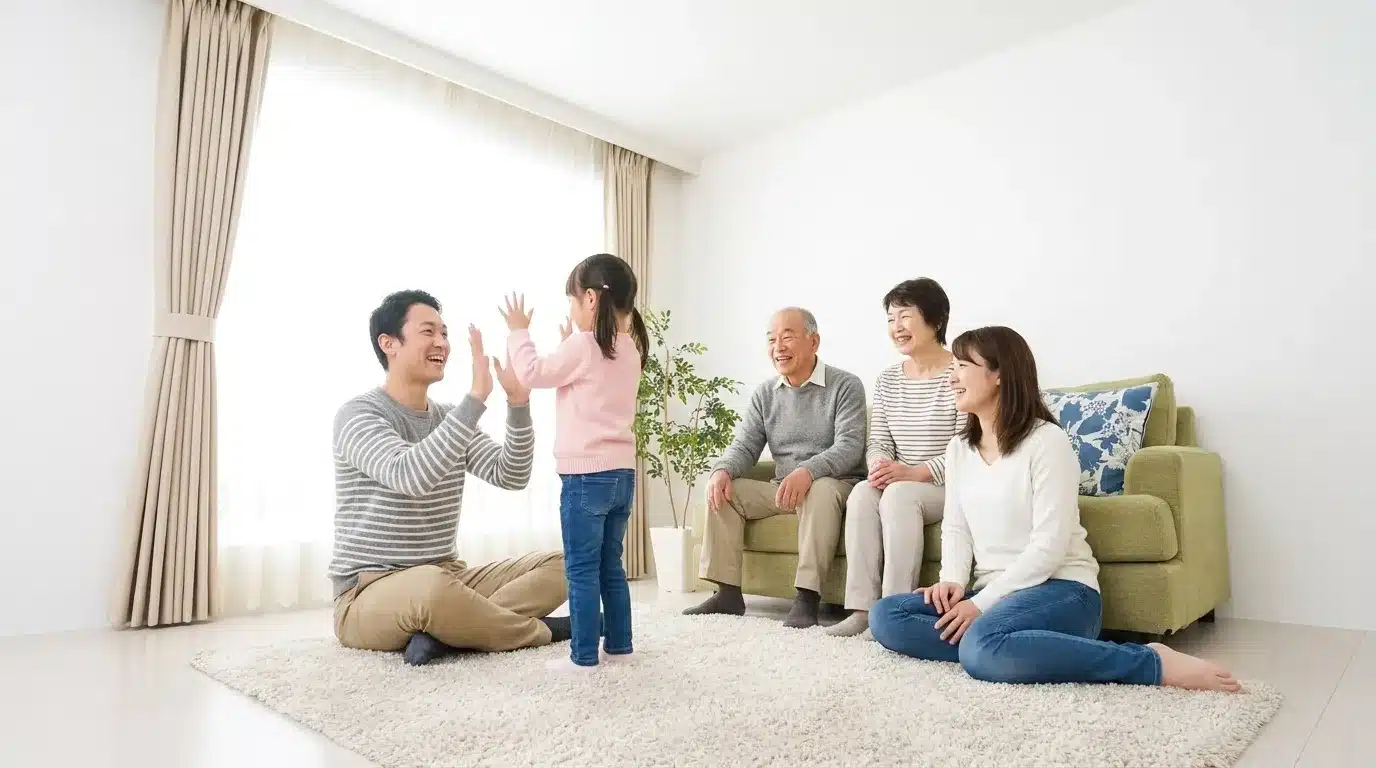
Alt text: Family in a living room smiling as a young girl plays a hand-clapping game with an adult while others watch.
Players: Any number (performers and audience) Age group: All ages Setting: Indoors or outdoors
The bar is low on purpose. Real talent is optional, and that’s exactly what makes it work. Cousins spending the afternoon planning skits together is half the fun before the show even starts.
What you need:
- A cleared performance area (a blanket or taped floor space works fine)
- A sign-up sheet for acts
- Optional: a speaker or microphone
How to play:
- Set up a simple performance area and pass around a sign-up sheet earlier in the day.
- Acts are performed one at a time. Solo acts, group acts, and completely made-up talents all count.
- The audience votes for a winner, or every act gets equal applause. Either way works.
Pro tip: Let kids know about the talent show at the start of the day so they have time to plan and practice together.
16. Birth Map
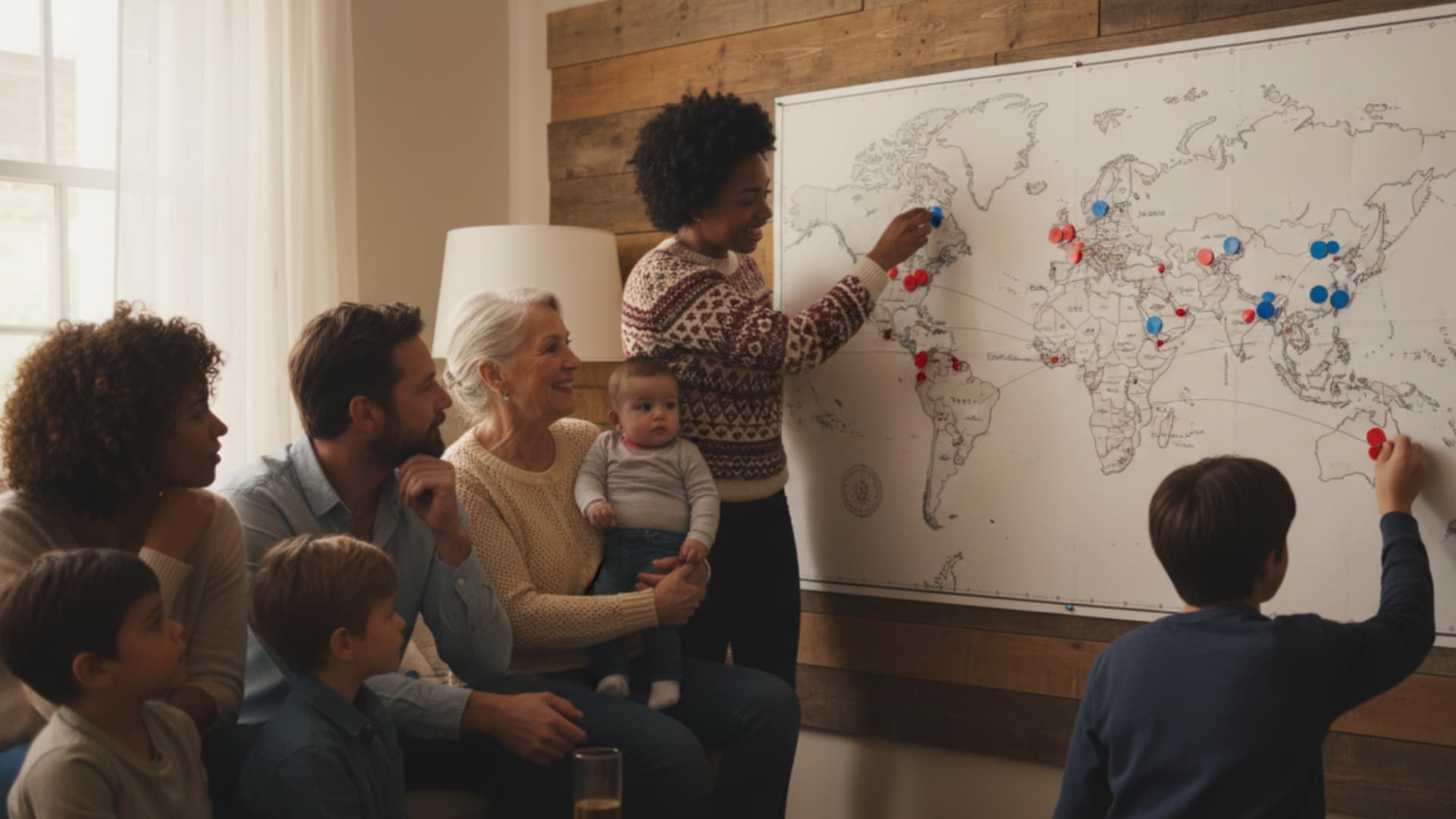
Alt text: Family gathered around a world map, placing pins at various locations and discussing travel or origins.
Players: Any number Age group: All ages Setting: Indoors
Birth Map is a quiet, conversation-starting activity that works especially well at the start of a reunion when not everyone in the room knows each other.
What you need:
- A large printed map (world or US, depending on your family)
- Sticker pins or small dot stickers in two colors
- Markers for labeling
How to play:
- Mount the map where everyone can see it. Assign one pin color to the birthplace and another to the current location.
- Each family member places their pins on the map and writes their name nearby.
- Once everyone has added their pins, look at the full map together and ask follow-up questions, such as “Who traveled farthest to get here today?”
Pro tip: The two-color system tells a richer story. Seeing where people started versus where they ended up leads to longer conversations than a single pin ever would.
Quick Tips to Keep Games Running Smoothly
A little prep goes a long way when you’re managing games for a big group. Here are a few things that actually make a difference on the day.
- Assign a game coordinator before the event: One person who knows the rules and keeps things on schedule changes everything.
- Pack supplies the night before: Label each game’s items in a separate bag so nothing gets mixed up or forgotten.
- Pick teams randomly: Draw names from a hat to avoid family cliques forming on the same side.
- Keep prizes simple: A small gift card, a funny trophy, or even a custom ribbon is enough to make winning feel worthwhile.
- Set a time limit per game: 20 to 30 minutes keeps the energy up and prevents any single game from dragging.
- Brief everyone on rules before starting: A 60-second rule explanation upfront saves five minutes of arguing mid-game.
- Have two indoor backup games ready: If the weather changes, you want to switch without scrambling.
How Do You Make a Family Reunion Fun?
Stop trying to make every moment perfect. The reunions people talk about for years are the ones where someone fell in the sack race or where a normally quiet uncle performed the strangest talent-show act anyone had ever seen.
Pick a mix of games from this list, let people opt in at their own pace, and leave space between activities so conversations can happen naturally.
You don’t need a packed schedule. You need a few good reasons to be in the same space, and games give you exactly that.
The laughter that follows a round of Telephone or a collapsed Jenga tower does more for family connection than any formal program ever will.
Wrapping It Up
Family reunion games don’t have to be complicated. You don’t need a huge budget or hours of planning. You just need a few solid options that give people a reason to get off their chairs and into the same space.
Start with one outdoor game and one quiet one. See what lands with your group. Add more as the day goes on.
The real goal isn’t winning. It’s the 10 minutes after a game ends when everyone is still laughing about what just happened.
Which game from this list are you planning to try first? Drop it in the comments.