

Your toddler just hit you. Maybe it was out of nowhere. Maybe it happened at the playground, in front of other parents, and you wanted to disappear.
That feeling is real, and you are not alone. Toddler hitting is one of the most common concerns parents bring up with pediatricians, and it does not mean you are doing something wrong.
Most children go through this phase. The good news is there are clear, proven ways to handle it. This guide covers why toddler hitting happens, what to do in the moment, and how to stop it over time.
Is Toddler Hitting Normal?
Yes, it is. Most children go through a hitting phase, typically between ages 2 and 3, because their brains are still learning how to handle big feelings.
They do not yet have the words to say “I’m frustrated” or “I want that back,” so their bodies react before their minds can catch up.
This does not mean you should let it go. It means you need to teach, not just correct.
Why Do Toddlers Hit?
Toddler hitting rarely comes out of nowhere. There is almost always something driving it beneath the surface. Once you understand the reason, responding becomes a lot easier.
- They cannot express their feelings yet. Toddlers feel big emotions but lack the words to name them, so hitting becomes their fastest way to communicate frustration, anger, or need.
- They want to see what happens. At this age, children test everything. Hitting gets a strong reaction, and to a toddler, any reaction, good or bad, counts as interesting.
- They picked it up from somewhere. Children copy what they see. If they have watched someone respond to frustration with force, they may try the same thing.
- They are tired, hungry, or overwhelmed. A toddler who has skipped a nap or gone too long without food has very little left to cope with. Physical reactions occur more quickly when the body is low on energy.
- They need sensory input. Some children hit because their bodies are looking for physical feedback. It is not always about anger. Sometimes the hands just need something to do.
What to Do the Moment Your Toddler Hits?
Stop it calmly and right away. Get down to their level, make eye contact, and say clearly, “Hitting hurts. We don’t hit.” Then remove them from the situation without a long explanation.
This is not the moment for a talk. A 2-year-old needs a short, firm response, not a lecture. Give it 1 minute per year of age as a brief break from the activity, then check in once both of you are calm.
How to Stop Toddler Hitting: 8 Proven Strategies
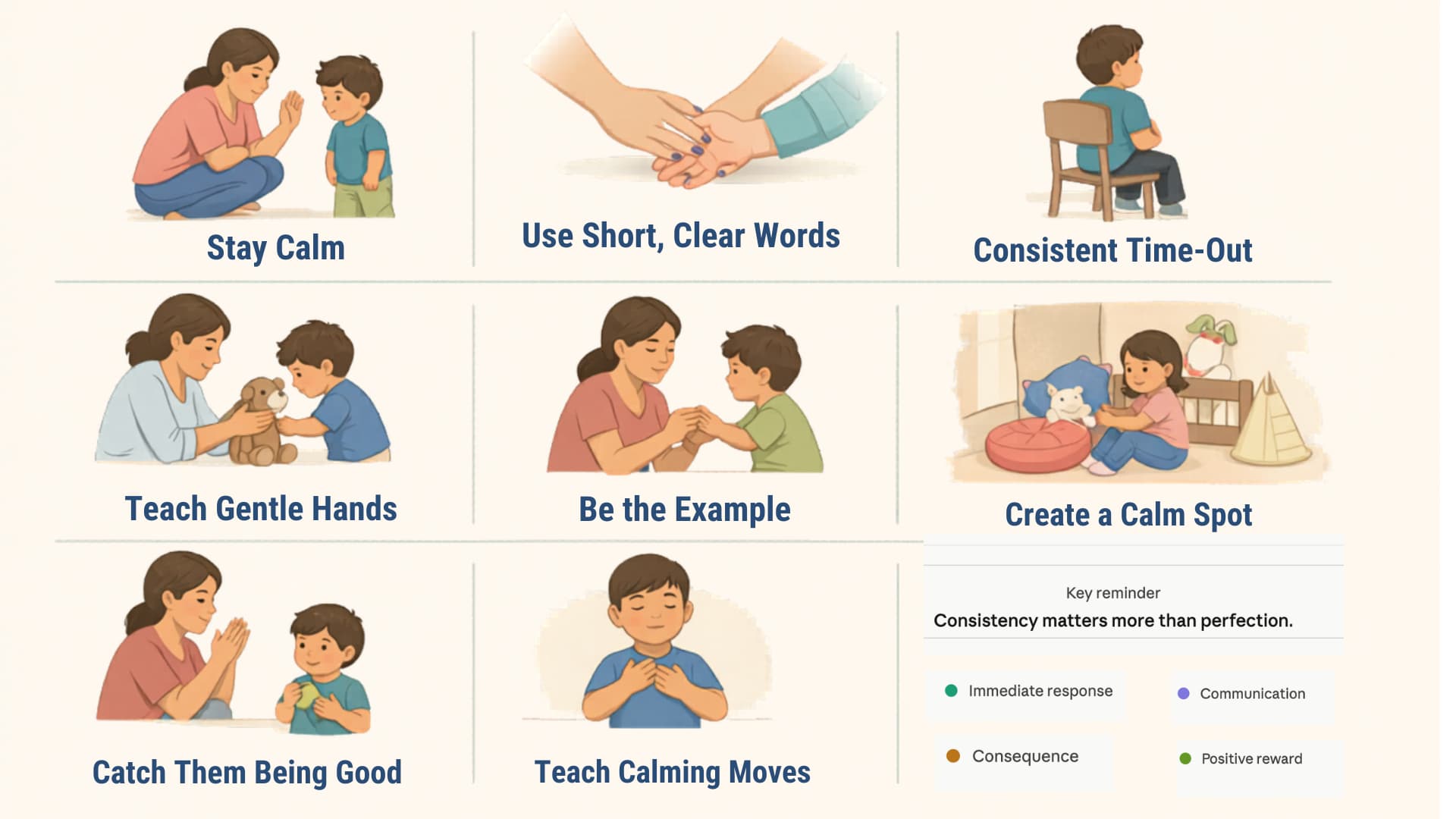
Alt Text: Illustrated guide showing parenting strategies to stop toddler hitting, including staying calm, clear words, time-outs, and teaching gentle behavior
Most parents know telling a toddler to stop isn’t enough. What works is being consistent and calm and teaching what to do instead. These eight strategies are backed by pediatric experts and child development research.
1. Stay Calm and Step in Right Away
Your reaction sets the tone. If you raise your voice or react with panic, the situation gets bigger, not smaller. Take a breath, speak firmly, and keep your body language steady. Children read your energy before they read your words.
2. Use Short, Clear Words
Toddlers do not process long sentences well. Say, “Hitting hurts. We use gentle hands,” and stop there. Then show them what gentle looks like by guiding their hand slowly and softly. Repeat this often, not just when hitting happens.
3. Use a Brief Time-Out Consistently
A short time away from play helps break the pattern in the moment. One minute per year of age is enough. A kitchen chair or a quiet spot on the floor works well. Keep it calm, not punishing in tone. The goal is a pause, not shame.
4. Teach “Gentle Hands” as A Real Skill.
Practice this when things are going well, not just after hitting. Touch your child’s cheek softly. Let them practice on a stuffed animal. When they get it right, name it “That’s gentle.” “That’s what we do.”
Children need to practice the right behavior, not just hear that the wrong one is bad.
5. Be the Example
Children watch everything. If they see adults slam doors, raise voices, or respond to stress with force, that becomes their reference point.
Talk out loud about how you handle your own frustration: “I feel annoyed right now, so I’m going to take a deep breath.” That small moment teaches more than any correction.
6. Catch Them Being Good
Many parents spend more energy responding to hitting than to kindness. Flip the ratio. When your child shares, waits, or uses words instead of hands, say something specific:
“You asked instead of grabbing. That was really good.” Positive attention for good behavior works better than negative attention for bad behavior.
7. Teach Simple Calming Moves
Even very young toddlers can learn belly breathing, which means taking a slow breath in and blowing it out.
You can also teach them to squeeze a pillow when they are angry, stomp their feet, or give themselves a tight hug. Practice these during calm moments so they become real options when things get hard.
8. Create a Calm Spot at Home
Set up a small, cozy area with soft items, a few books, or a sensory toy. This is not a punishment zone. It is a place your child can go, or be guided to, when feelings get too big.
Over time, children start to use it on their own. That is a real win.
What NOT to Do When Your Toddler Hits
It is just as important to know what makes toddler hitting worse. A few common reactions feel natural in the moment but tend to backfire.
- Don’t hit back or spank. When you respond to hitting with hitting, your child receives the message that hitting is what people do when they are upset. It does not stop the behavior. It reinforces it.
- Don’t ignore it completely. Saying nothing can read as approval. A calm, brief response every single time is what builds understanding.
- Don’t over-explain in the moment. Long reasoning does not land with a toddler mid-meltdown. Short words, consistent action, and follow-up later when they are calm work far better.
- Don’t label your child. Calling them “aggressive” or “bad” sticks in ways that hurt self-image and do not fix behavior. The behavior is the problem, not the child.
- Don’t give in after the hit. If a toddler hits and then gets what they wanted, they learn fast that hitting works. Hold the boundary even when it is hard.
Toddler Hitting at Daycare: What to Do
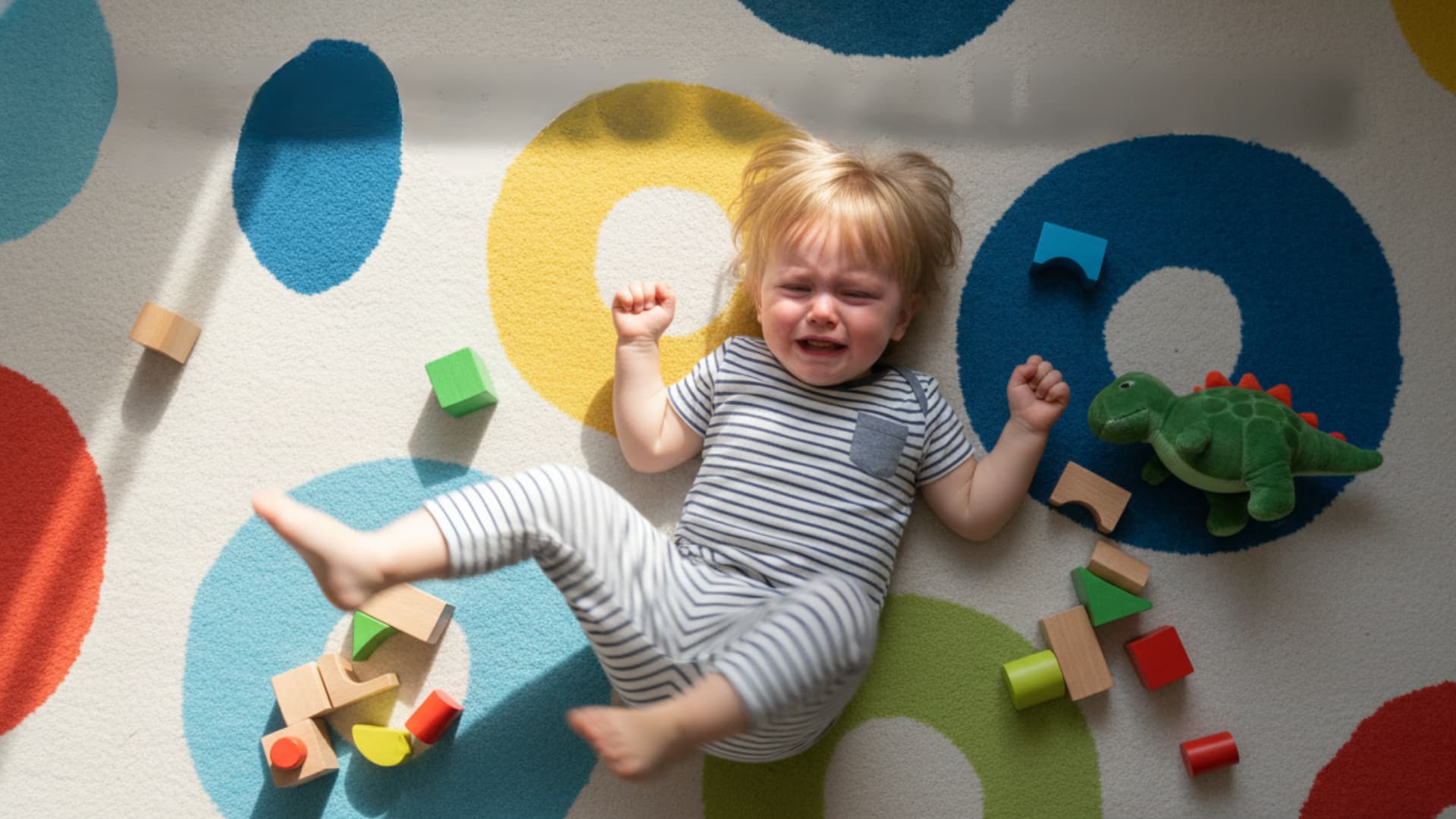
Alt Text: Crying toddler lying on a colorful play mat, kicking and flailing arms among scattered toys and blocks
Finding out your child is hitting at daycare can feel embarrassing. It also feels harder to fix because you are not there. The good news is that consistency between home and daycare makes a real difference, and most providers are very familiar with this stage.
| Situation | What to Do |
|---|---|
| You get a report that your child was hit at daycare | Ask the provider what happened right before the hitting. Look for patterns in time of day, activities, or specific children involved. |
| Daycare uses time-out, and you don’t | Align your approach at home with the daycare’s approach. Consistency is what teaches the fastest. |
| Your child hits a specific child repeatedly | Talk with the teacher about supervision during those interactions. Also teach your child what to say instead: “Can I have a turn?” |
| The hitting is getting worse at daycare, but fine at home | Check for triggers specific to that setting, such as loud spaces, long periods of sitting, or insufficient physical activity during the day. |
| Staff seem uncertain how to handle it | Ask to meet with the lead teacher or director to set up a shared plan. Reward charts that work the same at home and school help children connect the dots faster. |
| The hitting has been going on for weeks with no change | Talk to your pediatrician. Early support is always better than waiting and hoping it passes. |
When to Talk to a Doctor?
Most toddler hitting fades with consistent responses over weeks or months. But some signs are worth bringing to a pediatrician sooner.
If the hitting is happening in every setting, getting more intense rather than less, or is paired with other things like not talking, losing words they already had, or pulling away from people they know, that is worth a conversation.
Long, intense outbursts that include biting, scratching, or throwing things, and that occur very often, may signal that your child needs extra support with emotional regulation.
Getting help early is not an overreaction. It is good parenting.
Summing It Up
Toddler hitting is hard to deal with. It is stressful, sometimes embarrassing, and easy to feel lost about.
But it is also one of the most common phases children go through, and with the right response, most kids move past it. Stay calm, be consistent, and focus on teaching rather than punishing.
That is what actually works. If you feel like nothing is changing after weeks of trying or the hitting is getting worse, talk to your child’s doctor.
You don’t have to figure this out alone. Drop a comment below if you have a tip that worked for your family.