
Your toddler just threw up. You checked their temperature. Nothing. No fever, no obvious reason, just a mess and a confused little face staring back at you.
That moment is genuinely unsettling. Fever at least gives you something to work with. No fever feels like your body is broken; the one signal you rely on is missing.
But toddlers throw up without fever more often than most parents expect. The causes range from a simple stomach bug to a car ride that did not agree with them.
This post walks through what is likely happening, what to watch for, and when to pick up the phone.
Why Is My Toddler Throwing Up With No Fever?
Toddlers vomit without fever because not every cause of vomiting involves infection. A stomach bug can start with vomiting before fever ever shows up.
Food poisoning, acid reflux, motion sickness, and even swallowed drool from teething can all trigger vomiting with a perfectly normal temperature.
The body does not need to be fighting an illness to decide it needs to empty the stomach fast.
Common Causes of Toddler Throwing Up With No Fever

Alt Text: Mother comforting a sick toddler on a couch, holding the child close with a blanket while medicine, tissues, and food sit on a nearby table
There is rarely just one answer when a toddler vomits without a fever. Below are the most likely reasons, along with what to look for with each one.
1. Stomach Bug (Viral Gastroenteritis)
This is the most common cause. Viruses like norovirus and rotavirus hit the stomach fast. Vomiting often starts several hours before any fever or diarrhea develops, and in some children, fever never comes at all. Diarrhea usually follows within 12 to 24 hours.
Watch for:
- Multiple vomiting episodes in quick succession
- Loose stools starting a day or so later
- Other children at daycare with similar symptoms
2. Food Poisoning
Bacteria in bad food, chicken, fish, egg salad, and mayonnaise produce toxins that the stomach responds to quickly. Vomiting typically starts 2 to 12 hours after eating the food, and fever is often absent.
Watch for:
- Vomiting within hours of a meal outside the home
- Symptoms settling within 12 hours
- If vomiting lasts for more than 12 hours, food poisoning becomes less likely
3. Food Allergy or Reaction
When the body reads a food as a threat, it tries to get rid of it. The vomiting usually comes on fast, shortly after eating the trigger food.
Watch for:
- Hives, swollen lips, or skin redness alongside vomiting
- A pattern linked to a specific food (dairy, eggs, peanuts, shellfish, wheat)
- If there is swelling around the mouth or trouble breathing, call 911 immediately
4. Acid Reflux (GERD)
The muscle at the top of the stomach can sit too loosely in some toddlers, allowing stomach acid to back up. This causes vomiting after eating or when lying flat. Most toddlers outgrow it as the muscle strengthens.
Watch for:
- Vomiting shortly after meals
- Symptoms worse at night or first thing in the morning
- A child who arches their back or seems uncomfortable after feeding
5. Motion Sickness
The brain receives conflicting signals from the eyes and inner ear during movement. This makes some toddlers feel sick enough to vomit, with no fever involved. It tends to run in families.
Watch for:
- Vomiting on car rides, boats, or buses
- Quieting down, going pale, or refusing food before vomiting
- Children who sit too low to see out the car window are especially prone
6. Ear Infection
The inner ear controls balance. When it is infected, it sends mixed signals. enough to cause nausea and vomiting even without fever.
Watch for:
- Pulling at one ear
- Irritability and trouble sleeping
- Crying when lying down on a specific side
7. Hard Coughing
A strong cough can trigger the gag reflex, especially in children who already have some reflux. Post-nasal drip from a cold makes the throat itch, the child coughs hard, and vomiting follows.
Watch for:
- Vomiting that happens during or right after a coughing fit
- No other signs of illness once coughing stops
- Happens more at night or in the morning when mucus settles
8. Emotional Stress or Anxiety
The stomach and brain are connected more than most people realize. A toddler who is overwhelmed, nervous, or even extremely excited can vomit.
Watch for:
- Vomiting linked to a specific event (first day of daycare, a party, a long trip)
- No diarrhea, no belly pain, settles quickly once the child calms down
- Happens once or twice, then stops
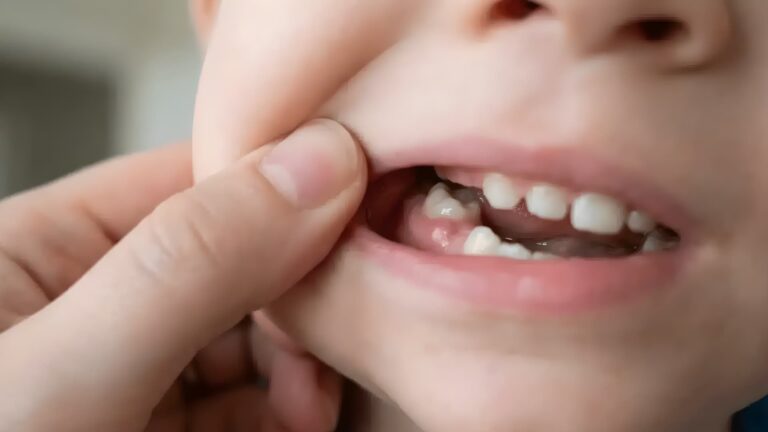
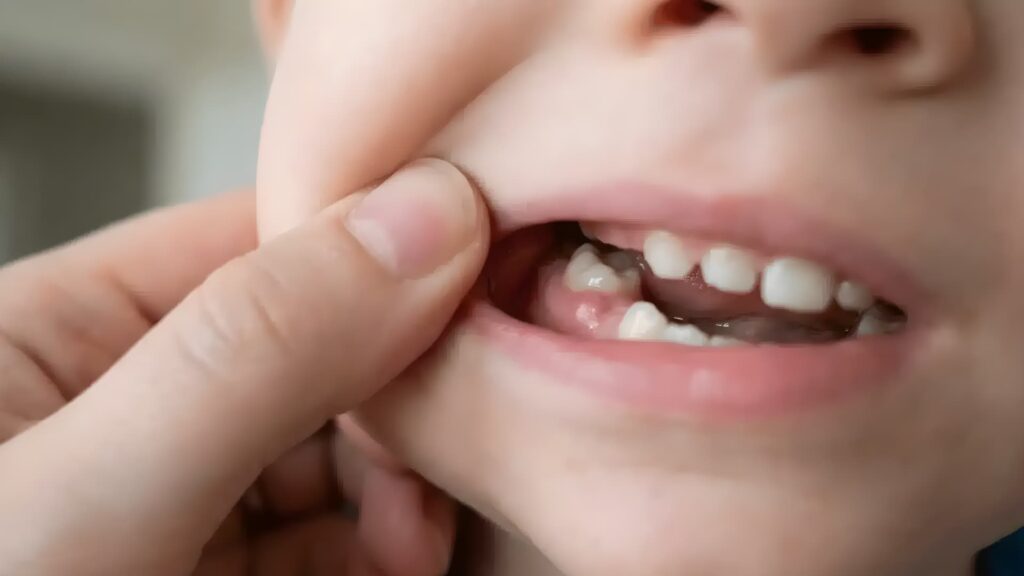
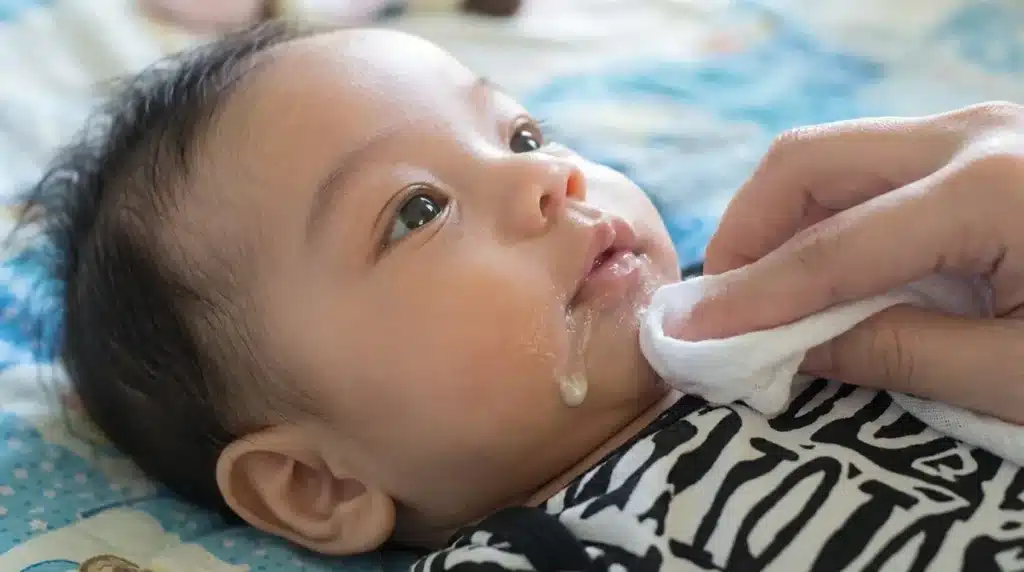
9. Teething and Excess Drool
Teething prompts the body to produce much more saliva. Toddlers swallow most of it, and that amount of liquid in the stomach can cause nausea and vomiting.
Watch for:
- Swollen, red gums alongside vomiting
- Drooling heavily in the days before vomiting starts
- Vomiting settles once teething eases
10. Medicine Side Effects
Some medicines irritate the stomach lining directly. Ibuprofen on an empty stomach is a common one. Antibiotics and iron supplements also cause nausea in some children.
Watch for:
- Vomiting started shortly after a new medicine
- No other signs of illness
- Do not stop prescribed medicine without calling the doctor first
11. Swallowed a Foreign Object
Toddlers put things in their mouths. A coin, small toy part, or food chunk can get stuck in the throat or stomach and trigger repeated vomiting.
Watch for:
- Sudden vomiting after playing with small objects
- Drooling more than usual, gagging, refusing to eat
- Do not wait, take the child to a doctor straight away
12. Post-Nasal Drip and Mucus Build-Up
During a cold or when congested, mucus drips down the back of the throat all night. The stomach collects it while the child sleeps. When they wake up, the body gets rid of it.
Watch for:
- Vomiting once in the morning, then stopping
- Stuffy nose or mild congestion alongside it
- The child seems fine within an hour of waking
Serious Causes of Toddler Vomiting With No Fever
Most vomiting clears up quickly. But some causes need a doctor involved fast. These are less common, but worth knowing.
- Cyclic Vomiting Syndrome (CVS): Repeated episodes of intense vomiting that follow the same pattern each time, with completely normal health in between. Linked to migraines. Most common in children ages 3 to 7. Needs a pediatric gastroenterologist’s evaluation.
- Abdominal Migraine: A type of migraine that causes belly pain and vomiting rather than a headache. Can start as early as 18 months. Often comes with a family history of migraines.
- Intestinal Blockage (Intussusception): One part of the intestine folds into itself and causes a blockage. Most common in children under 4. Signs include sudden vomiting, legs pulled toward the belly, and waves of intense crying. Go to the ER immediately.
- Pyloric Stenosis: A narrowing of the stomach outlet that causes forceful, projectile vomiting shortly after eating. The child seems hungry right after. Needs medical evaluation.
- Vomiting After a Head Bump: Vomiting after a fall or head injury is a red flag, even without fever. Go to the ER the same day, even if the bump seemed minor.
What Does the Color of Your Toddler’s Vomit Mean?
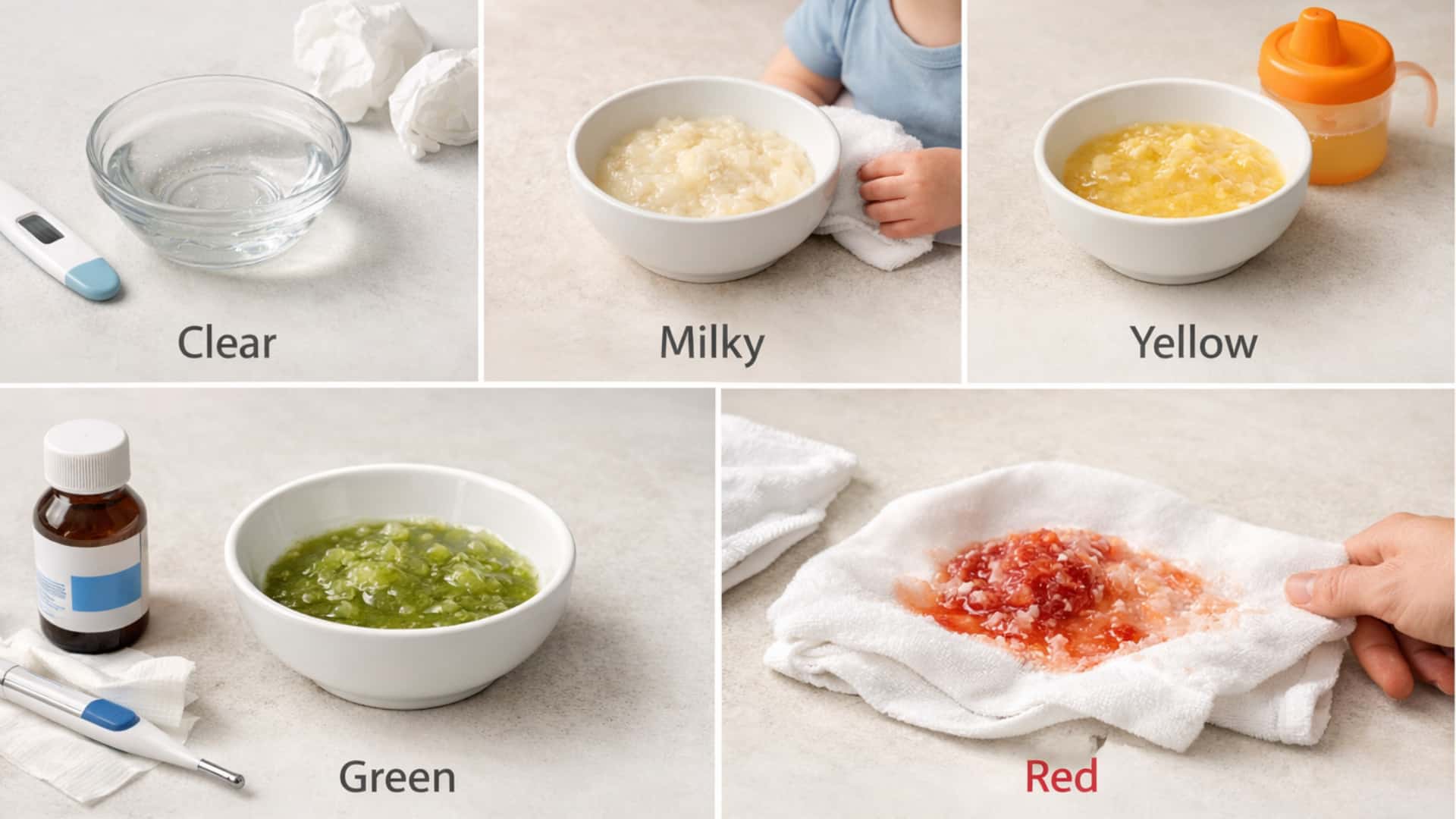
Alt Text: Chart showing different vomit colors in children, including clear, milky, yellow, green, and red, with corresponding visual examples
The color of vomit tells you more than most parents realize. Before you call the doctor, take note of what you saw.
| Vomit Color | What It Could Mean | What to Do |
|---|---|---|
| Clear or white | The stomach is empty, or undigested saliva | Monitor, keep fluids going |
| Milky white | Undigested milk or formula | Usually normal in younger toddlers |
| Yellow | Bile, the stomach is very empty | Mention to the doctor, not usually urgent |
| Green | Possible blockage in the gut | See a doctor the same day |
| Red streaks | Small throat tears from vomiting pressure | Usually harmless, but flag to the doctor |
| Bright red or dark brown (like coffee grounds) | Possible bleeding in the digestive tract | Go to the ER immediately |
| Looks red, but the child ate red food/drink | Food color, not blood | Check what they ate first |
Practical tip: Write down the color, timing, and how many times it happened. That is the first thing your pediatrician will ask.
Signs of Dehydration to Watch When Your Toddler Is Vomiting
Dehydration is the biggest real risk that comes with vomiting. Toddlers lose fluid fast. These are the signs to check for.
Check these one by one:
- Dry or sticky mouth and lips: One of the earliest signs. Run a finger across the inside of the lip — it should feel wet.
- Fewer wet diapers than usual: For toddlers in diapers, fewer than 3 wet diapers in 24 hours is a concern.
- No urination for 8 or more hours: For older toddlers who are toilet trained, this is the equivalent signal.
- Dark yellow urine: Healthy urine is pale yellow. Dark yellow means the body is conserving water.
- No tears when crying: If your child is crying hard but producing no tears, dehydration is setting in.
- Sunken eyes or cheeks: A sign of more significant fluid loss.
- Extreme tiredness or being unusually flat: Lethargy that goes beyond normal tiredness after vomiting needs a doctor’s attention.
How to Care for a Toddler Throwing Up at Home?

Alt Text: Mother feeding a toddler on a couch while offering water, with oral rehydration solution and tissues nearby in a calm home setting
You cannot stop the vomiting, but you can manage it well. Here is what to do, step by step.
1. What to Give to Drink and When
Start small. Do not hand them a full cup; the stomach will push it straight back up. Use an Oral Rehydration Solution like Pedialyte, available at most US grocery stores and drugstores.
Give 1 to 2 teaspoons every 5 minutes for the first 2 hours. If no vomiting happens for 2 hours, slowly increase the amount. If you are still breastfeeding, offer short feeds every 30 minutes rather than long ones.
Avoid: Juice, soda, and undiluted sports drinks. Too much sugar makes the stomach worse. Dilute sports drinks 50/50 with water if ORS is not available.
2. When to Reintroduce Food
Wait until there has been no vomiting for at least 6 to 8 hours. Then start plain and easy: crackers, dry toast, white rice, or plain cereal. Do not push food; let the child tell you when they are ready.
Avoid greasy foods, large amounts of dairy, and anything spicy or acidic until the stomach is fully settled.
One extra tip: Do not offer red-colored foods or drinks while the child is vomiting. Red juice or red fruit can look like blood in vomit and cause unnecessary panic.
3. Rest and Comfort Tips
Sleep is genuinely helpful here. It lets the stomach settle and reduces the urge to vomit. After a vomiting episode, encourage a rest or a nap. Keep the room calm, quiet, and at a comfortable temperature.
Sit older toddlers upright during vomiting to reduce the chance of choking. Keep a bucket close. And stay calm yourself, your child reads your energy.
4. What NOT to Give During Vomiting
This part matters, and most parents do not know it.
- Do not give ibuprofen (Advil, Motrin), as it irritates the stomach lining directly and can worsen nausea.
- Do not give anti-nausea medications without a doctor’s instruction. Many are not approved for young children.
- Do not give any over-the-counter medicine during the first 8 hours of vomiting without checking with the doctor.
- If a fever develops and the child cannot keep oral medicine down, ask a pharmacist about acetaminophen suppositories (such as FeverAll).
What to Tell Your Pediatrician?
When you call, the doctor will move faster if you can give them the key details upfront: how many times your toddler vomited and over what time period, what the vomit looked like, and how many wet diapers you have seen.
Whether the child is keeping fluids down, and whether anything changed recently, such as a new food, a new medicine, a head bump, or contact with someone who was sick.
Mention if the child seems unusually tired or hard to engage. The more specific you are, the quicker the doctor can tell you whether to wait and watch or come in.
Wrapping It Up
A toddler throwing up, no fever, is one of those situations that feels worse than it usually is. The vomiting is real. The worry is real. But most of the time, the cause is something the body handles on its own within a day.
Keep fluids going in small amounts. Watch for dehydration. Use the checklist above when you call the doctor. And trust what you are seeing, you know your child better than anyone.
If you have been through this and have something that helped, drop it in the comments below.
Other parents are reading this at 2 a.m., doing exactly what you did. Your experience might be exactly what they need.