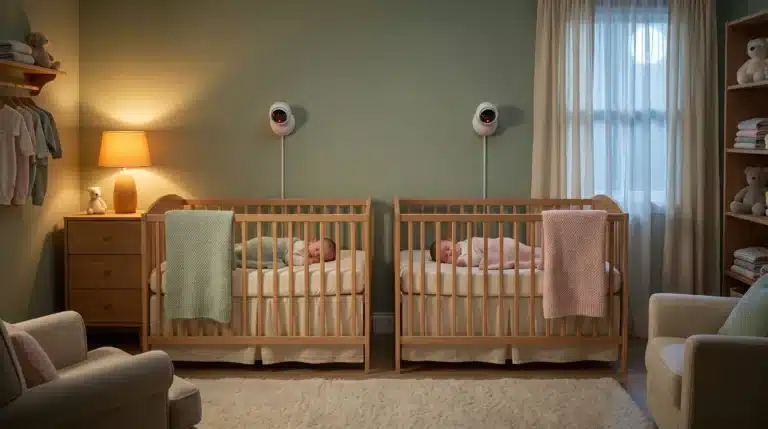


Your baby finally sleeps. The swaddle did that. So the idea of stopping it feels scary.
Most parents keep using it longer than they should, not because they don’t care about safety, but because they don’t know the exact moment to stop.
That moment matters. Swaddling past the right point puts your baby at real risk.
This blog tells you the right age to stop, the signs your baby will show you, what can go wrong if you wait, and how to make the change without losing sleep over it.
What Is Swaddling and Why Do Parents Use It?
Swaddling is the practice of wrapping a newborn snugly in a blanket to recreate the tight, warm feeling of the womb.
When done correctly, the American Academy of Pediatrics says swaddling can effectively calm infants and help them sleep, but only when the baby is always placed on their back.
It also reduces how often the Moro reflex, the sudden arm jerk that startles babies awake, interrupts their sleep.
When Should You Stop Swaddling?
There is no single date on the calendar that tells you to stop. Your baby’s body does the telling.
Most babies are ready to stop being swaddled between 3 and 6 months old. This is the age range when rolling skills begin to appear, and the Moro reflex naturally fades.
The short answer:
| Age | What’s Happening |
|---|---|
| 0 to 2 months | Swaddling is safe and helpful |
| 2 to 3 months | Watch closely for rolling signs |
| 3 to 4 months | This is when the AAP typically sees babies begin to roll. Once rolling signs appear, the transition must begin. |
| 4 to 6 months | The Moro reflex fades. Most babies are fully arms-out for sleep by this point. |
| 5 months and beyond | If your baby is over 5 months, they must be out of the swaddle for safety. At this age, it is often a habit rather than a reflex. |
6 Clear Signs It Is Time to Stop Swaddling Your Baby
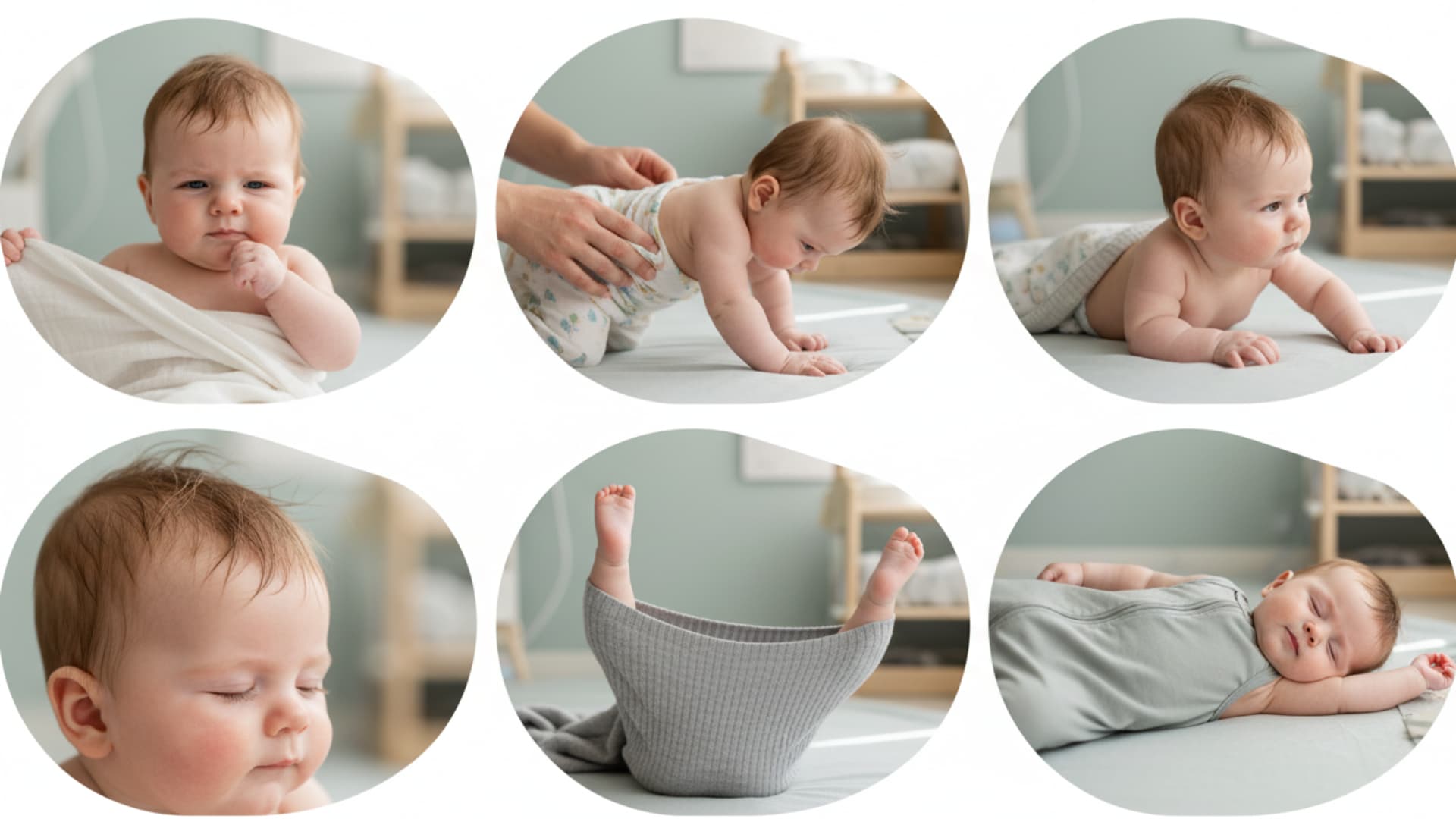
Alt text: A collage of six images showing a baby at different stages, including rolling, pushing up, kicking, and sleeping, indicating developmental milestones.
Every baby is different. The age window gives you a rough idea, but these signs give you the real answer. Watch your baby, not the calendar.
Sign 1: Your Baby Is Showing Signs of Rolling Over
Rolling is the number one reason to stop. No debate, no waiting.
Stop swaddling as soon as your baby shows any signs of trying to roll over. Some babies start working on rolling as early as 2 months of age. Once a baby rolls from back to front while swaddled, it raises the risk of suffocation. They cannot push up or roll back with their arms pinned down.
What to watch for:
- Getting up onto one shoulder during tummy time
- Twisting the lower body while lying on their back
- Legs looking stronger and pushing off surfaces more often
Sign 2: Your Baby Keeps Breaking Out of the Swaddle
When the swaddle can’t hold your baby anymore, that’s a message worth listening to.
If your baby is consistently breaking free from the swaddle or becoming fussy while being wrapped, it is likely a sign they are ready to move on.
That said, some babies break out because of the swaddle type, not because they are developmentally ready. If breaking out comes alongside rolling signs, that combination is clear enough.
What to watch for:
- Arms consistently pulling free overnight
- Loose fabric found near the baby’s face by morning
- Breaking out even from velcro-style swaddles
Sign 3: Your Baby Fights or Resists Being Swaddled
Getting wrapped up used to calm them. Now it makes things worse.
Babies who start to resist or break free from the swaddle are likely ready for a change, especially when this comes alongside signs of rolling.
If your baby arches their back during wrapping, cries through the whole process, or settles worse in the swaddle than out of it, that resistance is real feedback.
What to watch for:
- Arching the back during wrapping
- Crying that starts when the swaddle goes on, not before
- Settling faster when arms are left free
Sign 4: The Moro (Startle) Reflex Is Fading
The startle reflex was the main reason you started swaddling. Once it fades, the swaddle’s main job is done.
The Moro reflex typically begins to fade between 2 and 4 months and should be gone completely by the 6-month mark.
Once this reflex is gone, babies no longer need the tight feeling of a swaddle to stay asleep. You will notice your baby startles less often, or startles but doesn’t fully wake up.
What to watch for:
- Fewer sudden arm jolts during sleep
- Baby startles but settles back without waking
- Longer sleep stretches even when one arm slips free
Sign 5: Your Baby Is Overheating in the Swaddle
The swaddle is an extra layer. In warmer rooms or warmer months, that extra layer adds up fast.
Signs your baby may be too hot include sweating, damp hair, flushed cheeks, heat rash, and rapid breathing. Overheating is a known risk factor for SIDS on its own, so catching it early matters.
If you see these signs regularly, it is time to reassess what your baby is sleeping in.
What to watch for:
- Damp hair or neck when you check on them
- Cheeks that look flushed after a nap
- Fast or labored breathing while asleep
Sign 6: Your Baby Wants More Freedom to Move
Some babies simply outgrow the need for containment. You can see it in how they act when wrapped.
As babies get older, they become more active and may feel frustrated by the swaddle’s restrictions. They may also generate more body heat through their increased activity, which can make them uncomfortable.
If your baby looks like they are trying to swim out of the blanket every single sleep, that’s a clear sign they want their body back.
What to watch for:
- Legs kicking hard against the wrapping
- Arms pushing out from the sides repeatedly
- General fussiness that only happens while swaddled
What Happens If You Swaddle Too Long?
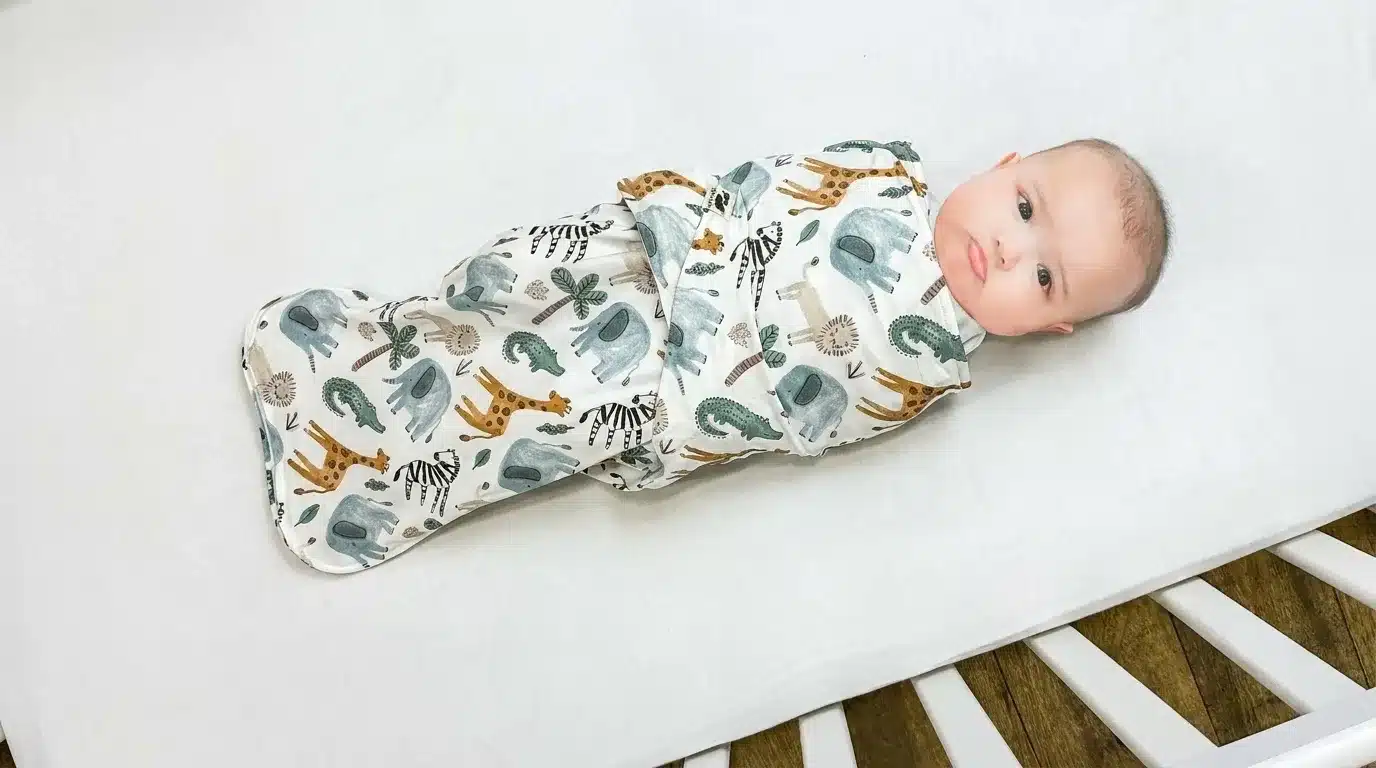
Alt text: A baby lying on their back, snugly swaddled in a patterned blanket with animal prints, resting on a crib mattress.
Knowing the signs is one part. Understanding what’s actually at risk when you wait too long is the other part. Here is what the research says.
Risk 1: Increased Risk of SIDS
- Some studies show an increased risk of SIDS and suffocation when swaddled babies are placed on their stomach or roll onto their stomach during sleep.
- A swaddled baby who rolls face down has no way to push up or reposition themselves.
- Some child care centers have formal policies against swaddling because of the increased SIDS risk if a rolling baby is left swaddled.
- The AAP says all babies should be placed on a firm, flat surface, on their back, every single time they sleep.
Risk 2: Hip Dysplasia from Tight Swaddling
- Swaddling infants with the hips and knees extended increases the risk of hip dysplasia and dislocation, according to the International Hip Dysplasia Institute.
- Studies have found that straightening and tightly wrapping a baby’s legs can lead to hip dislocation or hip dysplasia, an abnormal formation of the hip joint where the thigh bone is not held firmly in the socket.
- “Hip-safe” swaddling means the baby’s legs can bend up and out at the hips. The knees should stay slightly bent.
- The AAP, the Pediatric Orthopedic Society of North America, and the International Hip Dysplasia Institute all support swaddling, but only when done correctly, with the arms snug and the hips free to flex and open.
Risk 3: Overheating
- Swaddling for too long can lead to overheating, which can cause dehydration, fever, and other health problems, especially if the baby is swaddled with too many layers or the room temperature is too warm.
- Keep the room between 68 and 72°F (20 to 22°C).
- Use breathable fabrics like muslin or cotton.
- Always check the back of the neck or chest with your hand, not just the face, to feel for warmth.
Risk 4: Reduced Ability to Self-Soothe
- Swaddling may reduce a baby’s ability to rouse themselves from sleep. That reduced arousal is one of the main reasons babies may die from SIDS.
- Babies who stay swaddled past the appropriate stage can also become dependent on it to fall asleep, making the transition harder the longer you wait.
- Starting around 3 months, letting your baby learn to settle with some arm movement builds healthy sleep independence.
How to Stop Swaddling: 3 Methods That Actually Work
You know it’s time. Now comes the part that makes most parents nervous. The good news is that there is no single right way to do this. Pick the method that fits your baby’s personality.
Method 1: Cold Turkey
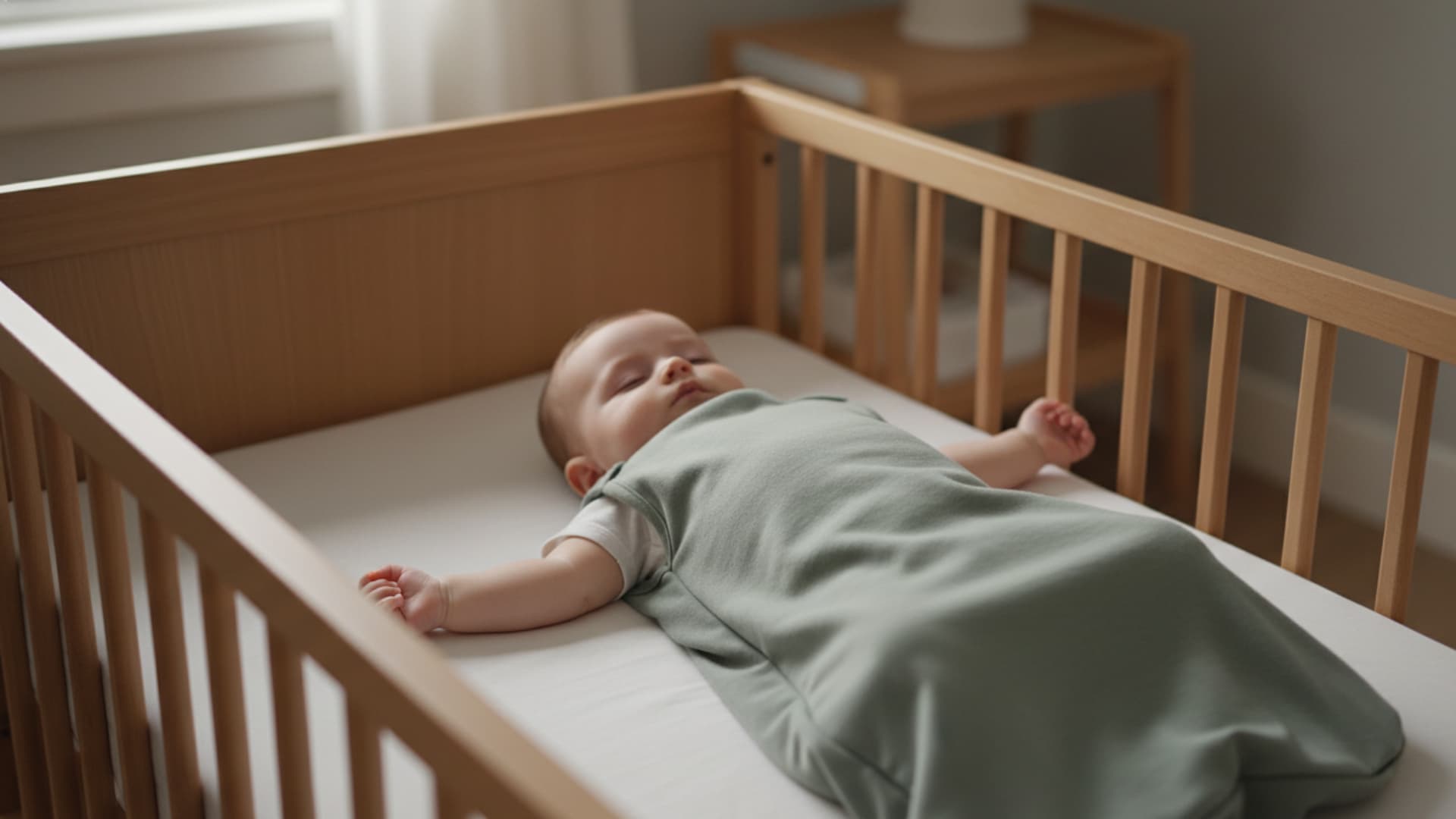
Alt text: A baby sleeping on their back in a crib, wearing a sleep sack with arms free.
Stop completely and move straight to an arms-free sleep sack.
This works well for calm babies who don’t fuss easily or get overtired quickly. If it’s too hard after a few nights, move to a more gradual approach.
- Best for: Babies already rolling, where waiting is not safe
- What to expect: A few rough nights as the baby adjusts to free arms
- How to support it: Use a consistent bedtime routine, keep the room dark, and add white noise
- When to stick with it: Give it at least 3 to 5 nights before deciding it isn’t working
Method 2: One Arm Out
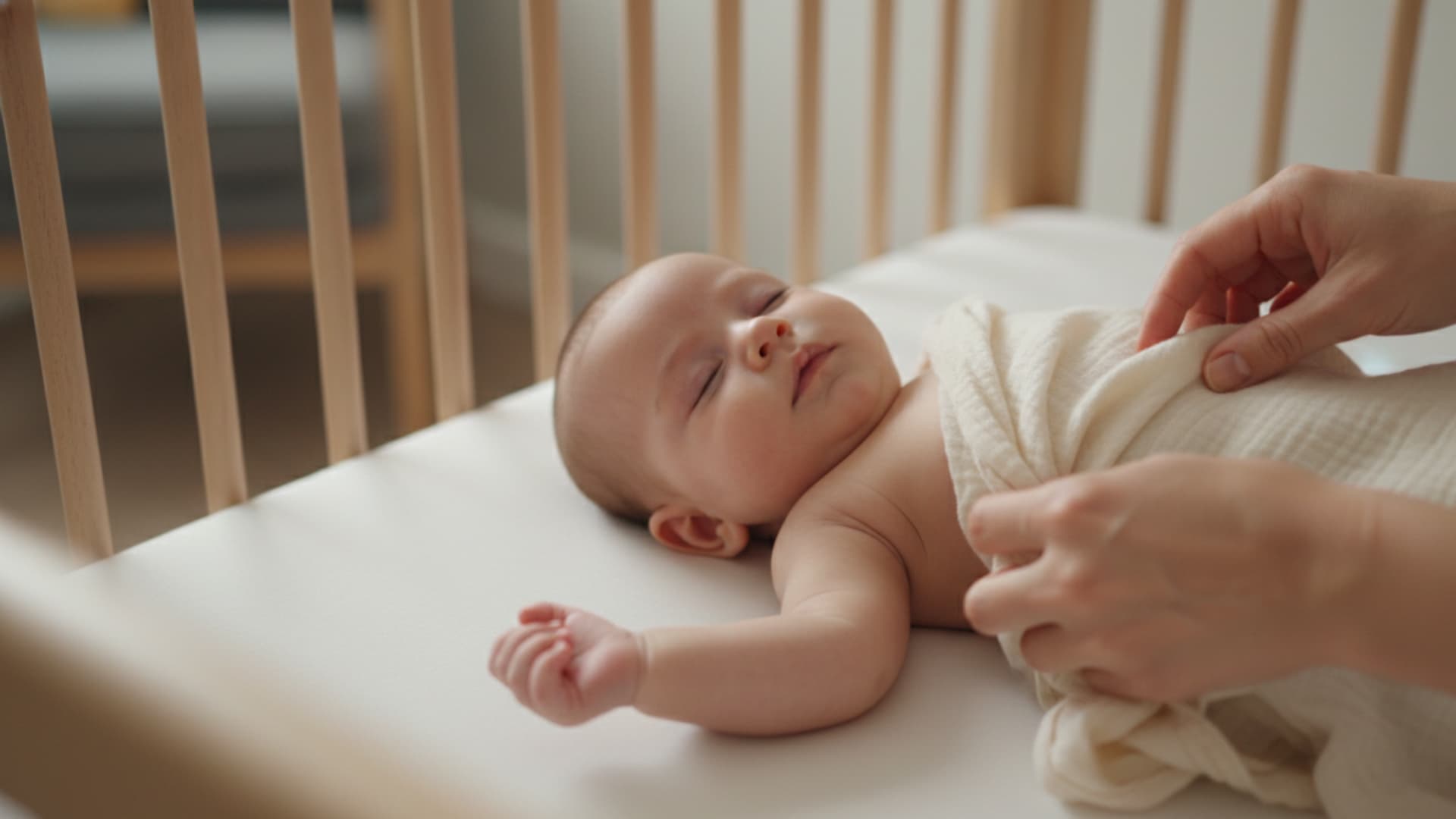
Alt text: A baby lying in a crib while a caregiver gently wraps a blanket around them, leaving one arm out.
Start with one arm free, then both, then no swaddle at all.
Start by swaddling with one arm out for a few days, then progress to leaving both arms free, and then remove the swaddle altogether.
- Best for: Babies with a still-active startle reflex who are starting to show rolling signs
- What to expect: The first night with one arm free will feel odd to your baby. That’s normal.
- Timing: Spend 3 to 4 nights on each step before moving to the next
- What to use: Look for velcro swaddles that allow one arm to be released safely
Method 3: Naps First, Then Nights
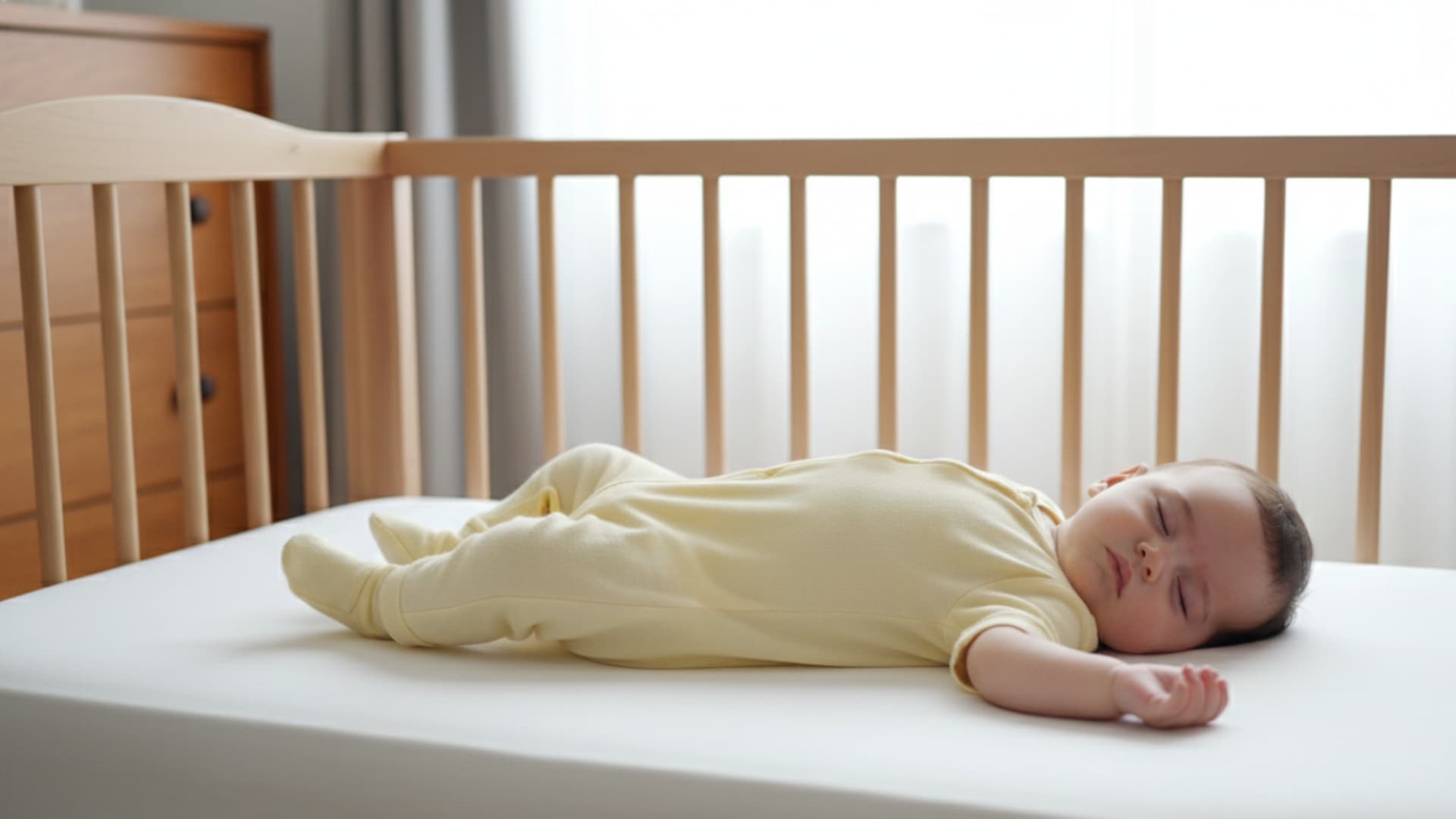
Alt text: A baby in a yellow onesie sleeping on their back in a crib with arms relaxed at their sides.
Take the swaddle away for daytime naps before tackling overnight sleep.
Start by removing the swaddle during nap times. The shorter sleep stretches give the baby time to get used to the new feeling without the pressure of a full overnight sleep.
- Best for: Babies who are very sensitive to sleep changes, or parents who want to manage one change at a time
- What to expect: Shorter naps at first. That’s okay. The goal is adjustment, not perfection.
- Progression: Once naps go well for 3 to 5 days, apply the same change to bedtime
- Tip: Use the nap-time version of your bedtime routine to reinforce the habit
What to Use After the Swaddle: Safe Sleep Options
Once the swaddle is gone, your baby still needs to sleep comfortably and safely. Here are the options worth knowing.
1. Sleep Sacks (Wearable Blankets)
Sleep sacks or wearable blankets that don’t compress the baby’s arms and chest can be worn until about age 2 or until the baby weighs about 30 lbs.
Once your baby outgrows the sleep sack, they can move to a blanket. Choose sleeveless designs that leave the arms fully free and keep the crib clear of loose fabric.
2. Transition Swaddles
A transition swaddle is a wearable blanket that still wraps the legs but leaves the arms free. It is designed for babies who are starting to roll but still want the snug feel around the bodies.
Some have slightly weighted sleeves to help with the lingering startle reflex. Always check that the product is approved for babies who can roll.
3. Regular Pajamas and Footed Sleepers
Footie pajamas, two-piece sets, or one-piece sleepers all work well. Dress your baby for the room temperature, not your own comfort. Infants overheat easily, so err on the cooler side.
Once your baby has adjusted to sleeping without a swaddle and the startle reflex has settled, well-fitting pajamas are all they need.
How Long Does the Swaddle Transition Take?
Most babies adjust to sleeping without a swaddle within one to two weeks. Some do it in just a few nights.
If your baby is still struggling after four weeks, speak to your pediatrician to rule out other factors affecting their sleep. Expect more wake-ups in the first week.
Without the swaddle holding the arms still, a sudden sound or movement can startle them awake. This is normal and settles down as the body adapts.
Stick to your chosen method, keep the sleep environment consistent, and give it time.
Key Takeaways
Stopping the swaddle is one of those parenting moments where you know it has to happen, but the timing never feels quite right.
The truth is, your baby will tell you when they’re ready. Rolling signs, a fading startle reflex, or arms that refuse to stay wrapped are all real signals.
When you see them, act on them. The longer you wait past those signals, the harder the transition gets and the greater the safety risk.
Pick a method that fits your baby. Give it a week. And know that a few rough nights on the other side of the swaddle is a small price for better, safer sleep ahead.
Have questions about the transition or want to share what worked for your baby? Drop them in the comments below.