
Organizing your room can seem like a daunting task, but with a few simple steps, it can change your space into a more functional and calming environment.
Whether you’re dealing with a small room or a larger space, organizing effectively allows you to make the most of every corner.
The key is to break the process down into manageable steps, tackle one area at a time, and create storage solutions that fit your needs.
By making small changes, you can enjoy a clutter-free space that’s easier to clean and more pleasant to spend time in.
How Do I Start Organizing My Room?
Start by clearing one small area instead of trying to fix the whole room at once. Remove everything from that spot and decide what you actually use, what can be stored, and what should go.
Once that’s done, clean the surface and only put back items that belong there.
This simple start makes the process feel manageable and gives you quick progress, which helps you stay motivated as you move to the next area while learning how to organize your room step by step.
Before You Start Organizing Your Room
Before you begin learning how to organize your room, setting things up first can save time and make the process feel much easier. A little planning helps you stay on track and finish what you start without feeling stuck.
| What to Prepare | Why It Helps |
|---|---|
| Storage bins or boxes | Keeps similar items together and easy to place later |
| Trash bags | Helps you quickly remove items you no longer need |
| Cleaning supplies | Lets you clean surfaces as you organize |
| Donation box | Makes it easier to separate items to give away |
| Labels or markers | Helps you remember where everything belongs |
| Laundry basket | Keeps clothes from piling up during the process |
| Basic tool kit | Useful if you need to adjust shelves or hooks |
Step-by-Step Process to Organize Your Room
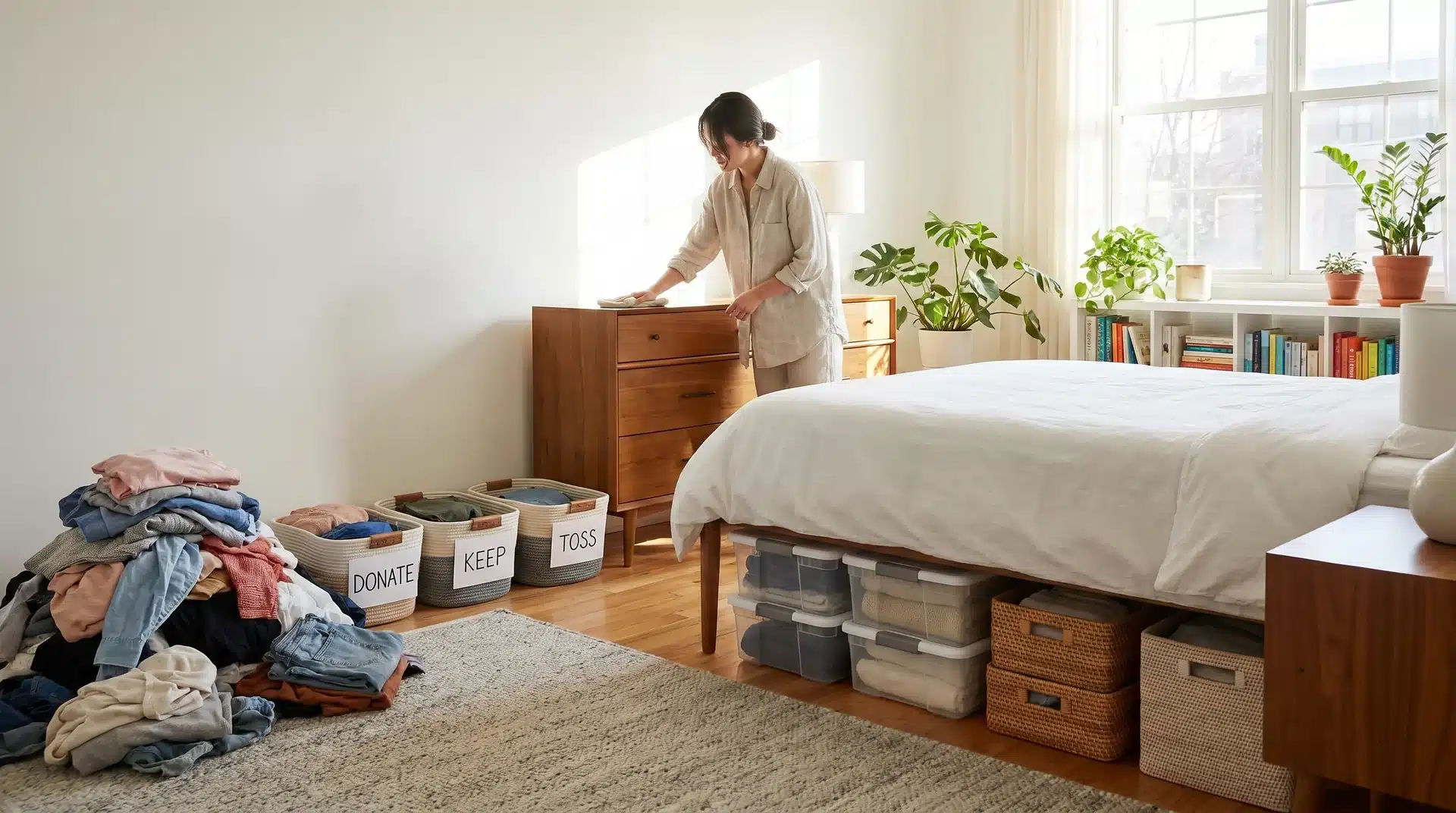
Alt Text: A person organizing clothes in a bedroom with baskets labeled “Donate,” “Keep,” and “Toss” next to a pile of clothes, and a tidy dresser with plants and books in the background.
Getting your room in order becomes much easier when you follow a simple path instead of jumping between tasks. These steps will help you move from clutter to a clean, organized space without feeling overwhelmed.
Step 1: Remove Clutter First
Start by picking up anything that clearly does not belong, like trash, dirty clothes, or random items lying around. This quick cleanup instantly makes the room look better and helps you focus on what actually needs organizing.
Step 2: Sort Items into Categories
Group similar things together such as clothes, books, accessories, and daily essentials. This helps you see how much you have and makes it easier to decide where everything should go.
Step 3: Keep Only What You Need
Go through each group and decide what stays in your room. Items you no longer use can be donated or removed. This step creates space and makes organizing much simpler.
Step 4: Clean and Arrange Your Space
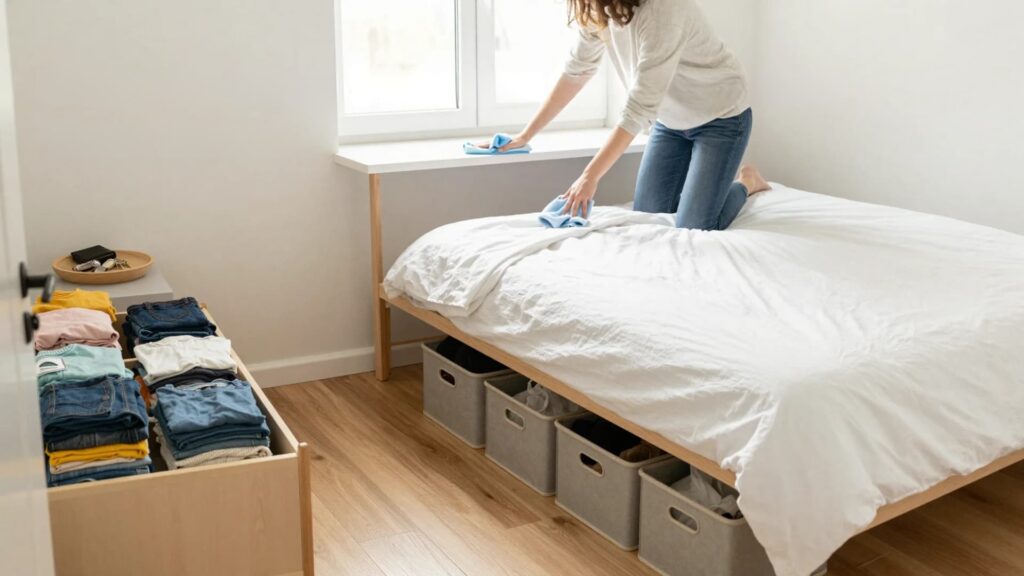
Wipe surfaces, clean the floor, and then start placing items back in a neat way. Keep frequently used things within easy reach and store the rest in drawers, shelves, or bins.
Step 5: Set a Simple Maintenance Routine
Spend a few minutes each day putting things back in place. This small habit keeps your room organized and prevents clutter from building up again.
11 Practical Ideas to Organize Your Room
Once you have the basic organization steps down, these practical ideas will help you organize your room even better. Each tip provides a smart, functional approach to storing and arranging your items, making your space more efficient and easier to maintain.
1. Use Under Bed Storage
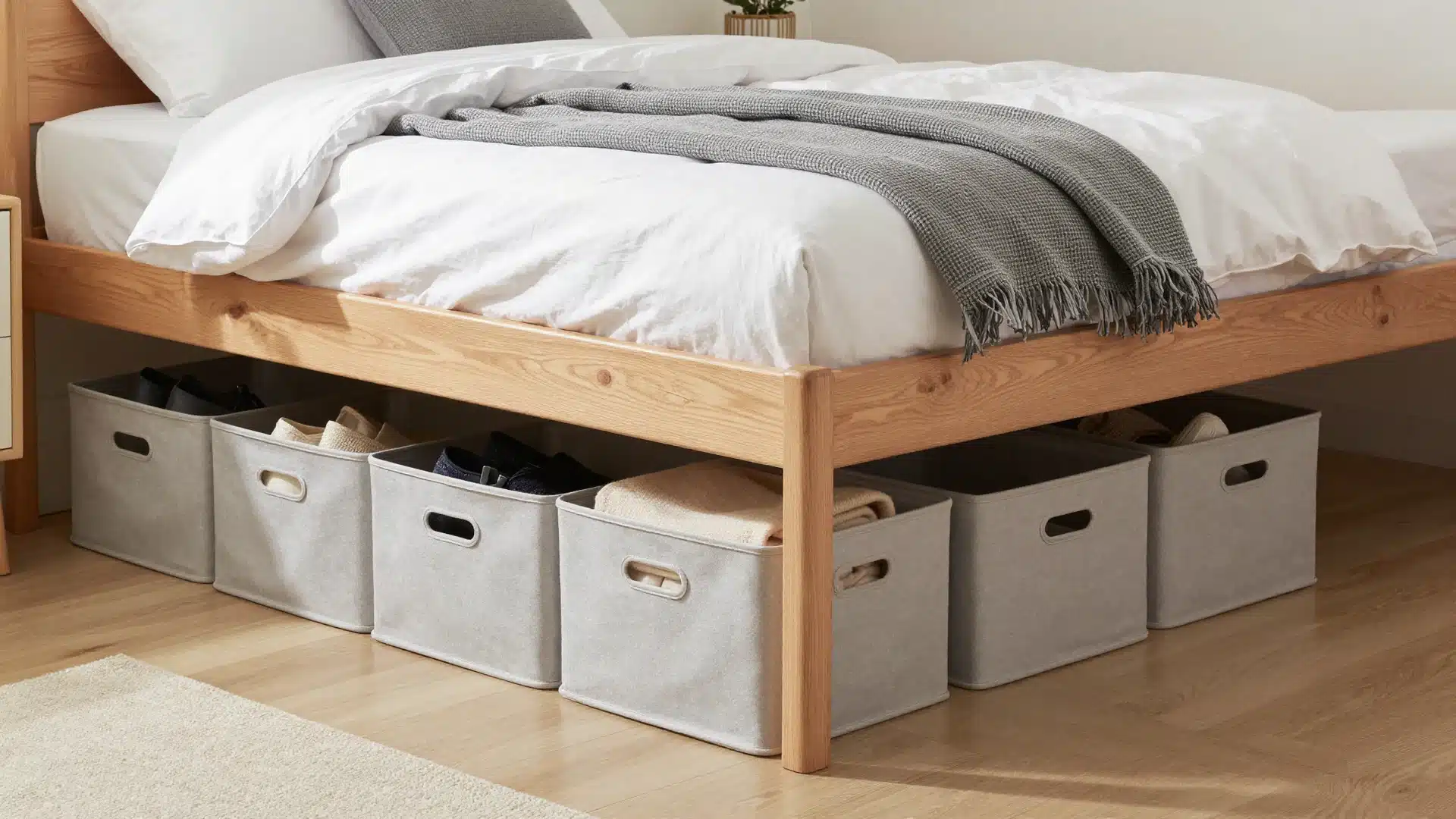
Alt Text: A cozy bedroom with under-bed storage baskets holding shoes and folded items, with a gray blanket draped over the bed.
Under-bed storage is one of the most efficient ways to save space, especially in smaller rooms. You can store seasonal items, extra bedding, or shoes in storage bins or flat boxes that slide right under your bed. This keeps things out of sight while still easily accessible.
Best for:
- Small rooms with limited storage
- Keeping seasonal items like winter clothes
- Storing shoes or extra bedding
Tip:
Use clear storage bins to make it easier to see what’s inside without pulling them out.
2. Add Wall Shelves
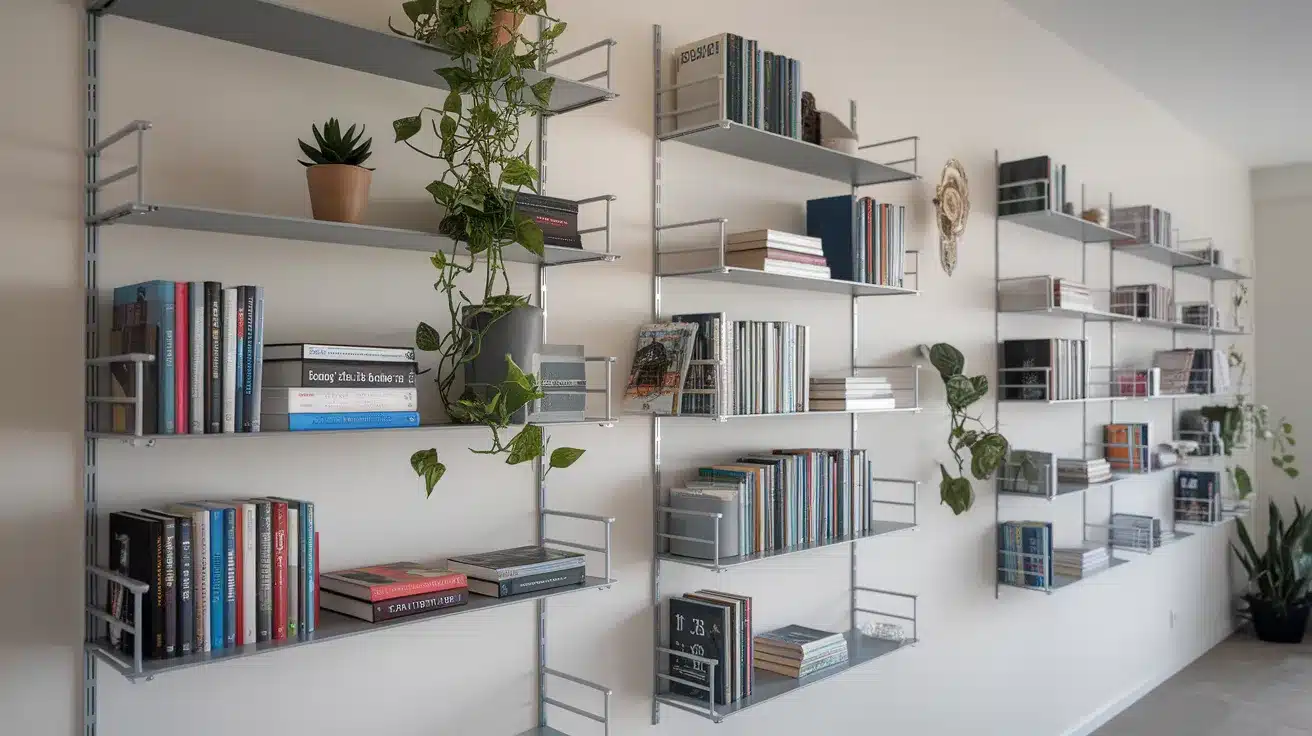
Alt Text: A modern bookshelf setup with a mix of books and plants arranged on metal shelving against a neutral wall.
Wall shelves help you use vertical space, which is often overlooked in many rooms. By adding shelves to your walls, you can store books, plants, or décor, keeping your floor space free for larger furniture and making your room look more open and airy.
Best for:
- Rooms with limited floor space
- Displaying books, plants, or decorative items
- Keeping items off your desk or dresser
Tip:
Install floating shelves for a sleek, minimalist look that doesn’t take up much space.
3. Use Storage Baskets
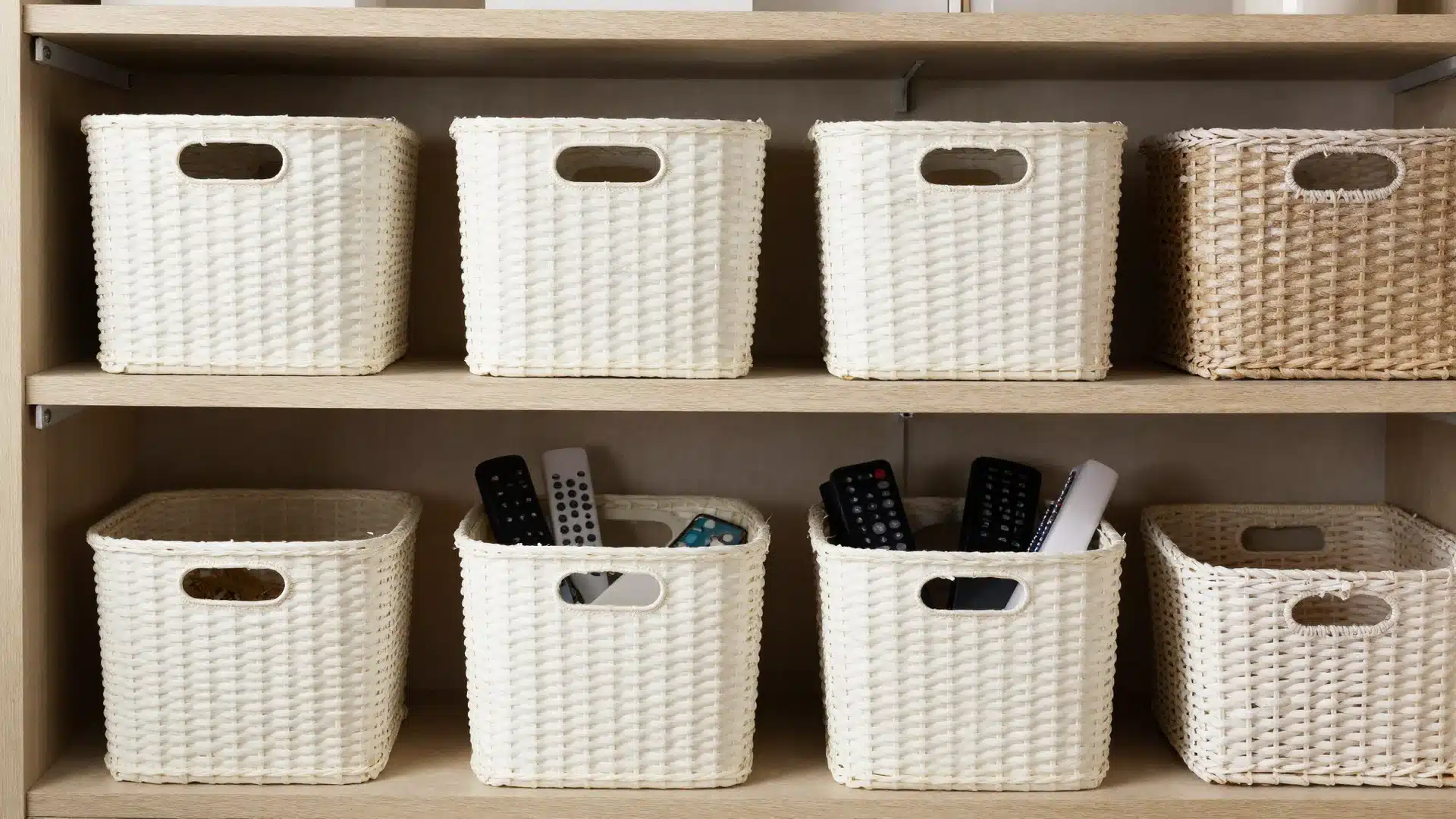
Alt Text: A shelf with woven storage baskets holding various remote controls, organized by size and color.
Storage baskets are perfect for keeping smaller items organized and easy to find. Whether it’s charging cables, accessories, or toiletries, baskets can hold everything in place while being flexible enough to move around when needed.
Best for:
- Organizing small items like accessories or cables
- Keeping clutter off shelves and countertops
- Creating a stylish way to store everyday essentials
Tip:
Choose baskets in matching sizes or materials to create a cohesive look in your room.
4. Hang Organizers Behind Doors
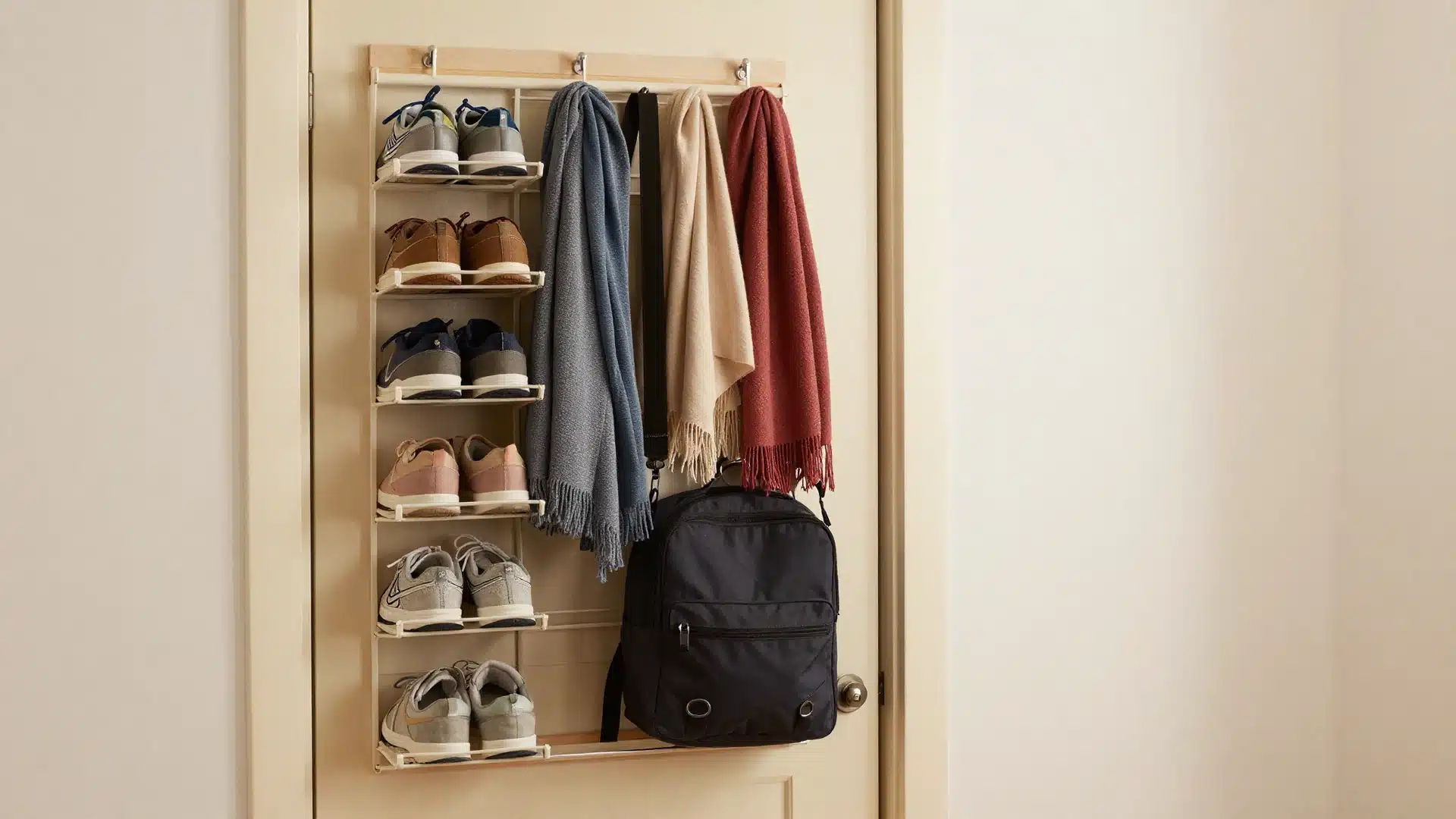
Alt Text: A door organizer with shoes, scarves, and a backpack neatly arranged on hooks and shelves.
The backs of doors are often unused spaces that can serve as a great place to hang organizers. Whether it’s a shoe rack, a coat hook, or a bag organizer, using this space keeps things out of sight but still easily accessible.
Best for:
- Storing shoes, bags, or hats
- Maximizing space in small rooms
- Organizing daily essentials like scarves or belts
Tip:
Opt for over-the-door organizers with multiple pockets for a more functional approach.
5. Fold Clothes Vertically
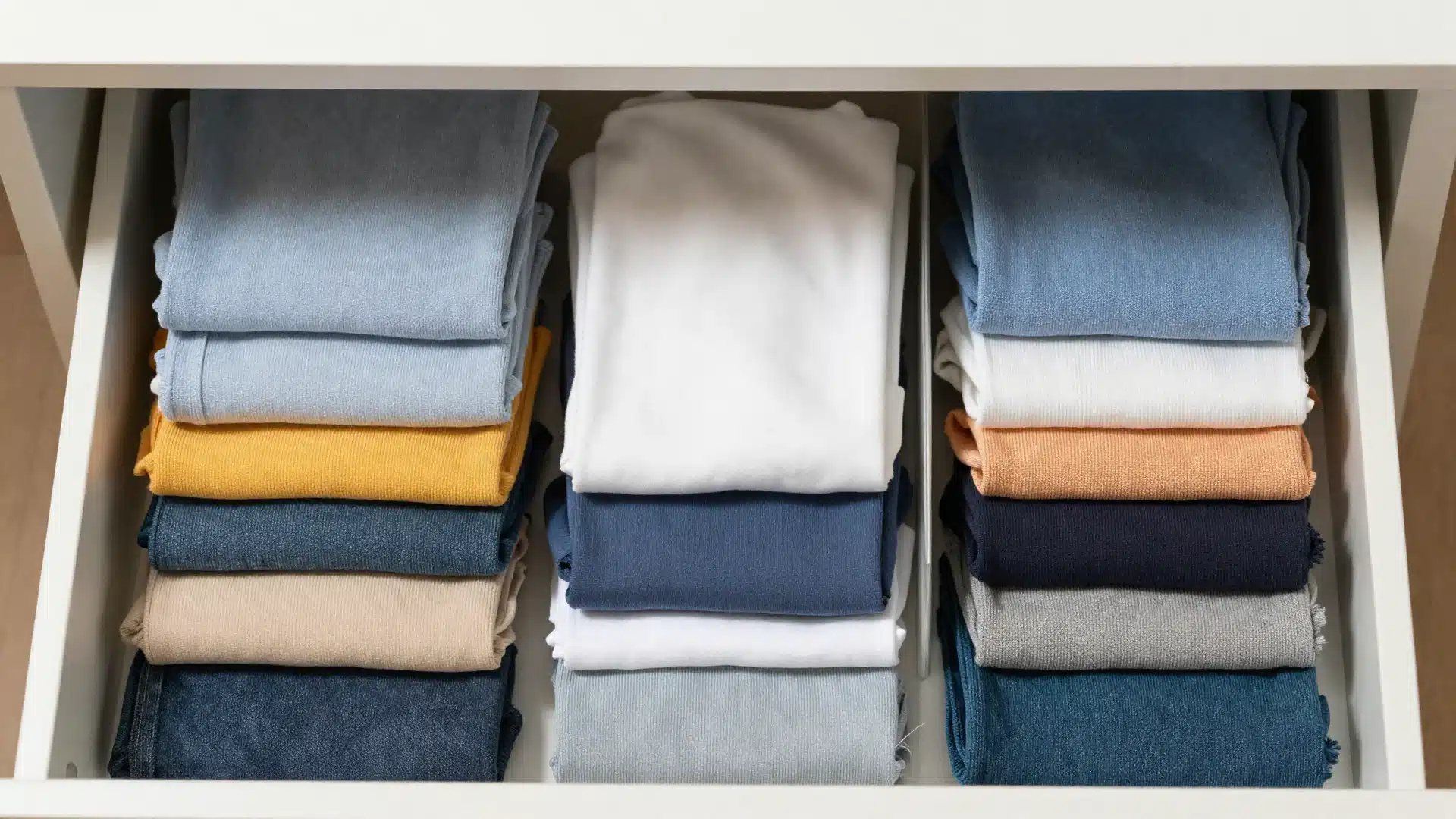
Alt Text: A neatly organized drawer with clothes folded vertically in various colors, including blue, yellow, and navy, arranged in stacks.
Vertical folding is a space-saving method that not only saves room in your drawers but also makes your clothes more visible. This technique prevents messy piles and helps you find what you need quickly without causing any disarray.
Best for:
- Organizing clothes in drawers or on shelves
- Making the most of drawer space
- Keeping clothes neat and easily accessible
Tip:
Use the KonMari method for folding clothes to maximize space and reduce wrinkles.
6. Create a Daily Drop Zone
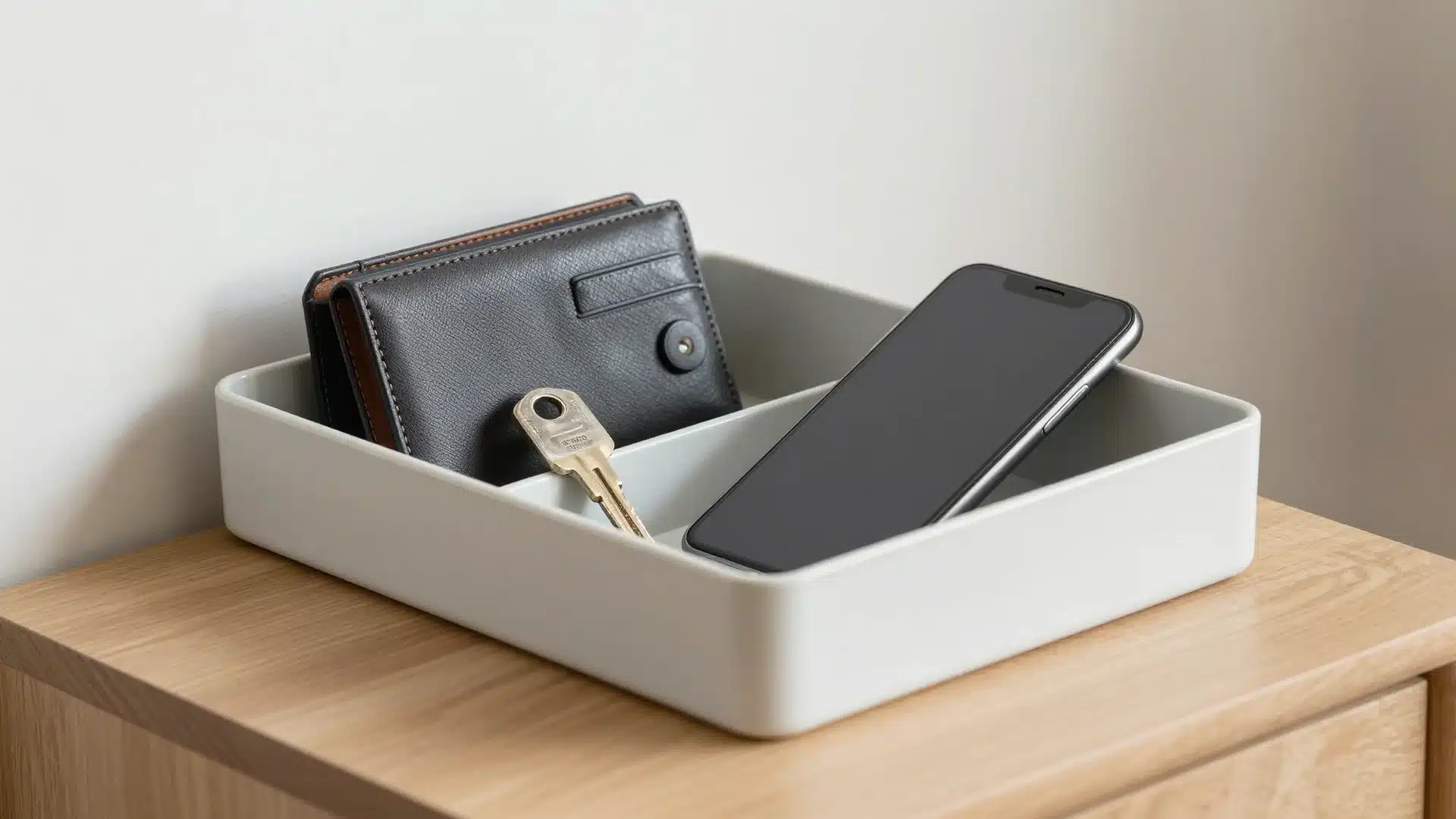
Alt Text: A minimalist drop zone with a white dish holding a wallet, keys, and a smartphone on a wooden surface.
Designating a spot, like a small tray or bowl, for your everyday items, such as keys, wallet, and phone, helps keep them from spreading around the room. This designated “drop zone” saves you time and ensures these items are always easy to find.
Best for:
- Avoiding clutter around desks, dressers, or nightstands
- Storing keys, wallets, and daily accessories
- Preventing items from being misplaced
Tip:
Place the drop zone near your entrance or bed for easy access.
7. Use Drawer Dividers
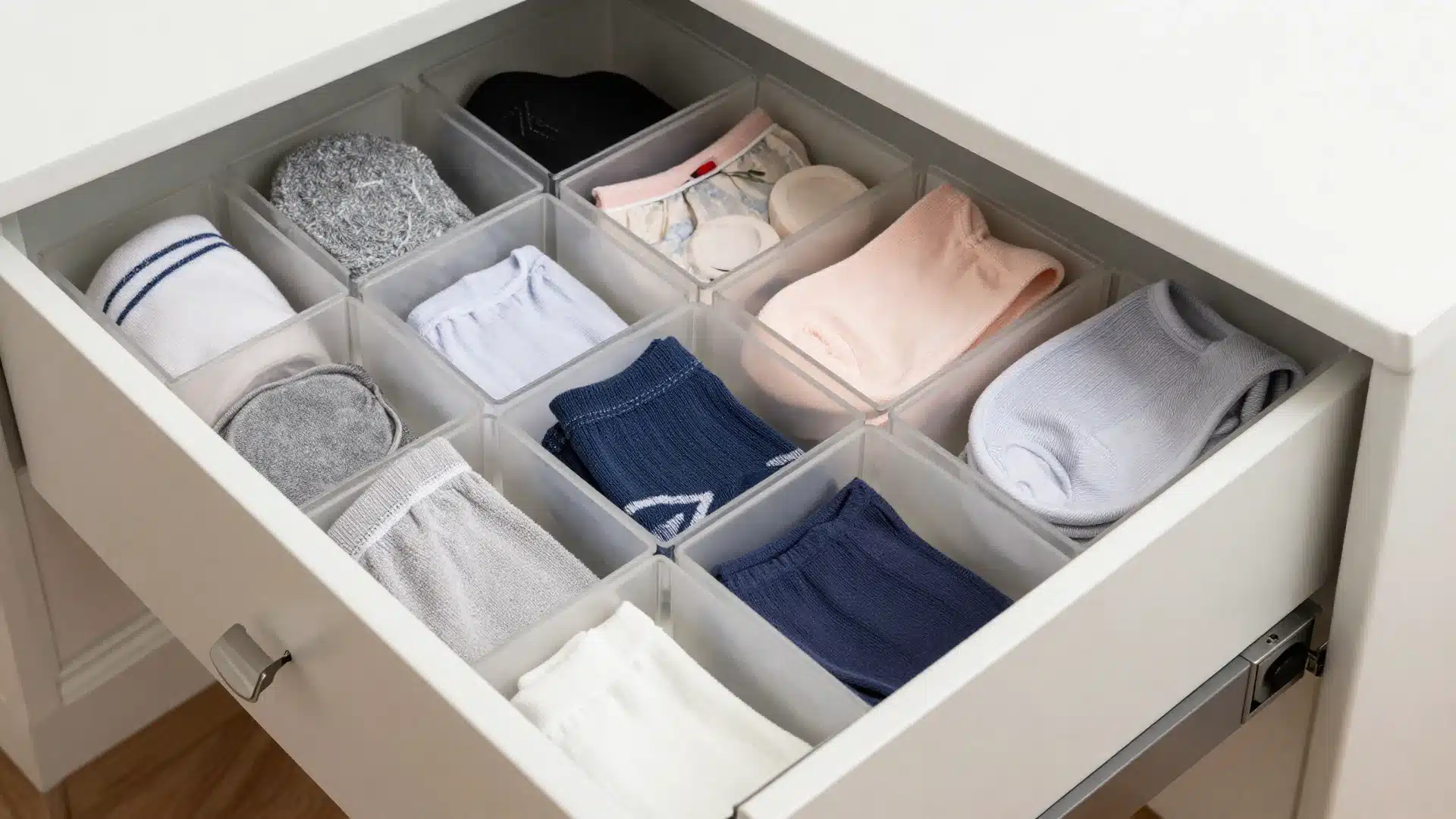
Alt Text: A drawer organized with dividers holding neatly folded socks in various colors and sizes.
Drawer dividers are simple tools that separate and organize items, preventing them from shifting around. Whether it’s for clothes, office supplies, or makeup, dividers help everything stay in its place, making drawers easy to navigate.
Best for:
- Organizing clothing or accessories in drawers
- Separating office supplies like pens and paper
- Keeping small items from getting lost
Tip:
Choose adjustable dividers that can expand or shrink to fit your needs.
8. Keep Only Essentials on Surfaces
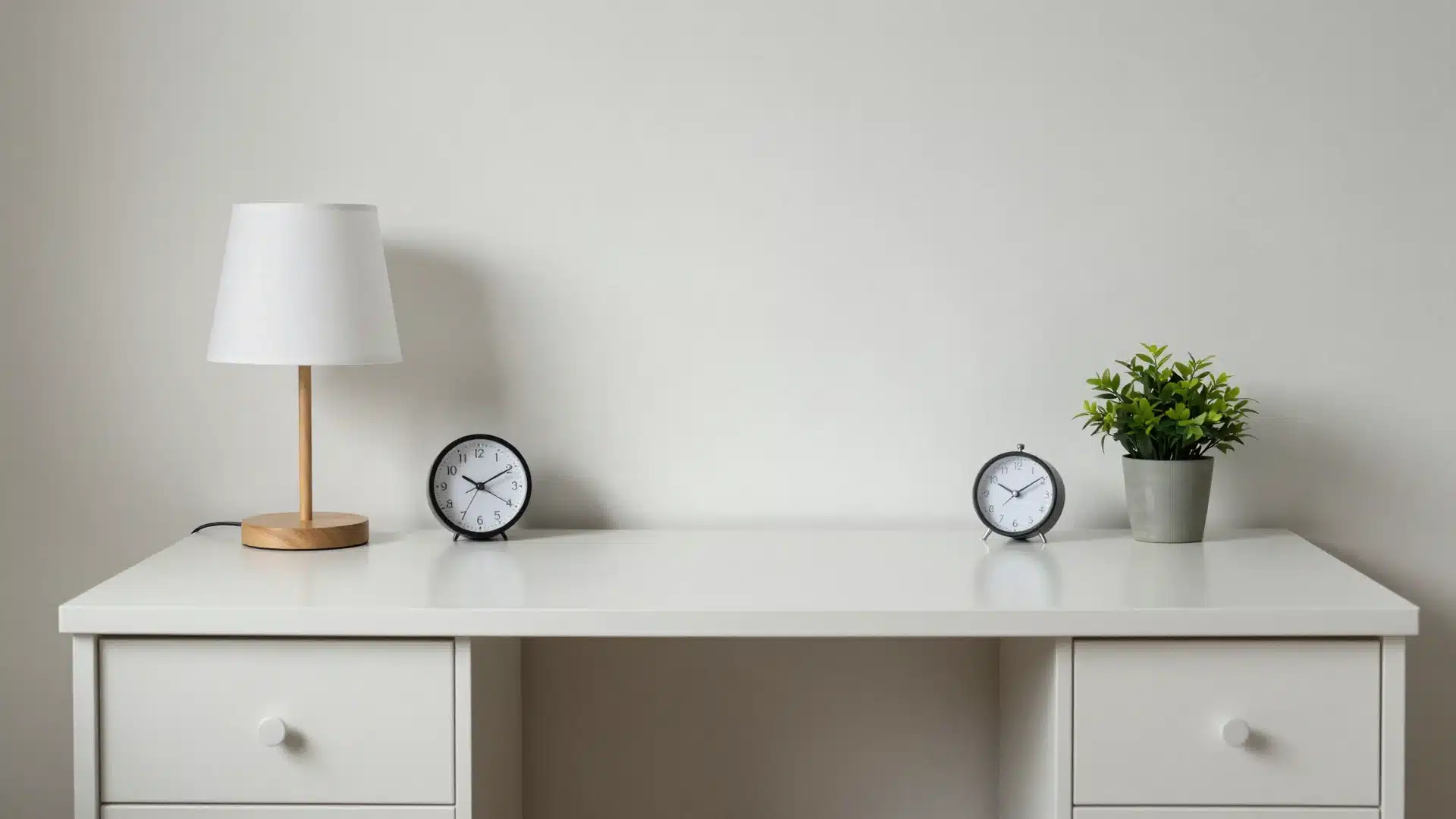
Alt Text: A minimalist desk with two clocks, a small lamp, and a potted plant, emphasizing a clean and tidy workspace.
Having too many items on your surfaces can make a room feel cluttered. Limit what you place on your desk, dresser, or nightstand to only the essentials, such as your lamp, a clock, or a few books. This makes your room look tidier and easier to clean.
Best for:
- Keeping your desk, nightstand, or dresser clutter-free
- Creating a minimalist look
- Making cleaning quicker and easier
Tip:
Use trays or bowls to collect small items like pens or jewelry on your surfaces.
9. Use Multi-Purpose Furniture
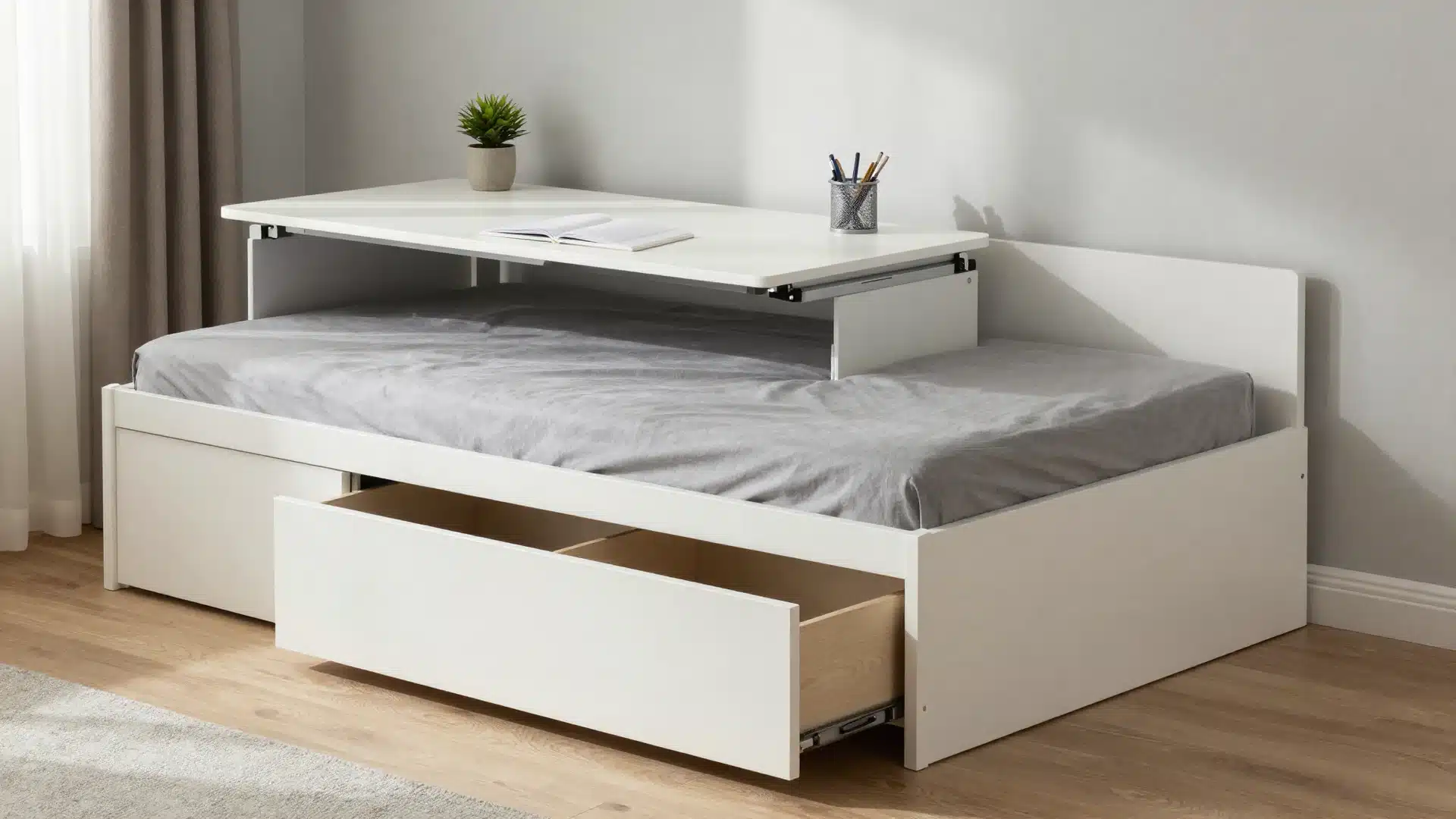
Alt Text: A modern bed with a built-in desk that can be raised, offering a space-saving solution with storage drawers beneath.
Multi-purpose furniture is an excellent way to save space and store more items. Pieces like a bed with built-in drawers or a desk that doubles as a vanity allow you to store things efficiently while keeping your room organized.
Best for:
- Small rooms that need to maximize storage
- Creating a functional yet stylish layout
- Storing things without taking up additional space
Tip:
Opt for a foldable desk or wall-mounted desk to save space when not in use.
10. Organize by Category
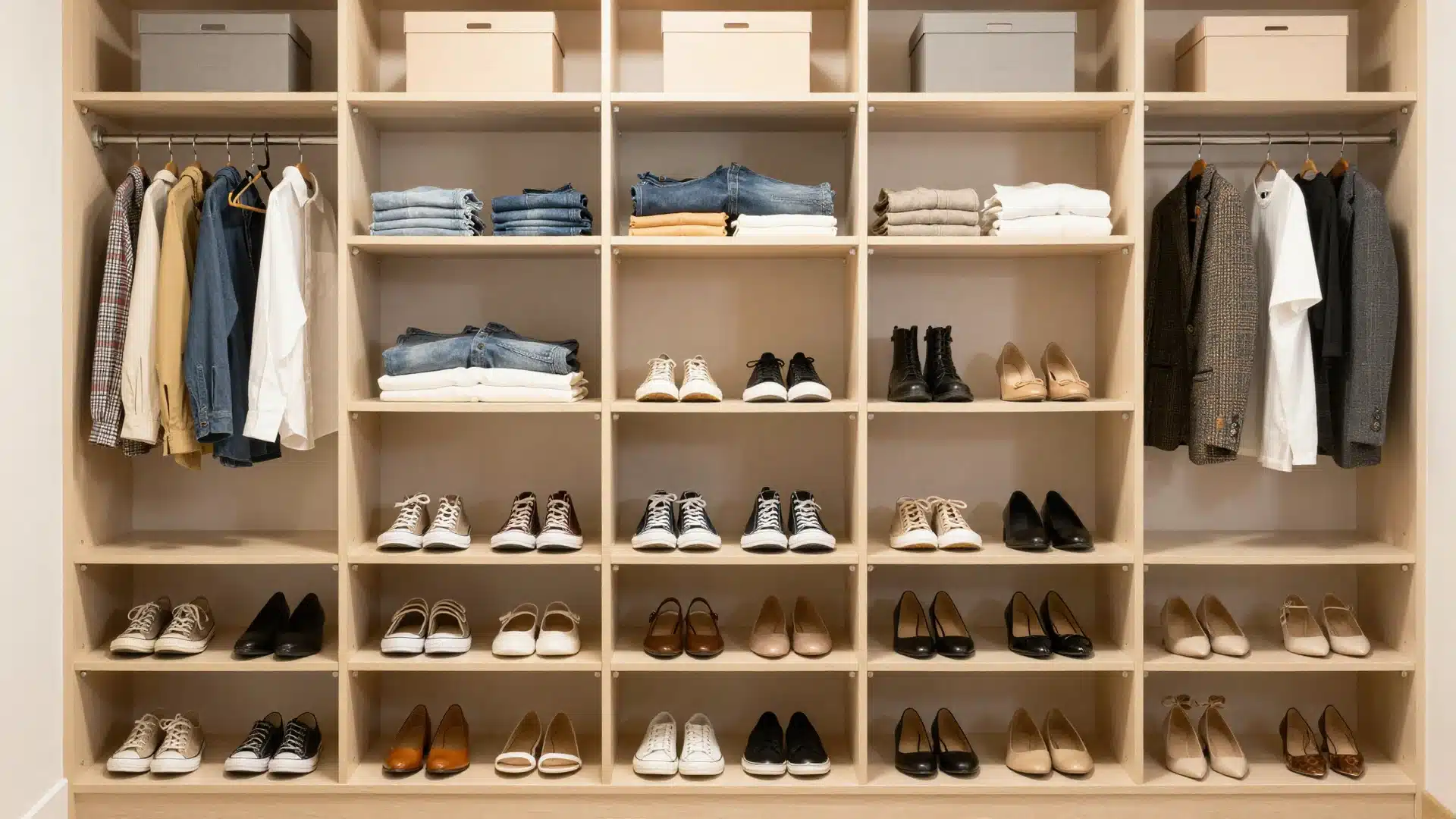
Alt Text: A well-organized closet with neatly arranged clothing and shoes, including shirts, jeans, sneakers, boots, and heels on shelves.
Grouping similar items together makes it easier to maintain order and find what you need quickly. By organizing books, clothes, and accessories by category, you can ensure everything has its place, making it easier to put things away.
Best for:
- Avoiding chaos by grouping similar items
- Quickly finding and accessing items
- Creating a clear system for organizing your space
Tip:
Use color-coordinated bins or labels to make organizing by category even easier.
11. Label Storage Boxes
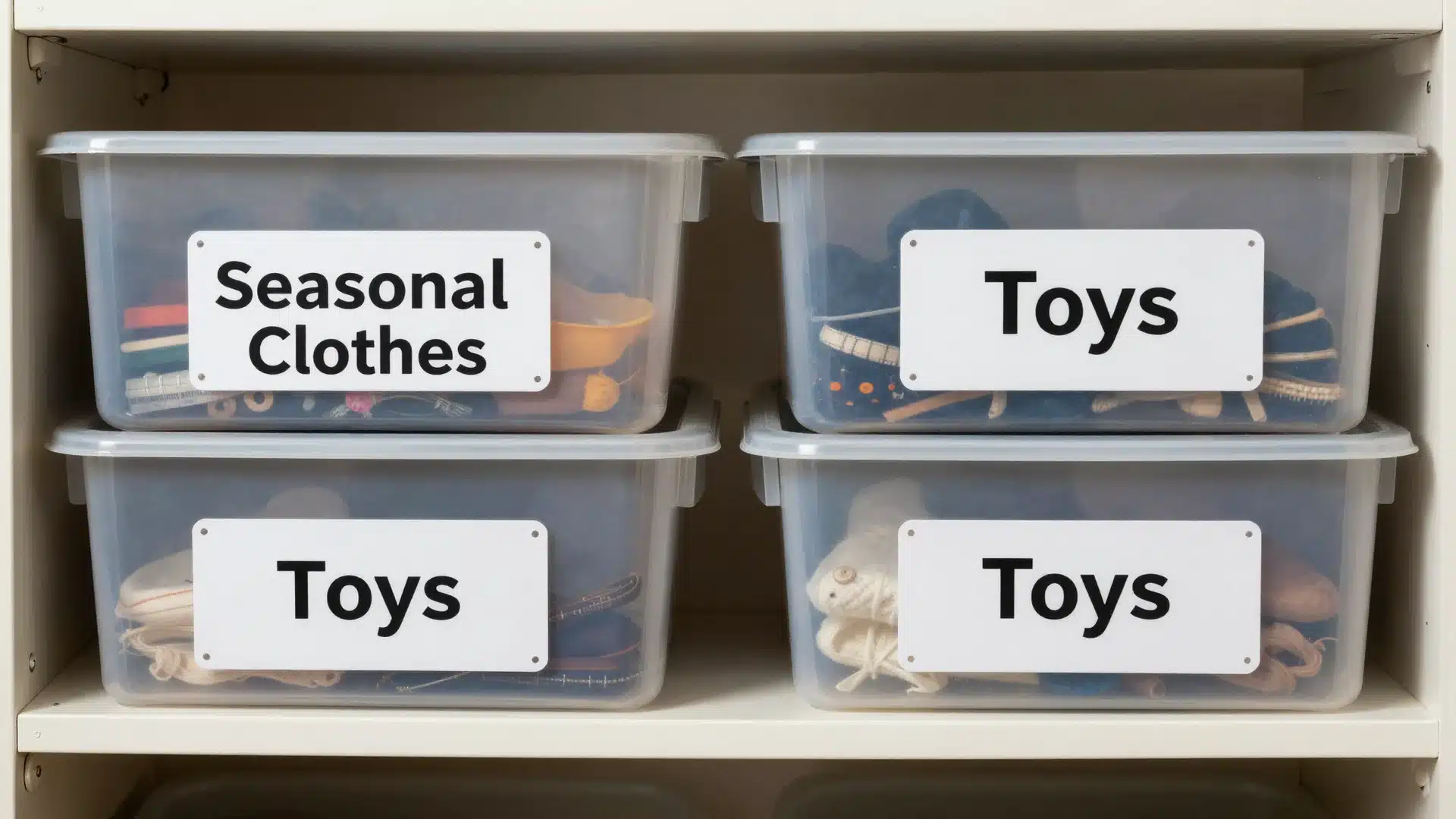
Alt Text: Clear storage bins labeled ‘Seasonal Clothes’ and ‘Toys’ filled with items, neatly arranged on a shelf.
Labeling your storage boxes not only makes it easy to identify the contents but also helps everyone in the house know where things belong. Whether you’re storing clothes or documents, labeled boxes keep your space tidy and organized.
Best for:
- Keeping track of items in bins or boxes
- Ensuring everything has a designated spot
- Preventing confusion when looking for something
Tip:
Use clear boxes for visibility and label them with large, easy-to-read tags.
Organizing Different Areas of Your Room
When it comes to organizing your room, breaking it down into individual areas can make the task feel much more manageable. Each part of your room serves a different purpose, so it’s important to organize them in a way that maximizes both function and flow.
- Bed Area: Keep only the essentials on your bed, such as a small lamp or alarm clock. Store extra pillows, blankets, or seasonal items in drawers or bins.
- Closet: Use slim hangers for clothing and consider using dividers or bins for shoes and accessories. Organize clothes by type or season to make getting dressed quicker.
- Desk: Limit the items on your desk to what you need daily. Use trays or organizers to keep pens, papers, and supplies in their place.
- Dresser: Fold clothes neatly and use drawer organizers to separate categories like underwear, socks, and accessories. Keep only daily essentials like skincare on top.
- Corners and Floor: Avoid cluttering corners with unnecessary items. Use baskets or floor storage to keep things tidy without overcrowding the space. Keep pathways clear for easy movement.
How to Keep Your Room Organized?
To keep your room organized, make it a habit to tidy up daily by putting things back in their designated spots.
Spend a few minutes each morning or evening resetting your space, and do a deeper clean weekly to maintain order. Regularly declutter and donate items you no longer use to avoid accumulation.
This consistent effort helps prevent messes and keeps your room looking neat without too much effort. Additionally, keep a designated place for everything, from clothing to gadgets, so you always know where things belong.
Over time, these small routines will become second nature, making it easier to maintain an organized environment.
The Bottom Line
By following these practical organizing tips, you can maintain a room that not only looks tidy but also feels organized and welcoming.
The goal is to make your space work for you, whether by using smart storage options or developing daily habits that keep clutter at bay.
Remember, consistency is key, by sticking to simple routines, you’ll keep your room neat and organized with minimal effort.
With a little time and focus, your room can become a more functional and peaceful retreat.