
Every child is good at something. The tricky part is knowing where to look. Some kids shine in the classroom. Others lead the lunch table. Some listen better than any adult in the room.
A child’s strengths are not just about grades or talent shows. They cover how your child thinks, feels, connects with others, and handles hard days.
Spotting those strengths early can change how your child sees themselves and how far they go.
This guide walks you through what those strengths are and how to support them.
What Are a Child’s Strengths?
A child’s strengths are the natural abilities, positive traits, and skills that help them learn, connect with others, and handle challenges in their everyday life.
They go well beyond report cards; strengths include how a child thinks, how they treat others, how they manage their feelings, and what lights them up.
Every child has a set of strengths. Some are easy to spot right away. Others take a little more time and attention to notice.
Types of Strengths in Children
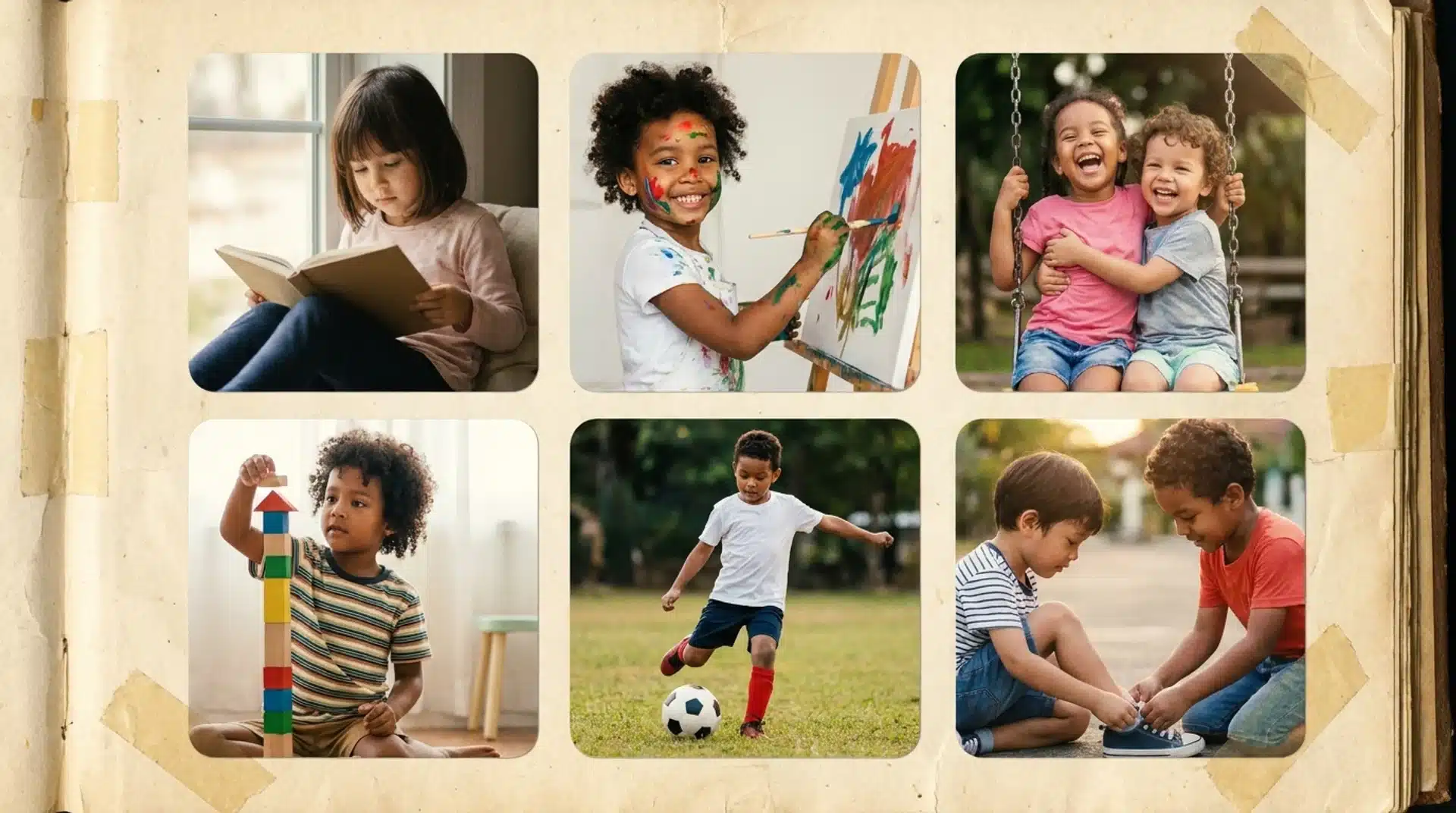
Alt Text: A collage of six photos showing children reading, painting, hugging, building blocks, playing soccer, and tying shoes.
Children carry more strengths than we often give them credit for. Understanding the different types helps you see the full picture of who your child really is.
1. Cognitive Strengths
Cognitive strengths are about how a child thinks and processes information. Organizational skills, memory, attention to detail, and study skills all fall under this category.
A child with strong cognitive strengths might remember facts quickly, stay focused on a task, or figure out solutions to problems before others do.
2. Emotional Strengths
Emotional strengths cover how a child understands and manages their own feelings. This includes empathy, self-awareness, and the ability to stay calm when things get hard.
A child’s emotional strengths also shape the kind of learning environment where they do their best work. These strengths go hand in hand with communication skills and other personal qualities that matter both in school and in life.
If you want to go deeper on this, we have a full guide on the emotional strengths of a child and practical ways to build them at home.
3. Social Strengths
Social strengths show up in how a child relates to other people. Kids with strong social skills are good at working in groups, listening well, and handling conflict without making it worse.
Even in early childhood, developing social skills has a lasting effect on how a child builds relationships as they grow up. Leadership ability also fits here, and it is worth watching for early.
4. Creative Strengths
Creative strengths are about thinking in fresh ways and expressing ideas through art, music, writing, or building things.
Many children use creativity and imagination to approach problems from angles others miss. Drawing, storytelling, drama, or designing something new are all signs of a strong creative mind.
5. Academic Strengths
Academic strengths are the skills that help a child do well in a school setting. Reading comprehension, clear writing, vocabulary, research skills, and memory for facts all belong here.
A child with academic strengths often enjoys learning new things and asks thoughtful questions to go deeper.
6. Character Strengths
Character strengths are the personal values that guide how a child treats others and handles situations. Honesty, kindness, perseverance, curiosity, and bravery are all examples.
The VIA Character Strengths framework, developed by researchers Martin Seligman and Christopher Peterson, identifies 24 such values, and there is a free survey families can use to find out which ones are strongest in their child.
7. Physical Strengths
Physical strengths cover body awareness, coordination, and physical ability. Running, climbing, dancing, or carefully cutting and building with small materials are all physical strengths.
Play that gets children moving also builds muscle control, balance, and body confidence.
8. Leadership Strengths
Some children naturally step into a leading role, they guide group play, speak up for others, and make decisions with confidence.
Leadership strengths are worth spotting early because they grow well with the right encouragement and often carry into adult life.
How to Identify Your Child’s Strengths
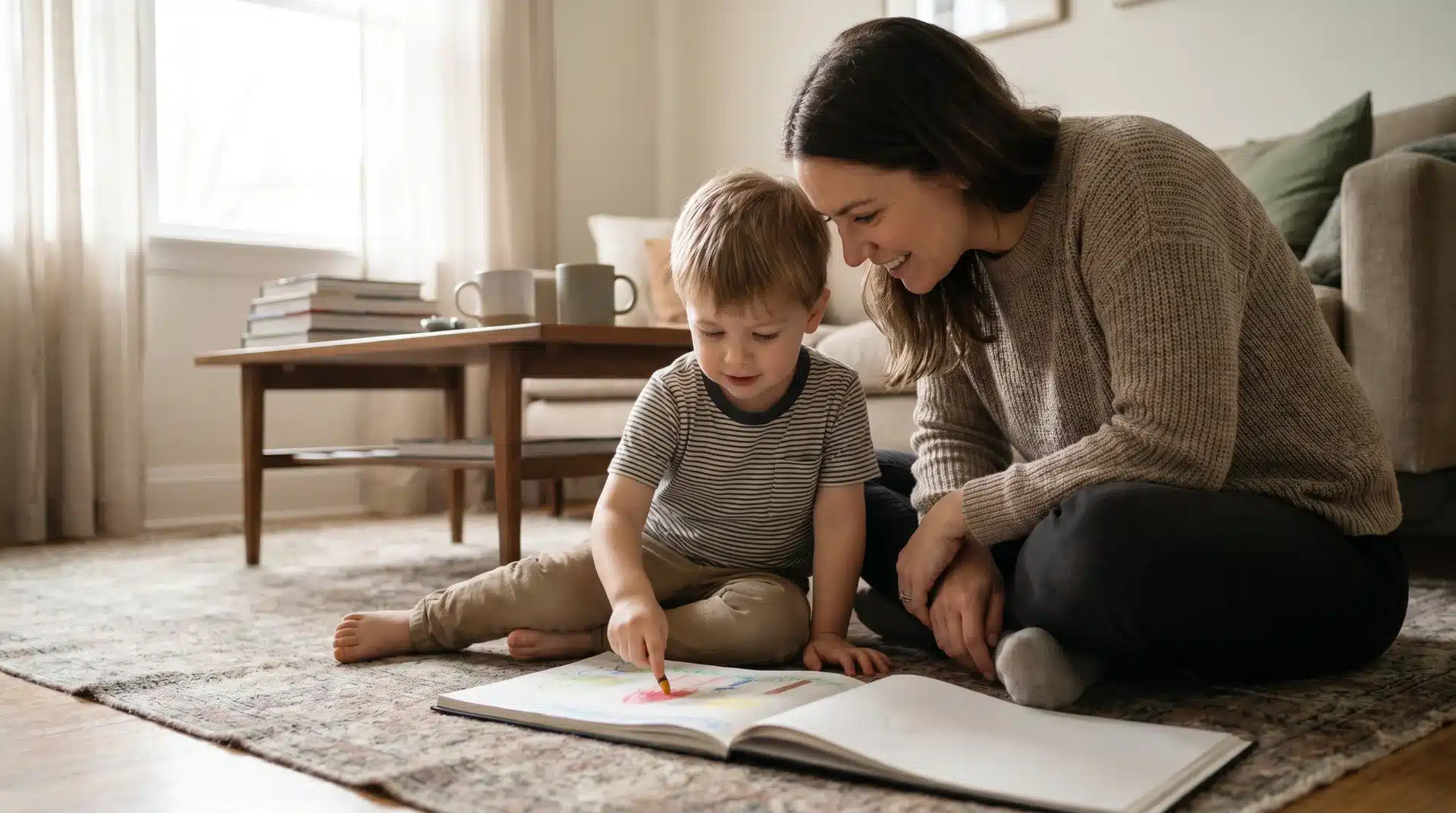
Alt Text: A mother and her young son sit on the floor of a bright living room, smiling as they look at a large open picture book.
Finding your child’s strengths does not require a formal test or a specialist. There are practical, everyday ways to start seeing what your child does best.
1. Watch How They Spend Free Time
What a child does when no one tells them what to do is often where their strongest interests live. Pay attention to what activities your child returns to on their own, that pull is usually a clue about a real strength.
2. Talk to Their Teacher
Teachers spend hours each week with your child and often notice things parents miss at home. Ask specific questions, like where your child seems most confident or what they do well without being prompted.
3. Use a Strengths Checklist
A simple checklist can help you spot strengths that are easy to overlook. Some strengths, like being a good listener or working well in a group, rarely get the attention they deserve. Going through a list together with your child also opens up a good conversation.
4. Try a Strengths Assessment
Tools like the free VIA Character Strengths Survey or the HIGH5 Strengths Assessment offer a more structured way to see a child’s strengths. Researcher Lea Waters, author of The Strength Switch, found that children who know their own strengths tend to have stronger self-worth and handle setbacks better.
5. Keep a Strength Journal
Write down small wins you notice each week. Over time, patterns show up clearly, and you start to see which strengths come up again and again in different situations.
How to Support and Build Child’s Strengths at Home
Noticing a strength is only the first step. What you do with that information at home makes the real difference.
- Praise the effort, not just the result. Acknowledge what your child does well as it happens, rather than only focusing on outcomes.
- Match activities to their strengths. If your child is strong in logic, try games and puzzles that challenge their reasoning. If they are social, involve them in group activities like team sports or cooperative projects.
- Build emotional strengths through daily habits. Simple practices like journaling, mindfulness, or doing small acts of kindness help children grow their emotional skills over time.
- Talk about strengths openly. Ask your child what felt easy today or what made them feel good about themselves. Regular, casual conversations build self-awareness.
- Try a “strengths chain” activity. Write each strength on a paper strip and link them into a chain. It gives children a hands-on way to see how many strengths they actually have.
- Celebrate small wins. Start with one strength at a time. Name it out loud. That simple act of recognition builds confidence faster than any reward.
Strengths in Children with Learning Differences
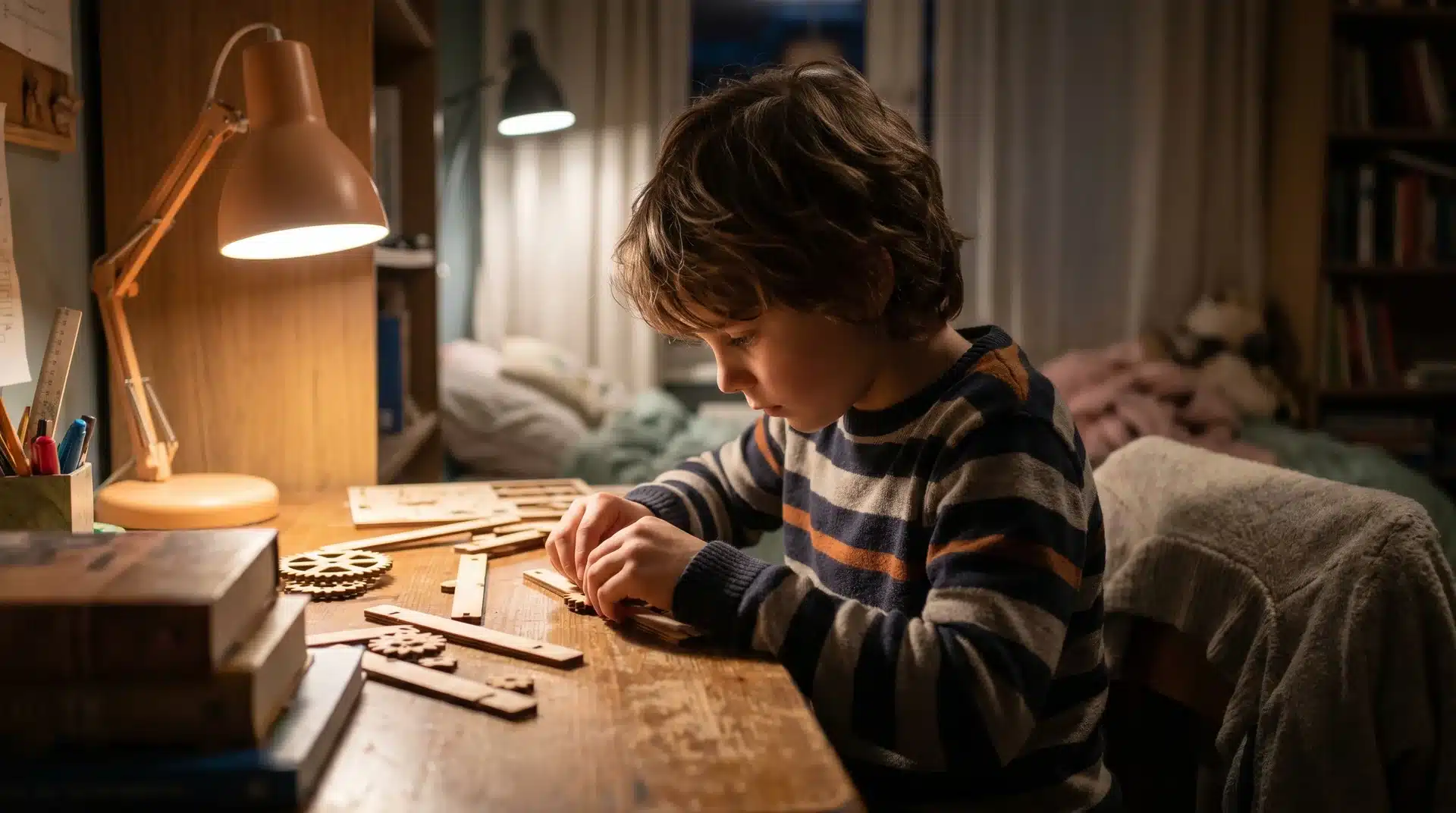
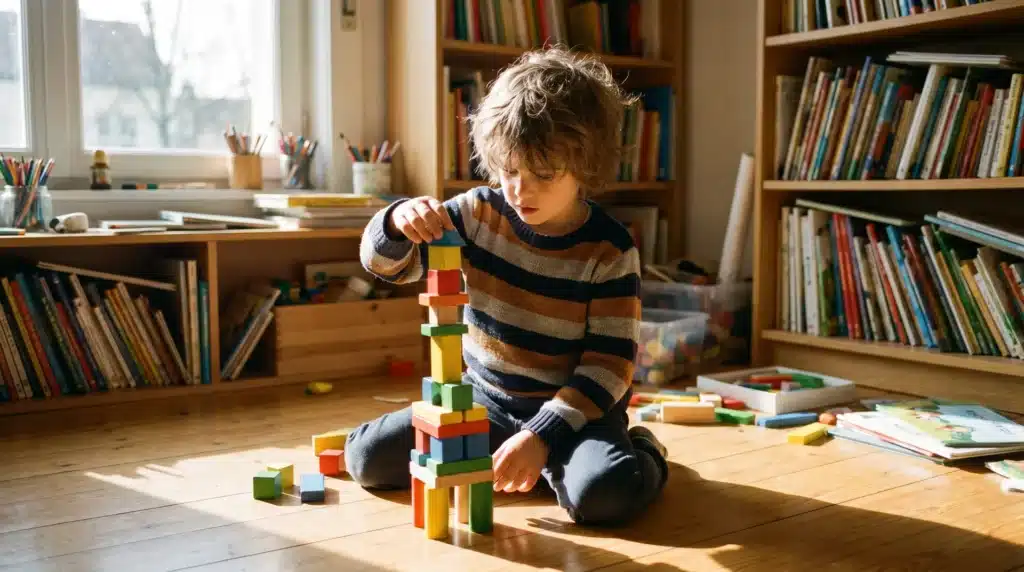
Alt Text: A young boy sits at a wooden desk in a dimly lit room, intently assembling a project with small wooden pieces under a desk lamp.
Children who learn differently often have strengths that go unnoticed because the focus stays on what is hard for them. Shifting that view changes what is possible.
| Learning Difference | Common Strengths Often Seen |
|---|---|
| ADHD | High energy, ability to hyperfocus, creativity, willingness to help others, agreeableness |
| Dyslexia | Strong storytelling, creative thinking, spatial reasoning, big-picture thinking |
| Autism Spectrum | Deep focus on areas of interest, honesty, strong memory for specific subjects, attention to detail |
| Anxiety | Empathy, thoroughness, strong preparation habits, sensitivity to others’ feelings |
| Sensory Processing Differences | Strong observational skills, deep awareness of environment, creativity |
Even children going through stress or adjustment can show real strengths, resilience, problem-solving, and emotional attunement among them. A strengths-based view is not about ignoring real challenges. It is about making sure the challenges do not become the only story.
How Educators Can Use a Strengths-Based Approach in the Classroom
A strengths-based classroom focuses on what students do well, not only on where they fall short. Teachers who acknowledge student strengths out loud help children feel seen and valued, and that feeling has a direct effect on engagement and confidence.
Research shows that when teachers build positive mindset skills like optimism and gratitude into classroom practice, students show measurable drops in anxiety and increases in self-esteem over time.
Practical steps are simple: use assessments to highlight what a student can do, use inclusive language, and create space for different kinds of strengths to be recognized, not just academic ones.
Wrapping It Up
A child’s strengths are not always loud or obvious. Some show up as a quiet kid who always knows what to say when a friend is upset. Others appear in the child who builds something new every afternoon.
The goal is not to find one big strength and run with it. It is to keep looking, keep naming what you see, and let your child know you see them clearly. Strengths grow when someone pays attention to them.
Start small, stay consistent, and watch what happens when a child finally knows what they are good at.
Frequently Asked Questions
What Are My Child’s Strengths?
Your child’s strengths are the natural traits and abilities they use consistently, things like memory, creativity, empathy, or the way they handle people.
What Are Character Strengths for Kids?
Character strengths are personal values like kindness, honesty, curiosity, and bravery that shape how a child treats others and responds to hard situations.
What Are 5 Examples of Strengths?
Five common kids’ strengths are strong memory, empathy, creativity in problem-solving, good listening skills, and the ability to stay focused.
What Can I Say for My Child’s Strengths?
Name what you actually see: “You are really good at figuring things out on your own” works better than general praise.