


Telling your kids about divorce may be one of the hardest conversations you will ever have. You want to be honest. You want to be kind. And you absolutely do not want to say the wrong thing.
Most parents spend months working through the legal side of divorce, yet very few think ahead about what to actually say to their children. The result? A rushed, tearful conversation with no plan.
This guide gives you clear, research-backed ways to talk to kids about divorce, including what to say at each age, what to avoid, and what to do in the weeks and months that follow.
Why the Conversation Matters More Than You Think
When children are not told the truth, they fill in the gaps themselves. And what they imagine is almost always worse than the reality.
A child of divorce who receives a calm, clear explanation from both parents adjusts far better than one left to guess.
The first conversation does not have to be perfect. It just has to be honest, age-appropriate, and kind.
9 Ways to Talk to Kids About Divorce
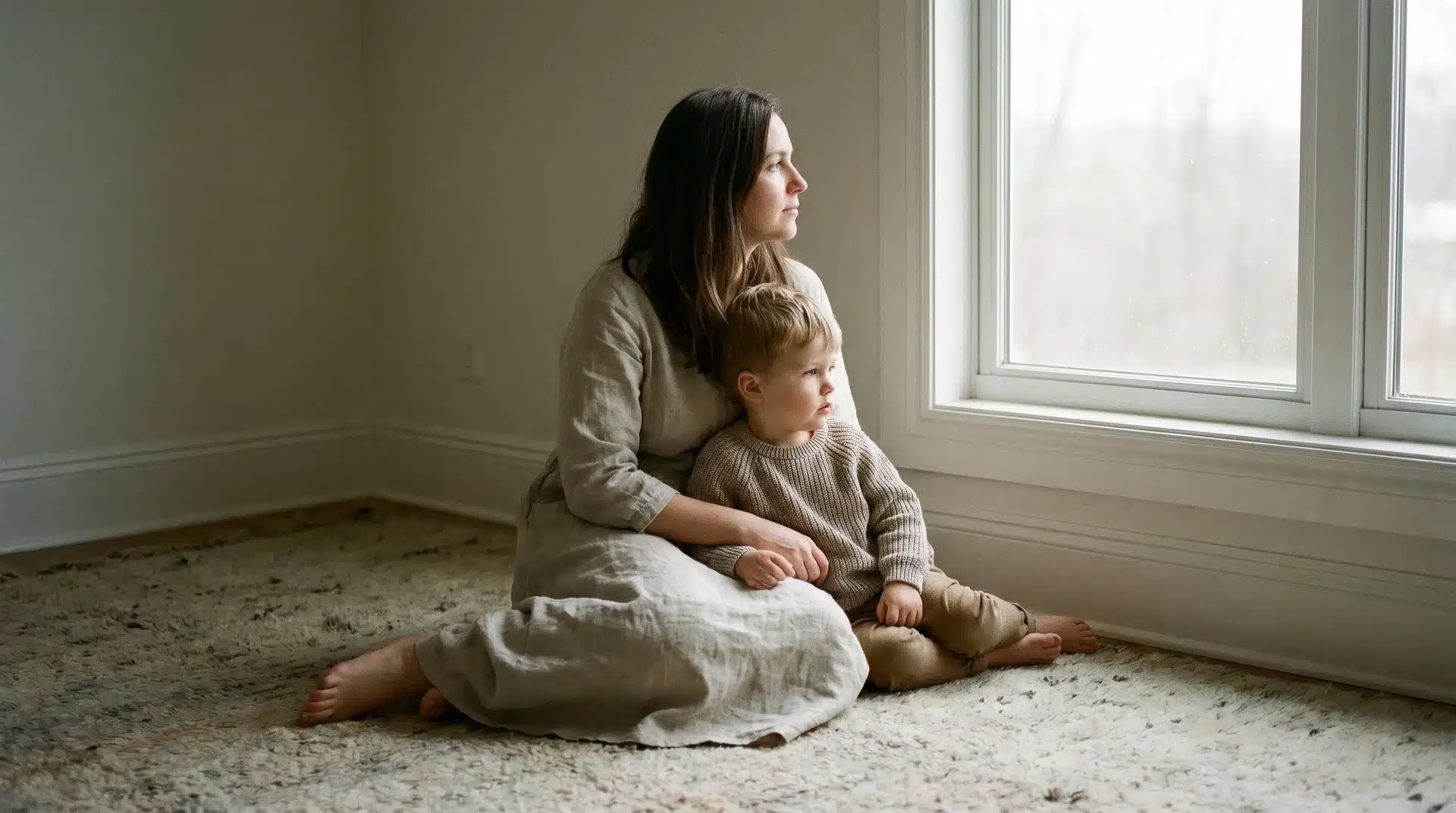
Alt Text: A mother sitting on a rug and holding her young child while they both look out of a window in a softly lit room.
Every parent wants to get this right. Here are nine ways that child development experts and family therapists consistently point to as the most effective.
1. Choose the Right Time and Place
Do not tell your children right before school, at bedtime, or during a holiday. Pick a calm morning or a quiet afternoon at home, when no one needs to leave, and there is space to react.
Give yourself a few hours after the conversation. Kids will have questions. They need time to feel things, ask things, and sit with them.
2. Tell Them Together as a Family
A united conversation gives children one clear, consistent message. When both parents sit down together, it signals to them that you are still a team, even if you are no longer a couple.
If sitting together is not possible because of high conflict, agree on the exact key points beforehand and use the same words. Inconsistent stories create confusion and fear.
3. Use Age-Appropriate Language
A five-year-old and a fourteen-year-old need very different explanations. For young children, keep sentences short and concrete: where they will live and that both parents still love them.
For school-age kids, address the practical things like school and routines. For teenagers, be more direct, acknowledge their emotions, and give them some say in how day-to-day life is structured. The goal is not to share everything but to share enough.
4. Be Honest Without Oversharing
Use the actual word “divorce” with older children. Vague language like “we are taking a break” creates false hope and more anxiety. At the same time, honesty does not mean sharing adult details.
Financial problems, infidelity, or legal disputes have no place in this conversation. One clear, simple sentence about what is happening is worth more than five confusing ones.
5. Tell Them It Is Not Their Fault
This is the single most important thing to say. Children between the ages of five and ten naturally think they are the center of everything.
Many will quietly connect a recent argument or bad behavior to the divorce. Say it directly: “This is not because of anything you did.”
Then say it again in follow-up conversations. A single mention is not enough. Kids need to hear it more than once before it truly lands.
6. Let Them Ask Questions
After you say what needs to be said, pause. Let the silence sit. Some children go very quiet. That is normal. They are taking it in. Let them know they can ask anything, even hard questions.
And when you do not yet have an answer, say so: “We are still working that out. We will tell you as soon as we know.” An honest “I don’t know” is better than a promise you cannot keep.
The way you respond to your child in these moments reflects the kind of connected parenting that also sits at the heart of gentle parenting.
7. Keep Their Routine Steady After the Talk
A child of divorce loses a sense of control over their world. Familiar routines, the same bedtime, the same school, and the same meals become emotional anchors.
Child therapists consistently identify a stable routine as one of the strongest protective factors for children during family change.
Do not overcompensate with late nights, extra treats, or looser rules. That signals to children that something is very wrong.
8. Watch for Signs They Are Struggling
Some reactions are normal in the first few weeks: crying, clinginess, repeating the same questions, and a shorter temper.
But if your child withdraws from friends or activities for more than a few weeks, drops significantly in school, or starts regressing (bed-wetting in younger children, baby talk, sleep problems that continue for over a month), those are signs worth paying attention to.
Keeping the conversation open is more useful than daily check-ins. A simple “How are you doing with everything?” once a week is enough.
9. Keep the Conversation Going Over Time
This is not a one-time talk. Children process divorce in stages as they grow. The same child will understand it very differently at age seven than at age twelve.
Make space for the topic to come up naturally, during car rides, quiet evenings, or regular check-ins.
Life events like birthdays, holidays, starting a new school, or seeing a parent in a new relationship can bring old feelings back to the surface. Let that happen. Be available when it does.
What Parents Get Wrong When Talking to Kids About Divorce
- Even well-meaning parents make mistakes here. These are the ones that come up most often.
- Waiting too long before telling the kids, children sense tension well before the conversation happens, and silence makes their fear worse.
- Telling the children separately, which leads to two different stories and creates more confusion.
- Sharing adult details like financial disputes, legal conflict, or the reasons the marriage broke down.
- Speaking negatively about the other parent, even once. Children hear criticism of a parent as criticism of part of themselves.
- Making promises about things that are not yet settled, like “nothing will change” or “you will still see Dad every weekend,” when the arrangement is still being worked out.
- Treating the conversation as a single event that is now done, when children need ongoing reassurance over months and years.
- Misreading silence as being okay. Quiet children often need just as much support as those who cry or ask questions out loud.
When to Bring in a Therapist or Counselor?

Alt Text: A calm, sunlit therapy room for children featuring a comfortable armchair, a soft rug, and toys on low wooden shelves.
You do not need to wait for a crisis before reaching out for professional support.
A child therapist who works with family change can give your child a safe place to say things they may not feel comfortable saying to either parent.
Starting early, before problems become serious, is almost always easier for the child. Many school counselors are also trained in family change and can be a low-barrier first step.
Seeking outside help is not a sign that you failed. It means you are paying close attention.
Conclusion
Learning how to talk to kids about divorce is not about finding the perfect words. It is about showing up honestly, staying calm, and keeping the lines of communication open long after that first conversation.
A child of divorce who is heard, reassured, and kept informed of what is actually changing will cope far better than one left to figure things out alone.
The ways covered in this post give you a real starting point. Take what fits your family, adjust what you need to, and remember that your willingness to keep talking matters more than getting every sentence right.
Have questions or something to add from your own experience? Share it in the comments below.
Frequently Asked Questions
What Is the Hardest Age for a Child in a Divorce?
Ages six to twelve tend to be the most difficult, as children this age are old enough to understand what is happening but not yet equipped to process it emotionally.
What Is the 7-7-7 Rule of Parenting?
The 7-7-7 rule suggests that parents check in with their child every 7 days, 7 weeks, and 7 months after a major life change to monitor how they are adjusting.
What Is the 10-10-10 Rule for Kids?
The 10-10-10 rule asks parents to consider how a decision will affect their child in ten minutes, ten months, and ten years, helping them think beyond the immediate reaction.
What Are the Three C’s of Divorce?
The three C’s are communication, consistency, and cooperation, referring to what both parents need to maintain for children to adjust well after a divorce.
What Is the Number One Predictor of Divorce?
According to research by Dr. John Gottman, contempt in a relationship, which includes eye-rolling, belittling, and disrespect, is the strongest single predictor of divorce.