
Most of us know Earth as the planet we live on. We know it has oceans, mountains, and a moon. But the real facts about Earth go much deeper than that.
Our planet is 4.6 billion years old. It has survived meteor storms, mass extinctions, and ice ages. And it still keeps going.
This list of interesting facts about Earth covers five big areas: space, structure, atmosphere, oceans, and life on land. Some of these facts will feel familiar.
Others will make you stop and think twice about the ground beneath your feet. Read on.
101 Interesting Facts About Earth You Never Knew
From deep-sea wonders to cosmic secrets, Earth is full of surprises. Let’s dip into fascinating facts that will change the way you see our planet.
Earth’s Place in Space
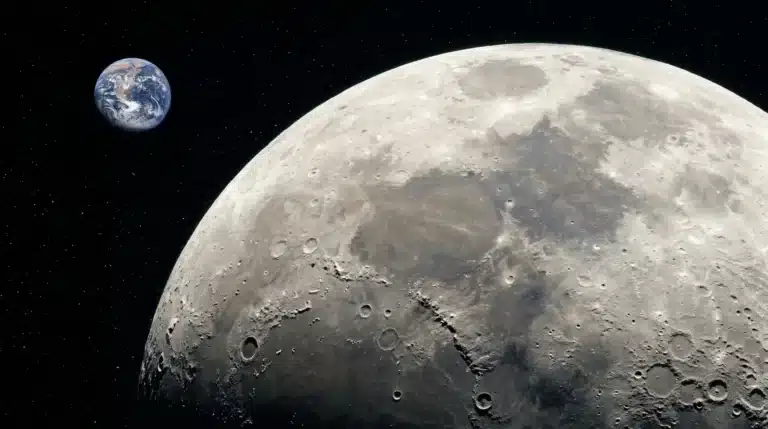
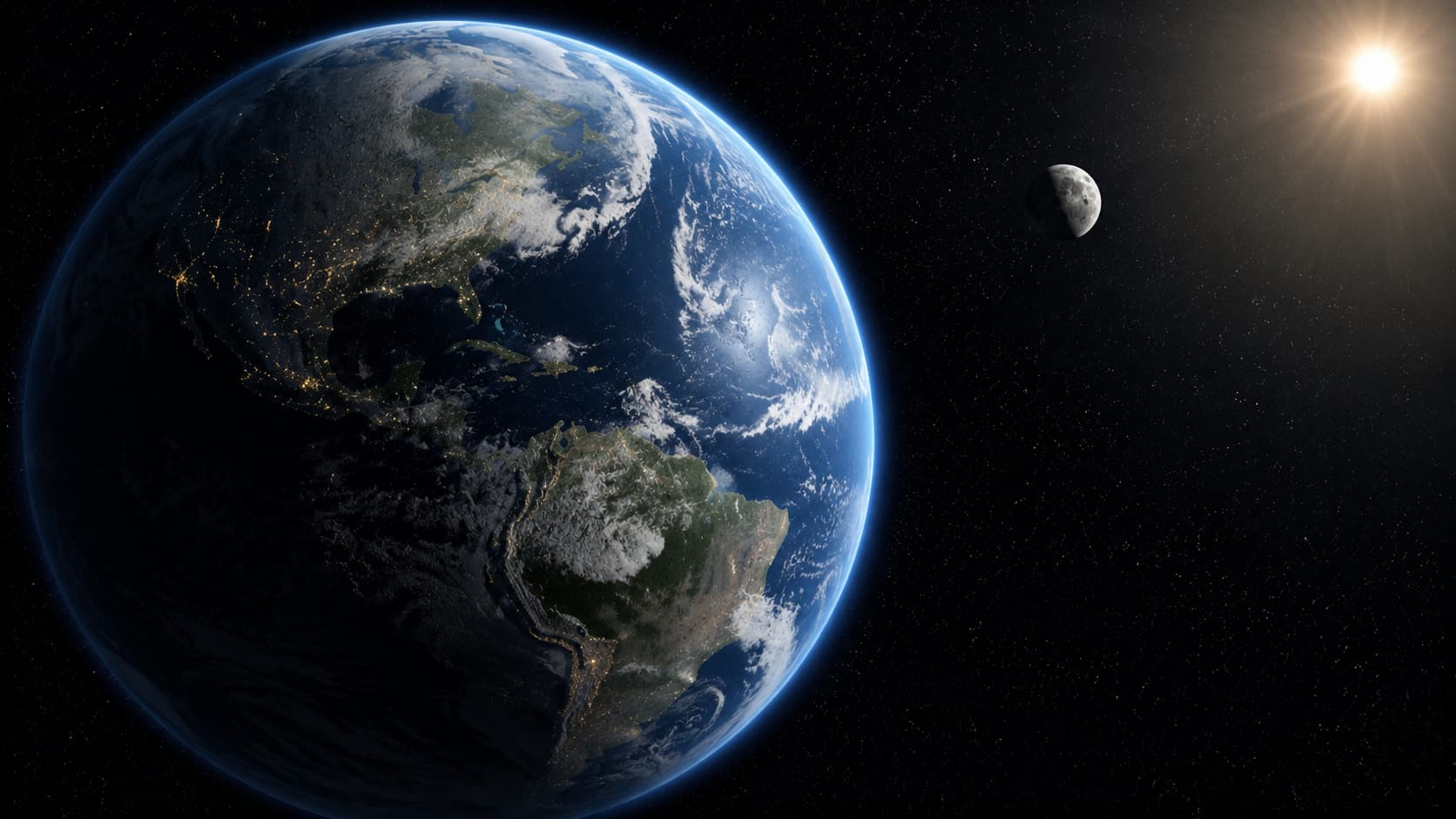 Alt Text: A high-angle view of Earth from space, showing a mix of blue oceans, white clouds, and the dark shadow of night, with the Moon visible in the distance. Before we look inward, let us look outward. Earth’s position in space is anything but ordinary. These cool facts about Earth and the cosmos put our planet’s size, speed, and location into real perspective.
1. Earth is the third planet from the Sun, sitting between Venus and Mars.
2. It is the fifth-largest planet in the entire solar system.
3. Earth’s radius measures 3,959 miles or 6,371 kilometers.
4. Among the four rocky planets, Earth is the largest. Mercury, Venus, Mars, and Earth make up this group.
5. Earth’s equatorial diameter is 7,926 miles, which equals about 12,756 kilometers.
6. Earth sits 93 million miles from the Sun. Scientists call this distance one astronomical unit, or AU.
7. Light from the Sun takes 8 minutes and 20 seconds to reach Earth’s surface.
8. When Earth first formed, the Sun was about 30% less bright than it is today.
9. Earth moves around the Sun at roughly 67,000 miles per hour. That is about 18.5 miles every second.
10. One full orbit around the Sun takes 365.26 days. That extra 0.26 is why we have a leap year every four years.
11. Earth completes one full spin on its axis every 23 hours, 56 minutes, and 4 seconds.
12. Earth’s axis tilts at 23.5 degrees relative to its orbit. This tilt gives us the four seasons.
13. At the equator, Earth’s surface moves at close to 1,000 miles per hour because of the planet’s spin.
14. Earth is not a perfect sphere. It bulges slightly at the equator. Scientists call this shape a geoid.
15. Gravity is not the same everywhere on Earth. In Peru, it measures 9.764 m/s². In the Arctic, it measures 9.834 m/s².
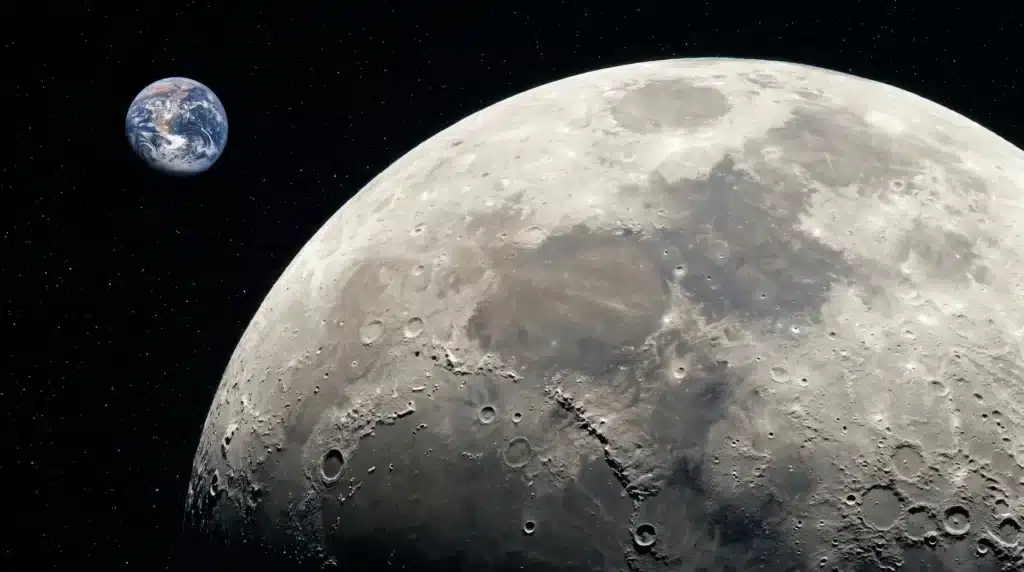
16. The Moon formed roughly 4.5 billion years ago when a Mars-sized body crashed into early Earth and flung material into orbit.
17. Before the Moon formed, Earth spun about three times faster than it does today. The Moon’s gravity gradually slowed things down.
18. The Moon has no tectonic activity, so impact craters from billions of years ago are still clearly visible on its surface.
19. Earth belongs to the Milky Way galaxy, which holds over 200 billion stars.
20. A supermassive black hole sits at the center of the Milky Way galaxy.
What’s Inside Earth
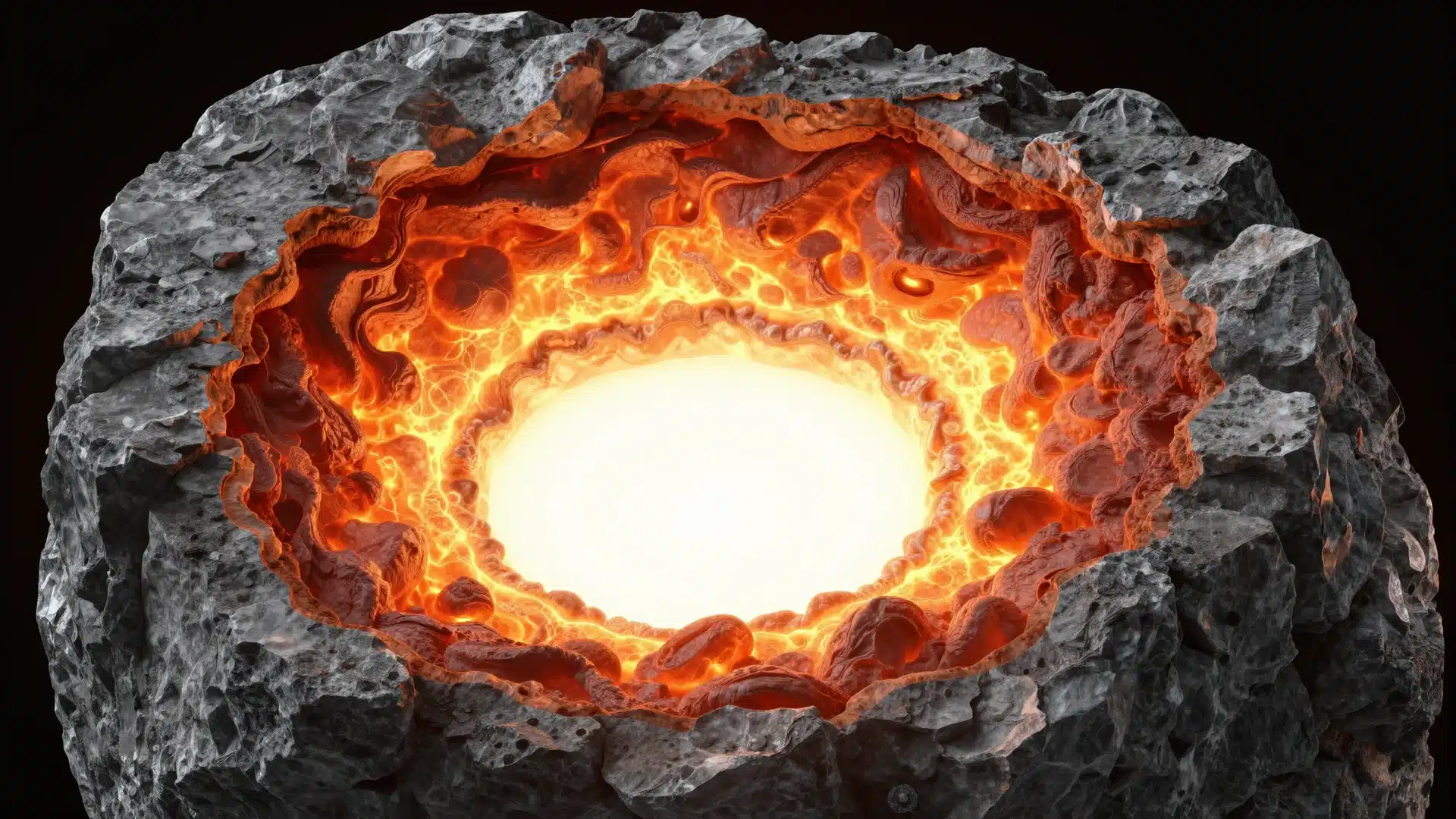
Alt Text: A cross-section of Earth revealing its interior layers, with a glowing, molten core surrounded by rocky mantle and a thin outer crust.
Nobody has ever drilled all the way through Earth. Scientists study its interior by tracking earthquake waves as they pass through rock and metal at different depths. What they have found is genuinely hard to wrap your head around.
21. Earth has three main layers: the crust, the mantle, and the core.
22. The crust is the outermost layer. On land, it averages about 19 miles (30 kilometers) thick.
23. Under the ocean, the crust is far thinner, just about 3 miles or 5 kilometers deep.
24. The mantle sits between the crust and the core. It is roughly 1,800 miles thick and has a texture similar to very thick caramel.
25. The outer core is liquid metal. The inner core is solid iron, kept solid by the immense pressure around it.
26. Earth’s inner core sits between 5,150 and 6,370 kilometers below the surface.
27. The temperature at Earth’s inner core reaches an estimated 10,800 degrees Fahrenheit. That is close to the surface temperature of the Sun.
28. Earth’s magnetic field is created by the movement of liquid iron in the outer core. Without it, harmful solar radiation would reach the surface directly.
29. Earth’s crust is broken into about seven major tectonic plates and several smaller ones. These plates float on the softer mantle below.
30. Tectonic plates move at roughly the same pace as fingernails grow, about 2 to 4 inches per year.
31. The Pacific Plate is the largest tectonic plate on Earth’s surface.
32. The Juan de Fuca Plate, located off the coast of the Pacific Northwest, is one of the smallest tectonic plates.
33. All of today’s continents were once joined in a single supercontinent called Pangaea. It started breaking apart roughly 175 million years ago.
34. Alfred Wegener first proposed the theory of continental drift in 1912. The scientific community rejected it for decades before it was confirmed.
35. Most of Earth’s volcanoes are hidden under the ocean. They form along the boundaries where tectonic plates meet.
36. The Pacific Ring of Fire is the most volcanically and seismically active zone on Earth. It encircles much of the Pacific Ocean.
37. Earthquakes happen when tectonic plates grind against each other, collide head-on, or pull apart.
38. Scientists study Earth’s interior using seismic waves from earthquakes. Different wave types travel at different speeds through solid rock versus liquid material.
39. Earth formed about 4.6 billion years ago from a swirling cloud of gas and dust left over from the young Sun.
40. In its earliest years, Earth was covered in molten rock and hit by constant meteor impacts. Scientists call this violent period the Late Heavy Bombardment.
Earth’s Atmosphere and Weather
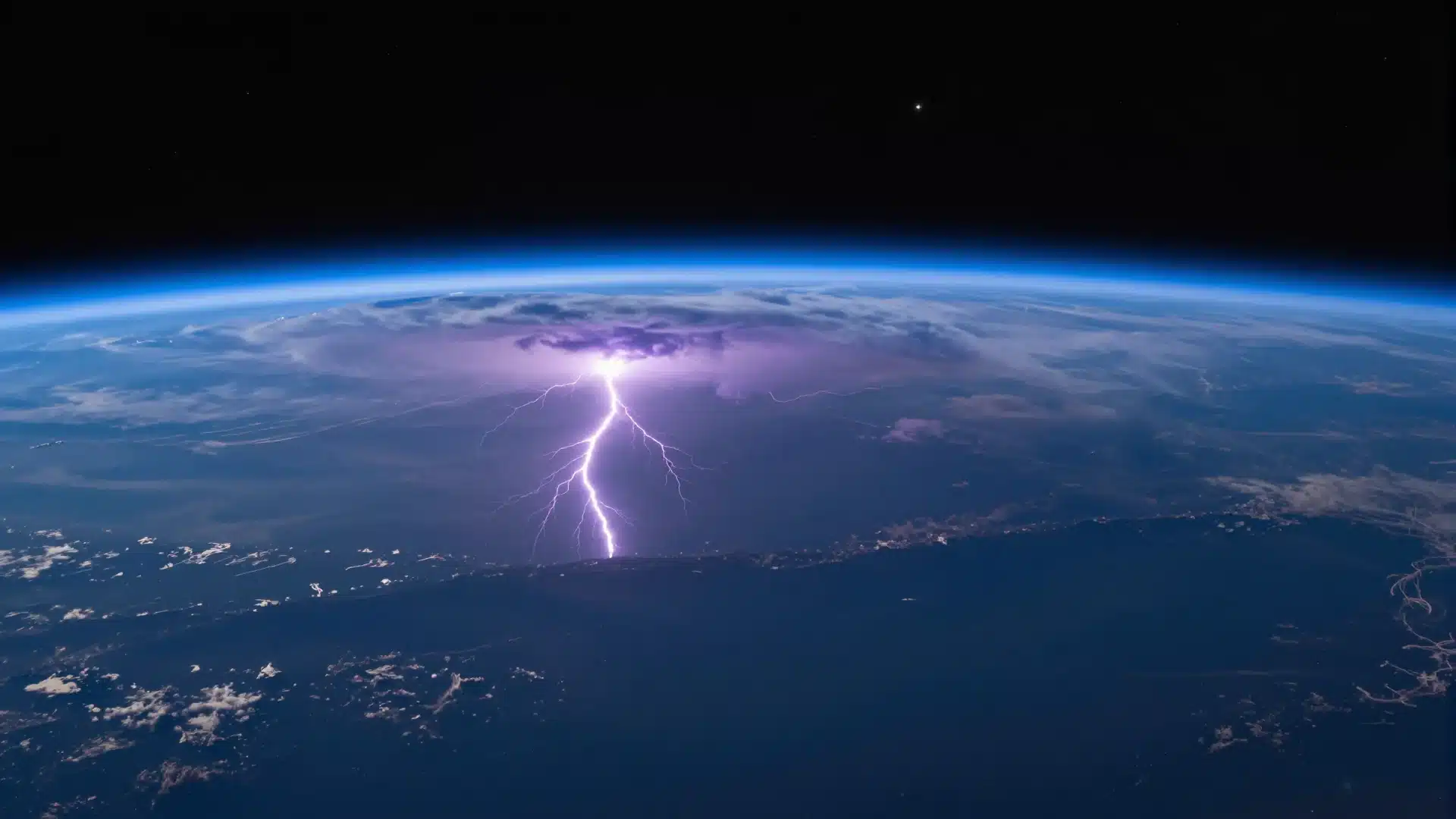
Alt Text: A view from space showing Earth’s thin, glowing blue atmosphere with a bright lightning strike illuminating the night clouds below.
The thin layer of gas around our planet does far more than let us breathe. It controls our climate, shields us from radiation, and creates every storm, rainbow, and sunset we have ever seen. These facts about Earth’s atmosphere are worth knowing.
41. Earth’s atmosphere is made of roughly 78% nitrogen and 21% oxygen. The remaining 1% includes argon, carbon dioxide, and trace gases.
42. Earth’s early atmosphere was almost entirely carbon dioxide. There was no free oxygen at all.
43. Plants changed the atmosphere completely. Over billions of years, photosynthesis pumped oxygen into the air while pulling carbon dioxide out.
44. Earth’s atmosphere has five layers: the troposphere, stratosphere, mesosphere, thermosphere, and exosphere.
45. The troposphere is the lowest layer. It accounts for about 80% of the atmosphere’s total mass and is where all weather occurs.
46. Temperature in the troposphere drops by 6.5 degrees Celsius for every kilometer you rise. At the top of this layer, it reaches minus 55 degrees Celsius.
47. The stratosphere contains the ozone layer, which absorbs most of the Sun’s harmful ultraviolet rays before they reach the ground.
48. Most meteors burn up in the mesosphere before they can reach Earth’s surface. When you see a shooting star, you are watching this happen.
49. The exosphere is the outermost layer of the atmosphere. It extends about 6,200 miles outward, nearly as wide as Earth itself.
50. The Northern Lights, also called Aurora Borealis, form in the thermosphere when charged particles from the Sun hit the upper atmosphere near the poles.
51. Earth’s magnetic field deflects most of the Sun’s harmful radiation away from the planet’s surface.
52. Weather refers to short-term atmospheric changes. Climate refers to the average weather of a region over 30 years or more.
53. Earth’s global climate has warmed and cooled many times throughout its history, long before human activity began.
54. The El Niño weather pattern is driven by unusual warming of ocean surface temperatures in the central and eastern Pacific Ocean.
55. Between the late 1950s and the year 2000, carbon dioxide levels in Earth’s atmosphere rose by more than 15%. Most of that came from burning fossil fuels.
56. A single chlorine atom can destroy more than 100,000 ozone molecules. This is why chlorofluorocarbons, or CFCs, caused serious damage to the ozone layer.
57. A doubling of atmospheric CO2 could raise Earth’s average global temperature by 1.5 to 4.5 degrees Celsius, affecting sea levels and food production worldwide.
58. Ninety-nine percent of the gases in Earth’s atmosphere sit within 32 kilometers of the surface.
59. Without the atmosphere, liquid water on Earth would evaporate completely, and harmful ultraviolet radiation would hit the ground at full strength.
60. The entire atmosphere is only about 500 kilometers thick. Compared to Earth’s full size, it is as thin as the skin on an apple.
Oceans, Rivers, and Water on Earth
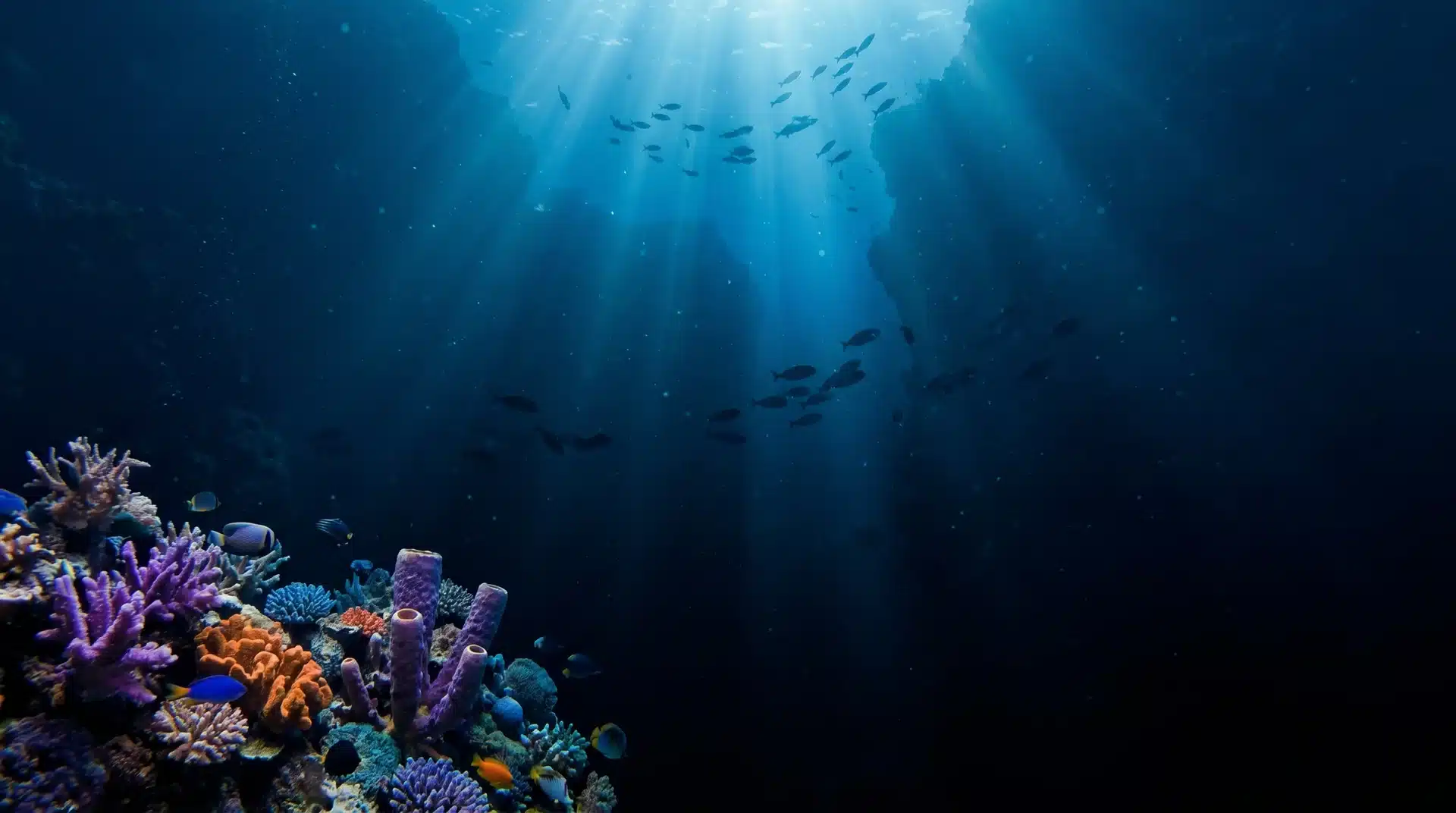
Alt Text: An underwater scene featuring a colorful coral reef teeming with diverse marine life in deep blue, sunlit ocean water.
Earth is the only known planet with liquid water sitting on its surface right now. That water shaped where life began, what the climate does, and where most of Earth’s biggest records are found. These cool facts about Earth’s oceans are hard to believe.
61. About 71% of Earth’s surface is covered by ocean water.
62. The global ocean has an average depth of about 2.3 miles or 3.6 kilometers.
63. Earth’s oceans hold roughly 97% of all the water on the planet.
64. The total volume of liquid water on Earth is approximately 1.39 billion cubic kilometers.
65. The average temperature of ocean water is around 4 degrees Celsius, just a few degrees above freezing.
66. The Mariana Trench in the western Pacific Ocean is the deepest known point on Earth, reaching about 36,000 feet or nearly 11 kilometers below the surface.
67. The longest mountain range on Earth is entirely underwater. The mid-ocean ridge stretches 40,389 miles across the ocean floor, four times longer than the Andes, Rockies, and Himalayas combined.
68. Hawaii’s Mauna Kea volcano is actually taller than Mount Everest when measured from its base on the ocean floor to its peak. Most of it is submerged.
69. Almost all of Earth’s active volcanoes are located under the ocean, not on land.
70. Coral reefs are the largest living structures on Earth. Some reef systems are large enough to be visible from space.
71. Only about 3% of Earth’s water is fresh water. The rest is salt water.
72. Three-quarters of all fresh water on Earth is locked inside glaciers and polar ice sheets.
73. Less than 1% of Earth’s fresh water sits in lakes and rivers where humans can actually reach it.
74. Life on Earth most likely began in the ocean about 3.8 billion years ago.
75. Less than 20% of Earth’s ocean floor has been mapped in any real detail. Most of our own ocean remains largely unknown.
76. Coral reefs support more species per square area than almost any other ecosystem on Earth, rivaling tropical rainforests in biodiversity.
77. Oceans act as massive heat stores that smooth out temperature swings across the planet. Without them, Earth’s climate would be far more extreme.
78. Ocean currents and the atmosphere constantly exchange heat, moisture, and carbon dioxide in a cycle that drives much of Earth’s weather.
79. The ocean absorbs a large share of the carbon dioxide that human activities release into the air each year.
80. Earth’s oceans formed when water vapor in the early atmosphere cooled, condensed, and fell as rain over millions of years.
Life, Land, and the Planet We Live On
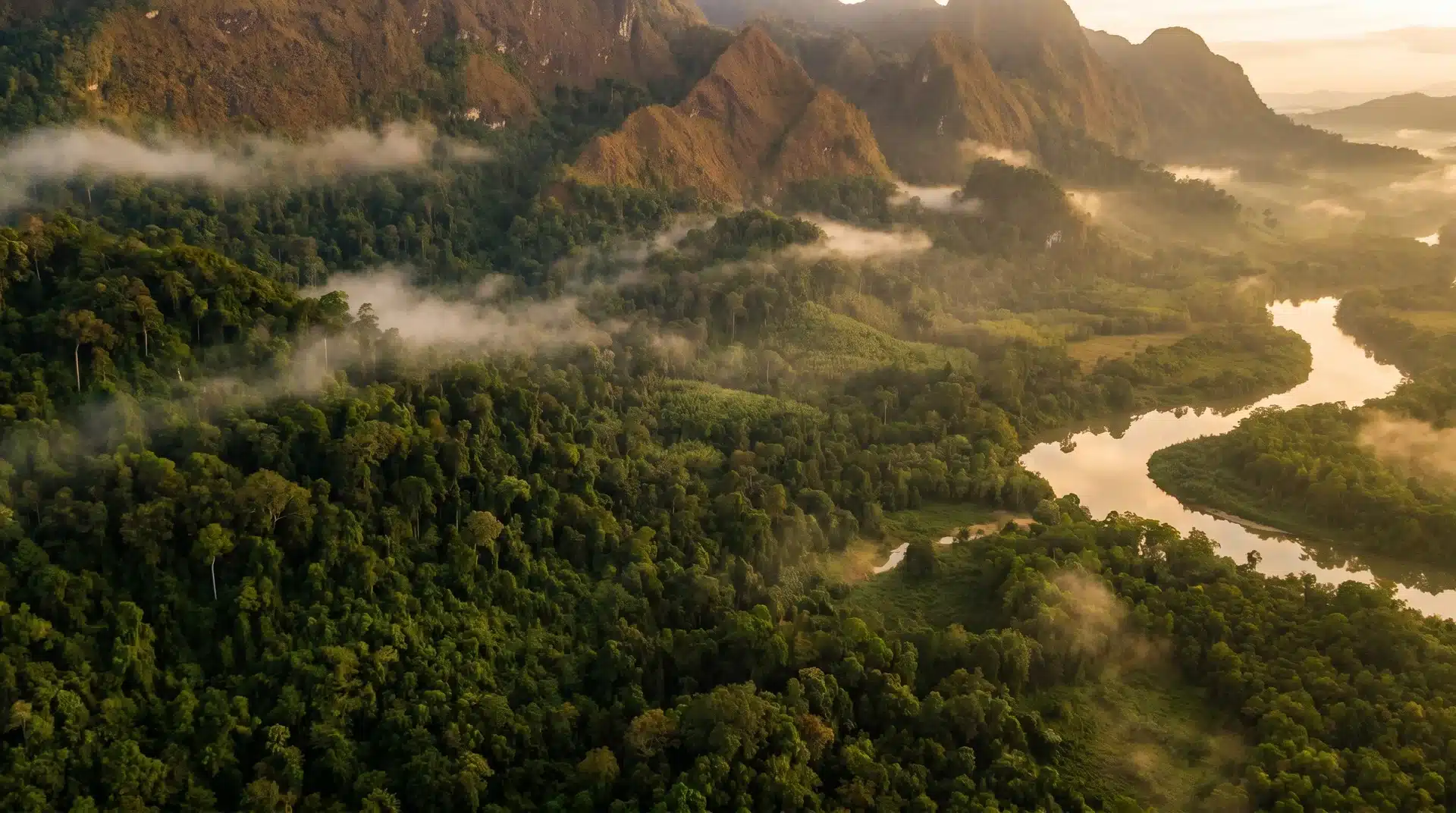
Alt Text: An aerial view of a lush, dense tropical rainforest landscape featuring a winding river flowing through mist-covered hills.
Earth holds records that seem made up. The highest, the lowest, the oldest, the wettest. And the life that calls this place home is just as hard to grasp. These final facts about Earth are a reminder of just how one-of-a-kind our planet really is.
81. Earth has a total surface area of about 510 million square kilometers.
82. Land covers only about 29% of Earth’s surface. Water takes up the rest.
83. Mount Everest in the Himalayas is Earth’s highest point above sea level, standing at 8,849 meters or 29,032 feet.
84. The Bentley Subglacial Trench in Antarctica is the lowest point on Earth not covered by ocean water. It sits 8,382 feet below sea level, buried under thick ice.
85. The Amazon Rainforest produces roughly 20% of the world’s oxygen and is home to about 10% of all known species on Earth.
86. The Sahara Desert is the largest hot desert on the planet. It covers an area close to the size of the United States.
87. Earth’s geographic north pole and magnetic north pole are not in the same location. The magnetic pole moves over time as the liquid outer core shifts.
88. Lightning strikes Earth’s surface around 100 times every single second.
89. The Dead Sea is the saltiest large body of water on Earth’s surface, with salt levels nearly 10 times higher than the ocean.
90. Antarctica holds approximately 70% of the world’s fresh water, almost entirely in the form of ice sheets.
91. Earth is the only planet in the known universe confirmed to host life.
92. Scientists estimate that about 8.7 million species exist on Earth, but the majority have never been formally identified or studied.
93. A bristlecone pine tree in California’s White Mountains is over 5,000 years old, making it one of the oldest known living organisms on Earth.
94. Tropical rainforests cover less than 6% of Earth’s land surface but are home to more than half of the world’s plant and animal species.
95. The blue whale is the largest animal known to have ever lived on Earth. It can reach lengths of up to 100 feet and weigh up to 200 tons.
96. Humans have changed more of Earth’s land surface in the last 50 years than in all of human history before that point.
97. About 8 million metric tons of plastic waste enter the ocean every year.
98. Earth loses approximately 4.7 million hectares of forest every year through deforestation.
99. Around 700 million years ago, Earth may have been almost entirely covered in ice. Scientists call this period Snowball Earth.
100. Earth’s days are getting slightly longer over time. The Moon’s gravity is slowing Earth’s spin by about 1.4 milliseconds per century.
101. Earth is the only planet in our solar system not named after a Greek or Roman god. The name comes from Old English and Germanic words meaning ‘ground’ or ‘soil’.
PS: Facts are great, but a good laugh never hurts. If you enjoyed learning about Earth, you will love these funny Earth Day puns too.
Conclusion
These interesting facts about Earth barely scratch the surface of what makes this planet worth knowing.
From a core as hot as the Sun to oceans that cover 71% of the surface, Earth is far stranger and more layered than most people realize.
The planet has been through ice ages, mass extinctions, and billions of years of constant change. And it keeps going. Knowing these facts about Earth is not just trivia.
It is a starting point for understanding why this planet deserves to be looked after. If one of these cool facts about Earth surprised you, share it with someone.
Which one got you the most? Leave a comment below and let us know.
Frequently Asked Questions
What’s Unique About Earth?
Earth is the only known planet with liquid water on its surface, a breathable oxygen atmosphere, active plate tectonics, and confirmed life.
Which Planet Has 0 Moons?
Mercury and Venus both have zero moons. They are the only two planets in the solar system with no natural satellites.
Will Life on Earth Exist Forever?
No. In about 1 to 1.5 billion years, the Sun will grow hot enough to boil away Earth’s oceans, making the surface unable to support life as we know it.
Who Is the Twin Sister of Earth?
Venus is often called Earth’s twin because it is almost the same size, but its surface temperature reaches 465 degrees Celsius, and it has no liquid water.
Which Is Earth’s Brother?
Mars is often called Earth’s sibling because it has seasons, polar ice caps, and a day that lasts just over 24 hours, similar to Earth.