

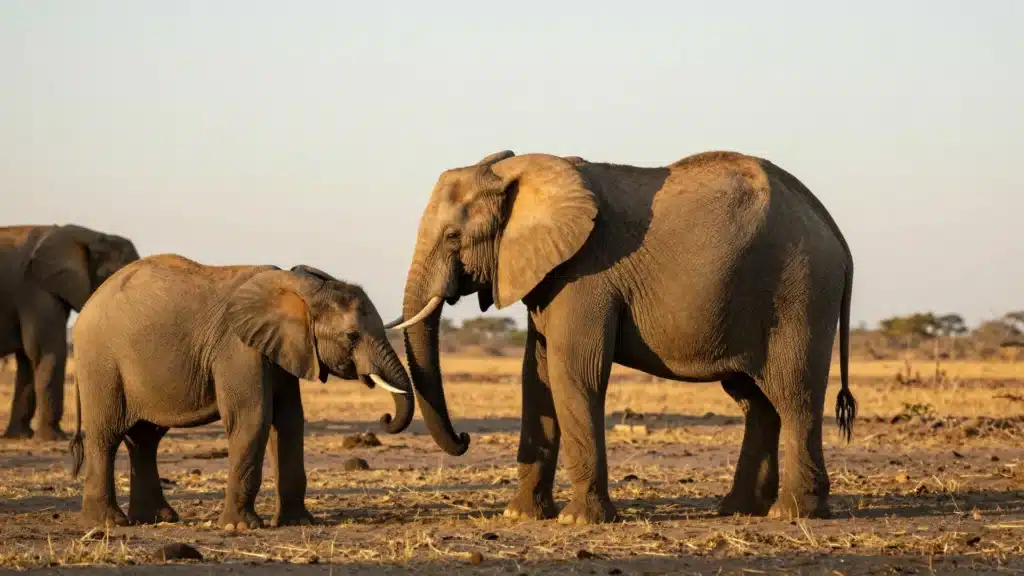
Most people think they know elephants. Big. Gray. Long trunk. But the more you look at them, the more you realize how little the basics actually cover.
These animals mine salt from underground caves. They grieve their dead. They can pick up a single grain of rice using a trunk built from over 100,000 muscle units, and they feel the footsteps of other elephants from miles away through the ground.
This blog brings together fun facts about elephants drawn from wildlife research, conservation studies, and decades of field observation.
Read through and see how many of these amazing facts about elephants you already knew.
The Three Species of Elephants
While often grouped together, there are actually three separate species: the African Savannah elephant, the African Forest elephant, and the Asian elephant.
Until 2021, the two African species were treated as one, but new DNA research showed they are genetically distinct and had to be classified separately.
| Feature | African Savannah | African Forest | Asian |
|---|---|---|---|
| Size | Largest land mammal | Medium | Slightly smaller than Savannah |
| Ear Shape | Shaped like Africa | Rounder | Shaped like India |
| Tusk Type | Both sexes | Both sexes | Males only (most females have small tushes) |
| Trunk Tip | Two “fingers” | Two “fingers” | One “finger” |
| Conservation Status | Endangered | Critically Endangered | Endangered |
| Habitat | Open savannahs | Congo Basin forests | South and Southeast Asia |
All three species are in decline due to poaching, habitat loss, and conflict with humans. African Forest elephants are in the most critical condition of the three.
30 Fun Facts About Elephants
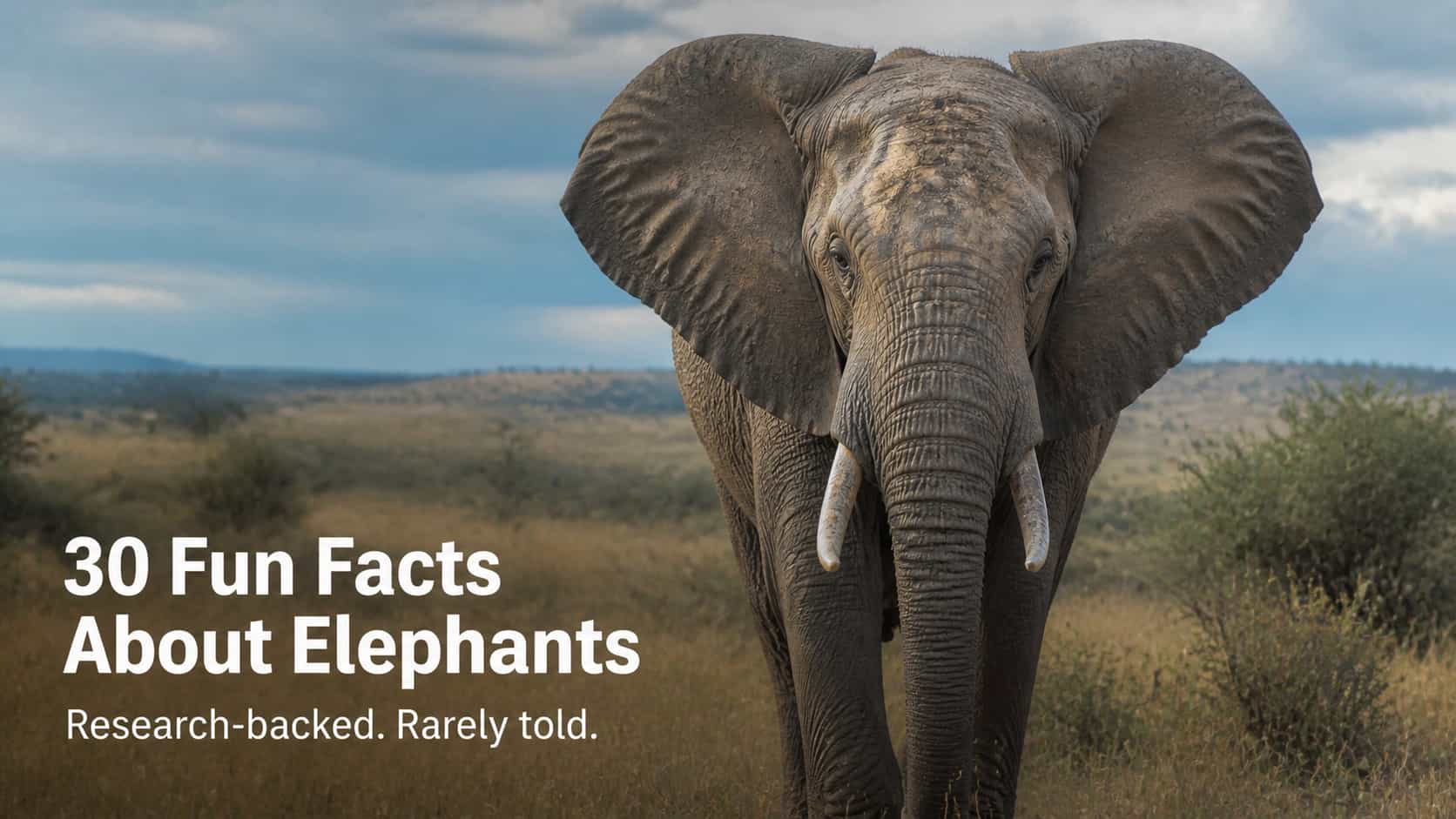
Alt Text: A front-facing view of an African elephant in a dry savanna, with text overlay reading “30 Fun Facts About Elephants.” Research-backed. Rarely told.”
These fun facts about elephants come from wildlife research, conservation organizations, and long-term field studies. Every entry on this list is grounded in real, documented observation.
1. African Savannah bulls can reach over 6,000 kg in weight and stand up to 4 metres tall at the shoulder, making them the largest land animals on Earth.
2. An elephant pregnancy lasts around 640 to 660 days, roughly 22 months. That is the longest gestation period of any mammal alive.
3. A newborn elephant calf can stand within 20 minutes of birth, walk within one hour, and keep pace with the full herd after just two days.
4. At birth, a calf can already weigh around 100 kilograms. It arrives fully developed and ready to move.
5. Elephants are the only mammals that cannot jump. All four feet remain on the ground at all times, no matter the situation.
6. Elephant tusks are not horns. They are enlarged incisor teeth that first appear when calves are about two years old and keep growing for the rest of the animal’s life.
7. Just like people are left or right-handed, elephants are left or right “tusked.” The dominant tusk tends to be shorter because it gets used more.
8. African elephants have two “fingers” at the tip of their trunks, while Asian elephants have one. This gives each species a slightly different grip.
9. An elephant trunk contains over 100,000 muscle units and has no bones at all. Despite this, it can lift up to 350 kilograms.
10. Elephants do not drink through their trunks like a straw. They suck water in, then pour it directly into their mouths. A single trunk holds up to 8 litres.
11. Elephants are strong swimmers. They use their trunks as snorkels and have been known to swim in the sea for up to six hours, covering around 48 kilometres in one go.
12. The elephant brain weighs about 4.8 kilograms, making it the largest brain of any land mammal, living or extinct.
13. Elephants can look at themselves in a mirror and recognize their own reflection. Only humans, great apes, and dolphins have shown the same ability.
14. African elephants spend over 17 hours a day feeding, but sleep for only about four hours. Most of that sleep happens around noon and just after midnight.
15. One elephant can produce 220 to 250 pounds of dung every day. This dung spreads tree seeds across wide areas, which makes elephants key to the growth of forests.
16. Elephants communicate through seismic signals. Their deep calls create vibrations in the ground that other elephants detect through their feet and bones.
17. Elephants produce a specific alarm call when they sense bees nearby. Different types of threats trigger different calls, showing a level of communication that few animals share.
18. In Mount Elgon National Park in Kenya, elephants use their tusks to mine for salt inside underground caves at night. They dig into cave walls to access sodium-rich rock deposits.
19. African elephant ears are shaped like the continent of Africa. Asian elephant ears are smaller and shaped roughly like the Indian subcontinent.
20. Elephant skin is about 2.5 centimetres thick in most places, yet it is still highly sensitive to touch, sun, and insect bites. The folds and wrinkles in their skin hold up to ten times more water than flat skin.
21. Elephants take regular mud and dust baths to protect their skin from sunburn and insect damage. This is their main form of skin care in the wild.
22. An adult elephant can eat up to 150 kilograms of food per day and may spend up to 75% of the day eating to reach that amount.
23. Elephants only digest around 40 to 50% of what they eat. Because so much passes through undigested, they must eat massive quantities every single day.
24. Elephants show clear signs of grief. They have been seen staying near the body of a deceased family member for up to a week and returning to touch the bones of loved ones years later.
25. Elephants are called “ecosystem engineers” by researchers because they knock down trees, dig waterholes, and clear paths through dense forest, reshaping the land around them.
26. Research has found that elephants can identify a person’s gender and approximate age just from the sound of their voice.
27. Scientists have identified four personality dimensions in elephants, built from 26 different personality types. These include playfulness, gentleness, leadership, and consistency.
28. An elephant’s heart beats at just 27 pulses per minute. By comparison, a small bird’s heart can beat over 1,000 times per minute.
29. The oldest known elephant in recorded history lived to 82 years of age. The typical lifespan in the wild runs from 50 to 70 years.
30. Elephants with at least one tusk weighing over 45 kilograms are called “super tuskers.” They are rare and have become prime targets for illegal ivory hunters because of their size.
P.S. If these facts made you smile, you will love this collection of elephant puns guaranteed to make your day a little brighter.
Threats Facing Elephants Today
All three elephant species are in decline. African Savannah and Asian elephants are listed as Endangered, while African Forest elephants are Critically Endangered.
Around 100 elephants are killed every day for their ivory tusks, and habitat loss continues to push herds into shrinking patches of land where they frequently come into conflict with local farming communities.
Conservation organizations across Africa and Asia are working to address poaching, land use, and human-elephant conflict through community programs, GPS tracking, and legal protections, but the pressure on wild elephant populations remains severe.
Summing It Up
These fun facts about elephants show something most wildlife lists miss: these animals are not just big; they are deeply feeling, highly intelligent, and biologically built for a world far more complex than most of us imagine.
They grieve, they remember, they communicate in ways we are still learning to understand, and they physically shape the forests they live in. The amazing facts about elephants in this list come from decades of field research and conservation work.
If any of these facts stayed with you, share this post, or tell us in the comments which one surprised you most. Every person who learns more about elephants is one more voice that can speak up for them.
Frequently Asked Questions
What Is the Coolest Thing an Elephant Can Do?
Elephants can recognize their own reflection in a mirror, a level of self-awareness shared by only humans, great apes, and dolphins.
What Is an Elephant’s Worst Enemy?
Humans are the biggest threat to elephants through poaching for ivory, habitat destruction, and human-elephant conflict.
What Smells Do Elephants Hate?
Elephants strongly dislike the smell of chili peppers, bee alarm pheromones, and strong citrus like lemons, all of which are used as natural deterrents by farmers.
What Is the Disney Elephant’s Name?
The Disney elephant is named Dumbo, though his real name in the film is Jumbo Jr., given to him by his mother, Mrs. Jumbo.
Which Elephant Had Twins?
In June 2024, a 36-year-old Asian elephant named Jamjuree gave birth to rare male-female twins at the Ayutthaya Elephant Palace in Thailand, the first recorded same-species opposite-sex twin birth in the country.