

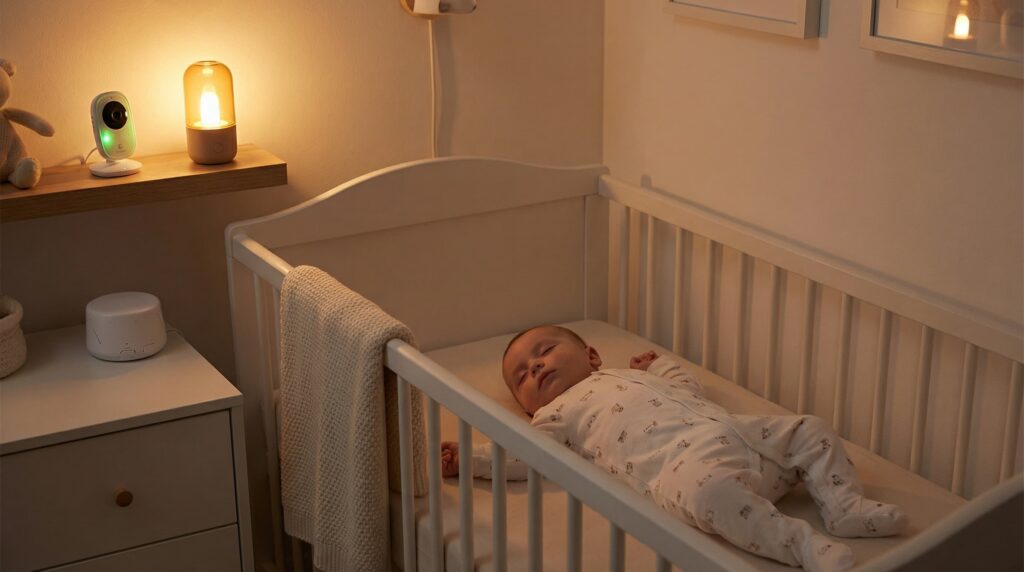
Getting your baby to sleep feels like a full-time job some nights. You rock them, feed them, pace the hallway at 2 a.m., and the second you put them down, they’re awake again.
At some point, every exhausted parent asks the same question: can my baby learn to fall asleep without me?
The short answer is yes. And no, it does not mean letting them scream it out alone. Teaching your baby to self soothe is a gradual process, and there are several ways to do it.
This guide breaks down when to start, what actually works, and what is quietly making things harder.
What Is Self Soothing in Babies?
Self soothing is a baby’s ability to calm themselves down and fall back asleep without a parent stepping in. It is not a switch you flip.
Pediatrician Matthew Badgett, MD, explains it this way: “Self soothing is really co-soothing because the parent is still involved.
Your baby plays a more active role, but you set them up for success.” Over time, with a steady routine and a safe sleep setup, babies learn to settle on their own between sleep cycles.
Self Soothing vs. Self Settling: Are They the Same?
Parents often use these two terms without realizing they mean different things. Both matter, but they describe separate skills your baby builds at their own pace.
| Category | Self Soothing | Self Settling |
|---|---|---|
| What it means | Baby calms their emotions on their own | Baby falls back asleep without help after waking |
| When it starts | Around 3 to 4 months (early signs) | Around 4 to 6 months as sleep cycles mature |
| What it looks like | Sucking fingers, stroking ears, holding hands together | Briefly fusses, then drifts back to sleep |
| Parent’s role | Build the habit, then step back gradually | Put baby down drowsy but awake |
| Goal | Emotional regulation | Independent sleep |
When Can Babies Self Soothe? Age-by-Age Breakdown
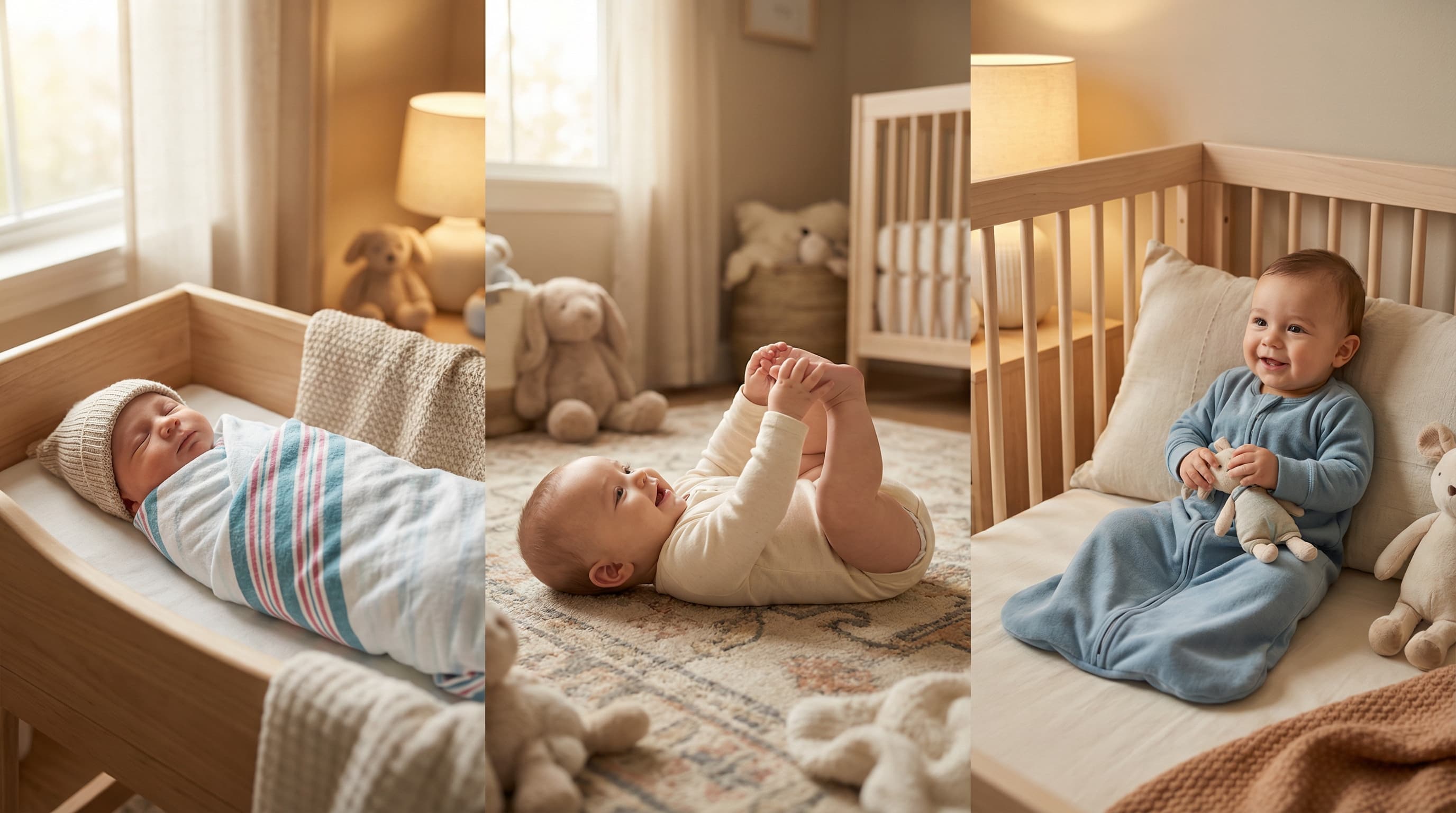
Alt Text: Collage of three babies at different stages, one swaddled asleep, one playing on the floor, and one sitting in a crib holding a toy
Every parent wants to know the exact right time to start. The honest answer is that it depends on your baby’s age and development. Here is what to expect at each stage.
0 to 3 Months: Too Early to Start
Experts advise not trying to teach a baby to self soothe before 3 months. Newborns do not yet have the ability to control their emotions. At this stage, responding quickly to your baby builds trust. That trust is actually what makes self soothing possible later.
3 to 4 Months: Watch for Early Signs
Many parents start noticing self soothing behaviors around 3 to 4 months. These are small, inconsistent moments. A baby sucking their fingers, briefly calming on their own, or rocking their head. Do not count on it yet, but take note of it.
4 to 6 Months: The Right Window to Start
This is the stage most pediatric sleep experts point to. Active sleep training works best between 4 and 6 months, as babies are developmentally ready and less resistant to change. Their sleep cycles are maturing, and they are physically capable of going longer stretches without a night feed.
6 to 9 Months: Do Not Wait Too Long
It is usually best to encourage self soothing before separation anxiety peaks, around 8 to 9 months. Once separation anxiety kicks in, it becomes harder for a baby to settle alone at night because they are actively worried about where you went.
8 Months and Beyond: Harder, But Still Possible
After 8 months, increasing mobility, stubbornness, and cause-and-effect awareness make the process more challenging, though still possible. It just requires more consistency and patience.
Signs Your Baby Is Ready to Self Soothe
Babies give you clear signals when they are getting closer to this milestone. You just need to know what to look for.
- Wakes briefly and goes back to sleep on their own without crying for you
- Sucks their fingers or finds a pacifier without needing you to put it in
- Rubs their eyes or ears when they feel tired
- Holds their hands together or reaches for a comfort object
- Shows longer sleep stretches at night compared to a few weeks ago
- Fusses less when you put them down while still slightly awake
Signs like thumb sucking, less need for rocking, or longer sleep stretches may indicate growing independence.
How to Teach Baby to Self Soothe: Step by Step
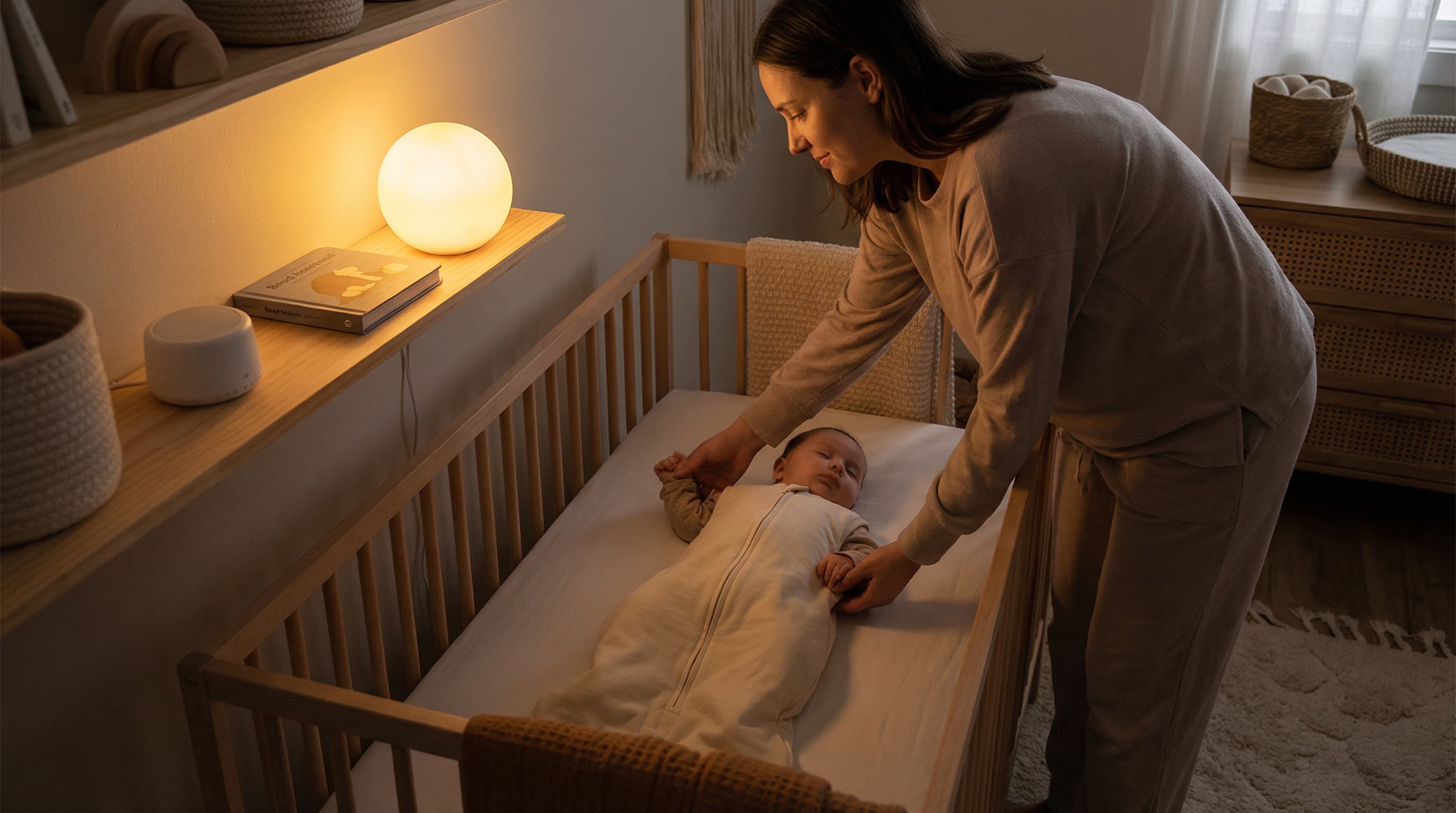
Alt Text: Mother gently placing a sleeping baby in a crib in a softly lit nursery, creating a calm bedtime routine atmosphere
There is no magic night where everything clicks. What works is doing the same things, the right way, over and over. Give yourself at least two weeks before deciding something is not working.
Step 1: Build a Consistent Bedtime Routine
Pick four to five calming activities and do them in the same order every single night. Bath, feed (not to sleep), a short book, a sleep sack, then down in the crib.
Even simple routines like reading a book, singing a song, or taking a bath give the body the signal that it is time to relax and go to sleep. The routine itself becomes the cue.
After a few weeks, your baby’s body starts preparing for sleep before they even hit the mattress.
Step 2: Set Up a Sleep-Friendly Room
The environment matters more than most parents expect. Keep the room dark and quiet, maintain a comfortable temperature, and use a white noise machine to cover household sounds.
A cool, dark, quiet room removes the triggers that wake babies up mid-cycle. Per the CDC and AAP, the crib should have only a firm mattress and a fitted sheet.
No loose bedding, bumpers, or stuffed animals under 12 months.
Step 3: Put Baby Down Drowsy, Not Asleep
This is the step most parents skip, and it is the most important one. Research shows that infants who were placed into their cribs awake had higher rates of self soothing.
When a baby falls asleep in your arms and wakes up in a crib, they are confused. They need to learn that the crib is where sleep starts, not where they land after it already began.
Step 4: Wait Before You Go In
When your baby stirs or makes a sound, pause. Not forever. Just a few minutes. The amount of time between a baby waking and a parent stepping in was linked to self soothing rates, with longer wait times connected to higher self soothing over time.
Many babies fuss briefly and fall right back to sleep if given the chance.
Step 5: Soothe Without Picking Up
If your baby is genuinely upset and needs reassurance, go in. But try to settle them without lifting them out of the crib.
Soothe by rubbing the head, replacing the pacifier, repositioning, re-swaddling, rubbing the back, or shushing in the ear. This reassures them you are there without restarting the cycle.
Step 6: Stay Consistent Night After Night
One different response can undo several nights of progress. Babies are quick to notice when the rules have changed. Any new skill requires time and consistency.
The baby will learn, and it will get easier. If one parent does things differently at 3 a.m., get on the same page before bedtime.
Why Babies Struggle to Self Soothe?
Most of the time, babies struggle because they have learned to rely on a specific routine to fall asleep, and that routine involves you.
Rocking a baby to sleep and then moving them into the crib every night makes them reliant on that help whenever they wake in the middle of the night. The same applies to feeding to sleep.
When a feeding ends the bedtime routine, the parent becomes a necessary part of falling asleep. When the baby wakes at night, they expect a repeat of that same feeding to settle again.
Overtiredness is another big factor. Once a baby is overtired, their ability to control their emotions and self soothe is greatly reduced.
Sleep Training Methods That Support Self Soothing
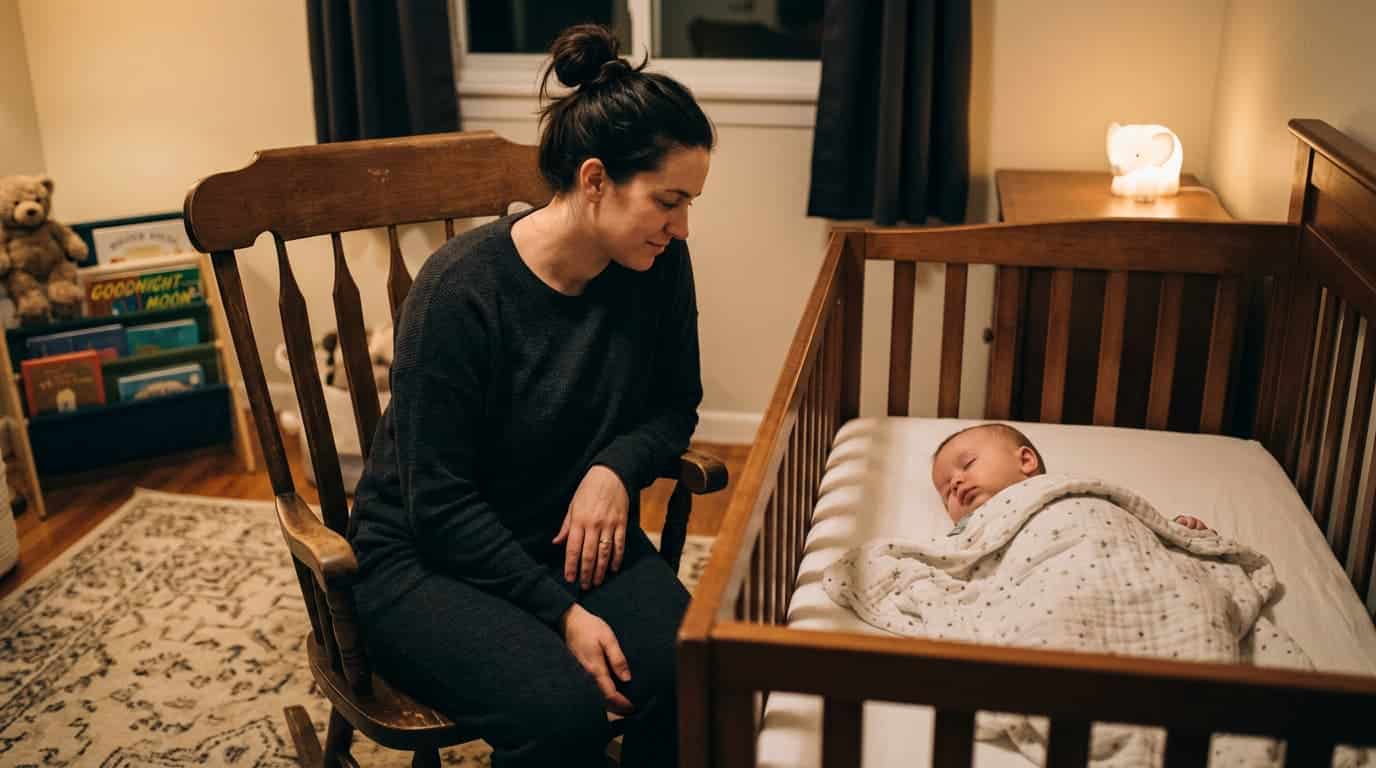
Alt Text: Mother sitting beside a crib watching her sleeping baby in a softly lit nursery, creating a calm and comforting bedtime scene
Not every family is comfortable with the same approach. Here is a quick overview of the most common methods so you can pick what fits your baby and your household.
- Cry It Out (Full Extinction): Put baby down, leave the room, do not return until morning. Most babies learn to self soothe within three nights, as there are no re-entries from parents to restart the cycle. Fast, but emotionally hard for many parents. Best for 4 months and older.
- Ferber Method (Graduated Extinction): Put baby down, leave, then check in at set time intervals that get longer each night. The goal is to train the child to self soothe, allowing them to fall asleep without attention from a caregiver. Gives parents a check-in schedule to hold onto.
- Chair Method (Fading / Camping Out): Sit next to the crib at bedtime without picking baby up. Each night, move the chair further away until you are out of the room. Research found this approach to be less stressful for parents and more helpful for babies with high levels of separation anxiety.
- Pick Up / Put Down Method: Pick baby up when they cry, soothe them, then put them back down drowsy but awake. Repeat. This method works best for babies between 4 and 8 months old. Very hands-on, takes patience.
- No Tears Method (Gentle Sleep Training): No crying involved. Developed by Dr. William Sears, this approach focuses on comfort, bonding, and a slow transition to independent sleep. Takes the longest but involves the least distress for baby and parent.
What to Do When Self Soothing Stops Working
Just when you think you have figured it out, your baby starts waking up three times a night again. Before you throw out everything that was working, read this.
Sleep regressions are temporary setbacks tied to developmental changes. Most regressions last two to four weeks and are tied to developmental leaps, not failures in parenting. Your approach was not wrong. Your baby’s brain is just growing fast.
| Regression Age | What’s Happening | What Helps |
|---|---|---|
| 4 months | Sleep cycles reorganize permanently | Return to drowsy-but-awake, tighten the routine |
| 6 months | Mobility begins (rolling, sitting) | More floor time during the day |
| 8 to 9 months | Separation anxiety peaks | Peekaboo games during the day, calm and brief night responses |
| 12 months | Learning to walk, surge in independence | Predictable bedtime routine, consistent response at night |
| 18 months | Language explosion, strong will | Brief reassurance, firm boundaries |
| 2 years | Big emotions, potty training stress | Comfort object, consistent cues, calm check-ins |
The key rule during any regression: hold your routine. Stick to a consistent routine, encourage self soothing, and avoid overstimulation before bed. Do not introduce new sleep props like rocking or feeding to sleep again. It will extend the regression, not shorten it.
When to Talk to Your Pediatrician?
Most sleep struggles resolve with time and consistency, but some situations call for a professional opinion.
If your baby shows signs of pain during sleep attempts, such as arching their back or crying in a way that sounds different from typical fussing, that can point to reflux or another medical issue.
Before beginning any sleep training, parents should screen their baby for underlying conditions. Also reach out if there is no progress after two to three consistent weeks, if your baby is vomiting from crying, or if you as a parent are hitting a wall and struggling to cope.
A pediatrician or certified sleep consultant can adjust the plan based on your baby’s specific situation.
Summing It Up
Teaching your baby to self soothe takes longer than most parents expect, and that is completely normal. Some babies take a few nights.
Others take a few weeks. What matters is picking an approach that fits your family and sticking with it long enough to give it a fair chance.
The biggest thing to remember? Your baby is not broken, and you are not doing it wrong. Sleep is a skill, and skills take practice.
Start with a solid bedtime routine, put your baby down while they are still a little awake, and give them the space to figure out the rest.
Which method worked for your family? Share your experience in the comments below.